
The nature of time, its subjective passage, and the elusive quality of the "present moment" have occupied philosophers, physicists, and historians for centuries. In his seminal 1962 work, The Shape of Time: Remarks on the History of Things, art historian George Kubler provided a rigorous framework for understanding how human experience interacts with the chronological flow of history. Kubler’s exploration serves as a bridge between the cold, objective measurements of physics and the ephemeral, subjective experience of consciousness, offering a profound inquiry into why the "now" remains so difficult to grasp.
The Chronology of a Philosophical Framework
George Kubler (1912–1996), a distinguished professor at Yale University, specialized in Pre-Columbian art and architecture. His 1962 publication, The Shape of Time, challenged the prevailing historiographical methods of his era. While his contemporaries were largely focused on linear successions of styles and biographical accounts of artists, Kubler proposed a "history of things" that viewed material culture as a series of linked signals.
Kubler’s work emerged during a transformative period in mid-century intellectual history. In the decades following World War II, scholars were increasingly preoccupied with the mechanics of communication and the passage of information. Kubler’s thesis was essentially an extension of this interest into the realm of material culture. He posited that objects—like the light of distant stars—are "signals" from the past, relayed through time to be perceived in the "now" of the observer.
Defining the Actuality of the Moment
In his analysis, Kubler distinguishes between "actuality" and the historical record. He describes actuality as the "void interval" between events—a microscopic rupture between the past and the future. By his definition, we do not experience the present as an extended duration; rather, we experience it as a series of infinitesimal flickers.
This conceptualization aligns with modern neuroscientific findings regarding human perception. While our conscious experience feels continuous, researchers have identified that the human brain operates on a "sampling" mechanism. Sensory input is processed in discrete packages, typically occurring at intervals of 80 to 100 milliseconds. What we perceive as a seamless flow of time is, in fact, a neurological reconstruction of discrete data points, much like the frame-by-frame projection of a film. Kubler’s philosophical assertion that "the instant of actuality is all we ever can know directly" finds remarkable support in the biological constraints of the human sensorium.
The Burden of Human Consciousness
A central pillar of Kubler’s argument is that human consciousness is fundamentally at odds with the brevity of the present. Because humans possess the capacity for prospection (looking forward) and retrospection (looking back), we are perpetually "evicted" from the moment.
Kubler draws a sharp contrast between human cognition and the instinct-driven existence of other species. He suggests that for a ruminant or an insect, the "instant" is likely more expansive, as their lives are not defined by the infinite bifurcation of choices that characterize human existence. For humans, the "moment of actuality" is fleeting because our brains are constantly evaluating the potential outcomes of every action. As Kubler notes, "the single life contains an infinity of present instants, each with its innumerable open choices."

Supporting Data and Scientific Parallels
To understand the scale of this cognitive dissonance, one must look at the nature of signal transmission. In astrophysics, the light from a galaxy may reach Earth thousands of years after the source has shifted or even ceased to exist. This "time-lag" is not merely a celestial curiosity; it is the fundamental condition of human knowledge.
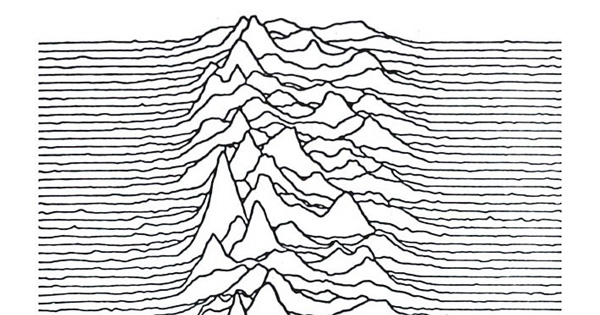
The discovery of pulsars—highly magnetized, rotating neutron stars that emit beams of electromagnetic radiation—serves as a poignant illustration of Kubler’s theory. When Jocelyn Bell Burnell detected the first pulsar, CP 1919, in 1967, she was observing a signal that had traveled across vast reaches of space and time. The "message" she received was a relic of a physical state that existed long before its detection. Kubler’s writing predates this specific discovery, yet his conceptual framework anticipates the scientific reality that we live in a universe composed of "past actions" masquerading as present information.
Analytical Perspectives: The Paradox of Possibility
Kubler’s most provocative claim is that the "fullness" of the moment is inversely proportional to the number of possibilities we entertain. He argues that for a moment to be experienced as "full," the field of possibility must be narrowed. When we are overwhelmed by potentiality—the "what-ifs" of our lives—the actuality of the present becomes diluted.
This analysis has significant implications for modern psychological practices, particularly mindfulness and cognitive-behavioral therapy. By focusing on a singular action or sensory input, individuals can effectively "filter" the noise of future projections and past baggage. The "eye of the storm," as Kubler describes it, is a state where the individual stops the frantic processing of unrealized possibilities to inhabit the singular reality of the present.

Broader Impact and Cultural Implications
The relevance of The Shape of Time has only increased in the digital age. We currently live in an era of unprecedented signal density, where the past is constantly being re-broadcast via digital archives, social media, and persistent connectivity. This environment makes it increasingly difficult to inhabit the "void interval" of the present.
Art historians and cultural critics often cite Kubler’s work as a foundational text for understanding how we curate our collective history. By viewing history not as a collection of static facts but as a dynamic, unfolding process of signal transmission, we change our relationship with the past. We no longer view history as a finished product, but as a series of "hazy coastlines" that we are continuously redrawing.
Conclusion: The Laboratory of the Possible
Kubler suggests that art—whether it be the sketches of an architect, the manuscript drafts of a poet, or the impulsive jottings of a musician—is our most effective tool for navigating the darkness of the "now." These artifacts are the physical manifestations of the human attempt to capture the present before it transforms into the past.
As we continue to advance our scientific understanding of time—through quantum mechanics, relativity, and neuroscience—the philosophical questions posed by George Kubler remain essential. We are, as he observed, creatures suspended on a "dying twig" of the living moment, forever trying to discern the signal of our lives from the noise of history. Ultimately, the task of the individual is to recognize that while the past informs our present, the "now" remains a laboratory where the shape of the future can be reimagined. Through the intentional narrowing of possibility and the deliberate engagement with the present, we transform the fleeting "void" of time into a meaningful history.








Leave a Reply