
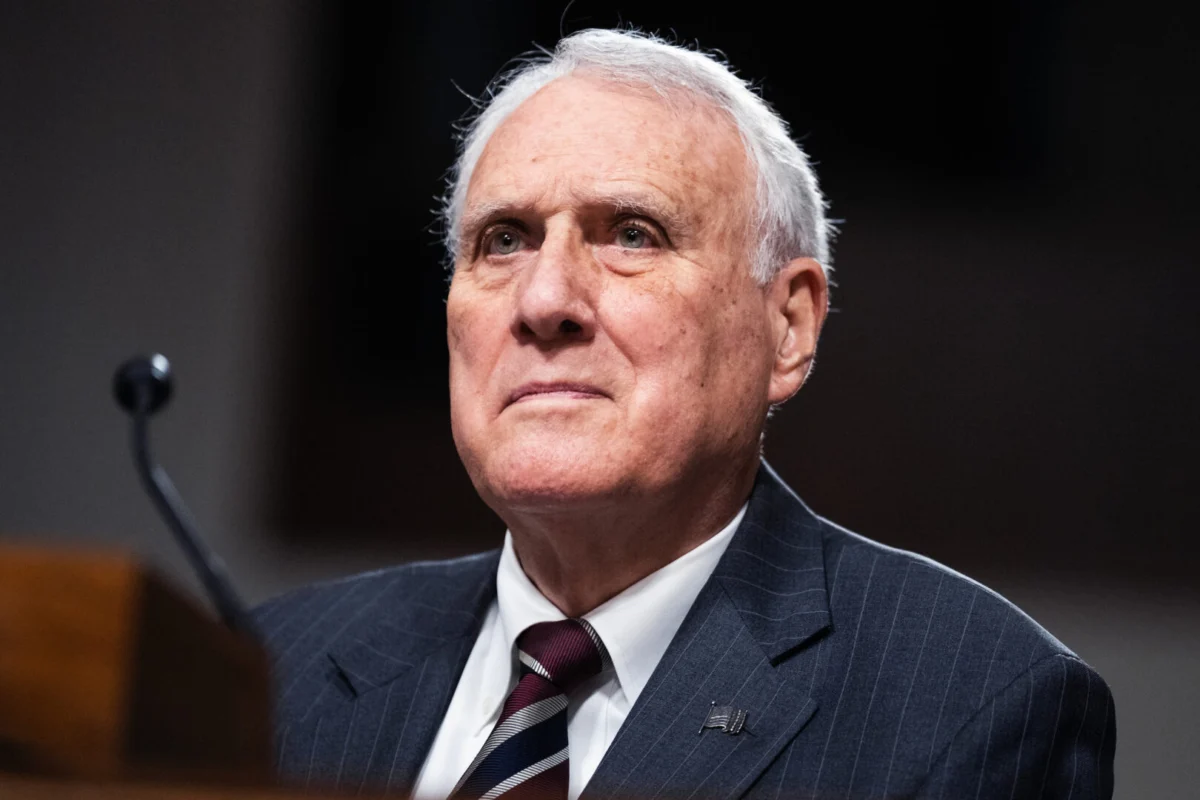
The passing of the former senator, confirmed by his family on Thursday, follows a public announcement made in late 2025 regarding his struggle with a progressive neurological disease characterized by dementia. His death marks the conclusion of a significant chapter in American political history, one defined by a unique brand of conservative statesmanship that prioritized meticulous policy development over the often-combative nature of modern partisanship.
A Legacy of Legislative Influence
Jon Kyl’s career was characterized not by the boisterous rhetoric of the campaign trail, but by the quiet, calculated work of the committee room. Serving in Congress for nearly three decades—four terms in the House of Representatives beginning in 1986 and nearly two decades in the U.S. Senate—Kyl established himself as the intellectual anchor for the Republican caucus.
His influence was perhaps most visible during his tenure as the Senate Minority Whip. Following the 2008 electoral cycle, which left the Republican Party in a weakened position with only 41 seats, Kyl was tasked with maintaining party cohesion. Peers frequently remarked on his ability to distill complex legislative jargon into clear, actionable arguments. He operated as a "legislator’s legislator," a title earned through his capacity to navigate the "legislative weeds" and persuade colleagues through logic rather than political theater.
Chronology of a Public Life
Born in 1942, Kyl was raised in an environment steeped in civic duty. His father, John H. Kyl, was a dedicated public servant who served in the U.S. House of Representatives for over a decade. The younger Kyl absorbed the mechanics of Washington early, often accompanying his parents to the capital—an experience he later credited with sparking his lifelong interest in national affairs.
- 1986: Elected to the U.S. House of Representatives, representing Arizona’s 4th district.
- 1994: Successfully transitioned to the U.S. Senate, filling the vacancy left by the retirement of Dennis DeConcini.
- 1999: Successfully led the opposition to the Comprehensive Nuclear-Test-Ban Treaty, a major victory for his national security agenda.
- 2005: Played a pivotal role in the Senate Judiciary Committee by rallying opposition against the Supreme Court nomination of Harriet Miers.
- 2007: Broke with party orthodoxy to co-sponsor comprehensive immigration reform legislation, an act that signaled his willingness to pursue bipartisan solutions despite his generally conservative voting record.
- 2008–2012: Served as Senate Minority Whip, acting as the primary strategist for the Republican caucus during the Obama administration.
- 2013: Retired from the Senate to pursue private practice as counsel at the law firm Covington & Burling.
- 2018: Appointed by Governor Doug Ducey to fill the seat of the late Senator John McCain, serving a brief but consequential four-month term.
- 2025: Announced his withdrawal from public life due to a dementia diagnosis.
Policy Mastery and Strategic Interventions
Kyl’s impact on American policy was profound, particularly in the realms of national security and the judiciary. He was a staunch advocate for a robust military posture, frequently challenging proposals that he viewed as compromising the nation’s security interests, such as the potential closure of the Guantánamo Bay detention facility.
His influence extended deep into the judicial appointment process. Beyond his role in derailing the Miers nomination, he was a key advisor in the 2018 confirmation of Supreme Court Justice Brett Kavanaugh. His ability to guide nominees through the confirmation labyrinth became a hallmark of his post-senatorial career.
Despite his reputation as a reliable conservative, Kyl was not a partisan dogmatist. His 2007 collaboration with Democrats on immigration reform demonstrated a pragmatism that is increasingly rare in the contemporary political landscape. He often noted that his focus remained on ideas rather than party labels, a philosophy that earned him respect from colleagues on both sides of the aisle.
The Professional Transition: From Capitol Hill to K Street
Following his initial retirement in 2013, Kyl leveraged his deep knowledge of federal processes to serve as a high-level consultant. His work at Covington & Burling involved high-stakes representation, including advising Facebook on complex regulatory and discrimination inquiries. This transition from lawmaker to legal counsel highlighted the fluid nature of influence in Washington, where former senior legislators often become indispensable assets to major corporate and advocacy entities.
His brief return to the Senate in 2018 served as a coda to a life of service. Stepping into the void left by his longtime friend and colleague, Senator John McCain, Kyl brought a level of experience and institutional memory that provided stability during a tumultuous time in Arizona’s political landscape.
Broader Implications and Institutional Impact
The death of Jon Kyl leaves a void in the "institutionalist" wing of the Republican Party—a group that valued the slow, deliberate processes of the Senate over the performative politics of modern media. Analysts suggest that his departure marks the end of an era where legislative success was measured by the durability of a bill rather than the volume of a soundbite.
His career provides a case study in the efficacy of the "inside game." By focusing on policy nuance and maintaining personal integrity in his dealings with opponents, Kyl managed to shape legislation long after he left his formal leadership roles. The implications of his absence are likely to be felt most in the Senate’s internal deliberations, where his presence once served as a bridge between ideological extremes and legislative reality.
Official Responses and Public Tributes
The reaction to Kyl’s passing has transcended partisan boundaries, reflecting the high regard in which he was held by those who worked with him.
Former Senator Jeff Flake, who succeeded Kyl in 2012, described the loss as a significant blow to the state, referring to Kyl as a "giant" of Arizona politics. The sentiment was echoed by Democratic Representative Greg Stanton, who lauded Kyl’s "mastery of policy" and his principled approach to his duties.
Senate Majority Leader John Thune, R-S.D., offered a poignant reflection on his colleague’s character, stating, "Jon Kyl loved his state of Arizona and was a true legislator’s legislator." This sentiment captures the core of Kyl’s identity: a man who found his purpose in the mechanics of governance and the advancement of ideas.
Analyzing the "Kyl Approach"
An analysis of Kyl’s tenure reveals a consistent methodology: he treated politics as an extension of his legal background. Whether in the Judiciary Committee or the Whip office, he approached every challenge as a problem to be solved through analysis rather than through the exertion of sheer partisan force. This approach, while highly effective during his active years, is increasingly at odds with the current environment of the U.S. Congress.
As the political landscape continues to shift, the loss of figures like Jon Kyl invites a reflection on the qualities that allow a democracy to function. His ability to move the needle on issues as varied as national defense, immigration, and judicial appointments—while maintaining the respect of political rivals—stands as a testament to the power of intellectual rigor in public service.
For Arizona, and for the nation, the legacy of Jon Kyl remains one of disciplined, policy-driven service. His death marks not just the loss of an influential figure, but the closing of a period in which the Senate was defined by the quiet, essential work of legislative mastery. As tributes continue to emerge from across the political spectrum, the recurring theme remains clear: a dedicated servant of the law and a man whose influence will be measured by the policies he shaped and the standards of conduct he maintained.







Leave a Reply