
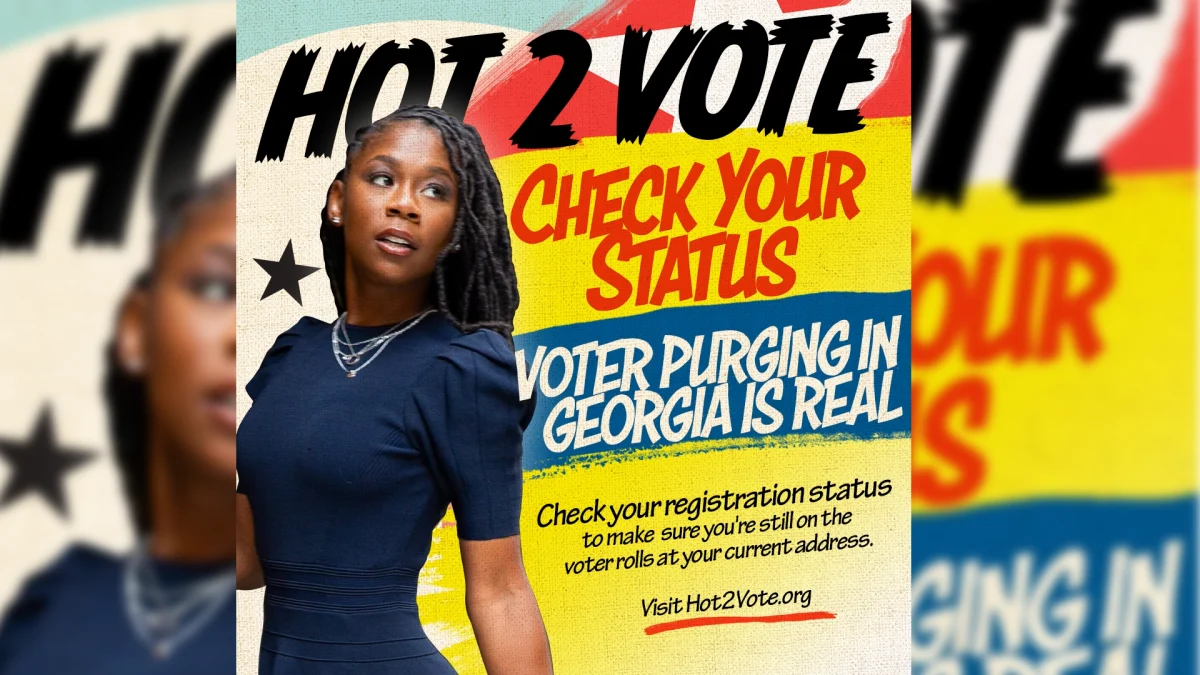
As the 2026 midterm election cycle approaches, a coalition of over 100 adult content creators has launched an unconventional political mobilization effort titled "Hot2Vote." This $100,000 initiative is designed to bypass traditional political communication channels, aiming directly at a demographic often ignored by mainstream campaigns. By utilizing their massive digital footprints and localized physical presence in Atlanta, these creators are urging residents to verify their voter registration status before the state’s October 5 deadline.
The urgency behind this campaign is rooted in recent administrative shifts within Georgia’s election infrastructure. In the previous year, the state oversaw a significant maintenance of voter rolls, resulting in the removal of over 470,000 names from the registration database. Proponents of these purges, including state officials, argue that such measures are essential for maintaining the accuracy of voter lists and preventing fraud. However, civil rights organizations and voting rights advocates have expressed alarm, suggesting that aggressive list maintenance can lead to the disenfranchisement of eligible voters who may be unaware their names have been scrubbed due to inactivity or minor clerical errors.
The Strategic Shift: Reaching the Disengaged
The "Hot2Vote" campaign, which runs through October 4, employs a multi-pronged strategy to ensure maximum reach. The campaign features safe-for-work (SFW) content from prominent entertainers such as Cherie DeVille and King Noire. Rather than relying on traditional cable news or direct mail, the effort utilizes digital geofencing to serve ads to users in Atlanta’s nightlife districts and places advertisements directly on adult-oriented platforms that correlate with the Atlanta metropolitan area.
Hazel Grace, an Atlanta-based performer and proprietor of the production house InMelanin, is leading the grassroots portion of the initiative. "Over the next few weeks, my team and I will be out hitting the clubs around Atlanta and connecting with our community to make sure everyone checks their voter registration status," Grace stated in a recent press release. The campaign is specifically designed to reach a demographic that has historically shown lower participation rates in midterms, with estimates suggesting the effort will reach between 400,000 and 450,000 individuals, a significant majority of whom are men.
Chronology of Voter Access in Georgia
The landscape of Georgia elections has been defined by a cycle of intense legal and administrative scrutiny. Following the 2020 presidential election, the Georgia General Assembly passed Senate Bill 202, a sweeping election overhaul that introduced new identification requirements for absentee ballots, limited the use of drop boxes, and expanded the authority of the State Election Board.
The 2025 voter roll purge, which serves as the primary catalyst for the current "Hot2Vote" campaign, is the latest chapter in this ongoing debate. According to data from the Georgia Secretary of State’s office, the state regularly updates its rolls to reflect changes in residency, death, or felony convictions. Critics, however, point to the high volume of removals as a potential barrier to access. By providing QR codes on physical posters in Atlanta and directing traffic to a centralized registration portal, "Hot2Vote" acts as a non-partisan bridge between the technical requirements of the state and the eligible electorate.
Contextualizing Modern Political Activism
This is not the first time adult performers have engaged in political advocacy. The current campaign draws direct inspiration from the 2024 "Hands Off My Porn" movement, which was organized to raise public awareness regarding "Project 2025," a conservative policy blueprint drafted for a potential second term of a Republican administration. That campaign proved that adult creators—who possess unique skills in digital marketing and community building—can successfully pivot their influence toward political engagement.
The trend extends beyond the United States as well. In the United Kingdom, for instance, creators involved in the "Headline Newds" web series have utilized their platforms to disseminate information regarding climate change. These efforts reflect a broader shift in how digital creators view their social responsibility. By moving from purely entertainment-based content to civic-oriented messaging, these influencers are attempting to leverage the parasocial relationships they maintain with their audiences to foster political participation in an era of declining institutional trust.
Data and Implications
The efficacy of the "Hot2Vote" campaign will be measured by its ability to convert digital impressions into active registration check-ins. Traditional political science models often suggest that "low-propensity voters"—individuals who do not vote in every election—are the hardest to reach through standard advertising. By situating their messages in spaces where these individuals already congregate, the "Hot2Vote" organizers are attempting to lower the "cost" of information for the voter.
The target demographic of 400,000 to 450,000 people represents a significant slice of the Atlanta metro population. In a state like Georgia, where recent statewide elections have been decided by margins of less than one percent, the mobilization of even a small fraction of this group could theoretically influence the outcome of local or state-level races.
The Role of Independent Advocacy
The reliance on independent campaigns by adult creators highlights a growing gap in how political parties reach voters. While traditional campaigns spend millions on television spots, they often struggle to penetrate the fragmented media landscape where younger voters reside. The "Hot2Vote" campaign illustrates that independent actors can mobilize resources—in this case, a $100,000 budget—to execute targeted, high-impact campaigns that complement or compete with official party outreach.
Furthermore, the integration of QR codes and real-time verification tools underscores the technical nature of modern civic engagement. As election laws become more complex and the process of verifying one’s registration becomes a more frequent necessity, the role of third-party facilitators becomes increasingly vital.
Broader Societal Impact
The "Hot2Vote" initiative raises questions about the future of political discourse in the digital age. As the line between "influencer culture" and "civic participation" continues to blur, the influence of non-traditional figures in politics will likely grow. While critics may argue that the nature of the industry these creators work in detracts from the gravity of the political message, supporters contend that the message—ensuring the right to vote—is universal and vital regardless of the messenger’s profession.
As the October 5 deadline approaches, the success of the campaign will be judged by the numbers. If the initiative results in a surge of registration verifications in the Atlanta area, it may serve as a template for future grassroots political movements. Regardless of the immediate outcome at the ballot box, the "Hot2Vote" campaign represents a significant evolution in the methods used to secure participation in the democratic process, proving that in the modern era, the call to civic duty can come from the most unexpected of platforms.
For now, the focus remains on the streets of Atlanta and the digital feeds of thousands of voters. Whether this intersection of adult entertainment and political activism can overcome the hurdles of voter apathy and administrative barriers remains to be seen, but it has undoubtedly added a unique, high-energy dimension to the 2026 midterm election season.









Leave a Reply