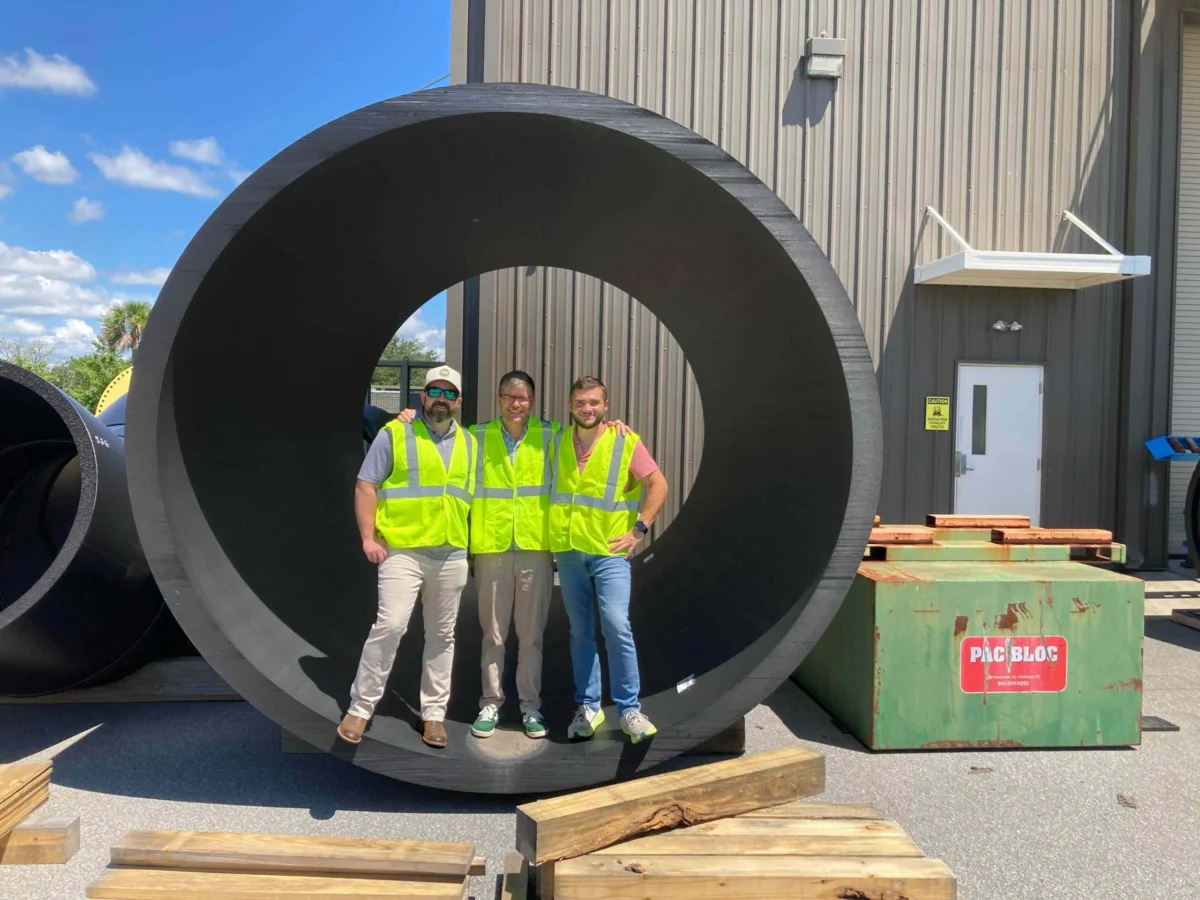
The rapid escalation of artificial intelligence development has placed an unprecedented strain on global electrical grids. As hyperscalers and enterprise entities scramble to secure power capacity, traditional real estate-focused data center development cycles—often spanning eight to ten years—have proven insufficient to meet the 10x surge in demand witnessed over the past three years. Enter Drogue, a Washington, D.C.-based startup that is betting on a radical alternative: moving the data centers to the energy source itself by utilizing the vast, untapped thermal potential of the world’s oceans.
The Mechanics of Ocean Thermal Energy Conversion
At the heart of Drogue’s strategy is Ocean Thermal Energy Conversion (OTEC), a process that exploits the temperature differential between warm surface waters and the frigid depths of the ocean. While the concept was pioneered in the mid-20th century, it has historically faced challenges regarding capital intensity and engineering scalability.
Drogue’s proprietary system functions as a closed-loop thermodynamic cycle. Surface water, warmed by solar radiation, is used to cool the onboard server arrays. This heat is then transferred to a working fluid—ammonia, which possesses a low boiling point—to turn it into a high-pressure gas. This gas drives a turbine, generating the electricity required to power the onboard data center. Following the turbine stage, the ammonia gas enters a condenser cooled by water pumped from a depth of approximately 1,000 meters, where temperatures hover around 39°F (4°C). The ammonia condenses back into a liquid, and the cycle repeats.
The environmental implications of this process are minimal compared to the massive thermal energy available. Global oceans absorb an estimated 5.8 million terawatt-hours of energy annually—a figure that dwarfs the 180,000 terawatt-hours of total energy consumption by human civilization. By tapping into this "thermal battery," Drogue claims it can operate indefinitely without exhausting the temperature gradient.
Corporate Chronology and Financial Backing
Founded only six months ago, the startup has moved at a velocity atypical for infrastructure-heavy ventures. The company recently confirmed an initial funding round of $20 million, backed by a diverse syndicate of investors including XYZ Venture Capital, Toyota Ventures, Tamarack Global, Dream, FDVC, Garuda Ventures, Flexcap, Boost VC, and Slow Ventures.
This capital injection is being deployed toward the design and procurement of a multi-megawatt prototype. The company’s current timeline is aggressive:
- Late 2024: Completion of initial design phases and securing of "approval in principle" from the American Bureau of Shipping.
- 2025–2026: Procurement and retrofitting of a traditional oceangoing vessel to house the pilot system.
- Early 2028: Deployment of the first operational prototype for live testing in open-water conditions.
Looking beyond the initial prototype, Drogue intends to pivot toward custom-built floating structures, which will be engineered to mimic the stability and durability of offshore oil and gas platforms.
The Logic of Maritime Data Centers
The shift to oceanic deployment solves two primary bottlenecks for the AI industry: location-agnostic power and real estate constraints. Sam Sipe, co-founder and CEO of Drogue and a veteran of the U.S. Navy, identifies the data center industry’s reliance on terrestrial power grids as its greatest liability.

"The data center industry is a real estate game," Sipe notes. "They are playing on 8- to 10-year timelines, including interoperability with utilities and independent system operators. AI demand has increased 10x in just the last three years. It is completely incompatible."
By placing data centers on the water, Drogue bypasses the need for regional grid permits and land-use negotiations. Furthermore, the operational logistics favor this approach; shipping data via satellite or high-speed underwater fiber-optic cables is significantly more cost-effective than transporting raw physical goods or electricity over long distances. Each vessel is designed for a ten-year deployment cycle, requiring minimal maintenance and no reliance on the overburdened onshore utility infrastructure.
Industry Comparisons and Technical Evolution
Drogue’s methodology invites comparison to other "frontier" data center concepts, such as orbital facilities currently being explored by firms like SpaceX. However, while orbital data centers face the astronomical costs of rocket launches and the complexities of radiation shielding, maritime data centers rely on established naval architecture.
Sipe, whose background includes piloting E-2D Hawkeye aircraft off U.S. Navy carriers, views the ocean not as a hostile environment, but as a misunderstood resource. He spent months interviewing engineers from the 1980s-era OTEC projects to understand why those early attempts failed. The consensus was not a flaw in the physics, but a lack of sufficient capital and the absence of a high-density, "always-on" consumer for the power—a role now perfectly filled by AI training and inference clusters.
Modern advancements in metallurgy, corrosion resistance, and heat exchanger efficiency have rendered previous barriers to entry largely obsolete. The American Bureau of Shipping’s preliminary approval suggests that the maritime and engineering communities are beginning to treat the concept as a viable industrial standard rather than a speculative experiment.
Economic and Environmental Implications
The broader implications of Drogue’s technology are significant for both the energy and technology sectors. As the climate warms, the energy content of the oceans increases, effectively creating a larger reservoir of potential fuel for OTEC systems. If successfully scaled, this could decouple AI growth from fossil-fuel-dependent electrical grids, potentially offering a "green" path for energy-hungry data centers.
However, the transition to floating data centers will face its own set of regulatory hurdles. Maritime law, international waters usage, and the protection of marine ecosystems are all domains that will require careful navigation. Furthermore, while the ammonia-based closed-loop system is designed to be self-contained, the long-term impact of circulating cold deep-sea water to the surface on local marine life remains an area for continued environmental impact study.
Future Outlook
As Drogue transitions from the design lab to the shipyards, the startup will be under significant pressure to prove that its multi-megawatt systems can withstand the corrosive and dynamic nature of the open ocean. If the 2028 pilot succeeds, it could provide a blueprint for a new class of "nomadic" infrastructure.
By moving away from the crowded, high-cost environments of land-based data hubs, Drogue is essentially proposing a new form of digital sovereignty. Whether this model can scale to meet the insatiable power demands of future foundation models remains to be seen, but the convergence of naval engineering and high-performance computing marks a notable shift in how the tech industry views the planet’s largest, most overlooked resource. As the competition for power intensifies, the open ocean may soon become the most valuable real estate in the digital economy.