Irish flag carrier Aer Lingus has officially announced the completion of its high-speed in-flight internet rollout across its entire long-haul fleet, equipping every single transatlantic aircraft with SpaceX’s cutting-edge Starlink Wi-Fi system. The milestone marks a significant leap forward in the airline’s passenger experience strategy, arriving well ahead of the carrier’s initial completion targets. The initiative forms part of a broader corporate commitment by International Airlines Group (IAG), the parent company of Aer Lingus, British Airways, and Iberia, to modernize cabin connectivity standards across its member airlines following a major announcement in late 2025.
The completion of the long-haul retrofit program underscores a rapidly accelerating deployment schedule that has surprised industry observers. Initially slated for completion by the first quarter of 2027, the timeline was subsequently pulled forward to the end of 2026 before engineering teams successfully finalized installations ahead of the close of October. This swift execution highlights the relative ease of retrofitting Starlink hardware once regulatory certifications are secured, setting a new benchmark for aviation technology integration.
Comprehensive Long-Haul Integration and Fleet Scope
The newly minted connectivity network spans every aircraft dedicated to Aer Lingus’s intercontinental and premium European routes. The long-haul fleet deployment encompasses all 12 of the airline’s widebody Airbus A330 aircraft, which serve as the backbone of transatlantic operations connecting Dublin and Shannon to major North American hubs such as New York, Boston, Chicago, and Los Angeles.
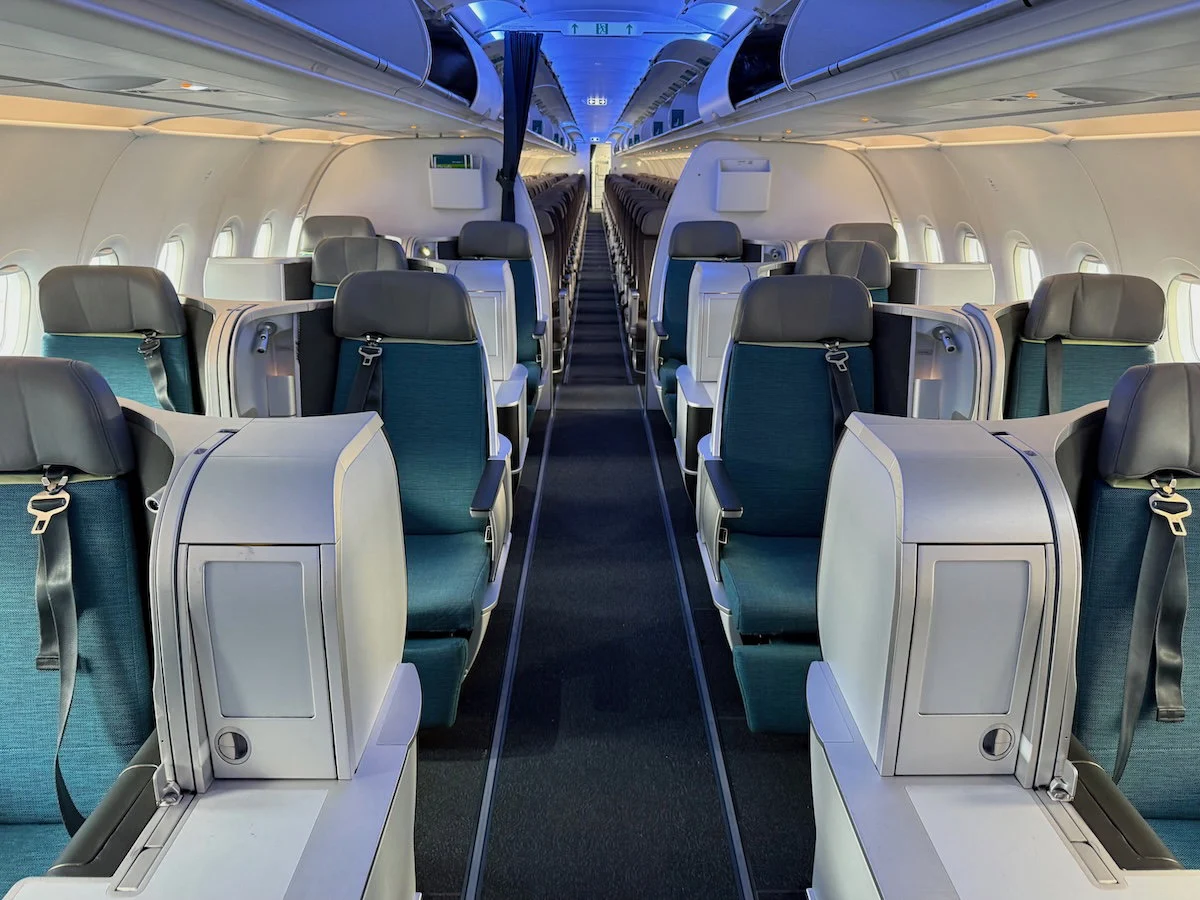
Additionally, the rollout covers 14 narrowbody long-range aircraft, specifically comprising both the Airbus A321LR (Long Range) and the newly introduced A321XLR (Extra Long Range) variants. These versatile single-aisle jets have enabled Aer Lingus to efficiently operate thin transatlantic routes to secondary cities in the United States and Canada while maintaining premium passenger amenities. With the latest modifications, passengers traveling in both economy and business class across these 26 aircraft now enjoy gate-to-gate broadband access without interruption.
Zero Cost and Frictionless Access Model
Unlike many legacy carriers that utilize in-flight connectivity as an exclusive perk to drive loyalty program sign-ups or monetize premium cabins through tiered pricing models, Aer Lingus has adopted an entirely open-access framework. The airline provides Starlink Wi-Fi completely free of charge to all passengers, regardless of their fare class or frequent flyer status.

Furthermore, travelers are not required to enroll in the Aer Lingus AerClub loyalty program or create a pre-existing user profile to access the network. Industry analysts have noted that this frictionless approach runs counter to prevailing commercial trends among international carriers, many of which gate high-speed internet behind paywalls or membership requirements. By offering open, complimentary access, IAG and Aer Lingus aim to remove barriers to digital productivity and entertainment at 35,000 feet.
The Technical Superiority of Low-Earth Orbit Connectivity
Traditional in-flight Wi-Fi systems have long relied on geostationary (GEO) satellites orbiting approximately 22,236 miles above the Earth. While these legacy systems offered basic connectivity, they were frequently plagued by high latency, sluggish data speeds, capacity bottlenecks, and frequent dropouts—particularly over oceanic expanses.
SpaceX’s Starlink network operates on a radically different architecture, utilizing a mega-constellation of satellites in Low-Earth Orbit (LEO), typically positioned between 300 and 1,200 miles above the planet. This significantly reduced physical distance translates into dramatically lower latency and vastly superior bandwidth capacities. For airline passengers, the technical upgrade enables robust, ground-like internet performance capable of supporting high-definition live streaming, competitive online gaming, real-time video conferencing, cloud-based productivity tools, and simultaneous multi-device connectivity per passenger across laptops, tablets, and smartphones.
Chronology of the Strategic Rollout
The rapid deployment of Starlink across Aer Lingus operations represents a carefully orchestrated multi-stage corporate strategy initiated by International Airlines Group.
November 2025: IAG announced a historic agreement to introduce free Starlink Wi-Fi across its major subsidiary brands, establishing a unified connectivity roadmap for British Airways, Iberia, and Aer Lingus.
March 2026: Aer Lingus successfully equipped its very first aircraft—an Airbus A330 widebody—with the Starlink hardware suite, commencing the live operational testing phase.
Mid-2026: Buoyed by seamless flight trials and faster-than-expected certification approvals, Aer Lingus leadership advanced the overarching project completion target from early 2027 to late 2026.
October 2026: The airline officially confirmed that all 26 aircraft comprising its long-haul fleet (Airbus A330s, A321LRs, and A321XLRs) were fully outfitted with operational Starlink systems.
Next Steps: Short-Haul Fleet Modernization
Following the successful transformation of its intercontinental network, Aer Lingus has turned its engineering focus toward its regional and short-haul European operations. While a formal completion timeline has not yet been finalized, the carrier is slated to begin equipping its narrowbody fleet with Starlink systems in the near future.
The short-haul retrofit program will encompass a total of 35 aircraft, consisting of 27 standard Airbus A320s and eight fuel-efficient Airbus A320neos. Given the streamlined installation protocols developed during the long-haul project, aviation experts anticipate that the short-haul rollout will proceed rapidly once initiated, likely reaching completion within a matter of months. Once finished, Aer Lingus will achieve total fleet-wide connectivity parity, making it one of the first European network carriers to offer complimentary, high-speed LEO broadband across its entire operating network.
Broader Industry Implications and Competitive Pressures
The decisive move by Aer Lingus and its parent company IAG is expected to exert considerable pressure on competing transatlantic and European carriers. As consumer expectations shift toward ubiquitous, high-quality digital connectivity as a baseline travel requirement rather than a luxury add-on, traditional airlines relying on legacy geostationary systems face mounting pressure to upgrade their infrastructure.
Airlines that continue to charge premium fees for metered, low-speed data risk losing market share to carriers offering seamless, complimentary broadband. Furthermore, the decision by IAG to decouple free Wi-Fi from loyalty program membership challenges the long-standing industry practice of data harvesting through captive portals, prioritizing direct customer satisfaction and brand differentiation instead.
As aviation authorities and satellite operators continue to navigate the integration of LEO technology into commercial aviation, Aer Lingus’s swift and successful execution serves as a compelling proof-of-concept for the future of in-flight telecommunications. With long-haul passengers already reaping the benefits of high-speed, low-latency connectivity from boarding to deplaning, the spotlight now shifts to the impending short-haul rollout and the broader adoption curve across the rest of the IAG family.