

The integration of artificial intelligence into the scientific research ecosystem has long been heralded as a transformative catalyst, promising to accelerate the pace of discovery by automating complex analytical tasks. However, a comprehensive new study conducted through a collaborative effort between researchers at Google, Google DeepMind, and the Massachusetts Institute of Technology (MIT) reveals a more nuanced reality. While AI is undeniably streamlining workflows, a significant portion of the efficiency gains is being offset by a mandatory "verification tax"—the time and cognitive effort researchers must expend to audit, debug, and fact-check AI-generated outputs to ensure scientific rigor.
The study, titled AI in Science: Early Insights and published in September 2026, provides a granular look at the friction points emerging at the intersection of machine learning and empirical research. Rather than focusing on the sensationalist narratives of "rogue AI" or existential risks—which currently dominate the broader public discourse—this research centers on the immediate, operational challenges that scientists face daily. These include the proliferation of AI-generated content, the persistence of "hallucinations" (where models present false information as fact), and the risk of "illusions of understanding" that could potentially compromise the integrity of peer review processes and institutional validation cycles.
Empirical Foundations and Research Methodology
The findings presented in the paper are derived from a robust multi-modal data set. The authors analyzed approximately 15 million anonymized interactions with Gemini, Google’s large language model, to observe how scientific queries are being structured and handled. This data was complemented by an exhaustive inventory of 2,690 specialized AI models currently utilized in scientific domains, ranging from biology and chemistry to astrophysics. To bridge the gap between theoretical model performance and real-world application, the researchers conducted a survey of 637 active scientists across the United States and the United Kingdom.
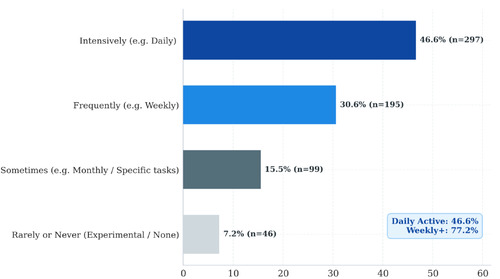
The survey results underscore the ubiquity of these tools, with nearly 50% of respondents reporting daily usage of AI in their professional capacities. Among those who reported net time savings, the average benefit was documented at just under seven hours per week. While this figure highlights the potential for massive productivity gains, the secondary data reveals that the "verification tax" significantly diminishes these benefits, creating a complex trade-off between speed and certainty.
Chronology of AI Integration in Science
The timeline of AI’s ascent in laboratory settings has been rapid, moving from experimental curiosity to essential infrastructure within the span of just a few years.
- 2022–2023: Initial phase characterized by the "hype cycle." Researchers began using early-stage LLMs for brainstorming, drafting literature reviews, and basic coding assistance. During this period, oversight was high because the models were viewed as unreliable novelties.
- 2024: The proliferation of domain-specific models. Specialized architectures for protein folding, genomic sequencing, and chemical property prediction moved from research prototypes to production-grade tools.
- 2025: Mainstream adoption. Integration into standard laboratory workflows became common, leading to the current challenge of managing high-throughput AI-generated hypotheses.
- 2026: The current period of assessment. As documented by the Google/MIT study, the scientific community is now shifting its focus from "can we use AI?" to "how do we maintain quality control in an AI-assisted pipeline?"
The Verification Tax: A Quantitative Analysis
The core of the study’s findings rests on the concept of the "verification tax." Approximately 75% of the scientists surveyed reported that AI has successfully saved them time in their day-to-day operations. However, the allocation of that saved time is telling. Of those who reported net time savings, 89% confirmed that more than 10% of their recovered time was immediately reinvested into verifying, debugging, or fact-checking the outputs provided by the AI.
More alarmingly, 46% of these scientists reported that more than one-quarter of their saved time was consumed by this verification process. This creates a feedback loop where the speed of hypothesis generation—aided by AI—frequently outpaces the human and physical capacity to validate those hypotheses through traditional experimentation. The study highlights that in the scientific method, the "cost" of a false positive is astronomically high, as it leads to wasted resources, retracted papers, and flawed clinical trials.
Official Perspectives and Economic Implications
Google’s AI & Economy ATLAS update, released on September 15, 2026, framed these findings as a necessary maturation of the digital research economy. The company acknowledged that while the productivity gains are substantial, they are not a "plug-and-play" solution for discovery. According to Google, the bottlenecks are not solely within the AI models themselves, but also within the physical experimentation and clinical validation stages of research.

The company noted that the "faster individual tasks" enabled by AI—such as summarizing existing literature or writing boilerplate code—do not necessarily translate to a faster rate of scientific discovery if the subsequent validation pipeline remains static. If an AI can generate 100 new drug candidates in a day, but a lab can only physically test one per week, the bottleneck merely shifts, it does not disappear. This reality check is critical for policymakers and institutional stakeholders who might otherwise expect an exponential increase in scientific breakthroughs simply through the adoption of more advanced computing power.
Broader Impact and Scientific Integrity
The implications of this study extend far beyond the laboratory bench. As scientific research becomes increasingly reliant on automated systems, the burden on the peer-review process is expected to grow. Editors and reviewers are now tasked with not only verifying the human work but also auditing the potential biases and hallucinations introduced by the AI models used in the data analysis phase.
Furthermore, the study mentions "illusions of understanding," a phenomenon where a researcher might feel they understand a complex topic because the AI provided a coherent, logical summary, even if that summary is missing critical nuances or foundational facts. This could lead to a degradation in the depth of scientific inquiry if researchers begin to rely on the "surface-level" intelligence of AI rather than engaging in deep, critical analysis.

The study also notes that while researchers have reported a 68% increase in access to insights from other disciplines and a 65% increase in the breadth of their research agendas, this expansion comes at a cost of depth. The challenge for the future will be to develop AI systems that are not just "fast," but are "explainable"—tools that can provide citations for their logic and pathways for their conclusions, thereby reducing the verification tax.
Conclusion: The Road Ahead
The collaboration between Google and MIT serves as a necessary reality check for the research community. While the productivity gains of AI in science are real and measurable, they are currently tethered to a high cost of human oversight. The "verification tax" is not necessarily a sign of failure, but rather a reflection of the high value the scientific community places on accuracy.
Moving forward, the focus must shift from purely optimizing the speed of AI models to improving their reliability and "auditability." If the scientific community can successfully navigate this transitional phase—where AI becomes a partner in verification rather than just a generator of data—the long-term impact on discovery could still prove to be revolutionary. However, as the current data indicates, we are currently in a phase of heavy investment, both in terms of computational power and human cognitive labor, as we learn how to effectively govern the machines that are helping us interpret the natural world.

The study concludes that the future of science will not be defined by whether or not we use AI, but by our ability to integrate it into a workflow that values the truth above the speed of production. For the foreseeable future, the "human in the loop" remains the ultimate, indispensable, and necessary safeguard against the limitations of current artificial intelligence.









Leave a Reply