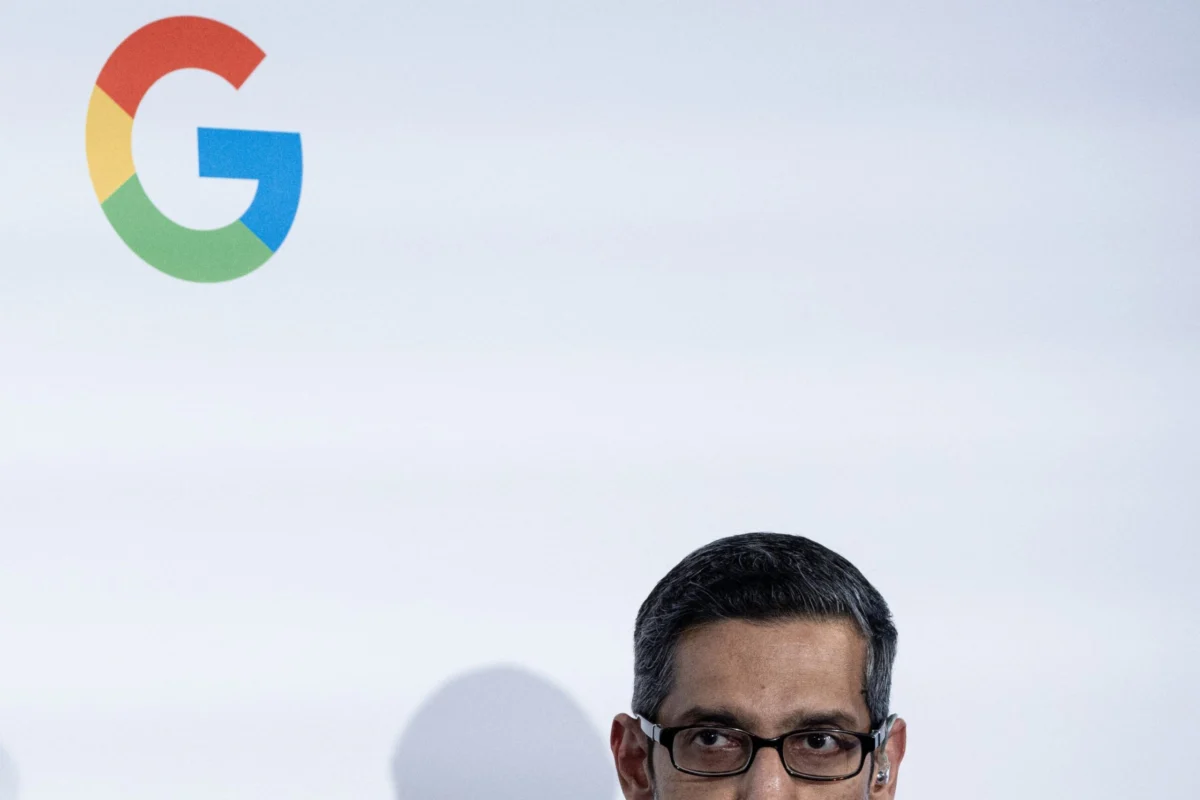
Alphabet, the parent company of Google, found itself in a paradoxical position following its latest earnings report, announcing a historic $112 billion in quarterly profit—the first time the tech giant has crossed the twelve-figure mark in a single quarter. This monumental figure, however, was largely dismissed by Wall Street, which instead focused on underlying financial metrics that painted a more concerning picture. The market reacted sharply, sending Alphabet’s shares plummeting by nearly 7% in a single day, marking its worst performance since the period characterized by global trade tariffs. The core reason for this investor apprehension was not a lack of revenue or a stagnant business, but rather a significant shift in its financial health: for the first time in its corporate history, Alphabet reported being cash flow negative.
The Nuance of Profitability: Paper Gains vs. Core Business
The headline-grabbing $112 billion profit figure, while impressive on paper, was heavily influenced by non-operational factors. A substantial 69% of this reported profit stemmed from unrealized paper gains on Alphabet’s strategic stakes in emerging technology companies, notably SpaceX and Anthropic. These gains, while reflective of increased valuations in its investment portfolio, do not represent actual cash generated from the company’s primary business operations. For sophisticated investors and analysts, such "paper profits" are often viewed with skepticism, as they are volatile, subject to market fluctuations, and do not directly contribute to the company’s operational cash reserves or core earnings power. This distinction is crucial for assessing a company’s sustainable performance and intrinsic value.
Stripping away these exceptional, non-cash gains, Alphabet’s operational performance still revealed considerable strength in certain areas. Its burgeoning cloud computing division, Google Cloud Platform (GCP), stood out as a beacon of growth, reporting an astonishing 82% surge in revenue. This segment, increasingly viewed as the future engine of the company, demonstrated robust expansion and competitive gains in the intensely contested cloud market. Such a performance would typically elicit a positive response from investors, signaling healthy growth in a critical strategic area. Yet, the broader financial context of the quarter overshadowed even this impressive achievement.
Google Cloud: A Strategic Imperative and Growth Engine
Google Cloud has been a pivotal focus for Alphabet in recent years, as the company seeks to diversify beyond its traditional advertising revenue stronghold and compete more aggressively with market leaders Amazon Web Services (AWS) and Microsoft Azure. The 82% growth rate in the last quarter underscores the substantial investments Alphabet has poured into this division, expanding its global data center footprint, enhancing its service offerings, and attracting enterprise clients. This growth is not merely about market share; it’s deeply intertwined with the ongoing artificial intelligence (AI) revolution. Cloud platforms are the foundational infrastructure for developing, training, and deploying AI models, making GCP’s robust expansion critical for Alphabet’s long-term relevance and competitive edge in the AI landscape. Analysts widely acknowledge that sustained growth in Google Cloud is paramount for Alphabet’s future valuation and strategic positioning.
The Cash Flow Conundrum: A Historic Reversal
The most significant factor triggering investor concern was Alphabet’s declaration of negative cash flow for the first time in its operational history. Cash flow, a critical indicator of a company’s financial health, measures the net amount of cash and cash equivalents entering and leaving a business. A negative cash flow means that more cash was spent than generated during the quarter, effectively draining the company’s liquid assets. For a company of Alphabet’s immense scale and financial maturity, crossing into negative cash flow territory represents a profound "negative milestone," as noted by Gil Luria, head of technology research at D.A. Davidson.
This shift signals an unprecedented level of capital expenditure (CapEx), largely driven by the ongoing arms race in artificial intelligence and the necessary infrastructure buildout. Companies like Alphabet are investing heavily in advanced data centers, specialized AI chips (like GPUs), and research and development to maintain and extend their leadership in AI and cloud computing. While such investments are strategically vital for future growth, a sudden and substantial negative cash flow can raise questions about financial discipline, the efficiency of capital deployment, and the potential for increased reliance on external financing if the trend persists. The unexpected nature of this event, particularly for a company long associated with robust cash generation, rattled investor confidence who perhaps believed such a scenario was improbable.
Mounting Commitments: The Price of AI Leadership
Adding to the anxiety, Alphabet’s management issued a stark warning regarding future capital expenditures. They indicated that 2027 CapEx would be "significantly" higher, suggesting that the current period of aggressive investment is not a temporary anomaly but a sustained strategic push. The company’s latest regulatory filing, released on Thursday, further elucidated the scale of these commitments, revealing an eye-popping figure of more than $800 billion in purchase commitments and other obligations.
This colossal sum includes various contractual agreements necessary to support its expanding infrastructure. A notable component of this total is approximately $51 billion earmarked for "backstopping other companies’ data centers." This practice, while strategic for securing critical compute capacity and fostering partnerships within the AI ecosystem, can also be complex. It involves committing financial resources or guarantees to ensure the operational stability and expansion of third-party data centers, often those utilized by Alphabet’s own cloud or AI partners. While crucial for securing future capacity and strategic alliances, such large, off-balance-sheet commitments raise questions about transparency and potential future liabilities, drawing comparisons, however distant, to past corporate accounting controversies where complex financial arrangements obscured true financial health. The underlying rationale is clear: the demand for AI compute power, data storage, and network infrastructure is exploding, and Alphabet is positioning itself to meet this demand, albeit at a staggering cost.
Wall Street’s Verdict: Analyst Downgrades and Market Contagion
The confluence of a largely paper-based profit, negative cash flow, and projections for escalating future expenditures immediately triggered a wave of downgrades and price target cuts across Wall Street. At least six prominent investment firms revised their outlooks for Alphabet. Piper Sandler reduced its price target to $395, UBS to $379, and D.A. Davidson issued one of the most bearish assessments, slashing its target to $350. The consensus among these analysts reflected concerns about the near-term financial strain despite the long-term strategic investments. Notably, only Barclays bucked the trend, raising its price target, suggesting a divergent view on the long-term value proposition of Alphabet’s AI bets.
The negative sentiment quickly spread beyond Alphabet, causing a ripple effect across the broader technology sector. Shares of other major tech players deeply involved in cloud computing and AI infrastructure, such as Microsoft, Amazon, and Nvidia, also experienced declines. The "chip complex," encompassing companies that supply the critical semiconductors for AI, felt the tremors as well. This contagion was further compounded by broader market jitters surrounding a new wave of powerful Chinese open-weight AI models, which introduced an element of geopolitical and competitive uncertainty into the global AI race. Even Tesla, though operating in a different sector, saw its stock drop by 15% after reporting a profit margin decline and high capital expenditure, underscoring a broader investor sensitivity to companies with significant investment needs and potential cash flow pressures in the current economic climate.
Expert Insight: Navigating the Market’s Reaction
Gil Luria of D.A. Davidson, despite cutting his firm’s price target, offered a nuanced perspective on the market’s reaction. He acknowledged that the company becoming cash flow negative was a "negative milestone," contributing to the immediate investor sell-off. "Maybe there was a sense that we’d never get to that point, and we just did," Luria told Fortune, highlighting the psychological impact of breaking a long-standing financial expectation for a tech giant.
However, Luria also argued that the market was likely overreacting. His primary concern regarding Alphabet’s stock had historically been its valuation, not its spending. Earlier in the year, when the stock was trading near $400, he believed it was being "valued as if it was the only winner" in the tech space. With the stock now trading closer to $320 (following the post-earnings dip), Luria asserted that "Google’s valuation is a lot more reasonable—because it’s the valuation of a company that’s a winner, as opposed to the winner." This distinction suggests that while Alphabet remains a formidable player, the market is beginning to recognize the intensified competition and shared opportunities within the AI and cloud sectors. Luria maintains a long-term bullish outlook for the overall AI infrastructure market, predicting that Microsoft, Amazon, and Alphabet will all "profit from supplying AI compute for years."
The Bullish Undercurrent: Google Cloud’s AI Promise
Despite the immediate market turmoil, Luria pointed to what he described as the "bullish case… hiding in plain sight": the "out of this world" growth of Google Cloud. He estimated that Alphabet could earn a substantial $15 billion to $20 billion this year directly from its compute buildout, underscoring the significant revenue potential derived from its aggressive infrastructure investments. This growth is a direct result of the surging demand for AI processing power and cloud services, which Google Cloud is uniquely positioned to deliver.
However, Luria conceded the difficulty of conveying such an optimistic long-term view on a day marked by negative financial news. "Nobody wants to hear that on a negative-milestone day where the CFO just told us it’s going to get worse before it gets better," he observed, capturing the challenge of reconciling strategic long-term vision with immediate financial performance metrics. The market often prioritizes short-term profitability and cash generation, especially from mature companies, making it difficult for investors to look past present financial headwinds, even when they are a byproduct of future-proofing investments.
Interconnected Investments: A Web of AI Partnerships
Luria also voiced concerns about the intricate web of investments and partnerships that bind the major AI giants to their own customers, describing it as a "tangle of investments." He highlighted key examples: Google’s relationship with Anthropic, Amazon’s with Anthropic (creating a complex love triangle), Microsoft’s deep ties with OpenAI, and Nvidia’s strategic backing of CoreWeave. This ecosystem, Luria suggested, has elements of "propping itself up," where large tech companies not only build their own AI infrastructure but also invest in or financially support the very startups and companies that become their significant clients.
The mention of "off-balance-sheet backstops" for data centers, like the $51 billion revealed in Alphabet’s filing, particularly gave Luria pause. He explicitly stated, "That term came into parlance around Enron, which is why I never like hearing it." This comparison, while not suggesting direct malfeasance, serves as a cautionary flag, highlighting the potential for complex financial arrangements to obscure the true nature of liabilities and interdependencies within a rapidly evolving, capital-intensive industry. Such arrangements, if not transparently managed, could create systemic risks or distort the perceived financial health of the participating entities.
The "Real Spend" Argument: Justifying AI’s Billions
Despite his reservations about the interconnectedness and financial structures, Luria drew a firm line at labeling the current AI investment boom as "circular" or a bubble. He emphasized the genuine, explosive growth in demand for AI products and services from end-users. "Consumers and businesses are now spending at a $120 billion annual rate on AI," he noted, adding a crucial historical perspective: "that number was zero two years ago." This dramatic increase in direct AI spending, Luria contended, represents "real spend," fundamentally different from speculative investments or purely internal capital flows. It indicates a robust and growing market for AI solutions, which in turn necessitates the massive infrastructure investments currently being undertaken by companies like Alphabet. The demand for AI compute, software, and services is not theoretical; it is manifesting in tangible economic activity, providing a strong underlying justification for the colossal capital outlays.
Looking Ahead: Alphabet’s Strategic Balancing Act
Alphabet’s latest earnings report presents a complex narrative of unprecedented profit juxtaposed with historic financial shifts and aggressive future commitments. The challenge for Alphabet’s leadership, and indeed for its investors, lies in balancing the immediate financial health of the company with its long-term strategic imperative to dominate the AI and cloud computing landscape. The decision to invest heavily in AI infrastructure, even at the cost of short-term cash flow, is a calculated gamble on the future.
The coming quarters will be critical in demonstrating whether these massive capital expenditures translate into sustainable, profitable growth for Google Cloud and its AI initiatives, ultimately justifying the current financial strain. The market will closely scrutinize Alphabet’s ability to manage its burgeoning commitments, maintain transparency in its financial reporting, and convert its strategic investments into tangible shareholder value. The tech world watches to see if Alphabet can navigate this period of intense investment, emerging as "a winner" in the AI race without succumbing to the financial pressures of the present.