
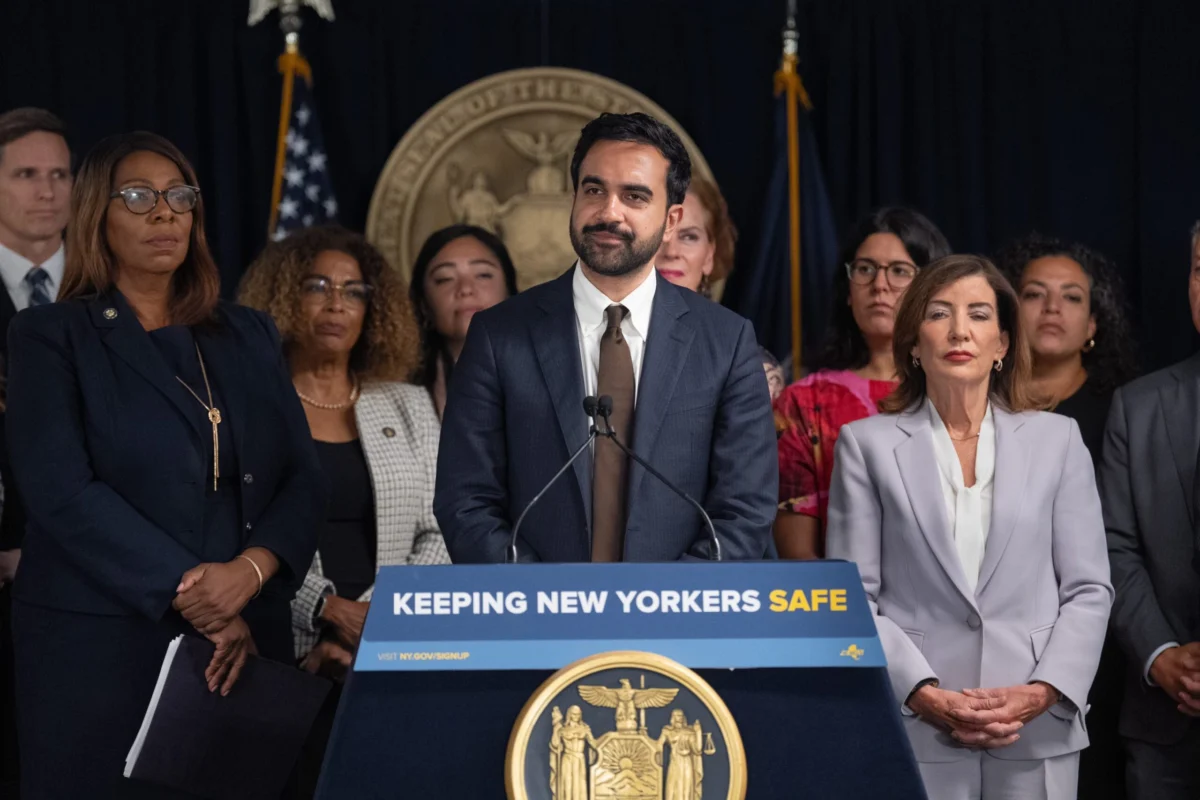
New York City’s controversial new pied-à-terre tax suffered a significant legal blow on Tuesday when a Staten Island judge threw out the administration’s rollout of the surcharge, ordering Mayor Zohran Mamdani’s administration to cancel all previously issued notices and restart the compliance process from scratch. The ruling represents a major roadblock for one of the mayor’s signature wealth-tax initiatives, which was designed to generate at least $500 million annually to fund public infrastructure, education, and municipal services.
State Supreme Court Justice Wayne Ozzi ruled that before the city can officially designate a property as a secondary residence subject to the tax, the Department of Finance must thoroughly review all available information and produce verifiable records backing up its administrative claims. While Justice Ozzi’s decision did not address the ultimate legality of the tax itself, it severely criticized the sloppy execution of its implementation, validating claims made by high-profile real estate figures and litigators who argued the city rushed the process to capture quick revenue at the expense of due process.
The Mamdani administration, which immediately announced plans to contest the ruling through an automatic stay, has defended the surcharge as an essential tool for economic equity. However, the legal setback lays bare the administrative hurdles, procedural missteps, and ferocious political pushback confronting progressive fiscal policies in the nation’s largest municipal real estate market.
The Anatomy of the Ruling and Legal Arguments
The lawsuit was brought forward by prominent attorney Randy Mastro, who previously served as first deputy mayor under former Mayor Eric Adams. Mastro filed the legal challenge on behalf of three aggrieved homeowners, focusing strictly on the execution and administration of the tax by the city’s Department of Finance rather than the validity of the legislative statute itself.
Mastro’s legal strategy centered on three core arguments that ultimately resonated with Justice Ozzi. First, state law explicitly mandated that the Department of Finance make an individual, verified determination for each specific property before issuing an official notice of taxation—a step the city admittedly bypassed in its initial sweep. Second, the administration improperly shifted the legal burden of proof onto homeowners, requiring them to proactively prove they did not owe the tax rather than undertaking the administrative legwork required by law. Third, the lawsuit challenged the legality of the city publishing an online public database containing the names and addresses of more than 900,000 property owners.
The flaws in the city’s rollout became glaringly obvious shortly after notices were dispatched. In July, approximately 17,000 property owners received notifications flagging them as potential targets for the surcharge. Bizarrely, the city later conceded that it had failed to cross-reference the targeted properties with basic income tax filings prior to sending out the warnings. Once those basic checks were finally conducted, thousands of the flagged properties were revealed to be the primary residences of lifelong New Yorkers—including Mastro himself, who noted with irony that he received a notification despite living in Manhattan for decades.
Mastro praised Tuesday’s decision, asserting in a public statement that the court “recognized we were right all along.” He emphasized that the city must now perform its due diligence, evaluating properties on a strict, individual owner-by-owner basis before demanding any surcharge payments.
Chronology and Key Milestones of the Pied-à-Terre Tax
To understand the current legal friction, it is necessary to examine the timeline of events that brought New York City’s real estate market to this flashpoint:
- Spring 2026: Mayor Zohran Mamdani champions the pied-à-terre tax as a cornerstone of his progressive legislative agenda, projecting half a billion dollars in annual revenue. The tax is targeted at luxury real estate holdings owned by non-residents and affluent property investors.
- July 1, 2026: The surcharge officially takes effect. It applies to one-, two-, and three-family homes valued at more than $5 million, as well as condominiums and cooperatives valued over $1 million, provided they do not serve as the owner’s primary residence.
- Mid-July 2026: The Department of Finance issues approximately 17,000 warning notices to property owners. Public outcry surges as prominent residents, including former officials and wealthy investors, discover they have been erroneously flagged due to a lack of preliminary data vetting.
- August 2026: Randy Mastro files a formal lawsuit against the Mamdani administration, challenging the administrative implementation of the tax and the publication of the controversial owner database. Public sparring ensues between the mayor and his frequent legal adversary.
- September and October 2026: Additional legal challenges emerge. Former Commerce Secretary Wilbur Ross, his wife Hilary Geary Ross, and casino magnate Steve Wynn file a separate federal or state lawsuit targeting the constitutionality of the tax itself, arguing it unfairly discriminates against non-residents.
- Late October 2026: State Supreme Court Justice Wayne Ozzi rules in favor of Mastro’s plaintiffs, throwing out the initial rollout and ordering the cancellation of notices while demanding the city restart the determination process. The administration signals its intent to file an immediate appeal and invoke a judicial stay.
Official Responses and Political Repercussions
The Staten Island ruling has ignited a fiery debate across New York political circles, drawing sharp lines between progressive reformers aiming to address wealth inequality and conservative property owners fighting what they view as government overreach.
Matt Rauschenbach, a spokesperson for Mayor Mamdani, issued a strongly worded statement defending the administration’s stance immediately following the verdict.
"The pied-à-terre surcharge is about a basic principle of fairness: If you can afford a luxury second home in New York City, you can afford to pay your fair share for the schools, streets, and parks that make this city work," Rauschenbach said to Fortune. "Today’s decision is wrong, and we will invoke a stay of the injunction. With a stay, we will continue implementing the surcharge fairly, efficiently, and in full compliance with the law, as we have since day one."
Rauschenbach framed the legal battle as an inevitable conflict between working-class priorities and the ultra-wealthy elite. "New York is a city for the many—not a tax haven for the wealthy few. Our administration is fighting every day to deliver for working New Yorkers. The ultrawealthy are fighting in court to avoid paying their fair share. They have filed lawsuit after lawsuit to protect their privilege, and we will not back down."
State-level leadership echoed similar sentiments regarding the underlying principle of taxing luxury real estate. Jen Goodman, director of rapid response for Governor Kathy Hochul, noted in a statement that while the administrative mechanics of the tax remain a matter for the courts, the governor continues to believe that owners of multimillion-dollar secondary homes possess the financial capacity to contribute more to the public good.
However, the political opposition views the ruling as a necessary check on executive overreach. Prominent billionaires and high-net-worth individuals who have launched parallel legal actions feel vindicated by the court’s swift intervention. Wilbur Ross, speaking to reporters moments after the decision was handed down, expressed little surprise at Justice Ozzi’s ruling.
"I had told you I was very confident that we were on the right side of the law," Ross stated. "I’m grateful that he did it so quickly, because a lot of people have been on pins and needles about this whole thing. Now undoubtedly there will be an appeal filed, so it’s not necessarily 100% over, but we’re certainly off to a good start."
Unlike Mastro’s lawsuit—which targets the execution of the tax—the legal challenge brought by Ross, Hilary Geary Ross, and Steve Wynn directly targets the constitutionality of the statute itself. Their legal team argues that imposing a targeted financial burden solely on non-resident property owners violates constitutional protections and establishes a dangerous precedent for interstate commerce and residency rights.
Economic and Fiscal Implications for New York City
The stakes for the municipal government are exceptionally high. The Mamdani administration has built its budgetary projections around the anticipated $500 million annual yield from the pied-à-terre surcharge. In an era where New York City faces persistent budgetary pressures, shifting costs for public infrastructure, mass transit upkeep, and educational enhancements, the loss of this revenue stream—or even a prolonged delay in collection—creates a noticeable fiscal gap.
Furthermore, real estate experts warn that the ongoing legal uncertainty surrounding luxury taxation could have a chilling effect on the city’s high-end property market. Prospective buyers of luxury condos, co-ops, and brownstones may hesitate to close transactions while the parameters of secondary-residence taxation remain subject to shifting judicial interpretations.
Conversely, supporters of the tax argue that luxury real estate speculation has long distorted New York’s housing market, driving up costs for everyday residents and leaving high-end apartments vacant for significant portions of the year. From this perspective, the tax serves a dual purpose: generating vital revenue while discouraging the commodification of urban housing stock by absentee investors.
Next Legal Steps and Outlook
As the legal saga continues to unfold, all eyes turn to the appellate courts. Legal analysts expect the Mamdani administration to file its formal appeal and request a stay of Justice Ozzi’s injunction. If granted, the stay would temporarily halt the court-ordered cancellation of notices, allowing the Department of Finance to continue processing payments while the higher courts review the merits of the Staten Island decision.
Simultaneously, the separate constitutional challenge spearheaded by Wilbur Ross and his co-plaintiffs will proceed through the judicial system, threatening to strike down the tax legislatively even if the city manages to fix its administrative and procedural blunders.
For Mayor Mamdani, the battle over the pied-à-terre tax has become the definitive test of his administration’s ability to enact transformative economic policies in the face of deep-pocketed opposition. Whether the city can successfully overhaul its compliance mechanism and salvage its projected revenue remains one of the most closely watched chapters in modern New York municipal governance.










Leave a Reply