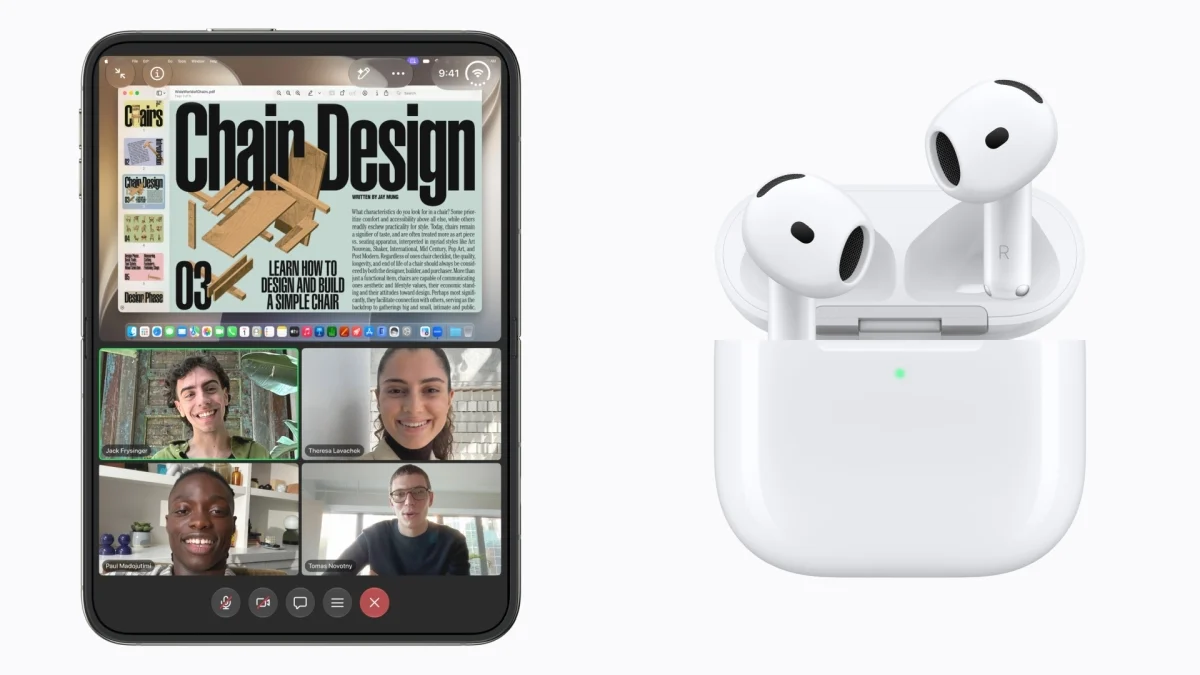
Apple’s “Surprise and Shine” event, held on Wednesday, September 9, 2026, served as a pivotal moment for the Cupertino-based technology giant, marking a significant departure from its traditional iterative release cycles. While the event showcased the expected performance upgrades to the iPhone 18 Pro series and the latest iterations of the Apple Watch, the primary focus remained on the company’s long-awaited foray into the foldable smartphone market. The introduction of the iPhone Duo signals a strategic shift in Apple’s hardware philosophy, aiming to bridge the gap between pocketable communication devices and productivity-focused tablets.
The iPhone Duo: Bridging the Gap Between Smartphone and Tablet
After seven years of market dominance by competitors like Samsung and Google in the foldable segment, Apple has officially entered the fray with the iPhone Duo. The device features a book-style folding mechanism, housing an external “passport-sized” cover display that allows for standard smartphone utility. When unfolded, the device reveals a expansive 7.6-inch Super Retina XDR display, effectively mirroring the utility of an iPad mini.
Engineered with durability as a primary concern, the iPhone Duo carries an IP68 certification, providing protection against dust ingress and water submersion up to 1.5 meters for 30 minutes. This robustness is intended to address common consumer concerns regarding the fragility of foldable hinge mechanisms. The device is powered by the latest proprietary silicon, optimized specifically to handle the increased graphical demands of a dual-screen interface.
The success of the iPhone Duo will be largely contingent on the software ecosystem. Apple has already confirmed deep integration with productivity and media applications, including Zoom, Slack, and Netflix, ensuring that the interface scales dynamically across the 7.6-inch canvas. The entry price for this premium hardware is set at $1,999 for the 256 GB base model, positioning it firmly in the ultra-luxury tier of consumer electronics. Pre-orders are scheduled to commence on October 16, with retail availability beginning October 23.
The iPhone 18 Pro Series: Refinement and AI Integration
Complementing the experimental nature of the iPhone Duo, Apple updated its flagship lineup with the iPhone 18 Pro and 18 Pro Max. These devices emphasize core performance metrics, specifically focusing on the integration of the next-generation, AI-enhanced Siri. The hardware features an adaptive camera lens system capable of adjusting focal lengths with unprecedented speed, a move designed to appeal to professional photographers and videographers who rely on mobile workflows.
Battery longevity remains a central selling point for the 18 Pro series. The standard Pro model boasts up to 30 hours of battery life, while the Pro Max extends this to 45 hours, representing a significant jump in power efficiency over previous generations. Pricing remains consistent with recent historical trends, with the iPhone 18 Pro starting at $1,199 and the Pro Max at $1,299. The accelerated release timeline sees these devices hitting the market on September 18, following a September 12 pre-order window.
AirPods 5: Redefining Open-Ear Audio
In the audio category, Apple introduced the AirPods 5, which prioritize advanced noise cancellation technology in a more accessible form factor. Apple claims these earbuds offer 50% better noise reduction compared to the previous AirPods 4, effectively narrowing the performance gap between entry-level audio products and the more expensive Pro line.
The product strategy for the AirPods 5 is bifurcated: a base model priced at $129 and a premium $149 variant. The latter introduces wireless charging capabilities and on-stem volume controls—features previously reserved for the high-end AirPods Pro 3. By aggressively pricing these units, Apple is clearly attempting to defend its market share against an influx of budget-friendly third-party wireless earbuds that have gained traction in recent years. Consumers can expect these units to arrive in retail channels on September 18.
Wearable Technology: Series 12 and Ultra 4
The Apple Watch Series 12 and the Apple Watch Ultra 4 received significant internal hardware updates, primarily aimed at facilitating more complex health data processing. The inclusion of upgraded optical and electrical heart sensors allows for more granular data collection, which is then synthesized by the new AI-driven Siri to provide users with proactive health insights.
These wearables continue to be a cornerstone of Apple’s ecosystem, with the Series 12 starting at $399 and the robust Ultra 4 at $799. Both models are scheduled for release on September 18. The focus on health monitoring suggests that Apple intends to keep its wearables positioned as essential medical-grade tools rather than mere fashion accessories.
Software Evolution: The Arrival of iOS 27
Accompanying the hardware announcements, the rollout of iOS 27 on September 14 serves as the operating system backbone for the new product lineup. The update introduces a “Liquid Glass” UI element, intended to make navigation on the iPhone Duo’s foldable screen more intuitive. Additionally, the inclusion of extra-large widgets and a more contextually aware version of Siri represents the most significant software overhaul in years.
Market Analysis and Industry Implications
The introduction of the iPhone Duo is a calculated move by Apple to capture a segment of the high-end market that has been held by Android-based foldables since 2019. Analysts suggest that by waiting seven years to enter this category, Apple has avoided the early “teething problems” associated with flexible display technology, such as screen creases and hinge failures.
However, the $1,999 price tag serves as a barrier to entry that may limit initial adoption to enterprise users and technology enthusiasts. Whether the iPhone Duo can achieve the same level of ubiquity as the standard iPhone will depend on how effectively Apple can market the utility of the larger screen to the general public.
The broader strategy behind the September 9 event appears to be an alignment of hardware and software around the concept of “AI-first” interaction. By upgrading the entire stack—from the Watch and AirPods to the iPhone 18 Pro and the iPhone Duo—Apple is creating a unified environment where Siri functions not just as a voice assistant, but as a predictive engine capable of managing complex workflows across multiple devices.
A Chronological Summary of Key Dates
- September 9, 2026: Official announcement of iPhone Duo, iPhone 18 Pro series, AirPods 5, and new Apple Watch models.
- September 12, 2026: Pre-orders begin for iPhone 18 Pro and Pro Max.
- September 14, 2026: Public launch of iOS 27.
- September 18, 2026: General retail availability for iPhone 18 Pro, AirPods 5, Apple Watch Series 12, and Apple Watch Ultra 4.
- October 16, 2026: Pre-orders open for the iPhone Duo.
- October 23, 2026: General retail availability for the iPhone Duo.
Conclusion
The “Surprise and Shine” event confirms that Apple is entering a new era of product diversification. While the company continues to rely on the reliable, iterative success of its flagship Pro line, the iPhone Duo represents a bold exploration into new form factors. Combined with the refined audio capabilities of the AirPods 5 and the AI-focused updates to the Apple Watch and iOS 27, Apple’s 2026 product roadmap is clearly focused on maintaining its competitive edge in a market that is increasingly demanding more sophisticated, intelligent, and versatile hardware solutions. The coming months will be critical in determining whether the market is ready to embrace the foldable paradigm shift at the price point Apple has established.