
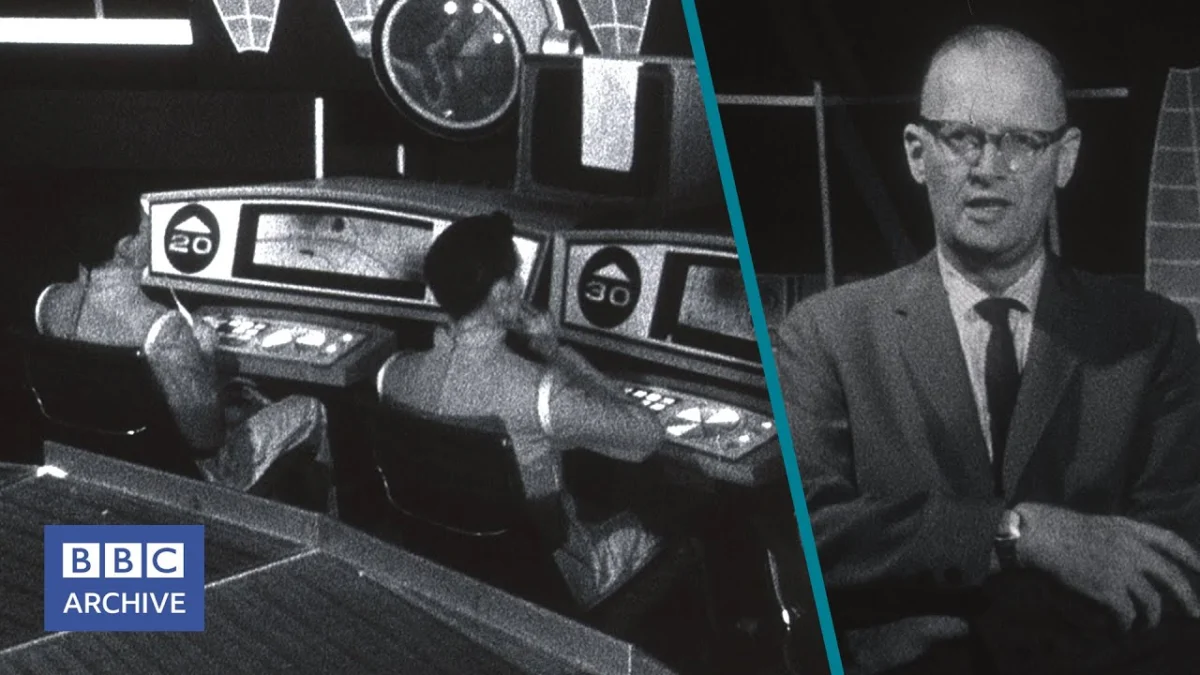
In the mid-20th century, as the world stood on the precipice of the Space Age, few individuals possessed the foresight of Arthur C. Clarke. A central figure in the "Big Three" of science fiction alongside Isaac Asimov and Robert Heinlein, Clarke was more than a novelist; he was a trained scientist and a relentless futurist whose ideas often blurred the line between speculation and engineering. A recently resurfaced 1964 interview from the BBC Archive provides a compelling window into Clarke’s mind, revealing a series of predictions that have largely materialized in the 21st century, while others remain tantalizingly on the horizon or serve as cautionary tales of ethical overreach.
The 1964 broadcast featured Clarke speaking with a calm, professorial certainty that defined his public persona. At the time, Clarke was already a household name, having gained acclaim for his 1945 technical paper "Extra-Terrestrial Relays," which laid the theoretical groundwork for geostationary communication satellites. By the time of the BBC interview, he had published "Profiles of the Future" (1962), a collection of essays that challenged the limits of human imagination. His appearance on the program was not merely a literary exercise but a report from the frontiers of possibility, delivered during an era when the Cold War fueled a massive technological arms race between the United States and the Soviet Union.
The Communication Revolution and the End of Distance
One of the most striking elements of the 1964 interview is Clarke’s accurate description of what we now recognize as the smartphone and the internet. He envisioned a world where individuals could be contacted anywhere on Earth, regardless of their physical location. "We could be in touch with each other anywhere we like," Clarke remarked, describing a future where a person’s "location" would no longer be a barrier to social or professional interaction.
In 1964, the concept of a personal, portable communication device was pure fantasy. The telephone was a stationary object tethered to a wall, and long-distance calls were expensive luxuries. Clarke, however, saw the trajectory of satellite technology and micro-miniaturization. Today, data from the International Telecommunication Union (ITU) suggests that over 95% of the global population is within reach of a mobile broadband signal, with billions of people carrying devices that far exceed the computing power Clarke could have imagined in his "black box" scenarios.
Furthermore, Clarke predicted that this connectivity would lead to the "death of the city." He argued that if a person could conduct their business from Tahiti or Bali just as easily as from London, the economic necessity of the urban center would evaporate. This prediction has seen a dramatic resurgence in relevance following the COVID-19 pandemic. The global shift toward remote work has forced a re-evaluation of commercial real estate and urban planning, mirroring Clarke’s suggestion that the commute would one day become an archaic relic of the industrial age. However, as modern analysts point out, the "death of the city" has been more complex than Clarke anticipated; while remote work is viable, the social and cultural density of cities continues to drive economic value, albeit with significant shifts in how urban spaces are utilized.
Artificial Intelligence and the Stepping Stones of Evolution
Clarke’s views on artificial intelligence (AI) in 1964 were both profound and, to some, unsettling. While the term "Artificial Intelligence" had been coined in 1956 at the Dartmouth Workshop, the field was in its infancy when Clarke spoke to the BBC. He posited that humans might be a "stepping stone" toward a higher form of machine intelligence.
"I suspect that we have reached the end of biological evolution," Clarke stated, suggesting that the next stage of development would be silicon-based. He viewed this transition not as a tragedy, but as a natural progression of the universe. In the contemporary context, this aligns with the theories of "technological singularity" popularized by thinkers like Ray Kurzweil. As Large Language Models (LLMs) and neural networks begin to outperform humans in specific cognitive tasks, Clarke’s 60-year-old observation that we should be "honored" to facilitate the rise of machine intelligence remains a central, if controversial, theme in the ethics of AI development.
Bioengineering and the Ethics of "Monkey Servants"
Perhaps the most eccentric of Clarke’s 1964 predictions involved the use of bioengineering to increase the utility of animals. He suggested that humans might one day genetically modify or "uplift" primates to serve as manual laborers or domestic servants. He even joked that such creatures might eventually form a labor union, returning humanity to the same social struggles it sought to escape.
While this specific vision of "monkey butlers" has not come to fruition, the underlying concept of bioengineering has advanced significantly. The development of CRISPR-Cas9 gene-editing technology has given humanity the ability to alter the genetic code of living organisms with unprecedented precision. However, rather than creating a class of animal servants, modern science has focused on medical breakthroughs, such as organ xenotransplantation and the eradication of genetic diseases. Clarke’s prediction serves as a reminder of the shifting ethical landscapes; what seemed like a whimsical possibility in 1964 is now viewed through the lens of animal rights and the moral implications of creating sentient life for utilitarian purposes.
The Replicator and the Post-Scarcity Economy
Clarke also discussed the "Replicator," a machine capable of creating an exact duplicate of any physical object. He warned that such a device would lead to "gluttonous barbarism" as the traditional economic systems based on scarcity would collapse. This concept was later popularized in the "Star Trek" franchise as the "transporter" and "replicator" technology.
In the modern era, the rise of 3D printing and additive manufacturing represents the first stage of Clarke’s vision. While we cannot yet rearrange atoms to create a gourmet meal or a complex electronic device from thin air, 3D printing has revolutionized aerospace, medicine, and manufacturing. According to market research, the global 3D printing market is expected to grow at a compound annual growth rate (CAGR) of over 20% through the 2030s. Clarke’s concern regarding the social impact of unlimited production remains a topic of debate among proponents of "Universal Basic Income" (UBI) and "Post-Scarcity Economics," who argue that technology may eventually decouple survival from labor.
Chronology of Clarke’s Visionary Milestones
To understand the weight of Clarke’s 1964 predictions, one must look at the timeline of his contributions to futurism:
- 1945: Clarke publishes "Extra-Terrestrial Relays," proposing the use of geostationary satellites for global radio and television coverage.
- 1951: He publishes "The Exploration of Space," which helps popularize the idea of interplanetary travel.
- 1962: "Profiles of the Future" is published, introducing "Clarke’s Three Laws," including the famous third law: "Any sufficiently advanced technology is indistinguishable from magic."
- 1964: The BBC "Horizon" interview takes place, where he outlines the future of AI, remote work, and global telecommunications.
- 1968: Clarke co-writes the screenplay for "2001: A Space Odyssey" with Stanley Kubrick, introducing the world to HAL 9000, a sentient AI that embodies both the promise and peril of his earlier predictions.
- 1979: In "The Fountains of Paradise," he popularizes the concept of the "Space Elevator," a theoretical structure that would revolutionize access to orbit.
Implications and Reflections on Clarke’s Legacy
While Clarke’s hit rate was remarkably high, he was the first to admit the fallibility of futurism. He often noted that experts tend to be too pessimistic about the long-term possibilities of technology while being too optimistic about the short-term. His 1964 predictions regarding memory erasure and instant language learning—concepts explored in films like "Eternal Sunshine of the Spotless Mind" or "The Matrix"—remain firmly in the realm of science fiction. Our understanding of the human brain’s plasticity and the nature of consciousness has proven to be a far more complex frontier than the physics of satellite communication.
However, the enduring power of Clarke’s 1964 interview lies not in its perfect accuracy, but in its invitation to think critically about the trajectory of human progress. Clarke did not just predict gadgets; he predicted shifts in human behavior and social structures. He understood that technology is not an end in itself, but a mirror reflecting our desires, our fears, and our potential.
As we navigate the challenges of the 2020s—from the integration of AI in the workforce to the ethical dilemmas of genetic engineering—Clarke’s closing remarks in 1964 serve as a vital philosophy for the modern age: "That is why the future is so endlessly fascinating. Try as we can, we’ll never outguess it." His legacy remains a testament to the importance of informed imagination, reminding us that while we cannot perfectly predict the world of tomorrow, we are the ones currently building the "stepping stones" that will lead us there.










Leave a Reply