The paradox of the modern American labor market is becoming increasingly stark: while recent college graduates express deep-seated anxiety over the rise of artificial intelligence and tech giants dominate headlines with waves of mass layoffs, recruiters on the front lines are struggling to fill critical roles. Matt Walsh, CEO of the Phoenix-based recruiting firm Blue Signal, highlights a reality that contradicts the prevailing narrative of job scarcity. In specialized sectors such as semiconductor production, Walsh describes the labor market not just as tight, but as non-existent. He notes that the unemployment rate in these specific niches is effectively "negative 20 percent," a hyperbolic illustration of a desperate talent vacuum where there simply are not enough qualified human beings to meet the demand of a burgeoning industry.
This disconnect between public perception and economic reality is growing. While Meta recently cited AI as a factor in laying off over 8,000 workers, and commencement ceremonies are increasingly marked by student protests against AI integration, economists suggest these events are distractions from a much larger, more systemic threat. The United States is not heading toward a future of mass unemployment caused by automation; rather, it is entering what is projected to be the most significant labor shortage in its national history. This "workforce cliff" threatens to stifle economic growth, compromise national security, and degrade the basic functioning of American society for decades to come.
The Demographic Time Bomb: A Chronology of Decline
The roots of the current crisis are not technological, but biological and generational. The United States is currently navigating a "perfect storm" of demographic shifts that have been decades in the making. The primary driver is a protracted decline in the national birthrate, which has fallen steadily since the Great Recession of 2008, coinciding with the massive, predictable exit of the Baby Boomer generation from the workforce.
According to data from the Georgetown University Center on Education and the Workforce, the window between 2024 and 2032 represents a critical inflection point. During this eight-year span, the final wave of Baby Boomers will reach Social Security eligibility. The center projects that more than 18 million college-educated workers will retire during this period. Conversely, the pipeline of new talent is insufficient to replace them, with fewer than 14 million new graduates expected to enter the labor force. This creates a net deficit of over 4 million workers in the high-skilled sector alone.
When considering the broader economy, including roles that do not require a four-year degree, the numbers become even more alarming. The labor market data company Lightcast estimates the total national deficit could reach as high as 6 million workers. This is not a distant dystopian forecast; the U.S. Chamber of Commerce reports that the shortage is already manifesting across nearly every industry. In many sectors, even if every currently unemployed person in the country were hired tomorrow, millions of positions would remain vacant.
The Educational Mismatch: Producing Widgets for a Non-Existent Market
Compounding the demographic decline is a significant structural mismatch in the American education system. For decades, the cultural and academic focus has been on steering students toward business, finance, and general liberal arts degrees. Ron Hetrick, Lightcast’s principal economist, likens the current higher education system to a factory that continues to churn out "widgets" that society no longer needs in such high volumes.

"We have pumped so many young people into business and finance when what’s really in demand are graduates in other fields," Hetrick noted. This oversupply in certain white-collar sectors—the very sectors most vulnerable to AI disruption—is occurring while the "essential" sectors of the economy are starving for talent. The fields of healthcare, engineering, and the skilled trades are facing catastrophic vacancies that AI is fundamentally incapable of filling.
The statistics bear out this imbalance. While business remains the most popular undergraduate major, the number of students entering healthcare-related fields is failing to keep pace with the needs of an aging population. This creates a dual crisis: a surplus of workers in fields where AI can automate entry-level tasks, and a vacuum in fields that require physical presence, manual dexterity, or high-level human empathy.
Sector-Specific Vulnerabilities: From Healthcare to National Security
The projected shortages across specific industries provide a roadmap of the challenges facing American infrastructure. The healthcare sector is perhaps the most vulnerable. By 2038, the U.S. Health Resources and Services Administration projects staggering gaps in medical staffing. The nation is expected to be short nearly 246,000 licensed practical nurses and over 100,000 registered nurses. The crisis extends to specialized medicine, with projected shortages of 70,000 primary care physicians and tens of thousands of mental health counselors, pharmacists, and physical therapists.
Beyond healthcare, the semiconductor industry—the backbone of modern technology and national defense—is facing a critical talent bottleneck. As the U.S. seeks to "onshore" chip manufacturing to reduce reliance on foreign entities, it is finding that factories are being built faster than they can be staffed. The Semiconductor Industry Association estimates that by 2030, the industry will face a gap of 67,000 workers, including technicians and engineers with advanced degrees.
This talent deficit has moved beyond an economic concern to a matter of national security. JPMorganChase recently warned that a "pervasive talent deficit" is constraining the nation’s capacity to build, compete, and protect its interests. From manufacturing lines in the defense industry to the modernization of the national energy grid, the lack of electricians, line workers, and specialized technicians is causing tangible delays in projects vital to the country’s long-term stability.
The Decline of the Traditional Workforce Pipeline
Several secondary factors have exacerbated the demographic shortage. One is the marked decline in college enrollment, which has dropped by nearly two million students since its peak in 2010. High school graduates are increasingly questioning the value proposition of expensive four-year degrees, particularly as they witness the struggle of recent grads in the "over-saturated" business and tech sectors.
Immigration, historically a "safety valve" for the American labor market, has also seen a significant downturn. The Census Bureau reported that immigration rates last year were less than half of what they were the previous year. This is particularly impactful in healthcare and elder care; historically, 41 percent of home health aides and 20 percent of nursing assistants in the U.S. are foreign-born. Brad Hershbein, a senior economist at the W.E. Upjohn Institute for Employment Research, suggests that by tightening immigration policies, the U.S. is effectively "rolling up the welcome mat" at the exact moment its economy needs an influx of talent.

Furthermore, a growing number of working-age Americans have exited the labor force entirely. Factors ranging from the prohibitive cost of childcare and early retirements triggered by the pandemic to more systemic issues like substance addiction and incarceration have left millions on the sidelines.
State-Level Responses and Economic Adaptation
State governments, which are often the first to feel the impact of local labor shortages, are taking aggressive measures to secure their economic futures. A "war for talent" is emerging between states, with many offering innovative incentives to attract and retain workers.
In Minnesota, lawmakers are considering a bill to offer in-state tuition at public universities for the children of parents who relocate to the state for work. Pennsylvania, facing a projected annual shortage of 218,000 credentialed workers, is exploring ways to increase post-secondary attainment by 4 percent. Meanwhile, states like Missouri and Colorado have merged their higher education and workforce development agencies to ensure that curricula are more closely aligned with the actual needs of employers.
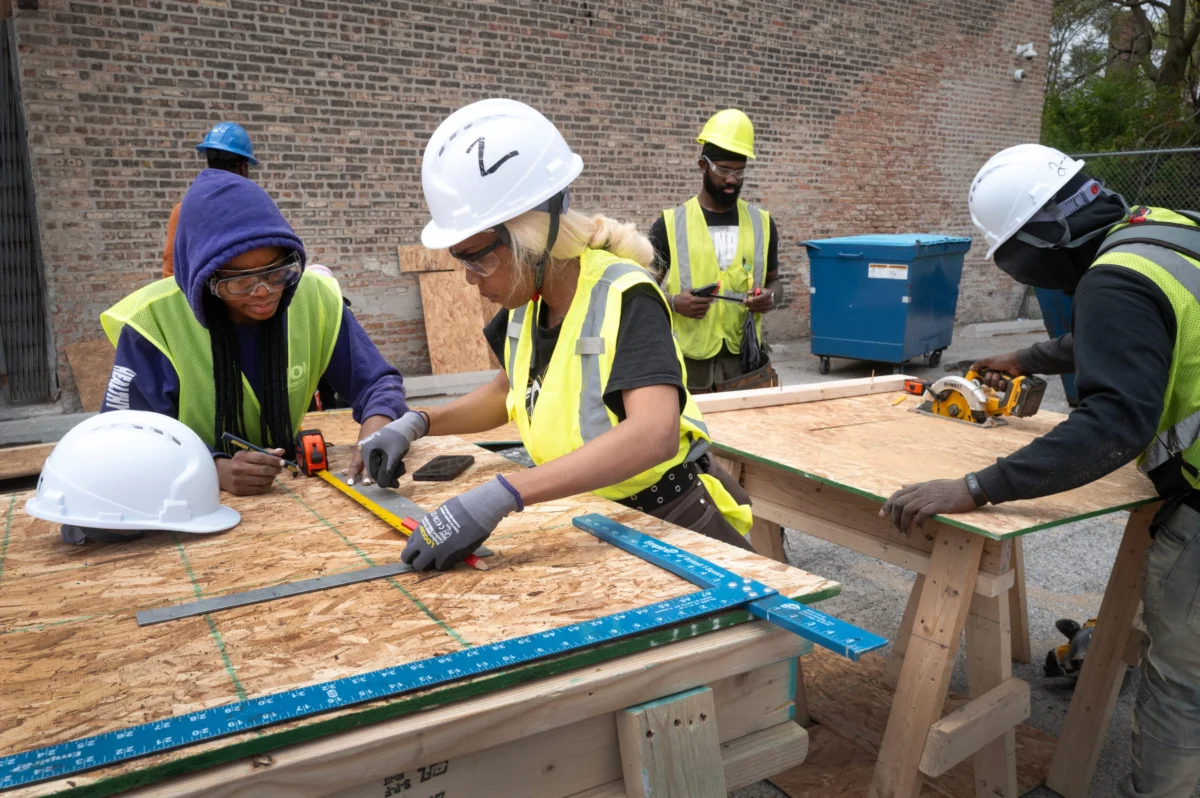
In the private sector, the "mother of invention" is necessity. Some industries are responding to the shortage by significantly increasing wages. Branka Minic, CEO of the Building Talent Foundation, points out that skilled trades in construction now offer starting pay as high as $50 an hour—rates that many college graduates struggle to achieve in their first years of employment. These roles also offer a level of "AI-proofing" that white-collar jobs lack. As a popular meme in the construction industry puts it: "Finish this, ChatGPT."
A New Strategy for a Changing Labor Market
The shift from a labor-surplus economy to a labor-shortage economy requires a fundamental reimagining of the American career path. Experts like Cheryl Oldham of the Bipartisan Policy Center argue for a more "nimble and responsive" system that provides job seekers with real-time data on where demand is highest.
Some young workers are already pivoting. Seth Russell, a 22-year-old fabricator in California, represents a growing cohort that has bypassed the traditional four-year college route in favor of vocational training. By learning welding, Russell entered the workforce debt-free and found immediate, high-paying employment. "There’s so many jobs out there," he says, echoing a sentiment that is becoming common in the trades but remains elusive in the traditional corporate world.
As the "workforce cliff" approaches, the challenge for the United States will be to bridge the gap between the jobs people think are disappearing and the jobs that the country desperately needs to fill. The narrative of AI-induced joblessness may be the most discussed topic in boardrooms and classrooms, but the empty desks in hospitals, schools, and factories tell the real story of the American economy’s future. Success in the coming decade will likely depend not on how many jobs can be automated, but on how many humans can be found, trained, and incentivized to do the work that machines cannot.