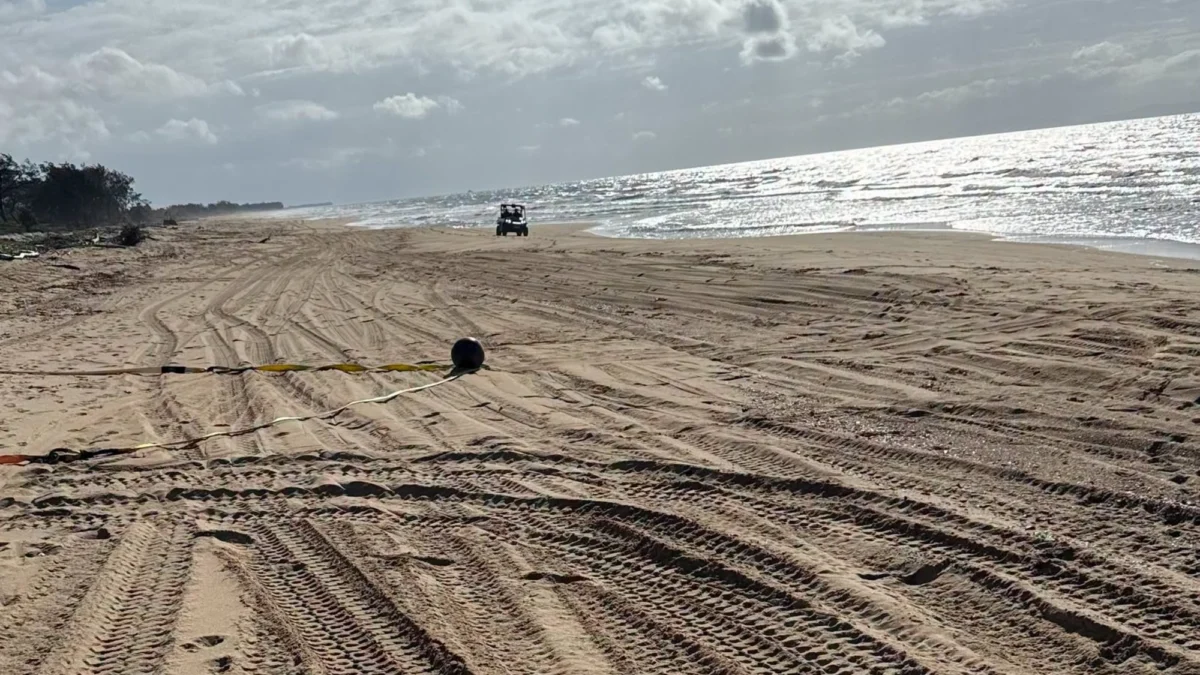
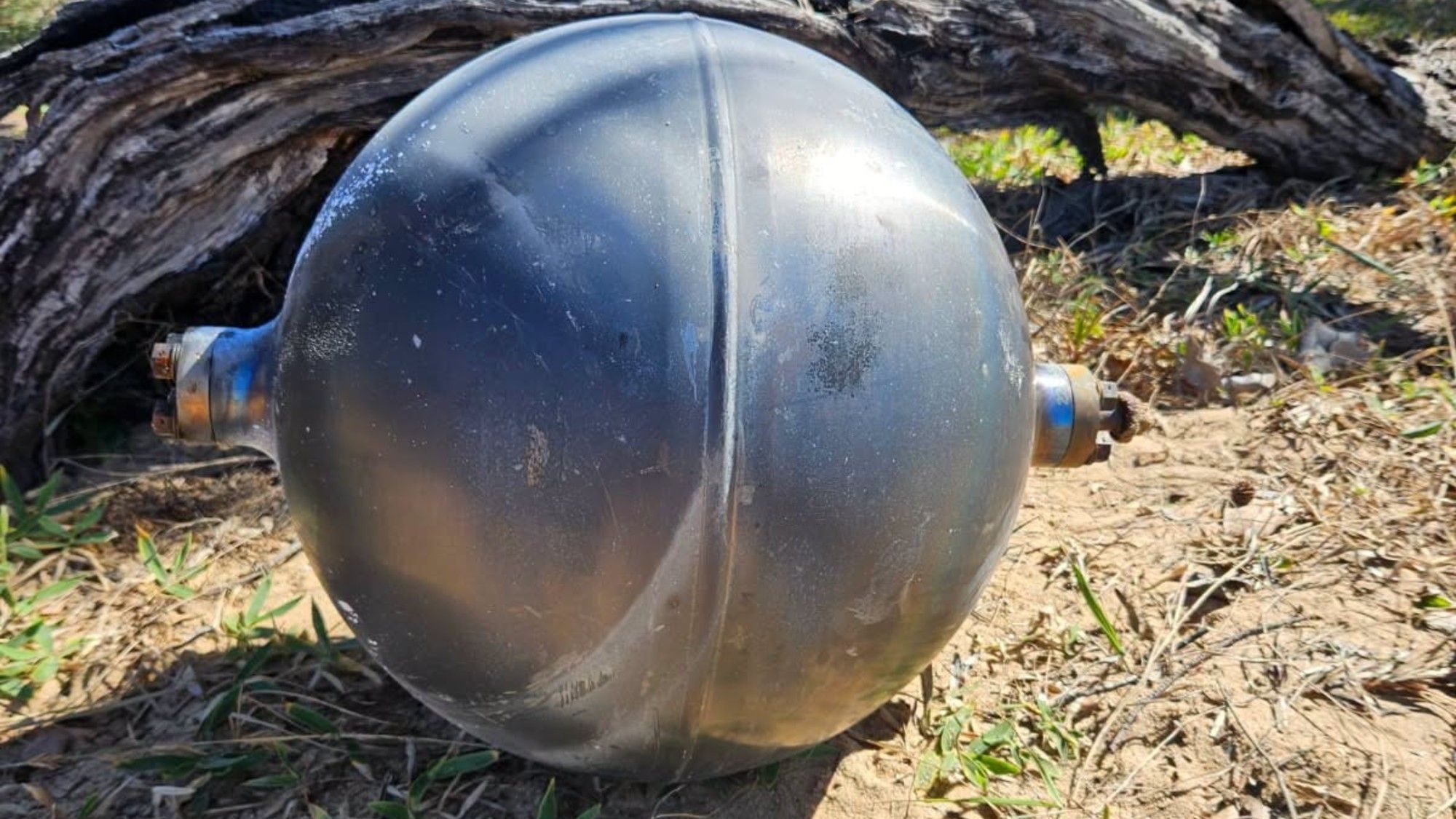
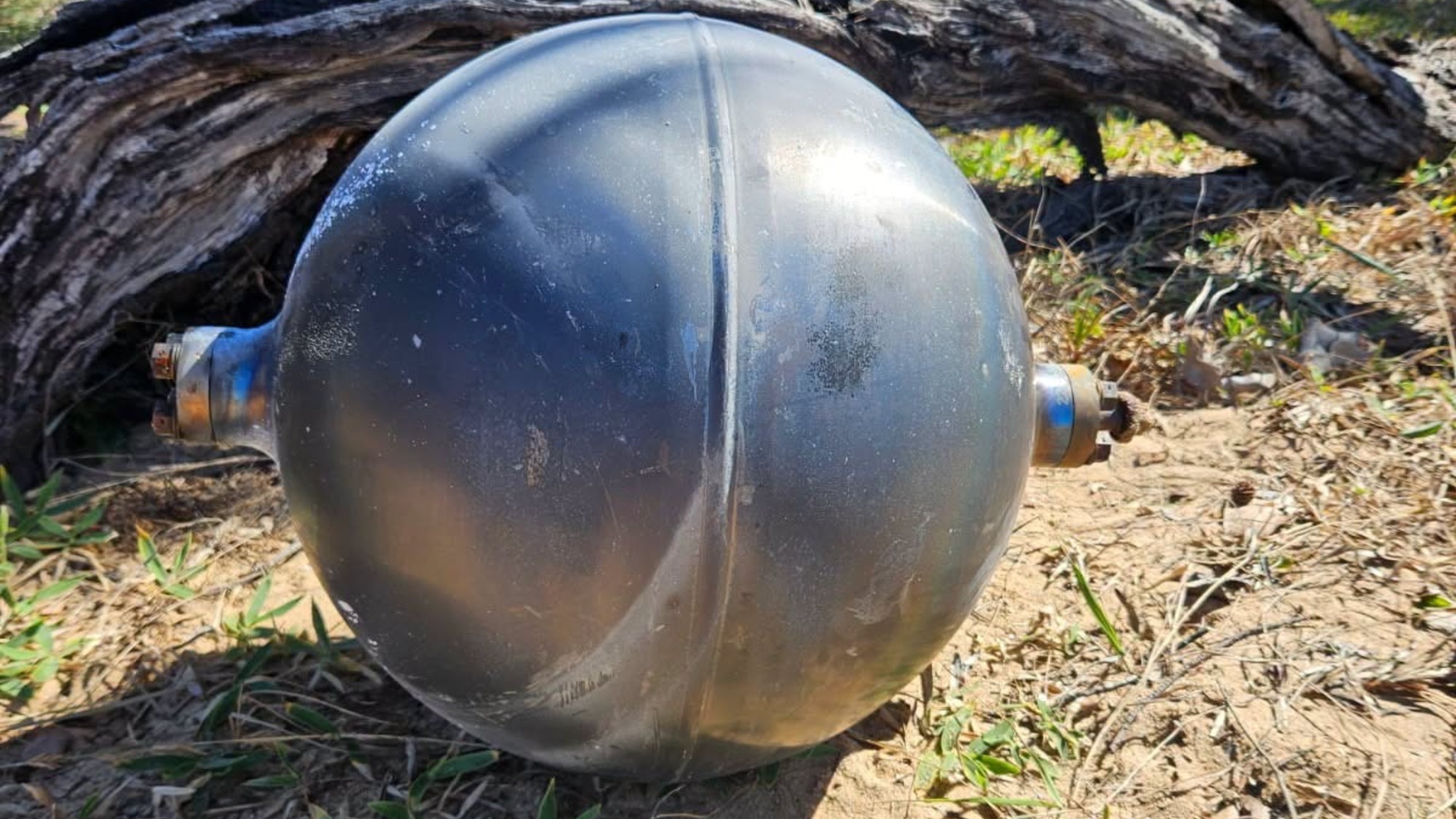
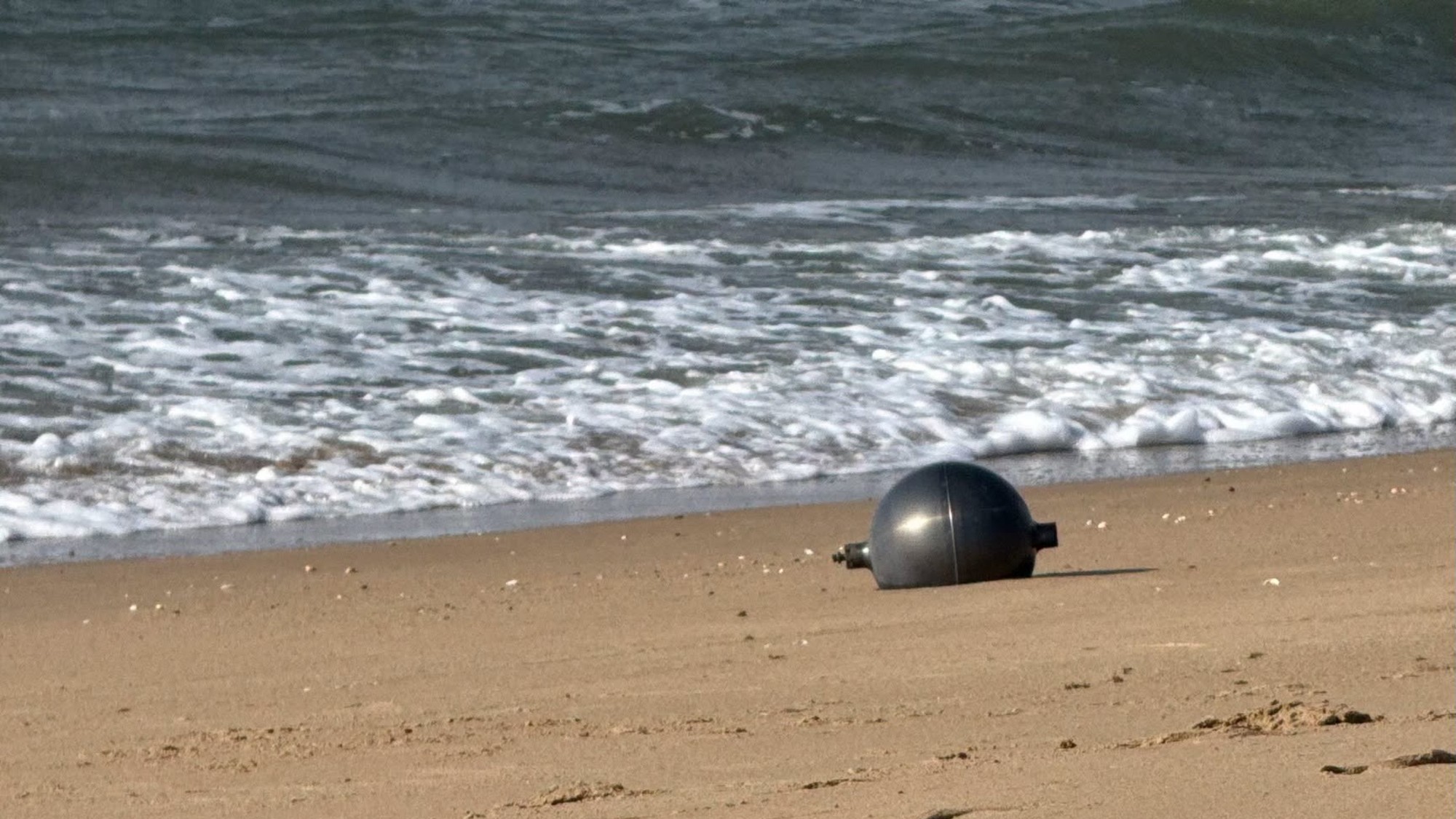
In an event that has captured the attention of both scientific communities and the public, Australia has once again found itself as the terrestrial destination for enigmatic objects from outer space. In early July 2026, the picturesque shores of Forrest Beach in Queensland, a small seaside community near Ingham, became the focal point of an unfolding mystery as several metallic spheres, now colloquially termed "space balls," were discovered by locals. The Australian Space Agency has since confirmed that these objects are highly likely to be pressure vessels originating from a foreign rocket body, adding another chapter to Australia’s curious history as a repository for fallen space junk.
The discovery prompted an immediate and coordinated response from emergency services and scientific bodies. Crews from the Queensland Fire Department were dispatched to assist partner agencies in managing the situation, emphasizing the potentially hazardous nature of the found items. Scientific teams swiftly cordoned off the area, establishing a 165-foot (50-meter) exclusion zone around the metallic spheres to ensure public safety while they conducted their initial assessments. While the precise origin and nature of the debris are still under rigorous investigation, the incident has reignited discussions about the growing issue of space debris and its implications for Earth.
This latest episode is not an isolated incident for Australia. The "Land Down Under" has a peculiar and recurring role in the narrative of space debris. The nation’s vast and often sparsely populated landmass, coupled with its geographical position, has made it a frequent, albeit unintended, landing site for objects reentering Earth’s atmosphere. This unwelcome legacy stretches back decades, with notable past occurrences including:
- 1979: Skylab Space Station Debris: A significant amount of debris from the United States’ Skylab space station reentered the atmosphere, with pieces scattering across Western Australia. This event led to a unique local ordinance in the town of Esperance, imposing a fine on NASA for littering, though it was never enforced.
- 2022: SpaceX Dragon Trunk: A substantial piece of a SpaceX Crew-1 Dragon trunk, a component of the spacecraft’s service module, was found on a farm in New South Wales. The object, weighing approximately 200 kilograms, was identified by SpaceX and later removed.
- 2023: Indian Booster Pressure Vessel: A pressure vessel, identified as originating from an Indian Space Research Organisation (ISRO) booster, washed ashore in Perth, Western Australia. ISRO confirmed the debris as part of their PSLV-C51 mission’s third stage.
- October 2025: Chinese Jielong-3 Rocket Stage: A smoldering piece of wreckage, later identified as part of a Chinese Jielong-3 rocket, was discovered in the Australian Outback. The discovery highlighted the challenges of tracking and managing rocket stages after launch.
The increasing frequency of such events has prompted the Australian Space Agency to develop clear protocols for the public. If suspected space debris is discovered, the recommended steps are:
- Do not touch or handle the object. Space debris can be hazardous due to its potential for residual fuel, sharp edges, or radioactive materials in some cases.
- Maintain a safe distance. Establish and adhere to any safety cordon put in place by authorities.
- Report the discovery immediately. Contact relevant emergency services or the Australian Space Agency with detailed information about the location and appearance of the object.
These guidelines are crucial, as the Australian Government holds international obligations regarding the discovery of space debris. According to international space law, specifically the Outer Space Treaty and the Liability Convention, a state that finds space debris is obligated to notify the launching state of its discovery. Furthermore, upon request, the launching state may be required to return the retrieved space object, provided it can be identified.
The Resilience of Space Debris: Understanding the "Space Balls"
Marlon Sorge, the executive director of The Aerospace Corporation’s Center for Orbital and Reentry Debris Studies (CORDS), offers expert insight into why these metallic spheres are so adept at surviving their fiery descent. "Very often they will be made of something like titanium, which is really good at surviving," Sorge explained to Space.com. "In spite of them being metal, they tend to decelerate more than, say, a solid hunk of metal. They can ‘float down’ a little bit more gently than some other things."
This enhanced deceleration, coupled with the inherent strength of materials like titanium, allows these pressure vessels to withstand the extreme heat and forces of atmospheric reentry. Sorge further elaborated that these objects decelerate quicker and, upon reaching the surface, remain more recognizable than fragmented pieces of metal. The resilience of titanium is such that, as Sorge put it, "even if they heat up, they don’t care," implying their structural integrity remains largely intact.
The scientific community’s awareness of the potential challenges posed by materials like titanium is growing. Sorge also pointed to Composite Overwrapped Pressure Vessels (COPVs), another common material in space hardware, as a significant consideration in debris studies. These materials, while advanced, also present their own set of challenges when it comes to safe reentry and disposal.
A Call for Responsible Space Operations
Ultimately, Sorge emphasizes that many of the concerns surrounding space debris could be significantly mitigated through more responsible behaviors by space agencies and launch providers. "In the bigger picture with [rocket] upper stages," he stated, "just don’t let them randomly reenter. Bring them down via controlled reentry and then if they are survivable it doesn’t matter because you dump them somewhere where there aren’t any people."
The metallic spheres found on the Australian beach are a clear indication of uncontrolled reentry events, where rocket components are allowed to fall back to Earth without a predetermined trajectory. The Aerospace Corporation has extensive experience studying recovered pressure vessels, similar to those found in Australia. Sorge extended an open invitation for countries that become recipients of space objects to contribute to their research. Such analysis provides invaluable data, including the physical condition of the debris, the temperatures it endured, and crucially, what it didn’t experience, offering a more complete understanding of reentry dynamics.
The ability to track and observe incoming debris during its descent is paramount, but currently a significant challenge. Sorge noted, "If we get an impact location and a time of reentry that really helps us figure out what’s going on." The current focus on reentering, human-made space objects is a growing imperative within the global space community.
"The real challenge is that this is still an area that we don’t completely understand. We get surprises now and again," Sorge concluded. "Because we know only so much. There’s certainly a lot more awareness now than earlier years to be proactive in thinking about this."
The Unpredictable Trajectory of Debris: Atmospheric Drag and Global Reach
Michelle Hanlon, Executive Director of the Center for Air and Space Law at the University of Mississippi School of Law, underscores the unpredictable nature of uncontrolled reentries. "It may seem surprising that pieces of the same rocket can show up in Australia, Canada or on a farm in Africa, but that’s actually what we’d expect," Hanlon remarked.
Objects in low Earth orbit traverse vast distances, passing over much of the planet as Earth rotates beneath them. Hanlon explained, "If a reentry isn’t controlled, the exact point where it finally comes down can shift by thousands of kilometers depending on when atmospheric drag finally wins." This inherent unpredictability means that even a seemingly minor orbital event can result in debris landing thousands of miles from its launch point.
Given that over 70% of the Earth’s surface is covered by oceans, it is statistically where the majority of space debris ends up. However, Hanlon points out, "Every now and then, though, a tough piece survives and lands somewhere people can find it — or lands in the ocean and gets swept swiftly to shore." The metallic spheres on Queensland’s beach are a prime example of the latter scenario, a resilient piece of technology making an unexpected arrival on land.
Identifying the Origin: Traceability Over "Made In" Labels
The persistent question surrounding recovered space debris is its country of origin. Hanlon suggests that simply stamping objects with a "country-of-origin" label may not be the most effective solution. "I’m not sure stamping everything with a country-of-origin is the answer," she stated. Many objects can already be identified through their design, serial numbers, or by cross-referencing them with launch and registration records. Furthermore, the extreme conditions of reentry mean that any such label might not survive the journey.
Hanlon advocates for a greater emphasis on traceability. "Can authorities quickly figure out what the object is, whether it poses any danger and which state should be contacted? Better information-sharing and better tracking would be far more useful than a ‘Made in’ stamp," she argued. This suggests that robust data management and communication channels between international space agencies are more critical than external markings.
The Space Boom and the Growing Debris Challenge
Hanlon also highlights a crucial contextual factor: the increasing volume of space launches. "One thing I’d also point out is that we’re seeing more of these simply because we’re launching a lot more things into space. That’s actually a sign of how active the space sector has become, not necessarily that it’s becoming less safe," she explained.
While launch operations are becoming increasingly sophisticated and statistically safe, a higher number of launches inevitably leads to a greater number of reentries. Even with a near-perfect success rate of 99.9% for controlled reentries, a larger sample size amplifies the probability that a particularly durable piece of debris might survive and land in an unexpected location.
The incident of the "space balls" in Australia serves as a stark reminder that space activities do not conclude with a mission’s operational phase. Hanlon concluded, "End-of-life disposal is now just as much a part of responsible space operations as launch." The responsible management of space assets throughout their lifecycle is becoming an increasingly critical component of sustainable space exploration and utilization.
Adding a touch of cosmic coincidence to the narrative, Hanlon noted the timing of this event. "It’s funny that we’re having this conversation just as ‘Spaceballs: The New One’ is gearing up." The highly anticipated sequel to the beloved sci-fi comedy is reportedly being filmed in Australia, bringing a humorous, albeit fictional, parallel to the very real phenomenon of space debris landing on Australian soil. This juxtaposition of science fact and cinematic fiction underscores the growing public awareness and cultural resonance of our interactions with the cosmos.