
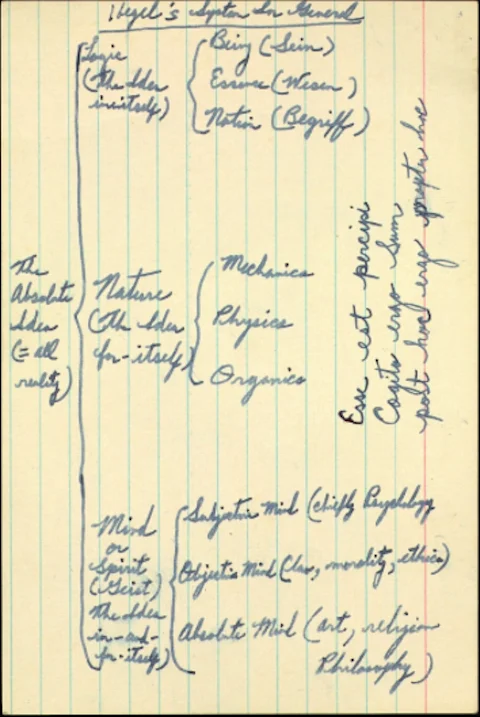
While the profound influence of German idealist philosopher Georg Wilhelm Friedrich Georg Friedrich Wilhelm Friedrich Friedrich Georg Wilhelm Friedrich Georg Friedrich Wilhelm Friedrich Georg Wilhelm Friedrich Hegel on the revolutionary frameworks of Karl Marx and Friedrich Engels is well-documented within intellectual history, his impact on the American Civil Rights Movement remains a lesser-known chapter. Mainstream historical narratives frequently conflate Dr. Martin Luther King Jr. with a sanitized version of neoliberal multiculturalism, often minimizing his radical intellectual engagement. Yet, archival research and scholarly analysis reveal that King was not merely an inspirational orator and organizer, but a rigorous philosophical thinker who deeply engaged with continental philosophy. Specifically, Hegel’s dialectical method served as a foundational pillar for King’s theory and practice of nonviolent resistance, allowing him to weaponize the rigorous logical systems of European philosophy against the oppressive architecture of Jim Crow America.
The Intellectual Evolution and Academic Foundation
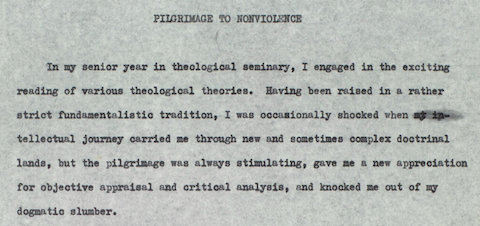
Dr. King’s engagement with philosophy was formalized during his graduate studies in the mid-1950s. After completing his theological training, King pursued doctoral studies at Boston University and attended seminars at Harvard University, immersing himself in the history of Western philosophy, religion, and social theory. At Boston University, he studied under Edgar Sheffield Brightman, a prominent personalist philosopher, and enrolled in a rigorous year-long seminar dedicated to Hegel’s monumental 1807 work, The Phenomenology of Mind.
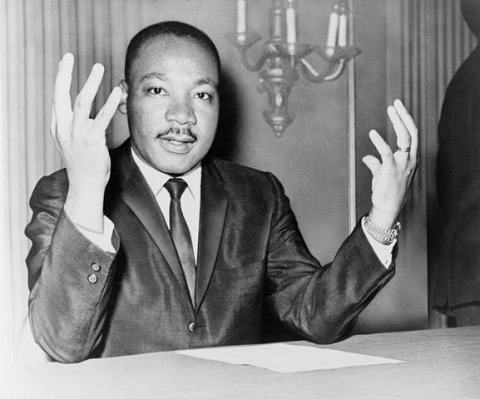
Far from treating the seminar as a mere academic requirement, King expanded his reading independently into Hegel’s Philosophy of History and Philosophy of Right. His academic notes and subsequent autobiographical reflections indicate a complex relationship with the German idealist. King openly rejected Hegel’s absolute idealism, finding the notion that the absolute "swallows up the many in the one" to be rationally unconvincing. However, he found immense value in two core Hegelian concepts: the notion that "truth is the whole," which fostered a commitment to philosophical and rational coherence, and the dialectical process, which demonstrated that societal and personal growth emerges directly through struggle.
In his seminal book Stride Toward Freedom, King explicitly connected this philosophical inheritance to his developing strategy for social change. Articulating the necessity of nonviolent resistance, he wrote that it represented a third way for oppressed people, functioning precisely like the synthesis in Hegelian philosophy. By seeking to reconcile the truths of two opposing forces—acquiescence and violence—nonviolent resistance avoided the moral extremes and destructive outcomes of both.
Bridging Philosophy and Direct Action
King’s academic pursuits were never isolated from the practical realities of the American racial caste system. During the Montgomery bus boycott of 1955–1956 and subsequent campaigns led by the Southern Christian Leadership Conference (SCLC), King regularly integrated philosophical concepts into his public addresses and strategic frameworks. In a January 1956 interview with The Montgomery Advertiser, King reportedly identified Hegel as his favorite philosopher. Later that year, at the First Annual Institute on Nonviolence and Social Change, he explicitly invoked both ancient and modern philosophy, stating that just as the Greek philosopher Heraclitus argued that justice emerges from the strife of opposites, Hegel preached a doctrine of growth through struggle.
This intellectual lineage placed King in a continuum of radical Black thinkers who utilized European philosophy to dissect and dismantle white supremacy. W.E.B. Du Bois, an intellectual precursor to King, had similarly immersed himself in Hegelian thought while studying in Berlin during the late nineteenth century. Du Bois subsequently applied Hegelian logic to his analysis of double consciousness, examining the internal and external fractures experienced by African Americans living within a racially stratified society.
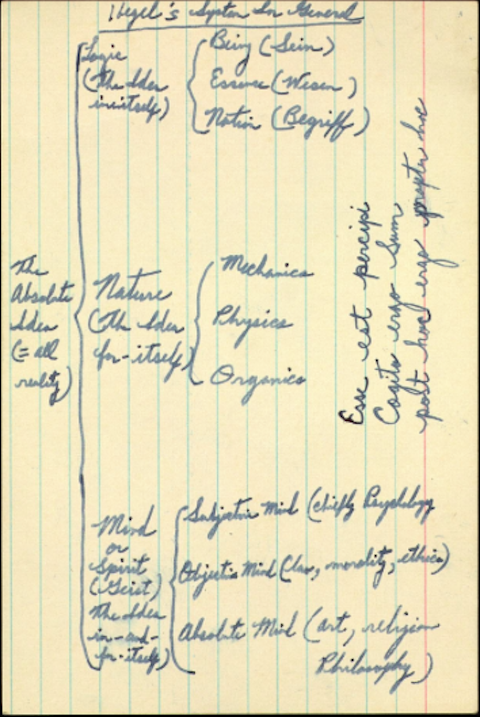
Independent scholars such as Ralph Dumain and philosopher Nolen Gertz have extensively cataloged King’s interactions with continental philosophy, highlighting essays such as King’s exposition on the first triad of Hegelian logic—Being, Non-Being, and Becoming. Gertz aptly observed that while Marx famously claimed to have turned Hegel on his head, King turned the ideas of traditional Western philosophers against the discriminatory practices of contemporary society, successfully operationalizing abstract metaphysics for civil rights activism.
Chronology of Philosophical and Activist Milestones
To understand the trajectory of King’s intellectual development, historians point to a distinct chronology linking his academic immersion to his public leadership:
- 1948–1951: King completes his Bachelor of Divinity at Crozer Theological Seminary, where he is first introduced to personalism, Walter Rauschenbusch’s social gospel, and the pacifist philosophies of Mahatma Gandhi.
- 1951–1955: While pursuing his doctoral studies at Boston University, King takes intensive seminars on Hegel under Edgar Sheffield Brightman and L. Harold DeWolf, writing multiple papers on Hegelian logic and absolute idealism.
- 1955: King completes his doctoral dissertation, A Comparison of the Conceptions of God in the Thinking of Paul Tillich and Henry Nelson Wieman, establishing his sophisticated grasp of systematic theology and ontology.
- December 1955 – December 1956: The Montgomery bus boycott takes place. During this crucible of mass mobilization, King explicitly frames the civil rights struggle through the lens of dialectical tension and creative conflict.
- 1958: Publication of Stride Toward Freedom: The Montgomery Story, in which King explicitly outlines his philosophy of nonviolent resistance using Hegelian synthesis as an intellectual framework.
- 1963: Writing from a jail cell in Birmingham, Alabama, King produces his famous epistle invoking historical precedents and philosophical tension, reinforcing the idea that constructive, nonviolent tension is necessary for genuine growth and legal reform.
The Global Dialectic: From the Haitian Revolution to the Civil Rights Movement
Recent historical scholarship reveals a profound, albeit historically unacknowledged, global irony underpinning the Hegelian framework. While King and Du Bois utilized Hegel to analyze Western oppression, contemporary scholarship by historian Susan Buck-Morss argues that Hegel’s own formulation of the "master-slave dialectic"—the core metaphor through which he analyzed the unfolding of human freedom in world history—was directly inspired by the Haitian Revolution (1791–1804).
Hegel developed his theories of recognition, bondage, and liberation precisely as enslaved Africans in Saint-Domingue successfully overthrew the French colonial plantation complex, establishing the world’s first free Black republic. Consequently, the intellectual thread connecting Hegel to King is part of a broader, reciprocal global exchange. The revolutionary praxis of enslaved Black revolutionaries in the New World informed the philosophical output of a German idealist, which was subsequently studied by African American intellectuals to guide a nonviolent mass movement that permanently transformed American democracy.
Implications and Legacy in Contemporary Discourse
The rediscovery and re-examination of Martin Luther King Jr.’s engagement with G.W.F. Hegel carry significant implications for contemporary political philosophy and civil rights historiography. By re-centering King as a rigorous intellectual and a radical theorist of systemic transformation, modern scholars challenge attempts to depoliticize his legacy into passive platitudes about racial harmony.
King’s application of the dialectic underscores the necessity of confronting structural injustice directly rather than seeking superficial compromises. By viewing conflict not as an end in itself, but as a necessary catalyst for a higher synthesis of justice and equality, King provided a blueprint for social movements that extends far beyond the mid-twentieth-century American landscape. As contemporary activists continue to navigate systemic inequality, the intersection of Hegelian philosophy and Kingian nonviolence remains a vital testament to the power of critical thought in the service of human liberation.










Leave a Reply