
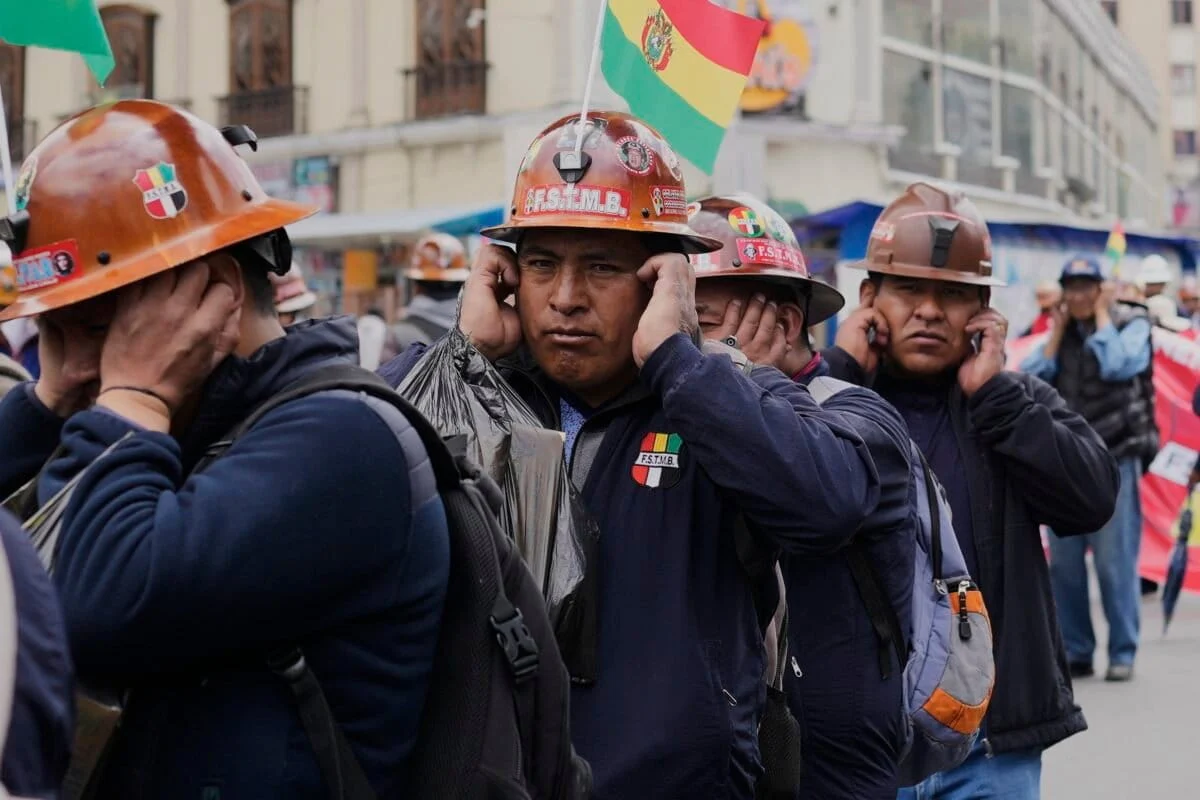
Bolivia has officially embarked on a comprehensive legislative overhaul of its foundational mining framework, aiming to modernize a critical pillar of its national economy while simultaneously intensifying oversight across the sector. Spearheaded by the Ministry of Mining and Metallurgy, the initiative seeks to replace the current legal framework enacted in 2014, known as Law 535. Government officials maintain that the impending code will stimulate economic growth, provide much-needed legal certainty for operators, and reinforce environmental management. However, the legislative process has ignited a firestorm of controversy. Civil society organizations, environmental advocates, and Indigenous communities have raised serious alarms, arguing that the reform prioritizes industrial profitability over public health and ecological preservation, while systematically sidelining vulnerable populations.
The push to rewrite the mining code comes at a crucial juncture for the Andean nation. Bolivia’s extractive sector has long served as a vital engine for employment, state revenues, and export earnings, encompassing everything from state-run operations and private corporate ventures to powerful, semi-autonomous mining cooperatives. Yet, the industry has also been plagued by systemic inefficiencies, regulatory bottlenecks, and a surge in illicit mining activities that have left indelible scars on the country’s fragile ecosystems. As the government presses forward with technical drafting committees, the nation finds itself locked in a high-stakes debate over how to balance the demands of modern resource extraction with ecological sustainability and the constitutional rights of local communities.
The Evolution of Bolivia’s Mining Code and the Impetus for Reform
To understand the weight of the current legislative overhaul, one must examine the historical and legal trajectory of Bolivia’s mining sector. Law 535, passed in 2014, was designed to govern mining development, establish environmental monitoring mechanisms, and formalize the participation of local and Indigenous communities through mandatory prior consultation processes. While the 2014 legislation represented a significant milestone in restructuring post-nationalization mining dynamics, stakeholders across the political and economic spectrum increasingly agree that the code has failed to keep pace with the realities of the modern global market.
In recent years, the sector has confronted complex challenges, including fluctuating international commodity prices, a rapid expansion in high-demand minerals like lithium, and a proliferation of unregulated, informal gold mining operations. These developments have strained institutional capacity and exposed regulatory loopholes. Recognizing these pressures, Minister of Mining and Metallurgy Marco Antonio Calderón de la Barca Quintanilla emphasized the necessity of a modernized legislative foundation.
“We want a mining code that responds to the current needs of the sector, generates legal certainty, and establishes clear rules to support the development of Bolivian mining,” Calderón de la Barca Quintanilla stated in an official release.
According to the Ministry of Mining and Metallurgy, the updated framework will focus on four core pillars: strengthening mining rights, promoting sustainable foreign and domestic investment, formalizing informal mining activities, and bolstering transparency. Furthermore, officials have repeatedly underscored that the forthcoming legislation will involve consolidating responsible environmental management. Despite these assurances, the exact text of the preliminary bill remains under wraps, leaving stakeholders to speculate on the definitive shape of the new regulations based on proposals floated during recent national forums.
Chronology of the Reform Process: From National Summits to Technical Committees
The path toward a new mining code has been marked by intensive dialogue, closed-door negotiations, and persistent friction between the state and grassroots organizations. The chronology of the overhaul reveals a deliberate, albeit contentious, trajectory orchestrated by the central government.
The process officially kicked off with a series of regional dialogues leading up to the National Mining Summit. During these initial phases, the Ministry of Mining and Metallurgy convened weekly meetings with key industry stakeholders—ranging from state enterprise representatives and private investors to powerful mining cooperative leaders—to gather feedback, grievances, and strategic proposals.
As proposals accumulated, local and regional reports began surfacing regarding specific policy changes under consideration. These leaked concepts included radical shifts in tax and royalty structures, the removal of the traditional 30-year limit on mining contracts to allow for indefinite extensions, and a complete restructuring of key regulatory bodies, including the Ministry and the Jurisdictional Administrative Mining Authority (AJAM). Additional proposals suggested establishing legal protections for whistleblowers reporting illegal mining, alongside contentious measures to streamline or bypass prior consultation requirements for local and Indigenous communities seeking to block or negotiate contract access.
By early this month, the accumulated ideas and preliminary recommendations were formally handed over to a specialized technical committee. This committee was tasked with synthesizing the inputs into a cohesive draft bill that will eventually be submitted to the national legislature for review and final approval. While the government has maintained a tight-lipped stance regarding a definitive timeline for the bill’s completion, the transition from open summits to closed-door technical drafting has intensified scrutiny from civil society groups who fear their voices are being actively excluded from the final product.
Stakeholder Divides: Economic Ambitions Versus Socio-Environmental Concerns
The core controversy surrounding Bolivia’s mining reform centers on a fundamental philosophical divide: whether the primary objective of the law should be the unfettered expansion of economic productivity or the rigorous enforcement of socio-environmental safeguards.
Industry representatives, particularly mining cooperatives and private commercial operators, have advocated for measures that reduce bureaucratic red tape, lower tax burdens, and secure long-term tenure stability. For instance, proposals emerging from recent sector summits included requests for specialized tax frameworks, such as a unified gold tax structure, and the extension of mining contracts beyond current statutory limits. Proponents argue that such incentives are vital for attracting desperately needed foreign investment, modernizing extraction infrastructure, and pulling thousands of informal miners into the legal economy.

Conversely, Indigenous groups, peasant confederations, and environmental watchdogs view these very proposals as a direct threat to their livelihoods and territories. For years, communities across Bolivia have pushed back against extractive projects—most notably foreign-backed lithium operations in the high plains and large-scale gold mining in the Amazonian basins—that consume vast quantities of freshwater, pollute watersheds, and fail to distribute adequate royalties to the regions where extraction occurs.
The situation has been further exacerbated by the unchecked expansion of illegal mining. Environmental studies and local reports have consistently highlighted the devastating impacts of unregulated extraction, including rampant deforestation in newly protected areas and widespread mercury contamination across major river basins, such as the Beni River. These toxic pollutants pose severe public health risks to more than 160 Indigenous and rural communities, contaminating local food chains and water supplies.
Accusations of Exclusion and the Battle Over Prior Consultation
From the outset of the legislative review, civil society organizations and Indigenous federations accused the central government of intentionally freezing them out of the policymaking process. Critics argue that limiting the consultation circle primarily to economic actors—such as mining cooperatives, private firms, and state enterprises—guarantees that environmental and public health concerns will be sidelined in favor of short-term financial gains.
Ruth Alipaz, a prominent representative for the National Coordinator for the Defense of Indigenous and Peasant Territories and Protected Areas (CONTIOCAP), did not mince words when evaluating the government’s approach. In a public statement addressing the consultation process, Alipaz criticized the administration’s stated commitment to environmental sustainability as mere rhetoric.
“The environmental focus is just talk, because they are seeking to discuss a new mining code only with mining actors and not with actors who can contribute from the perspective of the serious environmental and public health impacts for which gold mining is responsible,” Alipaz asserted.
Critics are particularly alarmed by proposals aimed at dismantling or restricting the constitutional right to prior consultation. Under current Bolivian law, Indigenous and local communities must be consulted before the state grants mining concessions on their ancestral lands. Industry stakeholders, however, have frequently blamed these consultation mandates for causing crippling delays in project execution. By attempting to remove prior consultation as a legal barrier to contract access, the government risks triggering severe constitutional challenges and social unrest reminiscent of past resource conflicts in the region.
In an apparent effort to mitigate growing criticism regarding representation, the government announced the inclusion of the Unified Confederation of Peasant Workers of Bolivia (CSUTCB) on the technical drafting committee. While state officials point to this inclusion as proof of a broad, participatory approach, civil society leaders argue that token representation from a single peasant confederation is insufficient to counterbalance the heavy influence of industrial mining lobbies and commercial cooperatives.
Fact-Based Analysis of Implications for Bolivia’s Future
As the technical committee finalizes the preliminary bill for congressional submission, the long-term implications of the new mining code extend far beyond the immediate economic and political landscape of La Paz.
Economically, a modernized legal framework that successfully formalizes informal miners and incentivizes foreign investment could provide a much-needed fiscal boost to Bolivia, which has recently faced macroeconomic headwinds and declining foreign exchange reserves. Clarifying tax structures and extending contract limits could unlock capital for critical mineral extraction, positioning the nation more competitively in global markets for energy transition metals and precious commodities.
However, the socio-political and environmental risks are equally profound. If the final legislation weakens environmental oversight, rolls back Indigenous consultation rights, or fails to address the severe public health crises driven by mercury contamination and illegal mining, Bolivia could witness an escalation of social conflict. Grassroots resistance, legal challenges, and regional blockades could destabilize the very investment climate the law seeks to create, negating its intended economic benefits.
Furthermore, the international reputation of Bolivia’s extractive sector hangs in the balance. Global markets and institutional investors are increasingly demanding strict adherence to environmental, social, and governance (ESG) standards. A mining code perceived as regressive or environmentally negligent could alienate international partners and complicate efforts to secure sustainable financing for large-scale industrial projects.
Ultimately, the success or failure of Bolivia’s mining code overhaul will depend on the government’s ability to forge a genuine, inclusive consensus. Balancing the legitimate imperative for economic modernization with an uncompromising commitment to environmental protection and human rights remains the ultimate test for lawmakers as they prepare to deliver the preliminary bill to the national legislature.










Leave a Reply