
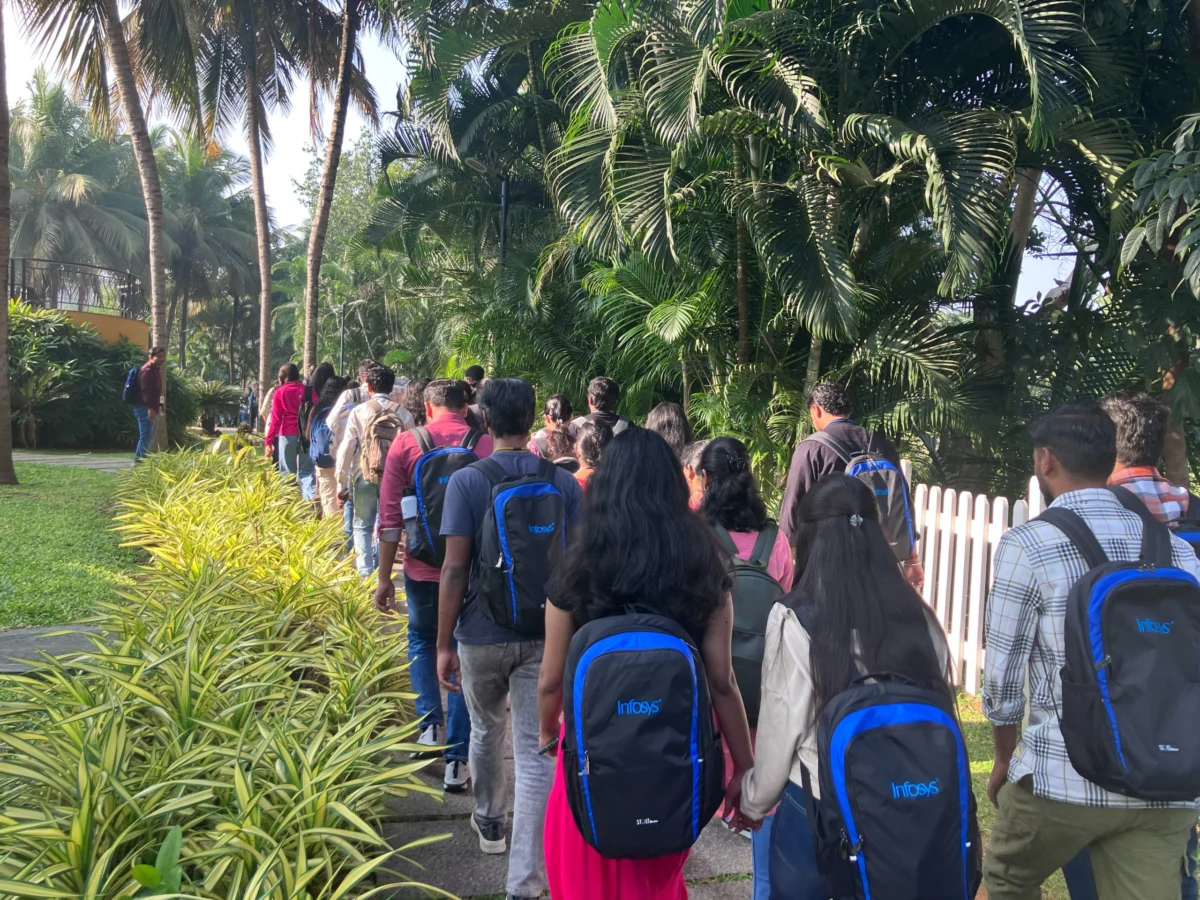
The disconnect between the hallowed halls of academia and the high-pressure demands of the modern corporate world has reached a critical tipping point. Across the globe, employers are voicing a persistent and increasingly urgent grievance: universities, despite their rising tuition costs and expanding enrollments, are failing to produce graduates who are ready to contribute on day one. In India, a nation that has become the back office and increasingly the R&D engine of the world, major corporations have stopped waiting for the traditional education system to reform itself. Instead, they have built a parallel education system—a network of massive corporate universities that function as finishing schools for the digital age.
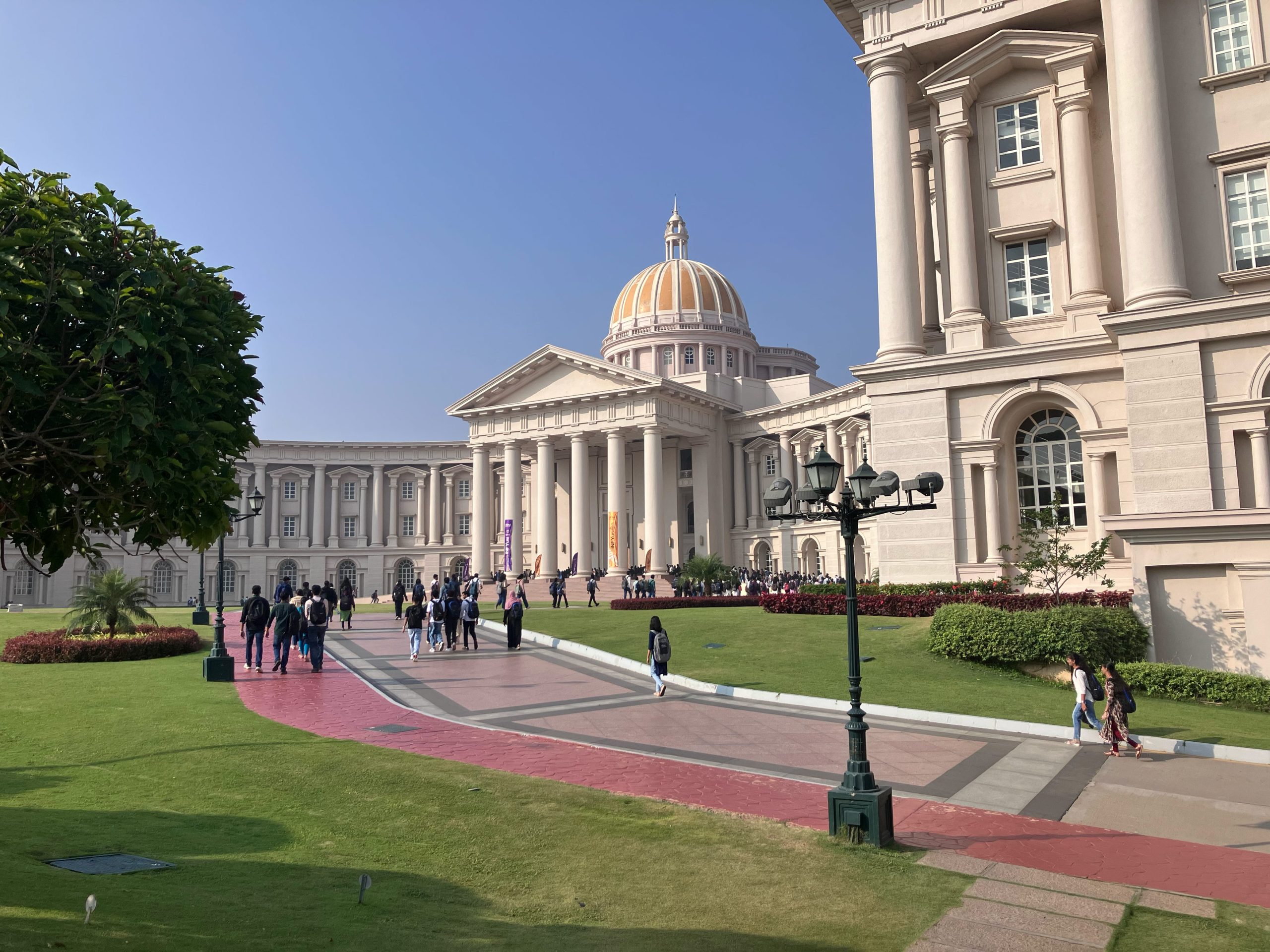
This shift is most visible in Mysore, a city in southern India better known for its royal palaces than its technological prowess. Here, the multinational giant Infosys operates a 337-acre campus that serves as a glimpse into the future of global workforce development. Known as the Global Education Center (GEC), this facility is not merely a training hall; it is a residential university with the capacity to house and train 9,000 "freshers"—newly hired graduates—at any given time. As American firms grapple with similar skills shortages, the Indian model offers a provocative template for how the private sector may eventually bypass traditional higher education altogether.
The Crisis of the Obsolete Degree
The impetus for this corporate-led educational revolution is a stark reality: the traditional degree is increasingly viewed by industry leaders as a signal of potential rather than a certificate of competency. Rishi Agrawal, a recent computer science graduate from a private engineering college in Bhopal, represents the typical struggle of the modern student. Despite attending a college affiliated with a large state university, Agrawal found his curriculum stuck in a time warp. He describes textbooks that were two decades old and professors who were fundamentally out of touch with the rapid evolution of the IT sector.
Agrawal’s experience is backed by sobering global data. According to the World Economic Forum’s Future of Jobs Report 2025, 63 percent of leading global employers identify skills gaps as a "major barrier" to business transformation. The disconnect is particularly acute in India, where college enrollment has more than tripled since 2005, surging from 14.3 million to 43.3 million. This explosion in quantity has not been matched by a consistent rise in quality. While India’s elite Indian Institutes of Technology (IITs) remain world-class, the vast majority of the country’s thousands of engineering colleges produce graduates who often lack the practical coding skills, soft skills, and specialized knowledge required by firms like Infosys, Tata Consultancy Services (TCS), and Wipro.
A Chronology of Corporate Self-Reliance
The rise of the corporate university in India was born of necessity. To understand how the Infosys Global Education Center became a cornerstone of the global IT supply chain, one must look at the timeline of its evolution:
- 1981: Infosys is founded in Bangalore by Narayana Murthy and six colleagues with just $250.
- Early 1990s: The Indian economic liberalization opens the floodgates for global outsourcing. Firms realize that the talent pipeline is too narrow to support triple-digit growth.
- 2002-2005: Under the direction of founder Narayana Murthy and veteran executive Satheesha Nanjappa, Infosys begins planning a centralized, world-class training facility to standardize the quality of its hires.
- 2005: The Global Education Center in Mysore is officially launched. It begins as a way to bridge the gap between diverse regional educations and a singular corporate standard.
- 2010s: As technologies like Cloud Computing and Big Data emerge, the GEC pivots from teaching basic coding to specialized architectural frameworks.
- 2023-2025: The curriculum undergoes a radical overhaul to integrate generative and agentic AI, reflecting the shift from manual coding to AI-augmented development.
Today, Infosys is a $19.3 billion behemoth. To maintain its edge in projects ranging from optimizing Lufthansa’s airline operations to managing the UK National Health Service’s payroll, it requires a workforce that is perpetually upskilled. The Mysore campus is the engine of this agility.
The Architecture of the Corporate Finishing School
Life at the Infosys GEC resembles a high-tech monastic order. Every weekday morning, thousands of trainees stream past a massive cricket pitch and palm-lined walkways toward a domed classroom complex. The environment is designed to be aspirational, particularly for students from small villages who may be experiencing an upscale, professional setting for the first time.

The curriculum is divided into a rigorous, multi-phase journey that typically lasts between 19 and 23 weeks:
Phase 1: The Foundations (8 Weeks)
Regardless of their specific engineering background—be it mechanical, civil, or electrical—all "freshers" begin with the basics of IT. This includes intensive modules on algorithms, database management systems, and object-oriented programming. The goal is to establish a "common language" of logic and structure.
Phase 2: Specialization (10+ Weeks)
Based on current client demands, trainees are funneled into specialized tracks. In late 2025, the focus has shifted heavily toward agentic AI, cloud architecture, and cybersecurity. In one typical classroom session, students use Python to analyze dummy healthcare datasets, predicting costs by standardizing variables like blood pressure and glucose levels—a practical application of data science rarely taught in state colleges.
Phase 3: The "Soft Skills" Integration
Woven throughout the technical training is a focus on "business English" and professional etiquette. Trainees learn how to write effective emails, how to deliver bad news to a client without damaging the relationship, and how to work in multi-cultural teams. For many, this is the most transformative part of the program, turning academic students into confident corporate representatives.

The Economics of Training: A High-Stakes Investment
This level of education is not cheap. Infosys estimates that it costs approximately $8,000 to turn one "fresher" into a billable employee. When multiplied by the 20,000 young people who pass through the program annually, the investment is staggering. However, the company views this as a necessary cost of doing business—an "education tax" paid because the public system has failed to deliver a finished product.
The program is also a high-stakes meritocracy. Unlike traditional universities where failure is rare once a student is admitted, the Infosys GEC has a "weed-out" rate of 5 to 8 percent. Trainees are paid a salary during their time in Mysore, but they must pass a series of rigorous assessments to remain with the company. Satheesha Nanjappa, who established the center, is clear about the stakes: "We don’t want to lose people… but at the same time, if somebody cannot pass or qualify, then they have to leave the company."
Global Comparisons and the American Context
While the scale of the Mysore campus is uniquely Indian, the underlying trend is global. American companies have begun building their own versions of these "knowledge hubs."
- Deloitte University: A $300 million facility in Westlake, Texas, focuses on leadership and specialized consulting skills.
- KPMG Lakehouse: Located in Orlando, Florida, this 55-acre campus serves as a cultural and educational home for the firm’s US employees.
- Accenture: The firm’s "New Joiner Experience" utilizes both virtual reality and regional hubs to onboard thousands of employees.
- Intuit: The Career Pipeline Program partners directly with colleges to provide real-world accounting experience before graduation.
The primary difference lies in the point of entry. In the United States, corporate training is often viewed as a "supplement" to a degree. In India, it has become a "replacement" for the final years of a practical education. Indian firms assume that the degree proves the student has the aptitude to learn, but they rely on their own internal systems to provide the ability to work.

Implications for the Future of Higher Education
The rise of corporate universities like the one in Mysore poses a fundamental question: Is the traditional four-year degree becoming a relic? Mohandas Pai, a former CFO of Infosys and now a prominent startup investor, suggests that the chasm between industry and academia will persist for the "foreseeable future." He argues that expecting state-run universities to keep pace with the exponential growth of technology is "like living in a fairy tale."
If corporate training continues to expand, we may see a shift in how society values education. We could be moving toward a "just-in-time" education model, where foundational logic is taught in schools, but specific, billable skills are acquired through corporate-sponsored boot camps. This would effectively move the cost and responsibility of specialized vocational training from the student (via tuition) to the employer (via training budgets).
However, this model also carries risks. Corporate education is by definition narrow; it teaches what is "billable" today, not necessarily what is "valuable" for a thirty-year career or for a functioning democracy. While Rishi Agrawal is now a proficient Python coder ready for an Infosys client project, his education was dictated by a corporate spreadsheet rather than a broad academic inquiry.
As the 2020s progress, the Mysore model suggests that the most successful nations will be those that can create a seamless handoff between the public education system and private sector finishing schools. For now, the palm-lined pathways of Infosys Mysore remain the most visible evidence that in the global race for talent, the diploma is just the beginning of the journey, not the end.









Leave a Reply