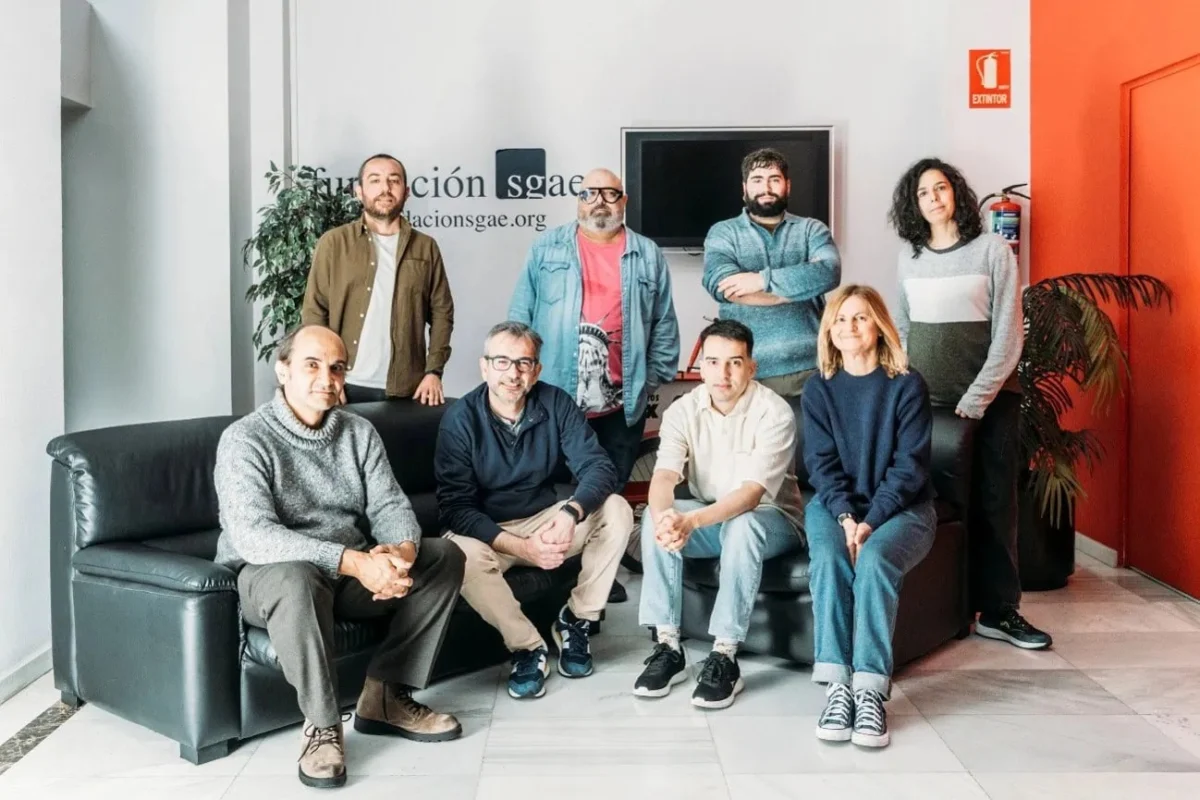
The sixth edition of Iberseries & Platino Industria has officially commenced in Madrid, bringing together thousands of audiovisual professionals, creators, producers, and executives from across the Ibero-American region. As one of the premier international events dedicated to celebrating, financing, and expanding Spanish- and Portuguese-language content, this year’s jam-packed schedule features a diverse array of panels, masterclasses, and high-stakes pitching sessions. Among the most anticipated highlights of the week is a specialized presentation held on Thursday, October 1, dedicated to six groundbreaking television series projects. These titles were meticulously developed by seven talented screenwriters as part of an ongoing, highly competitive collaborative initiative with Fundación SGAE, Spain’s primary collective management organization for intellectual property rights.
This exclusive pitching showcase is specifically curated to connect visionary creative talent directly with key industry stakeholders, including international producers, network buyers, streaming platform executives, and private investors. By bridging the gap between local artistry and global market demands, the session aims to fulfill one of the core strategic mandates established by the organizers of Iberseries & Platino Industria: fostering the production, enhancing the financial viability, and maximizing the international reach of emerging fiction projects. As the audiovisual landscape continues to evolve rapidly in the face of streaming consolidation and shifting audience habits, initiatives of this nature play an indispensable role in ensuring that fresh, culturally resonant narratives find the commercial backing necessary to cross borders.
The Background and Evolution of Iberseries & Platino Industria
Since its inception, Iberseries & Platino Industria has established itself as the ultimate B2B meeting point for the Ibero-American audiovisual sector. Created to strengthen ties between Europe and Latin America, the event serves as a vital nexus for co-productions, creative exchanges, and business development. Over the years, the platform has grown exponentially, reflecting the booming global appetite for Spanish- and Portuguese-language storytelling driven by major streaming platforms and international theatrical releases.
The collaboration between Iberseries & Platino Industria and Fundación SGAE represents a cornerstone of this developmental ecosystem. Fundación SGAE, committed to the protection and promotion of authors’ rights, has long invested in nurturing domestic writing talent through laboratories, grants, and professional mentorship programs. The partnership ensures that promising writers receive not only financial and institutional backing during the germination phase of their scripts but also direct access to the global marketplace, significantly shortening the distance between an initial creative concept and a greenlit series heading into production.
Detailed Overview of the Six Featured Series Projects
The six selected projects presented in Madrid span a remarkably diverse spectrum of genres, ranging from historical political satire and grounded social realism to speculative dystopian sci-fi and supernatural mystery. Each project offers a distinct lens through which to examine contemporary societal anxieties and historical complexities.
La Librera: Pioneering the LGBT Movement in 1990s Seville
Penned by the creative duo Virginia Burgos from Seville and Juan Sánchez from Madrid, La Librera transports viewers back to the early 1990s—a transformative decade marked by intense social modernization and cultural shifting in Spain. The narrative centers on a resilient woman who takes the bold entrepreneurial leap of opening the country’s very first LGBT bookstore. Over the span of several decades, this modest establishment evolves far beyond a commercial enterprise, serving simultaneously as a safe haven, an intellectual hub, and a clandestine political backroom for a marginalized community fighting for civil rights.
However, the dramatic turning point of the series arrives when the very neighborhood and community she helped build and sustain eventually turns its back on her due to shifting urban demographics and changing social dynamics. This departure leaves the protagonist confronting a deeply poignant and universal dilemma: What happens to a pillar of a community when the world evolves to a point where nobody seems to need her anymore? Industry analysts suggest that La Librera taps powerfully into contemporary themes of historical memory, generational shifts, and the often-overlooked personal sacrifices made by early civil rights pioneers, making it a compelling prospect for prestige drama buyers.
Avión: The Stark Clash Between Rural Precarity and Transatlantic Wealth
Authored by Miguel Cavadas of Vigo, Avión explores a fascinating and uniquely Galician socioeconomic phenomenon. The real-world village of Avión has long embodied the bittersweet utopia of Galician emigration: leaving an impoverished homeland behind in youth, seeking fortune abroad, and returning decades later with substantial wealth. In the winter months, Avión mirrors the broader reality of rural Spain—characterized by severe precarity, depopulation, and an aging demographic. However, during the summer months, the village undergoes a dramatic metamorphosis, transforming into a vibrant festival of money, ranchera music, and Mexican flags as the diaspora returns en masse.
During these peak months, the local population quadruples. Yet, beneath the surface celebration lies a profound cultural friction. Avión becomes a microcosm of two worlds colliding with little in common: community collectivism versus stark individualism, the historical past versus the present day, and the contrast between Galicia’s lowest domestic pensions and Mexico’s greatest transatlantic fortunes. Cavadas’ script avoids romanticized tropes, opting instead for a gritty, atmospheric social clash drama that forces audiences to reevaluate the complex emotional toll of migration and identity splitting.
El Capricho: 18th-Century Court Intrigue Through Goya’s Sarcastic Lens
Moving from modern social drama to historical satire, Alberto Grondona’s El Capricho offers a female-led, comedic reimagining of the late 18th-century Spanish court. The plot revolves around a fierce, high-stakes power struggle among three formidable women vying for supreme influence as the Spanish monarchy stands on the absolute brink of collapse: Queen María Luisa of Parma, the charismatic and influential Duchess of Alba, and the enlightened Duchess of Osuna.
What sets El Capricho apart from traditional period dramas is its narrative framing. The entire saga of ambition, palace intrigue, and personal desire is observed, filtered, and narrated with sharp, unrelenting irony by the legendary painter Francisco de Goya. Serving as an uneasy witness to the decay of the old regime, Goya uses his artistic and critical faculties to turn historical court politics into a surprisingly contemporary mirror reflecting modern political machinations. Described by critics as a Spanish-flavored, female-driven counterpart to Game of Thrones infused with dark humor and political cynicism, the project is poised to attract platforms looking for high-concept period comedies with a modern bite.
Teléfonos Fijos: Supernatural Mystery in the Age of Technological Skepticism
Written by Ángel Mirou, Teléfonos Fijos introduces a chilling supernatural premise set within the modest Recalde neighborhood of Bilbao. In the dead of night, traditional landline telephones begin to ring persistently, disturbing the slumber of the few residents who still maintain landline installations in their homes. Upon answering, the recipients hear the distinct, unmistakable voices of relatives, friends, and acquaintances from their past.
The unifying twist among all callers is as terrifying as it is confounding: every single one of them is dead. As the narrative unfolds, the characters are forced to grapple with an agonizing existential question: Are these mysterious telephone calls definitive proof of an afterlife, or are they merely the product of an elaborate, highly sophisticated fraud powered by cutting-edge AI and advanced voice-cloning technology? In an era defined by digital scams, deepfakes, and public distrust of reality, Mirou’s thriller examines how easily human grief can be exploited by technological innovation, ensuring viewers question both their ears and their eyes.
La Edad Menor: A Dystopian Madrid Where Children Become Legal Guardians
Dystopian speculative fiction takes center stage in La Edad Menor, created by Roberto Osa. Set in an alternate Madrid governed by deeply unsettling social laws, the story unfolds in a reality where children are legally mandated to become the legal guardians of their aging parents. The plot follows María, a determined protagonist who decides to actively challenge the established system when her mother is admitted to La edad menor—an official, irreversible bureaucratic process of state-mandated infantilization.
As María attempts to mount a resistance, her brother finds himself internally torn between loyalty to his sister and alignment with the authoritarian structures of power. Compounding the family’s turmoil, a devastating family secret emerges, proving that neither personal sacrifice nor active resistance may be sufficient to prevent complete oblivion. Industry observers note that while the premise playfully invokes the inversion of generational authority, the narrative quickly descends into a dark, psychologically tense exploration of institutional control, aging, and filial duty.
Trueque: A Modern Domestic Comedy on Parental Exchange
Rounding out the Fundación SGAE showcase is Trueque, written by Pedro Pablo Picazo. The project shifts tone entirely into contemporary domestic comedy, focusing on three tightly knit families who share a close bond of friendship but struggle daily with the universal trials of raising difficult teenagers. Each family firmly believes they possess the ultimate solutions to the behavioral issues plaguing their friends’ children.
Driven by a mixture of frustration and hubris, the parents arrive at a seemingly absurd proposition: What if they simply swap their teenagers? Naturally, the premise sets the stage for cascading domestic chaos, cultural clashes, and humorous miscalculations. Pitched as a modern, parental-level spin on classic body-swap and family-swap tropes, Trueque promises lighthearted, accessible entertainment designed to appeal to family-oriented streaming demographics.
Analysis: The Strategic Value of Spanish-Language Development Labs
The inclusion of these six projects at Iberseries & Platino Industria underscores a broader, highly successful structural shift within the Ibero-American audiovisual sector. In recent years, international buyers and streaming giants have increasingly turned their attention toward Spanish-language markets, recognizing that regional stories with high production values possess robust cross-border appeal. However, industry experts emphasize that the long-term sustainability of this boom depends heavily on robust early-stage development support.
Initiatives like the Fundación SGAE partnership provide writers with the necessary editorial feedback, legal protection, and networking opportunities required to refine raw concepts into pitch-ready, commercially viable properties. By balancing risk-taking artistic visions—such as Goya-narrated satires and AI-themed supernatural thrillers—with accessible comedies and grounded social dramas, the selected slate demonstrates the impressive range and maturity of contemporary Spanish screenwriting talent.
Conclusion and Next Steps for the Featured Projects
As the pitching sessions conclude in Madrid, the creators of La librera, Avión, El capricho, Teléfonos fijos, La edad menor, and Trueque will enter vital one-on-one meetings with potential co-producers, network programmers, and platform executives. For many of these writers, the exposure gained at Iberseries & Platino Industria will serve as the definitive springboard needed to transition their scripts from development slates into active pre-production. With the global demand for distinct, culturally rich, and innovative storytelling showing no signs of slowing down, the outcomes of this week’s presentations in Madrid will likely shape the television landscape of Ibero-America in the seasons to come.