
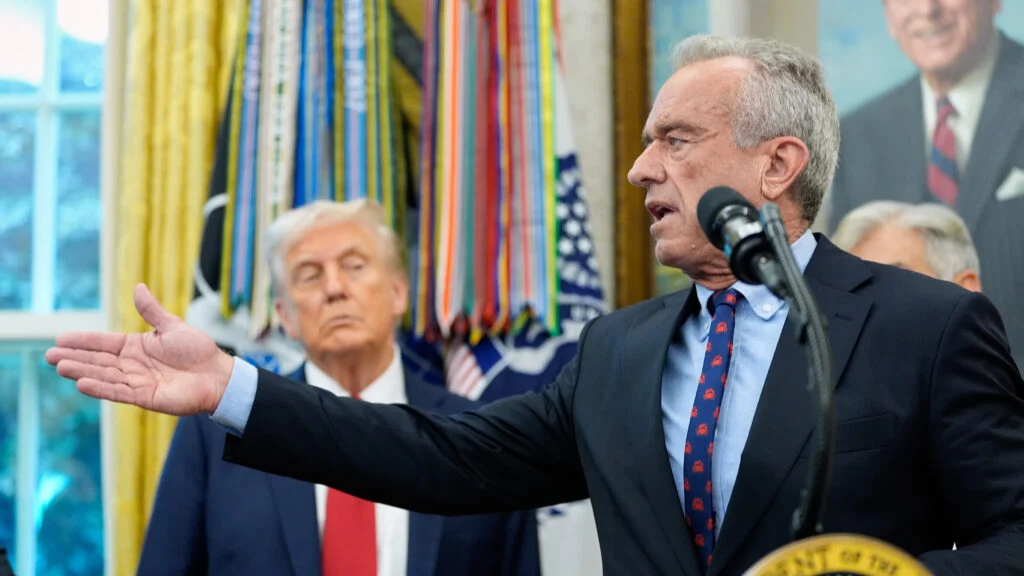
Health Secretary Robert F. Kennedy Jr. faces a pivotal moment on Capitol Hill this week as he prepares to defend the fiscal year 2027 budget request. His primary challenge will be to adhere strictly to the White House’s messaging on the "Make America Healthy Again" (MAHA) initiative, touting its perceived successes while artfully sidestepping contentious subjects, most notably vaccines. This series of at least seven congressional hearings represents a critical test of Kennedy’s ability to maintain a consistent public stance as he gears up for a crucial midterm election cycle aimed at bolstering support for the MAHA movement and the broader presidential agenda.
The upcoming hearings are particularly significant as they mark Kennedy’s first testimony before congressional committees since a contentious appearance before the Senate Finance Committee in September. That session was marked by raised tempers and sharp exchanges, primarily revolving around Kennedy’s controversial decision to terminate the tenure of Centers for Disease Control and Prevention (CDC) Director Susan Monarez. The circumstances surrounding Monarez’s dismissal, which occurred amidst ongoing investigations into alleged data manipulation within public health agencies, have been a persistent point of friction for the administration and a focal point for congressional oversight. Critics argue that the firing was politically motivated, while the administration maintains it was a necessary step to restore public trust and accountability.
This week’s congressional engagements are not merely procedural; they are strategic opportunities for Kennedy to project an image of competence and alignment with the administration’s public health priorities. The "Make America Healthy Again" agenda, a cornerstone of the White House’s domestic policy, aims to address a range of public health challenges, from chronic disease prevention to pandemic preparedness. However, its implementation has been met with both praise and significant criticism, particularly regarding its approach to vaccination policies and its perceived politicization of public health science.

Navigating the Budgetary Landscape and Political Minefields
The fiscal year 2027 budget request, presented for congressional review, outlines the administration’s funding priorities for various health agencies, including the Department of Health and Human Services (HHS), the CDC, and the National Institutes of Health (NIH). Historically, these budget hearings serve as a platform for lawmakers to scrutinize agency performance, question spending priorities, and advocate for their own legislative agendas. For Secretary Kennedy, the hearings will be an exercise in balancing the need to secure funding for critical public health programs with the imperative to avoid igniting partisan fires that could undermine the administration’s broader goals.
Sources close to HHS indicate that the secretary’s prepared remarks will heavily emphasize investments in public health infrastructure, disease surveillance, and initiatives aimed at reducing health disparities. The MAHA strategy is expected to be framed as a success story, with the administration likely to highlight data points related to improved health outcomes in specific demographics or progress in areas like mental health access and opioid crisis mitigation. However, the effectiveness of these narratives will hinge on Kennedy’s ability to withstand probing questions on more controversial aspects of the administration’s public health record.
The Shadow of Past Confrontations
The memory of the September Senate Finance Committee hearing looms large over these upcoming appearances. Lawmakers on both sides of the aisle expressed deep concerns about the process and justification for Dr. Monarez’s dismissal. Republicans questioned whether political considerations, rather than performance, were the driving force behind the decision, while some Democrats voiced unease about the potential for politicization within federal health agencies. The lack of a clear, publicly articulated rationale for Monarez’s ouster has fueled speculation and distrust, creating an environment where any perceived misstep by Kennedy could be amplified.
Dr. Monarez, a respected epidemiologist, had been at the helm of the CDC during a period of unprecedented public health challenges, including the ongoing COVID-19 pandemic. Her supporters argue that her leadership was instrumental in guiding the nation through complex scientific and logistical hurdles. Her abrupt departure, therefore, sent ripples through the scientific community and raised questions about the administration’s commitment to evidence-based decision-making. The administration’s official explanation for the firing, citing a need for "new leadership" to "reinvigorate the agency’s mission," has been widely seen as insufficient by many observers.

Key Issues on the Horizon
Beyond the budget itself, several key issues are likely to dominate the questioning of Secretary Kennedy:
- Vaccine Policy and Public Trust: The administration’s stance on vaccine mandates, the efficacy of certain vaccines against evolving strains of diseases, and the handling of vaccine adverse event reporting systems are all potential flashpoints. Critics have accused the administration of downplaying vaccine safety concerns or, conversely, of overreaching with vaccine mandates. Kennedy’s personal history and past public statements on vaccines, which have been a subject of considerable debate, will undoubtedly be scrutinized. His ability to articulate a clear, consistent, and science-backed policy on vaccination will be paramount.
- The "Make America Healthy Again" Initiative: While framed as a positive agenda, the specifics of MAHA have drawn criticism. Questions may arise regarding the allocation of resources within the initiative, the metrics used to define success, and whether certain aspects of the program align with established public health best practices. For instance, some health policy experts have raised concerns about the potential for the MAHA agenda to prioritize political optics over evidence-based interventions.
- Data Integrity and Transparency: Following the controversies surrounding data reporting during public health crises, lawmakers are likely to press Kennedy on measures being taken to ensure the integrity and transparency of data collected by federal health agencies. This includes questions about the independence of scientific research and the protection of whistleblowers within these organizations.
- Inter-Agency Coordination: The effectiveness of collaboration between HHS, the CDC, the NIH, and other federal bodies will be examined. The administration’s ability to present a unified front on public health issues, especially in light of past inter-agency friction, will be a key focus.
The Midterm Election Context
The timing of these hearings is strategically significant. With midterm elections on the horizon, the administration is eager to showcase achievements and shore up support among key constituencies. A strong performance by Secretary Kennedy on Capitol Hill could bolster the perception of a competent and effective health agenda, potentially translating into electoral gains. Conversely, a series of contentious hearings marked by evasive answers or further controversy could create significant headwinds for the administration.
The MAHA movement, in particular, is designed to resonate with voters concerned about their health and well-being. However, its success in the upcoming elections will depend on its ability to be perceived as a genuine solution rather than a politically motivated campaign. Kennedy’s role as a prominent figurehead for this initiative places him at the forefront of this effort. His ability to connect with the public, articulate the benefits of the MAHA agenda, and address concerns head-on will be critical.
A Test of Diplomacy and Substance
Ultimately, Secretary Kennedy’s performance this week will be a telling indicator of his capacity to navigate the complex and often politically charged landscape of federal health policy. He must demonstrate not only a deep understanding of the budget and the administration’s policy objectives but also a masterful command of communication, adeptly steering conversations away from potential pitfalls while highlighting areas of consensus and progress. The hearings will be a stark test of his ability to remain on message, to engage constructively with lawmakers, and to project an image of steady leadership in a critical sector of public governance. The nation will be watching to see if he can successfully balance the demands of policy advocacy with the realities of partisan politics, setting a course for the administration’s health agenda in the crucial months ahead.









Leave a Reply