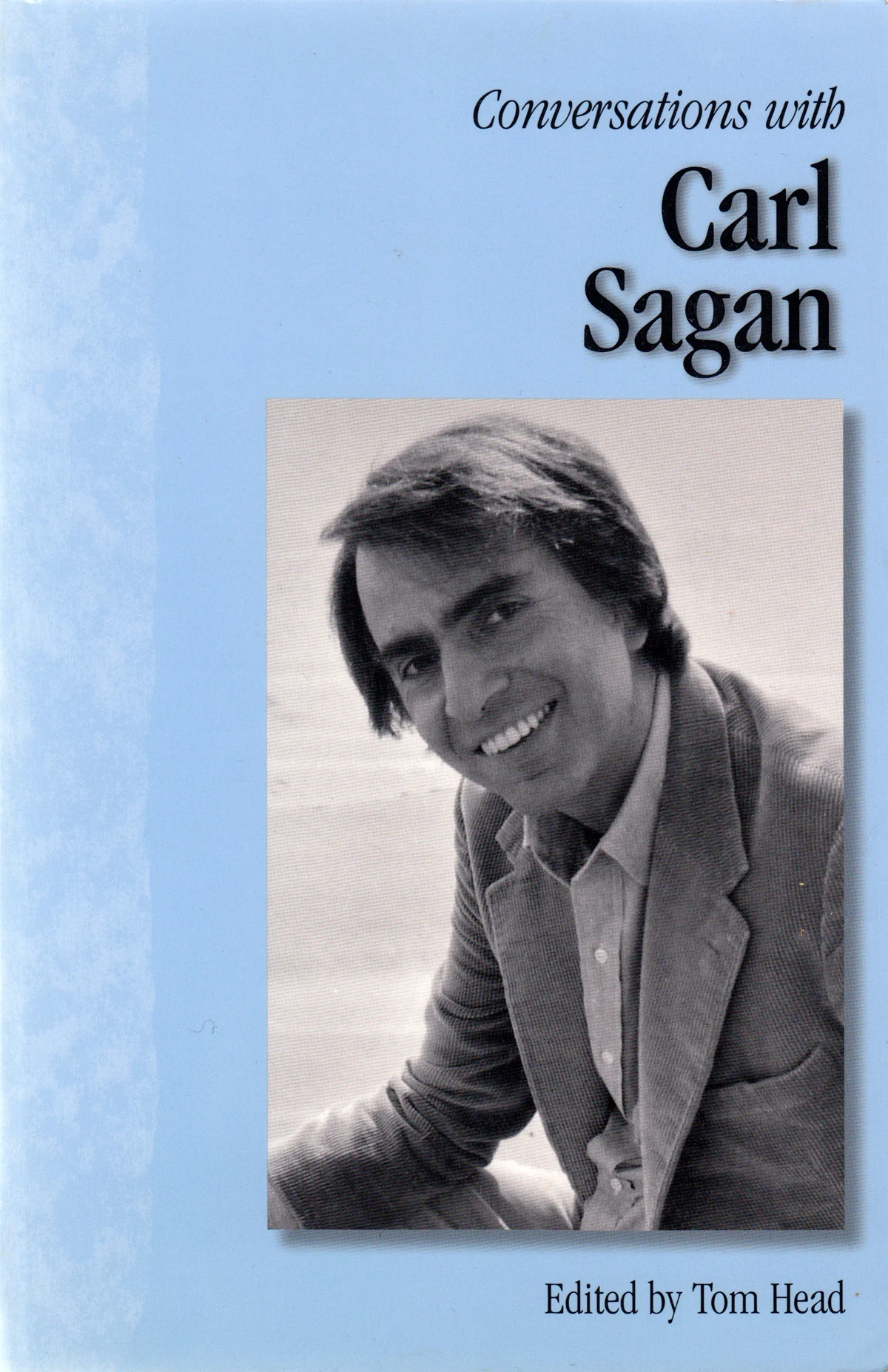
The pursuit of cosmic understanding represents one of the most profound intellectual endeavors in human history, bridging the gap between the rigid methodology of science and the intuitive reach of philosophy. As NASA astrophysicist and exoplanet researcher Dr. Natalie Batalha recently articulated, human consciousness serves as a unique aperture through which the universe experiences its own existence. This perspective, which views the human physical form as a convergence of 13.7 billion years of cosmic evolution, mirrors the lifelong inquiries of the late astronomer Carl Sagan. Through his work, particularly in the seminal 1980 documentary series Cosmos and his subsequent writings, Sagan sought to demystify the vastness of space while cautioning against the limitations of human perception.
A Chronology of Cosmic Inquiry
The dialogue surrounding our place in the universe has evolved significantly since the mid-20th century. A pivotal moment in this timeline occurred on December 24, 1968, when the Apollo 8 crew captured the Earthrise photograph. This image provided the first true visual evidence of Earth as a fragile, solitary blue marble in the vacuum of space. Twelve years later, in August 1980, journalist Jonathan Cott conducted an extensive interview with Carl Sagan at his Los Angeles home. This conversation took place shortly after the television premiere of Cosmos, a landmark production that brought high-level astrophysics to a global audience. By this time, Sagan had already been instrumental in the 1977 launch of the Voyager Golden Record, a symbolic attempt to archive human culture for potential extraterrestrial discovery. These events collectively signaled a shift in the public consciousness, moving from a terrestrial-centric view to a planetary perspective.
The Science of Cosmic Evolution
At the heart of Sagan’s philosophy was the concept that humans are, quite literally, made of "star stuff." Modern astrophysical data supports this, confirming that the hydrogen atoms constituting our bodies were forged in the immediate aftermath of the Big Bang, while heavier elements like carbon and oxygen were synthesized in the nuclear furnaces of dying stars.

The scale of this evolution is staggering. The universe is approximately 13.8 billion years old, and the Earth itself formed roughly 4.5 billion years ago. Sagan argued that recognizing this deep time is essential for scientific literacy. In his interview with Cott, Sagan emphasized that humanity is the mechanism by which the universe questions its own origins. He noted that while ancient cultures relied on myth and superstition to explain celestial phenomena, the 20th century provided the technological and theoretical framework—via the Hubble expansion law, cosmic microwave background radiation, and stellar nucleosynthesis—to move from folklore to verifiable fact.
The Limits of Common Sense
A significant theme in Sagan’s work is the inherent danger of "common sense." Human evolutionary biology has optimized our brains to navigate terrestrial environments—estimating distances, predicting predator behavior, and understanding Newtonian mechanics on a human scale. However, Sagan cautioned that these survival heuristics are ill-equipped to handle the realities of the very large (galaxies) and the very small (quantum mechanics).
Scientific advancement, Sagan posited, requires the deliberate suspension of our day-to-day expectations. For example, the theory of general relativity challenges the notion of time as a constant, while quantum field theory suggests a universe governed by probability rather than absolute certainty. Sagan’s "Baloney Detection Kit," a set of cognitive tools for critical thinking, was designed specifically to combat the human tendency to mistake intuitive comfort for objective truth. He famously criticized astrology as a modern form of bias, likening it to prejudice; by categorizing individuals into twelve rigid signs, one avoids the complexity of true human engagement, much as racism or sexism relies on dehumanizing generalizations.
Supporting Data and Scientific Implications
The implications of Sagan’s worldview remain central to contemporary research. Data from the Kepler Space Telescope, a mission which Dr. Natalie Batalha helped lead, has revolutionized our understanding of the cosmos by confirming thousands of exoplanets. Current estimates suggest that there are upwards of 100 billion stars in our galaxy alone, and a significant percentage of these host planetary systems. This reinforces the "Copernican Principle," which suggests that Earth is not in a privileged position within the universe.

From a sociological perspective, the "cosmic perspective" advocated by Sagan and Batalha has tangible policy implications. It fosters a sense of stewardship for the planet. If the Earth is the only known vessel for sentient life in a vast, indifferent expanse, the preservation of its biosphere becomes a moral imperative rather than a political preference. This sentiment is echoed by modern space agencies and climate scientists, who use satellite observation to monitor the health of the Earth as a closed system.
Official Perspectives and Academic Reception
In the academic and scientific communities, Sagan’s ability to communicate complex concepts without sacrificing intellectual rigor is still viewed as the gold standard for science communication. While some critics of his era argued that his focus on the poetic nature of science risked blurring the lines between philosophy and hard physics, the prevailing consensus is that his approach successfully expanded the public’s scientific literacy.
Dr. Batalha’s recent commentary on the "fluidity of time and space" aligns with the current scientific consensus regarding the interconnectedness of matter. By framing the self as a "portal to the universe," Batalha and Sagan provide a framework for existential meaning that does not rely on dogma. Instead, they propose that the pursuit of knowledge is an end in itself.
The Future of Human Knowledge
Sagan’s outlook on the future was one of cautious optimism. He viewed human knowledge not as a final destination, but as a series of "successive approximations." He posited that the universe is sufficiently complex to remain a source of endless discovery, yet sufficiently ordered to be partially understood by the human mind. This balance prevents the two extremes of nihilism—the belief that everything is known and there is no purpose, or the belief that the universe is so incomprehensible that inquiry is futile.

As we move further into the 21st century, the challenges Sagan identified—the temptation to project human desires onto the cosmos and the struggle against scientific illiteracy—remain prevalent. However, the trajectory of exploration continues. From the ongoing observations of the James Webb Space Telescope to the search for signs of life on moons like Europa or Enceladus, humanity continues to probe the mysteries Sagan described.
The synthesis of Sagan’s historical insights and modern scientific data suggests that our destiny is indeed tied to our willingness to embrace the unknown. By shifting our focus from the immediate, ego-centric concerns of daily life to the broader context of cosmic evolution, we gain both a sense of humility and a renewed appreciation for the extraordinary, fleeting opportunity to exist as conscious witnesses to the universe. As Sagan noted, it is a "best possible world" because it is a world that invites us to learn, to grow, and to wonder.