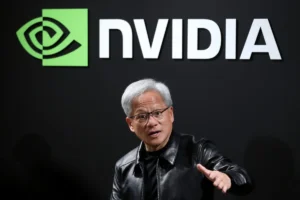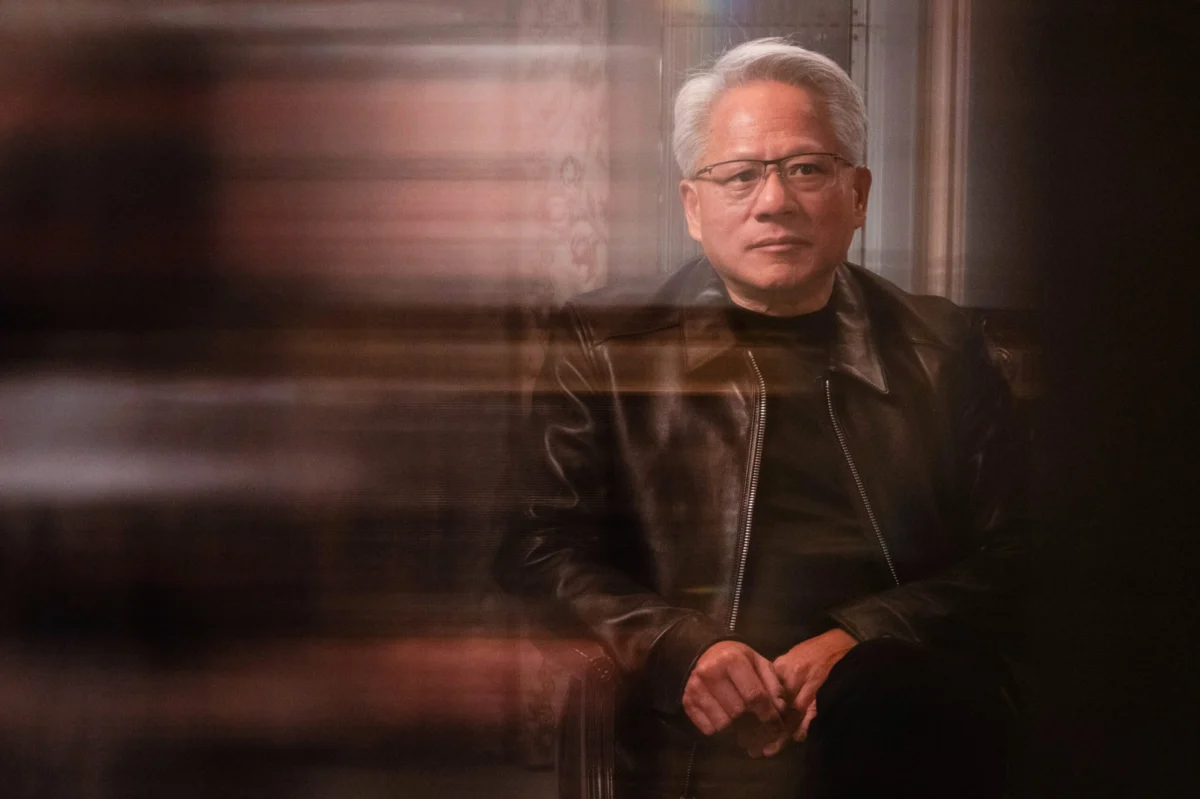
Few corporate executives loom larger over a single enterprise than Jensen Huang does at Nvidia. Over a remarkable 33-year tenure as chief executive officer, Huang has transformed the semiconductor pioneer from a niche graphics chip designer into an indispensable titan of the artificial intelligence revolution, boasting a staggering $4.3 trillion market valuation. Today, however, that singular dominance has become a vulnerability. Following Huang’s public acknowledgment of personal infidelity and subsequent revelations regarding foreign intelligence targeting, the linchpin of the global AI industry is being forced to confront the absolute limits of its corporate governance, compliance oversight, and succession planning.
The crisis erupted when Huang admitted to an extramarital affair with a woman whom U.S. national security and intelligence authorities concluded was a Chinese intelligence asset, as first reported by The New York Times. In response to the disclosure, Huang acknowledged the relationship publicly on a Sunday, prompting Nvidia’s board of directors to swiftly announce a formal, independent investigation. While the board emphasized in its initial statements that it had “no reason to believe that either national security or Nvidia secrets were compromised,” it underscored that the comprehensive inquiry would meticulously scrutinize “all available information.”
The unfolding situation places Nvidia’s board in an extraordinarily delicate position. Investigators are tasked with reviewing—and potentially considering the ouster of—arguably the most vital executive driving America’s technological and economic dominance in the artificial intelligence sector. Compounding this challenge is the very governance structure that helped propel Nvidia to its current heights: a highly centralized corporate architecture where Huang reigns as an outsized, irreplaceable decision-maker.
The Anatomy of a Cult of Personality and Centralized Power
Nvidia and its charismatic leader are fundamentally inseparable. At 63 years old, Huang has cultivated an internal and external corporate culture that places him at the absolute center of gravity. His signature leather jacket, omnipresent at product launches and financial keynotes, has been eagerly replicated by legions of tech enthusiasts, while his celebrity status has drawn comparisons to rock stars rather than traditional semiconductor executives. Beyond consumer-facing branding, Huang’s operational footprint within Nvidia is total.
Unlike most Fortune 500 corporations of comparable scale, Nvidia operates without a chief operating officer. Instead, Huang maintains an astonishing 60 direct reports, funneling virtually all major strategic, technical, and operational decisions directly through his office. This extreme concentration of authority has generated immense efficiency during rapid industry shifts, but it has left a profound void regarding executive continuity.
Furthermore, Huang’s influence extends far beyond corporate headquarters in Santa Clara, California. In recent years, he has cultivated deep relationships within high-level political circles, serving as a key informal advisor on national technology policy to successive administrations, including accompanying government delegations on international diplomatic and trade missions. As Nvidia’s largest individual shareholder—holding a 3.56% equity stake—Huang’s personal financial fortune is directly tied to the company’s market capitalization, which experienced an immediate shockwaves-inducing drop of more than 4% on Monday following his weekend admission.
The Compliance Framework and Regulatory Questions
The scandal has also cast a harsh light on Nvidia’s internal compliance and risk-management structures. Historically, the company has operated without a dedicated chief compliance officer, relying instead on a centralized compliance committee composed of the chief financial officer, the executive vice president of operations, and the senior vice president of human resources.
Regulatory scrutiny regarding this governance model is not entirely new. In September 2022, staff members at the Securities and Exchange Commission (SEC) formally inquired about Nvidia’s board-level risk oversight mechanisms, specifically questioning the absence of a standalone compliance officer, reporting lines, and overall structural safeguards. In response, Nvidia defended its committee-based approach, asserting that the arrangement effectively ensures strict adherence to internal corporate policies across all organizational tiers.
However, legal and compliance experts note that traditional corporate compliance frameworks are rarely designed to monitor or mitigate espionage or personal security risks involving top-tier executives. Hui Chen, a former federal prosecutor who served as the U.S. Justice Department’s inaugural compliance counsel expert from 2015 to 2017, observed that corporate risk management systems overwhelmingly focus on data leaks and compliance breaches originating from rank-and-file employees, routinely neglecting the disproportionate vulnerability posed by senior leadership.
A Void in Succession Planning
For corporate governance scholars, the unfolding crisis at Nvidia serves as a textbook warning regarding the dangers of prolonged, unmitigated CEO entrenchment. Jason Schloetzer, an associate professor at Georgetown University specializing in CEO succession practices, points out that the board’s failure to establish and publicly communicate a multi-year succession plan has left the firm exceptionally exposed.
“The board has made a mistake by not having a clearly outlined succession plan that’s been telegraphed to the market for a year or two,” Schloetzer noted. “They find themselves at the day of reckoning, and it’s a sudden and perhaps forced one, rather than a relay situation where they have time to figure it out as they go.”
Throughout his tenure, Huang has consistently dismissed conventional succession planning frameworks, arguing in numerous media interviews that his leadership philosophy relies on continuously transferring his institutional knowledge horizontally across his executive team. He has frequently expressed a preference that his eventual successor emerge from within the company’s existing ranks, though no such candidate has ever been officially designated or groomed in the public eye.
Potential Pathways Forward for Nvidia’s Board
As the board’s independent investigation progresses, directors face a narrow set of difficult choices. According to corporate governance advisors like Brian Burke, founder of Burke Law & Strategy, the board could ultimately compel Huang to step down immediately, transition into an advisory or non-executive role, or weather the storm depending on what the investigation uncovers regarding national security compliance.
In the event of an immediate departure, the board would need to activate an emergency leadership transition. Market analysts and governance experts have floated several potential interim solutions:
- Stephen Neal: As Nvidia’s lead independent director and the chairman emeritus and senior counsel at international law firm Cooley LLP, Neal possesses the legal and governance background to steady the ship temporarily.
- Colette Kress: Nvidia’s chief financial officer, who commands deep familiarity with the company’s financial machinery and investor relations.
- Internal Family Succession: Huang’s own family members occupy influential operational roles within the firm. His son, Spencer Huang, serves as a director of product management; his daughter, Madison Huang, holds the position of senior director of product marketing; and his son-in-law, Nico Caprez, operates as the vice president of global AI infrastructure growth. While family succession at a multi-trillion-dollar enterprise remains statistically rare, these insiders represent part of the broader leadership ecosystem.
Broader Market Implications and Industry Vulnerability
The stakes extend far beyond executive suites and shareholder portfolios. Nvidia currently commands an estimated 90% market share of high-performance graphics processing units (GPUs) that power the vast global infrastructure of artificial intelligence data centers. Any prolonged leadership vacuum, governance paralysis, or structural reorganization risks disrupting the hardware supply chains that feed tech giants building foundational large language models.
While corporate scandals involving romantic liaisons and executive misconduct are well-documented—such as McDonald’s high-profile ouster of former CEO Steve Easterbrook and subsequent multi-million-dollar legal recoveries over undisclosed workplace relationships—Nvidia’s situation is fundamentally distinct. The intersection of personal indiscretion, alleged foreign intelligence targeting, and the command of the world’s most critical artificial intelligence infrastructure elevates the matter from a standard corporate governance violation to a premier national security and economic stability concern.
For now, the global technology sector watches and waits as Nvidia’s board navigates unchartered waters. Whether Jensen Huang can retain his grip on the empire he built, or whether the company is forced into a sudden and turbulent generational handover, the outcome will redefine corporate governance standards for the artificial intelligence era.