
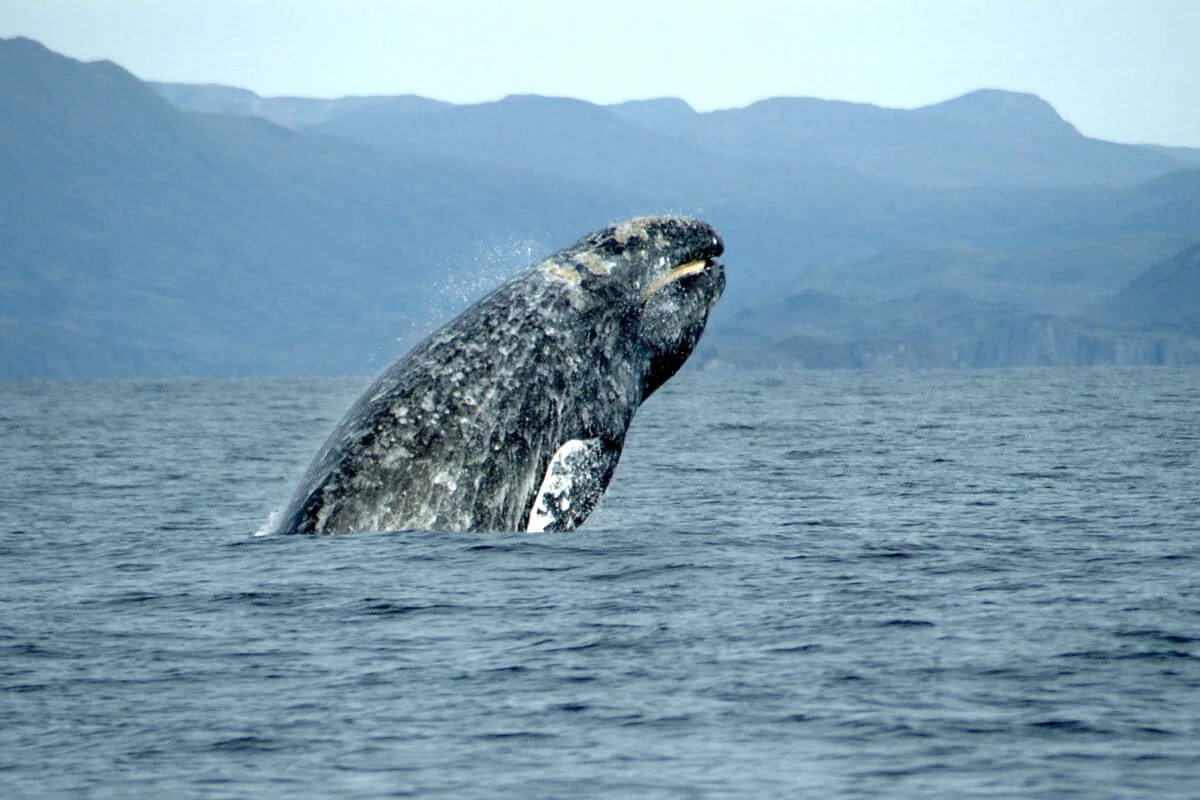
The gray whale, a species once celebrated for its remarkable recovery from the brink of extinction, is currently facing a modern crisis that highlights the profound intersection of climate change and industrial maritime activity. Known for undertaking one of the longest annual migrations of any mammal—a staggering 19,000-kilometer (12,000-mile) round trip between the Arctic and the lagoons of Baja California, Mexico—the gray whale (Eschrichtius robustus) is increasingly deviating from its traditional coastal routes. New research indicates that these majestic 15-meter (50-foot) mammals are entering the San Francisco Bay in unprecedented numbers, a shift that is proving to be a deadly gamble. Since 2016, the eastern North Pacific population of gray whales has plummeted by more than 50%, a decline that has alarmed marine biologists and environmentalists alike.
Historically, gray whales were rarely seen inside the San Francisco Bay. Their migration typically follows the coastline, staying within the relatively shallow waters of the continental shelf but avoiding the enclosed, high-traffic environments of major urban estuaries. However, a study led by Josephine Slaathaug of Sonoma State University and published in the journal Frontiers in Marine Science has documented a significant shift in behavior. Between 2018 and 2025, researchers utilized extensive photo-identification surveys to record 114 individual gray whales within the bay. This influx into a "uniquely complex and busy waterway," as described by marine biologist Rachel Rhodes, has exposed the population to a suite of anthropogenic threats they are ill-equipped to handle.
The San Francisco Bay Mortality Crisis
The presence of gray whales in the San Francisco Bay is not merely a biological curiosity; it is a symptom of a larger ecological distress. The study conducted by Slaathaug and her colleagues revealed a grim reality for the whales that venture into these urbanized waters. Of the 114 individuals identified through photography, at least 18% were later confirmed dead. Researchers located 70 gray whale carcasses in the area during the study period, and by matching fluke patterns and other distinguishing marks, they were able to confirm that 21 of these deaths belonged to the group of whales previously sighted alive in the bay.
Experts warn that this 18% mortality rate is likely a conservative estimate. In marine environments, many carcasses sink to the seafloor or are carried out to sea by tides and currents before they can be documented. "The minimum mortality rate of 18% observed in San Francisco seems to be unique in terms of the intensity of mortality, though gray whales face threats and die across their entire migratory route," Slaathaug noted. The intensity of deaths within such a localized area suggests that the bay has become a "mortality hotspot," where the cumulative stressors of malnutrition and physical trauma converge.
A Collision Course: Ship Strikes and Urban Hazards
The primary cause of death for whales entering the San Francisco Bay is physical trauma, specifically from ship strikes. Of the documented carcasses, 30 individuals showed clear evidence of being hit by vessels. The San Francisco Bay is home to some of the busiest ports on the West Coast, including the Port of Oakland and the Port of Richmond. The narrow "Golden Gate" entrance and the congested shipping lanes create a gauntlet for any large marine mammal.
As the whales expand their range into these urban environments, they encounter a landscape dominated by massive container ships, high-speed ferries, and recreational boaters. Unlike the open ocean, the bay offers little room for maneuverability. Rachel Rhodes, a marine biologist who spoke with The New York Times, emphasized the lack of space for coexistence: "It’s such a uniquely complex and busy waterway. Then you add whales into the mix, and there’s just not a lot of room." The whales, often already weakened by other factors, may lack the energy or the acoustic awareness to avoid fast-moving hulls and propellers.
The Arctic Connection: Malnutrition and the Melting Cryosphere
While ship strikes are the immediate cause of death for many, the underlying reason for the whales’ presence in the bay is often malnutrition. Gray whales are coastal bottom feeders, a niche role among baleen whales. They rely on their specialized baleen plates to filter tiny invertebrates, such as amphipods, from the seafloor—a region known as the benthic layer. Their primary feeding grounds are located in the nutrient-rich waters of the Bering, Chukchi, and Beaufort seas in the Arctic.
Climate change is currently dismantling the Arctic food web that sustains these giants. As the Arctic warms at a rate nearly four times faster than the global average, the timing and extent of sea ice melt are shifting. This has a "bottom-up" effect on the ecosystem. Normally, as sea ice melts, it triggers a bloom of phytoplankton. These microscopic plants eventually die and sink to the seafloor, providing a "snow" of nutrients for the benthic invertebrates.

However, earlier-than-usual ice melt is disrupting this cycle. When the ice disappears too soon, the phytoplankton bloom occurs earlier in the season, often before the benthic community is ready to process the influx. Consequently, the phytoplankton may be consumed by pelagic (open water) species or decompose before reaching the bottom. This leads to a collapse in the populations of the high-calorie invertebrates that gray whales depend on to build the fat reserves necessary for their 12,000-mile journey.
"As the Arctic warms, ice melt impacts the invertebrate species that carry high nutritional value for these whales," Slaathaug explained. Starving whales, unable to find sufficient food in their traditional northern summering grounds, are forced to seek out "emergency pit stops" along their migration route. The San Francisco Bay, with its rich sediment and potential for alternative food sources, appears to be one such stop. Unfortunately, what should be a refuge often becomes a terminal destination.
Chronology of a Declining Population
The current crisis in the San Francisco Bay is part of a broader "Unusual Mortality Event" (UME) that has plagued the eastern North Pacific gray whale population for several years. To understand the gravity of the situation, it is necessary to look at the timeline of the species’ recent history:
- 1994: The eastern North Pacific gray whale is removed from the Endangered Species List after a successful recovery from commercial whaling, with the population reaching approximately 21,000 individuals.
- 1999-2000: The first major UME occurs, with hundreds of whales washing up dead along the West Coast. The population drops significantly but eventually begins to recover.
- 2016: The population reaches a modern peak of approximately 27,000 individuals.
- 2019: A second UME is officially declared by the National Oceanic and Atmospheric Administration (NOAA) after an alarming number of "skinny" whales are sighted and record numbers of strandings occur from Mexico to Alaska.
- 2019-2023: The UME continues, with the population plummeting. By late 2023, estimates suggest the population has fallen to roughly 14,500 individuals—a decline of more than 50% in less than a decade.
- 2024-2025: While NOAA officially closed the UME in early 2024, citing a stabilization in stranding numbers, localized data from the San Francisco Bay suggests that the threats remain acute and that migratory patterns have been permanently altered.
Scientific Methodology and Identification
The findings by Slaathaug and her team are the result of rigorous longitudinal data collection. Researchers utilize high-resolution photography to document the unique markings on the whales’ flukes and dorsal ridges. These "fingerprints" allow scientists to track individual whales over multiple years and across vast distances.
By comparing live sightings in the bay with the data from recovered carcasses, the team was able to prove that the whales dying in the bay were the same ones seen entering it weeks or months earlier. This direct link confirms that the bay environment itself—and the hazards within it—is a primary factor in the mortality of these specific individuals. Ongoing research is currently analyzing tissue samples and fecal matter to determine exactly what the whales are attempting to eat within the bay’s brackish waters, which differ significantly from their usual salty Arctic feeding grounds.
Conservation Strategies and Future Outlook
The recurring deaths of gray whales in one of California’s most iconic waterways have prompted calls for stricter maritime regulations. Currently, education initiatives are underway to inform commercial pilots and recreational boaters about the presence of whales. Organizations like the Marine Mammal Center are leading these efforts, using real-time sighting data to warn vessels.
However, many experts argue that voluntary measures are insufficient. "Stricter conservation strategies such as mandatory slow speed zones may be necessary if the pattern of mortality continues," said Slaathaug. Implementing mandatory speed reductions in shipping lanes has proven effective in other regions, such as the Atlantic coast, where it is used to protect the critically endangered North Atlantic right whale. In San Francisco, such a move would require coordination between federal agencies, port authorities, and the shipping industry.
The plight of the gray whale serves as a "sentinel" for the health of the ocean. Their 50% population decline is not just a tragedy for a single species; it is an indicator of a destabilized Arctic ecosystem and an ocean environment that is becoming increasingly hostile to its inhabitants. As the whales continue to navigate a world transformed by rising temperatures and industrial expansion, their survival will depend on our ability to mitigate the urban hazards we have placed in their path and address the root causes of the climate crisis that is driving them toward our shores.
The ongoing research in San Francisco Bay provides a critical window into the adaptability—and the limits—of marine life. While the gray whale has shown resilience in the past, the current combination of starvation and physical trauma presents a challenge of unprecedented scale. For the whales entering the Golden Gate, the bay is a symbol of both hope for sustenance and the very real danger of extinction.










Leave a Reply