
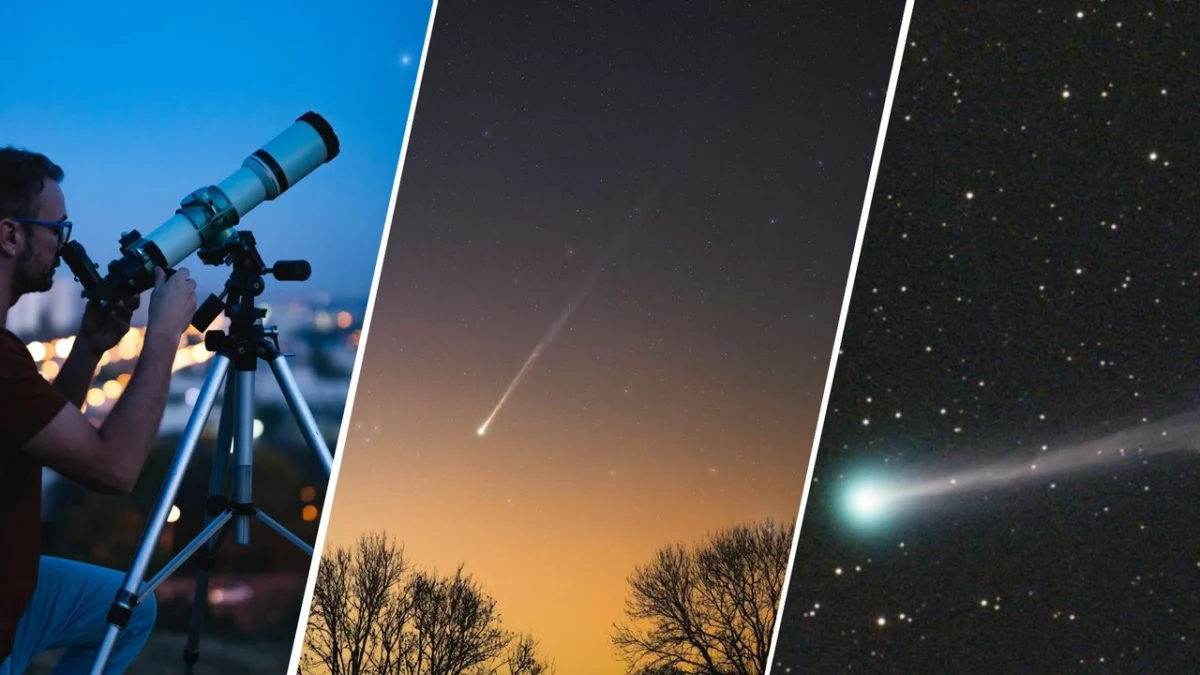
As the pre-dawn darkness of April 17th graces the skies, observers in the Northern Hemisphere are presented with a final, precious opportunity to witness the celestial dance of Comet C/2025 R3, affectionately known as PanSTARRS. This icy wanderer, currently gracing our night skies, is poised to dip below the horizon, effectively bidding farewell to observers in the north for the foreseeable future. For those keen to catch this ephemeral display, heading away from the intrusive glow of city lights will significantly enhance the chances of spotting this cosmic visitor.
A Glimpse of the Icy Traveler
Comet C/2025 R3 (PanSTARRS) has already achieved a respectable brightness, estimated at a magnitude of +4.7. This measurement, a cornerstone of astronomical observation, quantifies the luminosity of celestial objects; the lower the magnitude number, the brighter the object. For context, the human eye, under optimal dark sky conditions, can perceive objects as faint as magnitude +6.5. This means that Comet PanSTARRS, while not as brilliant as the brightest stars, is indeed visible to the unaided eye as a faint smudge of light for those situated in areas free from light pollution.
For those seeking a more detailed view, a pair of 10×50 binoculars will prove invaluable. These instruments can resolve the comet’s glowing nucleus, offering a clearer perception of its ethereal presence. Furthermore, the adventurous skywatcher might consider employing long-exposure photography. This technique allows for the capture of striking details within Comet PanSTARRS’ tail, a dynamic feature sculpted by the relentless push of the solar wind. The interplay between the comet and this stream of charged particles from the Sun creates mesmerizing, often wispy, structures that photography can immortalize.
The Comet’s Journey: A Celestial Timeline
The comet’s current visibility in the Northern Hemisphere is a transient phase in its grand orbital journey. Comet PanSTARRS is expected to reach its perihelion – the point in its orbit closest to the Sun – on the night of April 19th. This proximity to our star will undoubtedly intensify its brilliance, offering a final surge in its observable brightness. However, this same closeness also marks the beginning of its retreat from our visible sky. As it swings around the Sun, its trajectory will carry it towards the Southern Hemisphere, making it inaccessible to northern observers.
The path Comet PanSTARRS will trace after its perihelion passage is a testament to the vastness of our solar system. It will journey through constellations familiar to many skygazers, including Pisces, Cetus, Eridanus, and Orion. This celestial transit, while a spectacle in itself, also signifies its ultimate departure from our view for the remainder of our lifetimes. Comets are notoriously unpredictable in their journeys, often embarking on paths that take them on multi-generational orbits or even eject them from the solar system entirely. The classification of C/2025 R3 indicates it’s a newly discovered comet, or one whose orbit is not yet fully understood, adding an element of mystery to its appearance.
Optimal Viewing Conditions: Timing and Location are Key
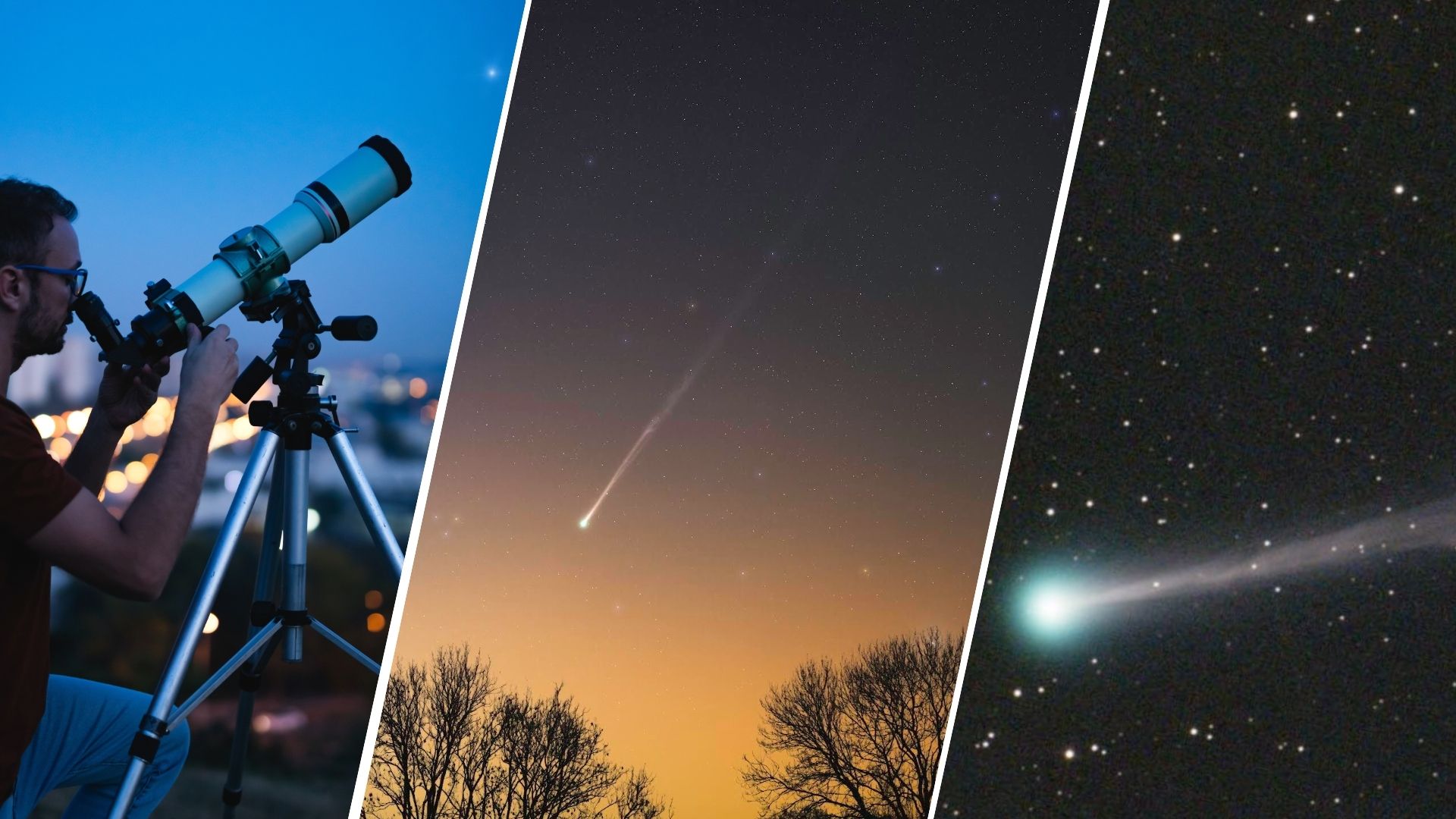
To maximize the chances of witnessing Comet PanSTARRS, astronomers and skywatching enthusiasts recommend being in position approximately 90 minutes before sunrise on April 17th. The early morning hours are crucial, as the comet will be low on the eastern horizon. The further one can venture from urban centers and their pervasive light pollution, the more pronounced the comet’s faint glow will appear against the inky backdrop of the predawn sky.
Navigating the night sky to find the comet can be an engaging experience in itself. Skywatchers are advised to first locate the "Great Square of Pegasus," a prominent asterism composed of four bright stars that will be rising in the eastern sky. Comet PanSTARRS is anticipated to be visible in the patch of sky situated approximately five degrees above Algenib, the lowest of the four stars forming the Great Square. For those without star charts, this distance can be approximated by holding three middle fingers together at arm’s length against the sky – the span roughly equates to five degrees.
The Science Behind the Spectacle
Comets, often described as "dirty snowballs" of ice, dust, and rock, originate from the frigid outer reaches of our solar system, primarily the Kuiper Belt and the Oort Cloud. Their elliptical orbits bring them periodically into the inner solar system, where the Sun’s heat causes their volatile ices to sublimate, releasing gas and dust that form the characteristic coma and tail. The tail of a comet always points away from the Sun, a phenomenon driven by solar radiation pressure and the solar wind.
The Comet Observation Database (COBS), a collaborative effort by amateur and professional astronomers, plays a vital role in tracking and documenting the behavior of these celestial visitors. The magnitude estimations logged in COBS provide crucial data for understanding a comet’s brightness and predicting its visibility. As Comet PanSTARRS journeys closer to the Sun, its activity is expected to increase, potentially leading to a brighter and more visually striking appearance. However, this proximity also increases the risk of the comet fragmenting or disintegrating, adding an element of uncertainty to its future visibility.
Technological Aids for Celestial Observation
While the naked eye can offer a glimpse of Comet PanSTARRS, specialized equipment can dramatically enhance the viewing experience. As mentioned, 10×50 binoculars offer a significant boost in resolving power, bringing the comet’s nucleus into sharper focus. For those with a deeper interest in astrophotography, modern digital cameras equipped with manual controls are essential.

The Canon EOS R7, for instance, has been highlighted as a suitable camera for beginners aiming to capture celestial events. Its capabilities in low-light conditions and its range of customizable settings make it an excellent tool for those venturing into astrophotography. Capturing images of comets requires careful consideration of exposure times, aperture settings, and ISO sensitivity to balance detail with noise reduction. Long-exposure photography, in particular, allows for the accumulation of light over extended periods, revealing faint details like the comet’s tail that would otherwise be imperceptible.
Broader Implications and Future Prospects
The appearance of comets like C/2025 R3 (PanSTARRS) serves as a poignant reminder of the dynamic nature of our solar system and the vastness of the universe. Each comet that graces our skies offers a unique opportunity for scientific study and public engagement with astronomy. Data gathered from these transient visitors contributes to our understanding of the early solar system, the composition of interstellar material, and the processes that shape planetary bodies.
The transition of Comet PanSTARRS from the Northern to the Southern Hemisphere sky underscores the interconnectedness of our celestial neighborhood. While Northern Hemisphere observers will bid farewell, those in the south will soon have their chance to witness this icy traveler. The fact that this comet may never be seen again in our lifetimes adds a layer of poignancy to its current appearance, encouraging skywatchers to seize the moment.
For those who manage to capture stunning images of Comet C/2025 R3 (PanSTARRS), sharing these observations with the wider scientific and public community is encouraged. Platforms like Space.com often invite readers to submit their astrophotography, fostering a sense of collective exploration and appreciation for the wonders of the cosmos. Such submissions not only provide valuable citizen science data but also inspire others to look up and connect with the universe around us.
In conclusion, the predawn hours of April 17th present a final, fleeting window for Northern Hemisphere residents to witness the grandeur of Comet C/2025 R3 (PanSTARRS). By seeking dark skies, utilizing available optical aids, and understanding the optimal viewing times, skygazers can etch this celestial visitor into their memories before it embarks on its journey beyond our sight. This cosmic spectacle serves as a powerful testament to the ongoing wonders that await us in the night sky, urging us to look up, observe, and appreciate our place in the grand tapestry of the universe.









Leave a Reply