
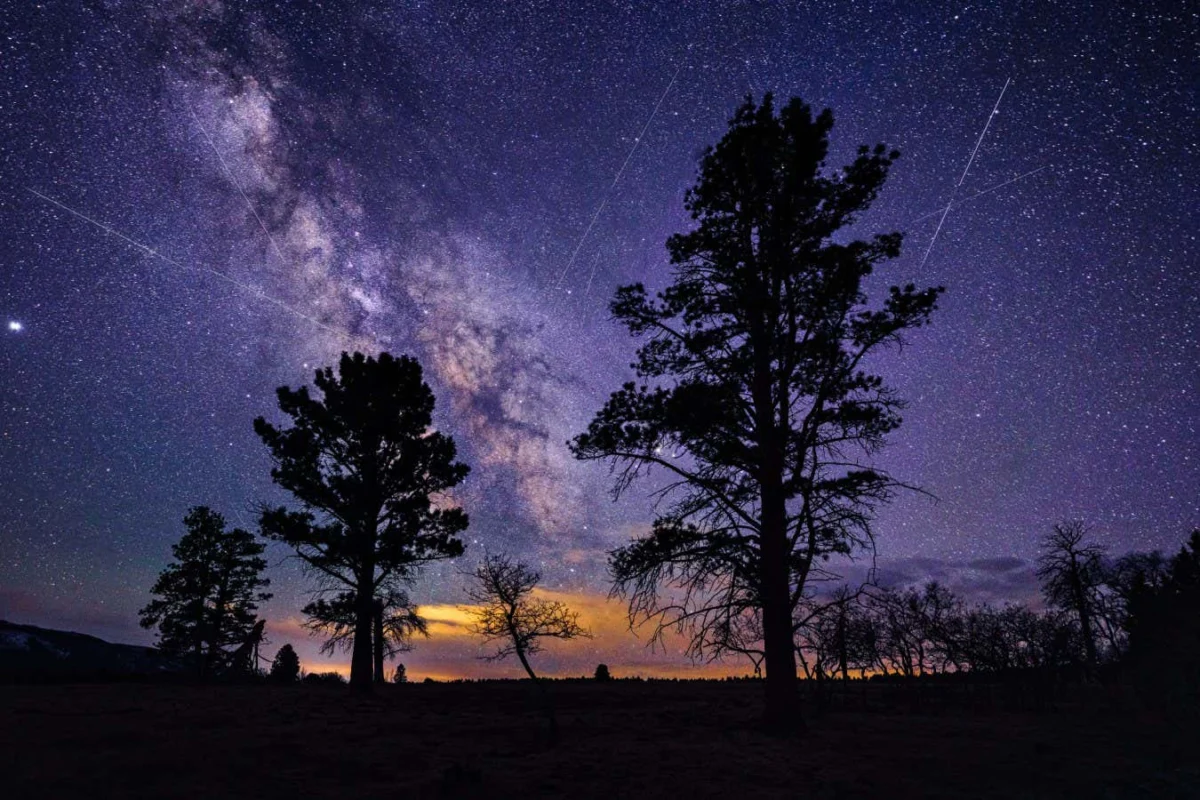
The Lyrid meteor shower, a celestial event anticipated by stargazers worldwide, is set to reach its zenith on the evening of April 22nd, extending into the early hours of April 23rd. While this period represents the peak of activity, observers will have an extended window to witness the spectacle, with visible meteors expected between April 16th and April 25th. For those eager to enhance their viewing experience, New Scientist offers a dedicated stargazing companion, available in audio format and within the podcast feed for "The world, the universe and us," providing comprehensive guidance on identifying and appreciating this annual cosmic display.
Understanding the Lyrids: A Cosmic Legacy
Meteors, often referred to as "shooting stars," are a dazzling phenomenon resulting from high-speed cosmic debris entering Earth’s atmosphere. These minute particles, typically dust or rock fragments, encounter immense friction as they plunge into our atmosphere at extraordinary velocities. This friction causes them to incinerate, producing the brilliant streaks of light that captivate observers.
The predictable recurrence of meteor showers is intrinsically linked to Earth’s annual orbital path around the Sun. As our planet traverses its celestial journey, it periodically passes through expansive clouds of dust and debris. These cosmic remnants are primarily shed by comets and asteroids, and their predictable presence explains why specific meteor showers occur around the same dates each year.
The Lyrid meteor shower, in particular, traces its origins to the long-period comet C/1861 G1, famously known as Thatcher. This celestial body, first identified in 1861, embarks on an extensive 415-year orbit around the Sun. Its next predicted passage through our vicinity of the solar system is anticipated around the year 2278, a testament to its immense orbital period.
Locating the Lyrids: Navigating the Night Sky
Unlike some celestial events that require pinpointing a specific area of the sky, meteor showers are visible across a broad expanse. However, each shower is named based on the apparent origin point of its meteors, known as the radiant. For the Lyrids, this radiant lies within the northern hemisphere constellation Lyra, which is home to the brilliant star Vega.
For observers situated in the northern hemisphere, Lyra will ascend in the eastern sky shortly after sunset. As the night progresses, the constellation will climb higher, offering more optimal viewing conditions. However, it is important to note that as dawn approaches, the increasing ambient light from the rising Sun can diminish the visibility of fainter meteors.
A key navigational aid for locating Lyra is the prominent asterism known as the Summer Triangle. This easily recognizable formation is comprised of three exceptionally bright stars: Vega, Deneb, and Altair. While named for its visibility during summer nights in the northern hemisphere, the Summer Triangle’s position in the sky shifts with the seasons. In late April, at midnight, these stars will be observable near the eastern horizon. Vega, the highest of these three stars, resides within the constellation Lyra, serving as the radiant point for the Lyrids.
While the Lyrids’ radiant is not visible from the southern hemisphere, meteors are not constrained to a single direction. Consequently, observant individuals in the southern hemisphere may still catch glimpses of shooting stars, particularly if they direct their gaze eastward.
Peak Activity and Viewing Conditions
At the peak of the Lyrid shower, under conditions of clear skies and minimal light pollution, astronomers estimate that observers could witness between 10 and 18 meteors per hour. This rate, while modest compared to some other major meteor showers, still offers a significant opportunity for celestial observation.
The intensity of a meteor shower can be influenced by various factors, including the moon’s phase. Fortunately, for the 2023 Lyrid shower, the moon phase is expected to be relatively favorable, with a waning crescent moon providing less illumination and thus darker skies conducive to meteor viewing. However, the specific lunar phase can vary year to year, underscoring the importance of checking astronomical calendars for the most up-to-date information.
The Science Behind the Spectacle: Cometary Debris in Action
The Lyrids are not the only meteor shower linked to cometary debris. The Perseids in August, for instance, originate from the comet Swift-Tuttle, while the Leonids in November are associated with Comet Tempel-Tuttle. Understanding the parent bodies of these showers provides valuable insight into the dynamics of our solar system and the long-term evolution of cometary trails.
Comets, often described as "dirty snowballs," are celestial bodies composed of ice, dust, and rock. As they approach the Sun, the ice sublimates, releasing gas and dust that form a coma and a tail. This trail of debris can persist for thousands of years, creating a cosmic river through which Earth periodically flows. The size of the particles varies, from microscopic dust grains to small pebbles, and their composition dictates the brightness and color of the resulting meteor.
Historical Context and Future Predictions
The Lyrid meteor shower has been observed for centuries, with historical records suggesting its observation dates back to at least 687 BC, according to Chinese astronomical records. This long history of observation highlights humanity’s enduring fascination with the night sky and our efforts to understand its patterns.
While the Lyrids are known for their consistent, albeit not exceptionally numerous, displays, they are also capable of producing occasional outbursts of heightened activity. These outbursts are thought to occur when Earth passes through denser regions of the comet’s debris trail, possibly remnants from more recent passages of Comet Thatcher or fragmentation events. Predicting these outbursts with precision remains a challenge for astronomers.
Enhancing Your Viewing Experience
To maximize your chances of enjoying the Lyrid meteor shower, several practical tips can be employed:
- Find a Dark Location: Light pollution from urban areas significantly diminishes the visibility of meteors. Seeking out a location away from city lights, such as a rural area or a designated dark sky park, is paramount.
- Allow Your Eyes to Adjust: It takes approximately 20 to 30 minutes for human eyes to become fully adapted to the dark. Avoid looking at bright lights, including phone screens, during this adjustment period.
- Get Comfortable: Meteor watching can involve extended periods of looking upwards. Bring a comfortable chair, a blanket, or a sleeping bag to ensure you can relax and observe without discomfort.
- Face Eastward: While meteors can appear in any part of the sky, their radiant is in the east. Facing eastward will increase your chances of seeing more meteors originating from this point.
- Be Patient: Meteor showers are unpredictable events. While the peak offers the highest probability of sightings, patience is key. Enjoy the quiet contemplation of the night sky.
The Role of Technology in Modern Stargazing
The advent of advanced astronomical tools and educational resources has democratized stargazing. Mobile applications can assist in identifying constellations, tracking celestial objects, and providing real-time information about meteor showers. Furthermore, online platforms and podcasts, like New Scientist‘s offering, serve as invaluable guides, making complex astronomical phenomena accessible to a broader audience.
The integration of expert commentary and detailed explanations within these platforms allows individuals to not only witness but also understand the science behind these celestial events. The New Scientist stargazing companion, for instance, aims to bridge the gap between casual observation and deeper scientific appreciation, transforming a simple viewing experience into an educational journey.
Broader Implications: Our Place in the Cosmos
The annual occurrence of meteor showers serves as a gentle reminder of our planet’s dynamic place within the vastness of the solar system. These events connect us to the ancient history of comets and asteroids, offering tangible evidence of the celestial processes that have shaped our cosmic neighborhood. They also inspire a sense of wonder and curiosity, encouraging us to look beyond our terrestrial concerns and contemplate the grandeur of the universe.
The Lyrids, though perhaps not the most prolific meteor shower, offer a consistent and accessible opportunity for individuals to engage with astronomy. By understanding their origins, learning how to observe them effectively, and appreciating the scientific principles at play, we can transform a fleeting glimpse of a shooting star into a profound connection with the cosmos. As the Lyrids grace our skies once more, they invite us to pause, look up, and marvel at the enduring beauty and mystery of the universe.








Leave a Reply