San Francisco-based data and AI powerhouse Databricks unveiled a sophisticated new suite of agentic artificial intelligence tools designed to continuously analyze, organize, and synthesize the fragmented data scattered across modern corporate ecosystems. Announced on Wednesday, the new capabilities represent a strategic push to fundamentally transform the daily workflows of office and knowledge workers. By deploying autonomous systems that operate persistently in the background, the company aims to move enterprise AI beyond simple chatbot interactions into a realm of proactive, autonomous execution.
The unveiling follows closely on the heels of a major competitive rollout by rival AI developer Anthropic, creator of the Claude model family. Anthropic released its own enterprise-focused productivity suite, setting the stage for an intense clash over the lucrative corporate software market. As software developers have largely integrated AI into their day-to-day coding practices, the broader $40 trillion global knowledge worker market remains the ultimate frontier for tech companies seeking clear return on investment and widespread enterprise adoption.
The Evolution of Genie and the New Ontology Feature
At the heart of Databricks’ Wednesday launch is a major upgrade to its conversational assistant, Genie. Unlike traditional AI applications that remain dormant until prompted by a user, the updated version of Genie operates continuously. It shadows office workers throughout their daily routines, proactively surfacing relevant insights, retrieving critical information, and making suggestions based on real-time organizational context and ongoing projects.
Complementing the upgraded Genie assistant is a powerful new capability known as "Ontology." This feature acts as an exhaustive index of an organization’s internal landscape, scanning everything from complex management reporting lines and departmental hierarchies to ongoing project pipelines. By mapping these intricate relationships, Ontology allows individual employees to rapidly query company data, execute sophisticated analyses, and bridge organizational silos that typically slow down corporate decision-making.
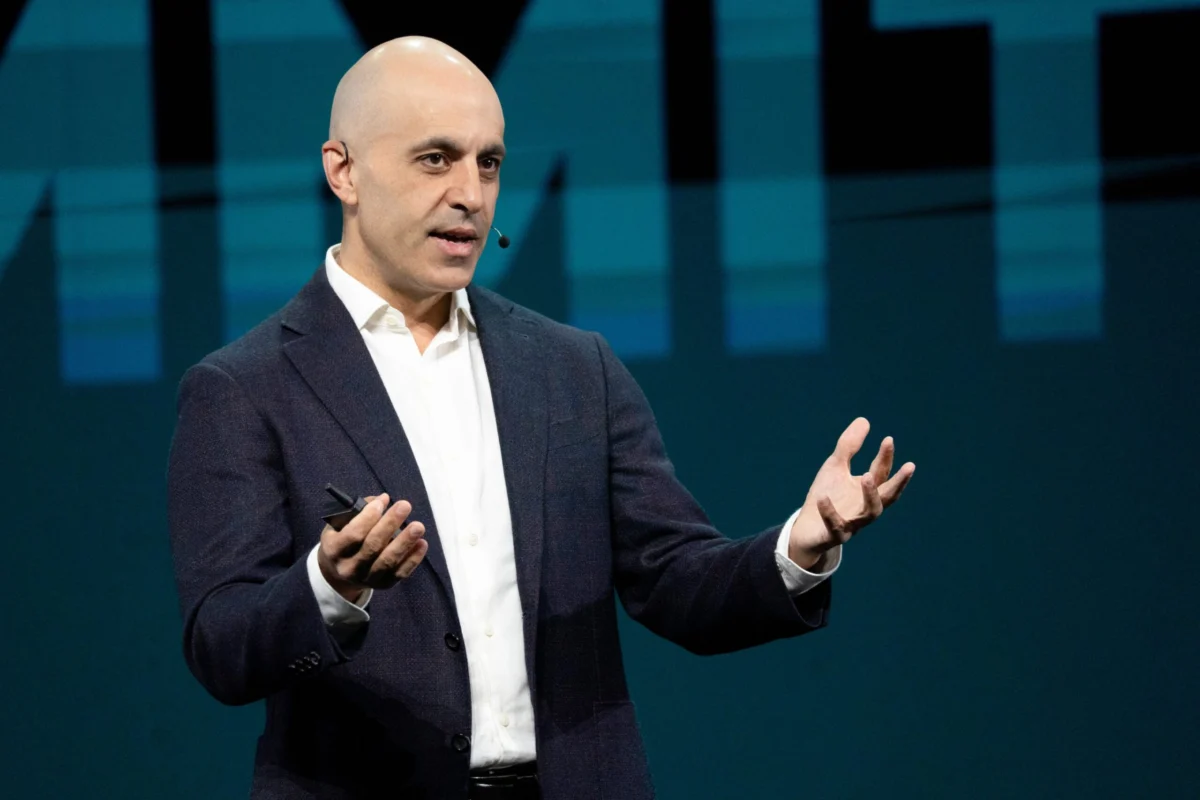
Ali Ghodsi, CEO and co-founder of Databricks, emphasized the profound impact these background agents are already having within his own organization. Speaking to reporters ahead of the public announcement, Ghodsi noted that the continuous nature of the technology sets it apart from previous generations of software.
"The agents are running in the background all the time. So it’s always on," Ghodsi said. "I personally use it every day. Every hour of the day. It’s basically made me a 10x better CEO than I was a year ago."
Ghodsi expressed strong confidence in the commercial viability of the tools, predicting widespread adoption across organizations of all sizes. "Lots of companies, both big and small, will use this," he added.
A Crowded Battlefield: Anthropic’s Enterprise Push and Upcoming IPO
The timing of Databricks’ announcement underscores a broader industry race to capture corporate budgets. Just one day prior to the Databricks launch, Anthropic introduced its own comprehensive suite of productivity tools aimed at office knowledge workers. Anthropic’s new offerings include an AI-powered spreadsheet application designed to challenge established giants like Microsoft Excel and Google Sheets, alongside an advanced feature enabling the Claude assistant to join live video calls. This capability allows the AI to listen to ongoing discussions and begin drafting deliverables and executing tasks while participants are still talking.
This product blitz coincides with a pivotal moment for Anthropic, which is preparing for an initial public offering expected as early as next week. The high-profile market debut could value the company at an estimated $1.4 trillion, making it one of the most closely watched financial events in the history of the technology sector. Wall Street and Silicon Valley alike view Anthropic’s upcoming IPO as a crucial bellwether for the financial health and investor appetite surrounding the generative AI industry.
In the regulatory and financial prospectuses filed ahead of the IPO, Anthropic highlighted the immense economic prize driving these corporate strategies. The company noted that the labor performed by global knowledge workers represented more than $40 trillion in economic value in 2025. By deploying frontier AI models capable of driving meaningful productivity gains, Anthropic aims to expand this economic footprint and accelerate global growth.
While Anthropic prepares for its public market debut, Databricks continues to expand its footprint as a private entity. In August, the San Francisco startup closed a massive $5 billion funding round that valued the company at an impressive $190 billion, underlining the immense private capital flowing into enterprise data infrastructure.
Navigating Industry Headwinds and Leadership Scandals
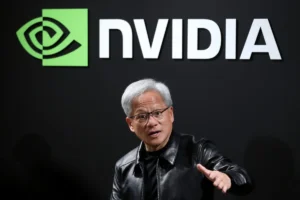
Beyond the fierce competition between startups, the broader artificial intelligence sector has recently found itself rattled by external governance challenges. News broke concerning Nvidia CEO Jensen Huang and an extramarital affair with a woman whom U.S. national security officials reportedly suspect of acting as a foreign intelligence operative for China.
Given Nvidia’s near-monopoly position in supplying the advanced graphics processing units (GPUs) that power modern AI training and inference—as well as the company’s extensive financial backing of various AI startups—concerns have emerged regarding potential ripple effects across the ecosystem. Speculation regarding Huang’s possible departure has fueled anxieties over leadership stability at the infrastructure layer of the AI boom.
Despite these geopolitical and leadership concerns, Ghodsi brushed off the notion that the scandal would derail the broader technological revolution. Expressing strong support for the embattled semiconductor executive, Ghodsi praised Huang’s decades of visionary leadership.
"I think that Jensen is an amazing CEO. He’s built that company for the last many decades. I think he should continue to be the CEO of that company," Ghodsi stated.
Addressing the potential fallout for the broader market, Ghodsi remained resolute. "I think we will weather through this storm," he said, emphasizing that the momentum of the global AI transformation is far too expansive to be derailed by individual executive controversies.
Fact-Based Analysis of Market Implications
The simultaneous moves by Databricks and Anthropic mark a critical transition phase for artificial intelligence. For the past several years, the most visible commercial successes of generative AI were concentrated within software engineering, where tools like automated code generators delivered immediate, measurable efficiency gains. Translating those successes into the sprawling, unstructured environments of general office administration, however, has proven more challenging.
The introduction of "agentic" workflows—systems that do not merely respond to queries but autonomously plan, execute, and monitor multi-step tasks across enterprise software—represents a fundamental shift in software architecture. By embedding intelligence directly into the background fabric of corporate data platforms like Databricks or productivity suites like Anthropic’s, tech companies are attempting to lower the friction of adoption.
However, moving AI agents into the background of daily office life introduces complex challenges, particularly regarding data privacy, security, and employee oversight. As tools like Databricks’ Ontology ingest organizational structures, management hierarchies, and cross-departmental projects, enterprises must enforce rigorous access controls to prevent unauthorized data exposure. Furthermore, as AI systems begin to autonomously retrieve information and make real-time suggestions, organizations will need to establish clear governance frameworks to audit automated actions and mitigate the risk of algorithmic hallucinations influencing critical business decisions.
As Anthropic’s public market debut approaches and Databricks rolls out its background-running agentic ecosystem, the coming months will test whether enterprises are ready to embrace continuous, autonomous AI collaboration on a global scale. The commercial battle lines are drawn, and the ability to demonstrate tangible return on investment for the world’s $40 trillion knowledge economy will ultimately dictate the next chapter of the artificial intelligence boom.