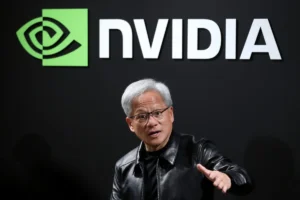
The modern technology sector has long prided itself on being a meritocracy driven by code, compute power, and raw innovation. However, the high-stakes global race for artificial intelligence supremacy has abruptly dragged Silicon Valley into the murky, high-threat realm of international espionage. The seismic scandal that forced the resignation of Jensen Huang, co-founder and longtime chief executive officer of AI chip giant Nvidia, has laid bare a vulnerability that national security experts have warned about for years: the corporate suite has become a primary target for foreign intelligence services.
As artificial intelligence transitions from a commercial novelty into a critical pillar of national security, the intersection of big tech and geopolitics has never been more perilous. The fallout from the Nvidia crisis, combined with a string of brazen security breaches across other leading AI firms, has catalyzed an unprecedented hiring boom for counterintelligence professionals, forced a radical rethinking of executive protection, and triggered a sweeping expansion of economic warfare operations within the United States defense apparatus.
The Anatomy of a Silicon Valley Crisis
The sequence of events that brought down one of the most celebrated executives in the technology industry unfolded with the cinematic precision of a Cold War thriller, yet it played out in the boardrooms of Silicon Valley and the corridors of Washington, D.C.
Last weekend, Jensen Huang publicly admitted to maintaining a romantic relationship with Alice Huang, an executive at Megaspeed who U.S. intelligence agencies had long suspected of operating as an asset for China’s Ministry of State Security. According to classified surveillance and intelligence reports, foreign handlers were actively feeding directives to Alice Huang, who allegedly funneled sensitive insights back to Beijing.
Despite red flags raised by the U.S. intelligence community regarding the nature of the relationship, Jensen Huang’s immense political influence remained unchecked. He continued to enjoy unfettered access to President Donald Trump and senior administration officials, leveraging his status as the steward of the world’s most crucial AI hardware supplier.
The revelation triggered immediate crisis management protocols within Nvidia. The company’s board of directors launched an independent investigation to determine the extent of the exposure. While the preliminary findings indicated that neither core company secrets nor direct national security architecture were compromised, the reputational damage and governance crisis were insurmountable, ultimately costing Huang his position at the helm of the multi-trillion-dollar enterprise.
A Pattern of Vulnerability: The Expanding Threat Landscape
The Nvidia scandal was not an isolated incident; rather, it represented the most dramatic manifestation of a growing wave of targeted espionage operations aimed at American artificial intelligence infrastructure. Just one month prior to the Nvidia revelations, federal law enforcement arrested an OpenAI engineer after discovering a sophisticated listening device planted inside a high-security corporate conference room. According to the Department of Justice, the rogue employee was actively communicating and leaking confidential data to a high-ranking member of the Saudi royal family.
These events have shattered the illusion that commercial technology companies can operate independently of geopolitical conflict. Because foundational models and advanced semiconductor hardware are now viewed by world powers as the ultimate instruments of economic and military dominance, the protection of trade secrets has transformed from a routine corporate function into a vital national security imperative.
Foreign intelligence services and state-sponsored actors no longer need to hack firewalls to extract valuable intellectual property; instead, they target the human element. Executives, researchers, and engineers who hold the keys to advanced AI architectures are increasingly being subjected to sophisticated human intelligence operations.
The Counterintelligence Hiring Surge in Big Tech
Recognizing that conventional cybersecurity protocols are utterly inadequate against human-centric espionage, major artificial intelligence firms have aggressively fortified their internal security apparatuses. Companies that once relied on standard human resources vetting and basic IT safeguards are now building formidable counterintelligence divisions, frequently poaching elite talent from agencies like the CIA, the FBI, the NSA, and the U.S. Secret Service.
Workforce data compiled by Revelio Labs and analyzed by Reuters illustrates a dramatic, exponential increase in counterintelligence hiring across the sector’s most prominent laboratories. At Anthropic, the corporate counterintelligence footprint has expanded rapidly: the company hired nine counterintelligence professionals in 2024, increased that figure to 14 in 2025, and accelerated hiring to 33 employees in 2026 alone. Furthermore, Anthropic bolstered its strategic oversight by appointing heavy-hitting national security veterans to its advisory council, including former CIA Deputy Director David Cohen and former NSA Cybersecurity Director Dave Luber.
OpenAI has mirrored this aggressive defensive posture. The company grew its counterintelligence headcount from nine employees in 2025 to 22 in 2026. This followed a high-profile governance move in 2024 when OpenAI appointed former NSA Director Paul Nakasone to its board of directors. Even Nvidia, despite navigating the turmoil of its CEO scandal, actively recruited 16 counterintelligence specialists over the course of the year.
Christopher Falkenberg, a former U.S. Secret Service agent and current president of Insite Risk Management, noted the immense pressure these companies are placing on a scarce labor pool. "The AI firms have snapped up a lot of security talent," Falkenberg observed. "There are some very sophisticated people out of government thinking about security for these businesses. Demand outstrips the supply of people with relevant experience."
The talent war shows no sign of abating. Current open listings across the tech sector underscore the new baseline for corporate defense. OpenAI is actively recruiting a senior global security investigator with counterintelligence explicitly listed as a core competency. Anthropic is advertising for a threat-intelligence security engineer, while semiconductor lithography giant ASML is searching for a Taiwan-based intelligence officer to safeguard its critical manufacturing supply chain overseas.
The Psychology of Industrial Espionage: How Executives Are Targeted
To understand how high-ranking leaders fall victim to foreign influence operations, security experts emphasize that the process is rarely transactional at the outset. Rarely does a foreign handler approach a chief executive and ask them to hand over classified source code or proprietary strategic plans.
Eric O’Neill, a renowned former FBI counterintelligence operative, explained that successful espionage operations follow a psychological playbook designed to build deep emotional or professional dependency. The approach often begins innocuously at an academic conference, through a routine business introduction, over casual drinks, or even via professional and personal networking applications.
The warning signs are deliberately subtle, designed to blend into the fast-paced, high-net-worth lifestyle of a global tech executive. Red flags include relationships that progress at an uncharacteristic speed, persistent and probing inquiries regarding sensitive business operations, introductions to seemingly influential peers, and subtle encouragement to keep certain interactions confidential. These dynamics become exponentially more dangerous when the subject of the operation is someone the executive deeply trusts.
"By the time a security professional raises concerns, the executive may already be emotionally invested and unwilling to listen," O’Neill cautioned. Consequently, modern executive protection programs are being redesigned to incorporate psychological resistance training, teaching leaders to recognize manipulation tactics while establishing secure internal reporting channels that allow subordinates to intervene when a compromised executive refuses to heed warnings.
The Pentagon Retaliates: Economic Warfare Goes Covert
While the private sector scrambles to defend its boardroom tables, the United States defense and intelligence establishments are moving with equal aggression to counter foreign economic espionage at the state level.
According to investigative reports from the Washington Post, the Pentagon has formulated comprehensive plans to deploy deep-cover "nonofficial cover officers"—intelligence operatives posing as corporate executives—as part of a broader, offensive economic warfare campaign designed to protect domestic technological advantages.
Concurrently, investigative reporting by Politico revealed that the Department of Defense has quietly established an elite agency tasked with covertly disrupting and sabotaging foreign technology programs that threaten American military and technological superiority. Originally operating as smaller-scale classified initiatives as early as 2023, these efforts were consolidated in April into the newly formed Technology Support Office. While the Pentagon has officially denied these reports, the structural shift aligns with broader public policy initiatives.
In September, CIA Deputy Director Michael Ellis publicly confirmed that the agency is aggressively expanding its espionage operations targeting foreign entities in critical technology sectors, specifically prioritizing artificial intelligence, biotechnology, and advanced semiconductor manufacturing. Furthermore, the Pentagon formalized its strategic posture earlier in the year by establishing the Economic Defense Unit, a specialized body dedicated to deterring, denying, and disrupting adversaries through integrated economic measures.
Broader Implications for the Future of Innovation
The convergence of corporate governance, artificial intelligence development, and national security represents a paradigm shift that will permanently alter how Silicon Valley does business. The era of the unfettered, hyper-globalized tech entrepreneur who freely engages with international markets without geopolitical friction has come to an abrupt close.
As AI models become more powerful, the corporate perimeter is no longer defined merely by firewalls and encryption keys, but by human trust, rigorous vetting, and counterintelligence vigilance. The Nvidia scandal will likely serve as a watershed moment—a stark reminder that in the twenty-first-century geopolitical landscape, artificial intelligence is the ultimate high ground, and the battle to control it is being fought inside the minds and personal lives of the industry’s most powerful leaders.