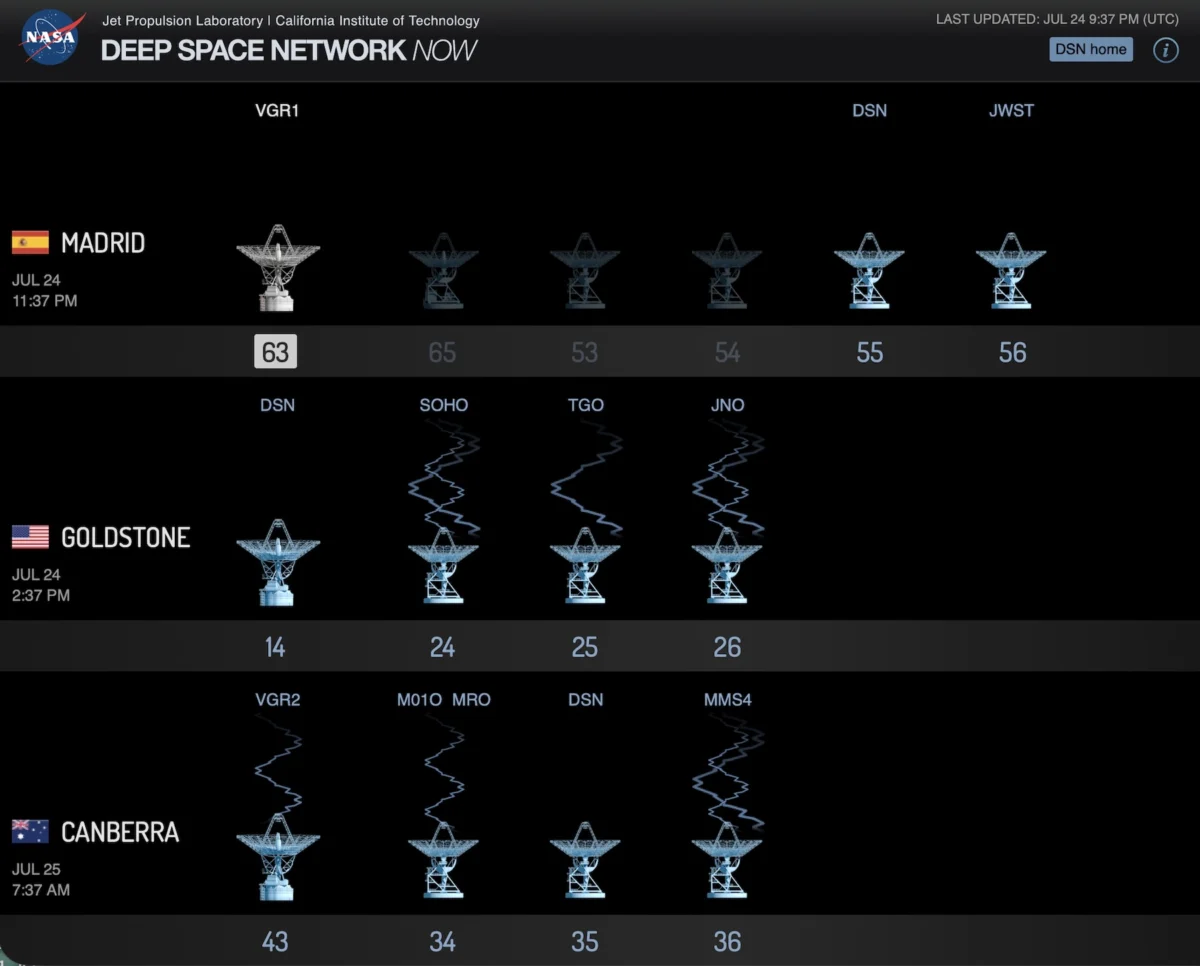
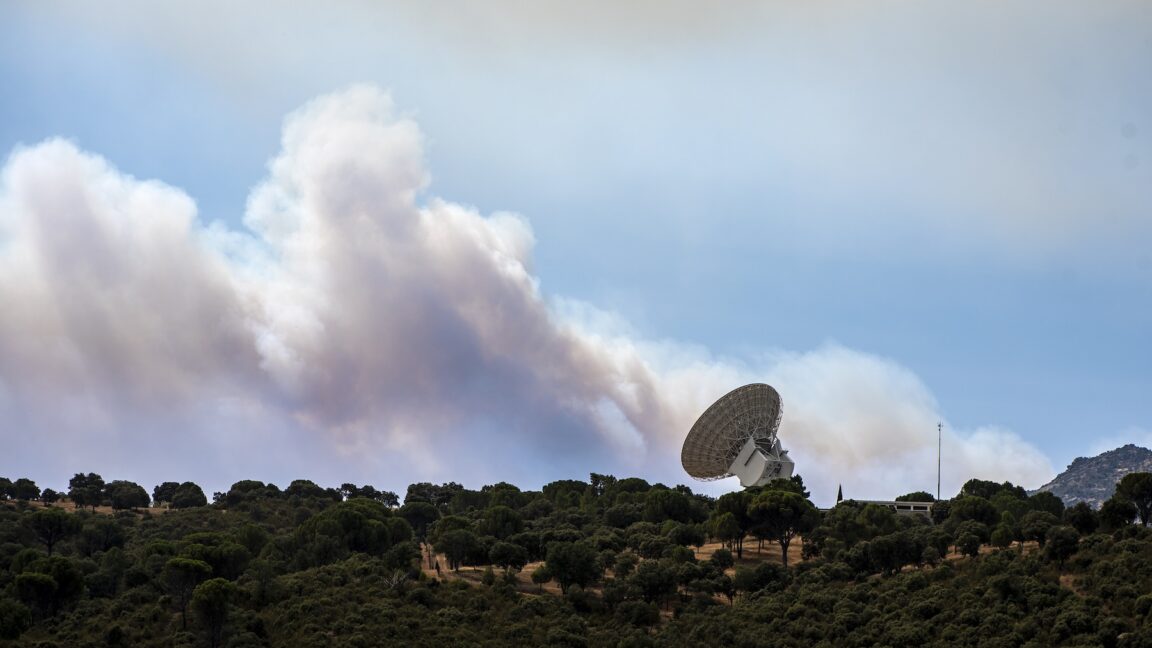
The vital communications lifeline for humanity’s deepest space missions, NASA’s Deep Space Network (DSN), is currently operating under significant duress following the evacuation of its Madrid Deep Space Communications Complex. Wildfires raging across central Spain forced the closure of the critical facility on Friday afternoon, rendering one of the network’s three global sites inactive. This incident comes as the DSN grapples with the long-term outage of a crucial 70-meter antenna at its California complex, creating an unprecedented challenge for NASA’s ability to maintain contact with its far-flung robotic explorers and future human spaceflight endeavors.
The Deep Space Network: A Global Lifeline to the Cosmos
The Deep Space Network is arguably one of the most indispensable assets for space exploration, acting as the primary communication link between Earth and dozens of robotic spacecraft exploring our solar system and beyond. Operated by NASA’s Jet Propulsion Laboratory (JPL), the DSN is comprised of three primary complexes strategically located approximately 120 degrees of longitude apart around the globe: Goldstone, California (USA); Madrid, Spain; and Canberra, Australia. This precise geographic distribution ensures continuous, 24/7 communication with spacecraft as Earth rotates, preventing any loss of contact regardless of a mission’s location relative to our planet.
Each complex houses multiple large parabolic antennas, including the iconic 70-meter (230-foot) dishes, which are the largest and most sensitive, essential for detecting the faint radio signals from distant spacecraft like the Voyager probes in interstellar space or for commanding complex maneuvers for missions at the outer planets. Smaller 34-meter (111-foot) antennas provide additional capacity, supporting a wider array of missions and higher data rates when spacecraft are closer to Earth. The DSN’s capabilities extend beyond simple communication; it also provides crucial navigation data, enabling precise tracking of spacecraft trajectories and ensuring missions stay on course. Without the DSN, deep space exploration as we know it would be impossible, as spacecraft would be unable to receive commands, send back scientific data, or even confirm their operational status.
Wildfires Force Evacuation of Madrid Complex
On Friday afternoon, a NASA website dedicated to providing real-time status updates on DSN activity confirmed the Madrid site’s complete inactivity. While antennas at the Goldstone, California, and Canberra, Australia, locations were actively communicating with various NASA spacecraft – including the venerable Voyager 2, which is exploring interstellar space, and Juno, currently orbiting Jupiter – the Madrid complex was silent. The reason for this sudden halt in operations was the escalating threat posed by severe wildfires in the surrounding communities west of Madrid.
"The safety and well-being of our personnel is our highest priority, and our thoughts are with the families and neighbors who are also experiencing the impact of the wildfires in the surrounding communities," NASA officials stated, emphasizing the immediate concern for human safety. The agency committed to providing updates as conditions evolve, underscoring the dynamic and unpredictable nature of the emergency. The Madrid complex, officially known as the Madrid Deep Space Communications Complex (MDSCC), is nestled in the municipality of Robledo de Chavela, a region particularly susceptible to the summer heatwaves and droughts that plague Spain. Its location, chosen for its clear skies and minimal radio interference, has unfortunately also placed it in the path of natural disasters.
ESA’s Cebreros Station Also Affected
The impact of the wildfires was not limited to NASA’s operations. A separate deep space tracking station, the Cebreros station, owned and operated jointly by the Spanish government and the European Space Agency (ESA), was also evacuated due to the same wildfires, according to Spanish news reports. The Cebreros station is a crucial component of ESA’s Estrack network, which serves a similar function to NASA’s DSN for European space missions. Located just a few miles from NASA’s DSN facility, the proximity of the two critical stations highlights the widespread and indiscriminate threat posed by the conflagration. The evacuation of Cebreros further stresses the global network of deep space communication infrastructure, as it represents another significant antenna taken offline from the international constellation of tracking stations.
Spain’s Battle Against Blazes: A Broader Context
The wildfires forcing these evacuations are part of a larger, more severe pattern gripping Spain and other parts of Southern Europe. Reuters reported on Friday that Spanish authorities had issued evacuation orders for more than 19,000 people from towns in the mountainous regions west of Madrid. The scale of the emergency prompted the deployment of over 2,000 firefighting personnel and 10 aircraft, including water-bombing planes, to combat the relentless advance of the flames.
The environmental conditions in Spain have been acutely ripe for such catastrophic fires. A persistent summer heatwave, with temperatures frequently soaring above 40 degrees Celsius (104 degrees Fahrenheit), combined with chronic drought conditions, has turned vast swathes of vegetation into tinder. These extreme weather patterns are increasingly linked to climate change, which is exacerbating the frequency and intensity of wildfires across the Mediterranean basin. The parched landscapes, coupled with strong winds, create ideal conditions for fires to ignite easily and spread rapidly, overwhelming local emergency services and threatening both human settlements and critical infrastructure, such as the deep space communication complexes. The evacuation of such vital scientific facilities underscores the far-reaching consequences of climate-related disasters.
Compounding Challenges: The California Antenna Outage
The closure of the Madrid complex due to the wildfires presents an even more critical situation given the pre-existing operational challenges facing the DSN. The 70-meter antenna at the Goldstone, California, complex – known as Deep Space Station 14 (DSS-14), or "Mars antenna" – has been offline since last year. This outage was not due to natural disaster but an unfortunate mechanical incident. During routine operations, the massive structure was "over-rotated," causing significant damage to its intricate internal systems.
The incident severely compromised critical cables and water lines, leading to a substantial flood at the base of the antenna. Approximately 200,000 gallons of water, contaminated with glycol (an environmental hazard used as a coolant), inundated the facility. The scale of the damage necessitates extensive repairs and a thorough environmental cleanup. The projected cost for this complex operation is estimated to be between $4.1 million and $4.6 million. NASA officials have wisely decided to combine these essential repairs with already-planned upgrades to the aging antenna, aiming to modernize its capabilities while restoring its functionality. However, this integrated approach means that the DSS-14 antenna is expected to remain offline well into 2028, further extending the period of reduced DSN capacity.
Operational Strain: A Network Under Pressure
With the Madrid 70-meter antenna temporarily out of commission and the Goldstone 70-meter antenna undergoing prolonged repairs, the Deep Space Network is left with only one fully operational 70-meter radio antenna: the one located in Canberra, Australia. This significantly reduces the network’s redundancy and overall capacity, particularly for the most demanding missions. While the DSN does operate numerous 34-meter antennas at all three sites, the 70-meter dishes are unique in their ability to detect the incredibly faint signals from spacecraft at the very edge of our solar system or beyond.
The loss of two of these three premier assets creates a bottleneck for scheduling communication time. Mission planners must now meticulously coordinate their requests for downlink and uplink windows, potentially leading to delays in data transmission, reduced science return, or even critical communication blackouts if unforeseen events arise. While the DSN has built-in flexibility and the 34-meter antennas can sometimes substitute for the 70-meter ones for closer missions or during periods of high signal strength, they cannot fully compensate for the sensitivity and power of the larger dishes. This situation puts immense pressure on the remaining operational sites and the DSN’s scheduling teams, who must now perform a delicate balancing act to ensure all active missions receive their required communication time.
Critical Links to Deep Space Missions
The immediate impact of this reduced DSN capacity falls squarely on the shoulders of NASA’s ongoing deep space missions. Missions like Voyager 2, which has journeyed into interstellar space, rely almost entirely on the 70-meter antennas to receive its extremely faint signals. Any prolonged reduction in access to these antennas could mean less frequent data downloads or even the inability to send critical commands to the aging probe. Similarly, the Juno mission, currently orbiting Jupiter, transmits vast amounts of scientific data back to Earth, requiring consistent access to high-bandwidth communication links. While Juno might be able to leverage 34-meter antennas more readily than Voyager, any disruption could affect the timeliness and completeness of its data return.
Other missions, such as those exploring Mars (e.g., Perseverance rover, Ingenuity helicopter, Mars Reconnaissance Orbiter), Saturn (e.g., Cassini’s legacy data archives), or even distant asteroids and comets, also depend on the DSN. While these missions often have more robust communication protocols and can sometimes store data onboard until a communication window opens, a prolonged or unpredictable outage at a DSN complex introduces significant operational risks and logistical complexities. The reduced capacity forces mission teams to prioritize, potentially impacting the pace of scientific discovery or the responsiveness to unexpected events in space.
Implications for Artemis: Human Spaceflight in Focus
Perhaps the most significant long-term implication of the DSN’s current challenges lies with the ambitious Artemis program. Artemis aims to return humans to the Moon, establish a sustainable lunar presence, and pave the way for future human missions to Mars. These human spaceflight endeavors place exceptionally high demands on the DSN. Unlike robotic missions, human missions require near-constant, high-priority communication for crew safety, critical telemetry downlinks, imagery transmission, and command uplinks. The stakes are infinitely higher when human lives are involved, making robust and redundant communication absolutely paramount.
The good news for DSN is that the next Artemis mission to the Moon, Artemis II (a crewed test flight around the Moon), is still at least a couple of years away. This provides a crucial window for the Madrid complex to resume operations and for the Goldstone 70-meter antenna repairs to progress. Artemis III, originally planned as the first lunar landing with astronauts, has seen its scope modified and will now focus on testing the Orion capsule in low-Earth orbit with commercial Moon landers from SpaceX and Blue Origin. The actual first planned lunar landing with astronauts, Artemis IV, is now targeted for no earlier than 2028. This revised timeline aligns more closely with the projected repair completion date for the Goldstone 70-meter antenna.
However, any further delays in restoring the DSN’s full capabilities could directly impact the Artemis schedule. The program cannot afford to launch astronauts without the most reliable and redundant communication infrastructure in place. The DSN is not merely a data pipe; it is an essential safety net and operational backbone for human exploration beyond Earth orbit. The current outages serve as a stark reminder of the delicate balance required to maintain such a critical global asset and the potential vulnerabilities introduced by both mechanical failures and increasingly frequent natural disasters.
Resilience and Redundancy: Future Outlook
The events unfolding at the DSN complexes highlight the critical need for continued investment in the network’s resilience and redundancy. While the DSN was designed with global distribution to ensure continuous coverage, the simultaneous incapacitation of two major 70-meter antennas underscores the limitations even of a robust system. NASA and its international partners continually work on upgrades and modernization efforts for the DSN, including enhancing its software-defined radio capabilities, improving antenna efficiency, and exploring new communication technologies like optical communications.
The Madrid complex, once the immediate wildfire threat subsides, will likely undergo thorough inspections before resuming full operations. The long-term repair of the Goldstone antenna is a complex engineering challenge, but its combination with planned upgrades represents a strategic effort to enhance the DSN’s capabilities for decades to come. As humanity pushes further into space, with ambitious plans for lunar bases, Mars exploration, and even deeper probes into the solar system, the demand on the DSN will only increase. Ensuring its continuous operation, robustness, and adaptability in the face of both technological challenges and environmental threats remains a paramount concern for the future of space exploration. The current situation serves as a powerful reminder of the interconnectedness of Earth-based infrastructure and humanity’s cosmic aspirations.