
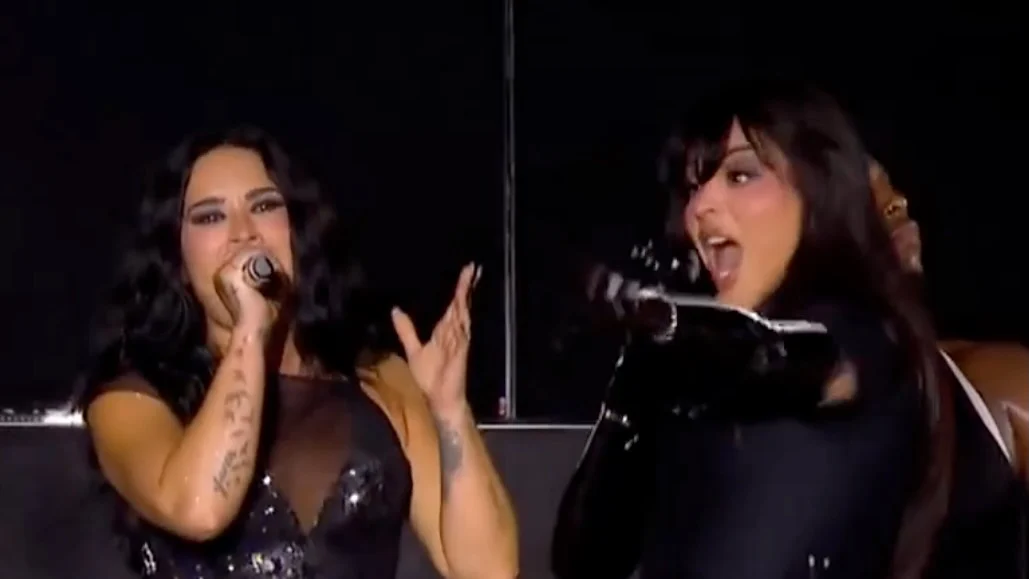
The Palco Mundo stage at Rock in Rio witnessed a watershed moment in contemporary pop music this past Saturday as American powerhouse Demi Lovato invited Brazilian drag superstar Pabllo Vittar to join her for a climactic rendition of the 2015 global hit "Cool for the Summer." The collaboration served as the definitive highlight of a career-spanning set that saw Lovato bridge the gap between her long-standing international discography and her most recent musical evolution, represented by her latest studio album, It’s Not That Deep.
A Night of Musical Synergy at Rock in Rio
Rock in Rio, consistently ranked among the world’s most influential music festivals, provided the high-stakes backdrop for this unexpected duet. As the headlining performer, Lovato navigated a complex setlist designed to cater to a diverse Brazilian audience that has historically remained one of her most dedicated fanbases. The inclusion of Pabllo Vittar—a figure who has transcended the traditional boundaries of the Brazilian music industry to become a global icon for the LGBTQ+ community—was more than a mere guest appearance; it was a symbolic convergence of two of the most significant voices in modern pop.
The performance of "Cool for the Summer" was met with a thunderous response from the capacity crowd at the Cidade do Rock. The track, which remains one of Lovato’s most streamed singles, was reinterpreted with a vibrant, rhythmic flair that underscored the collaborative energy between the two performers. For the audience, the sight of Lovato sharing the spotlight with Vittar—a performer who has previously collaborated with international heavyweights such as Lady Gaga, Charli XCX, and Rina Sawayama—represented a hallmark moment of cultural exchange.
The Setlist: A Retrospective Journey
The performance was meticulously curated to showcase the trajectory of Lovato’s career. Before the arrival of Vittar, Lovato treated the festival-goers to a comprehensive overview of her artistic evolution. The set began with high-energy staples, including the pop-rock anthem "Heart Attack," which remains a staple of her live shows, and the emotive "Give Your Heart a Break."
As the concert progressed, Lovato shifted toward more introspective material. Fans were treated to "Stone Cold" and "Skyscraper," performances that highlighted her vocal range and technical precision, reminding the audience of her transition from a child star to a mature, vocal-focused pop artist. These ballads provided a necessary emotional contrast to the upbeat tracks, allowing the audience to engage with the thematic depth of her songwriting.
The inclusion of "Solo," her 2018 collaborative effort with the electronic group Clean Bandit, bridged the gap between her mid-career success and her more contemporary, genre-blending work. By integrating tracks from It’s Not That Deep, Lovato demonstrated her commitment to her current artistic vision while acknowledging the foundation built by her earlier hits. The pacing of the set was designed to keep the energy levels high while allowing for moments of vocal intensity, culminating in the high-octane finale with Vittar.
The Significance of Pabllo Vittar’s Participation
Pabllo Vittar’s presence at Rock in Rio is indicative of the shifting landscape of global pop stardom. Vittar, who rose to prominence through a combination of social media savvy and an undeniable stage presence, has become a pivotal figure in the international drag scene. Her ability to command the Palco Mundo—one of the largest stages in the music industry—reflects the growing influence of non-traditional pop stars in mainstream festival circuits.
Industry analysts note that collaborations of this nature serve a dual purpose: they amplify the regional reach of international artists while providing a platform for local icons to secure a global audience. Vittar’s international track record, which includes high-profile features and appearances at major global festivals, has solidified her status as a bridge between the Brazilian market and the Western pop hegemony. The synergy between Lovato and Vittar, characterized by their shared vocal intensity and command of the stage, highlighted the growing trend of cross-cultural musical partnerships.
Contextualizing the Rock in Rio Experience
Rock in Rio, established in 1985, has long been a barometer for the health of the global music industry. By hosting this specific collaboration, the festival reaffirmed its status as a primary venue for artistic statements. The logistical complexity of coordinating such a high-profile guest spot during a major headlining set requires significant planning and mutual respect between artists.
For Lovato, the performance in Brazil holds particular weight. Over the past decade, she has cultivated an exceptionally strong relationship with her Brazilian fan base, who have frequently been cited as being among the most active and supportive demographics in her international career. This performance served as a testament to that loyalty, with the surprise appearance of a local legend like Vittar acting as a deliberate nod to the host nation’s vibrant cultural contributions.
Analysis of the Performance and Its Implications
From an industry perspective, the Lovato-Vittar duet is a masterclass in audience engagement. By utilizing a familiar, high-tempo track like "Cool for the Summer," the performers ensured immediate audience participation. The song’s thematic content—which deals with summer flings and identity exploration—has always resonated with the demographic that comprises the core audience for both artists.
The implications of this performance extend beyond the immediate viral success on social media platforms. It highlights a shift in how major pop stars approach international touring. Rather than delivering a standardized show, there is an increasing demand for localized, bespoke performances that acknowledge the host country’s musical identity. This trend is likely to continue as global music markets become more interconnected through digital streaming platforms, where regional stars are increasingly accessible to a global audience.
Furthermore, the visibility of an out-and-proud drag queen performing alongside a global pop superstar on one of the world’s largest stages sends a powerful message regarding the inclusivity of the music industry. It reinforces the role of live music as a space for cultural representation, where diverse identities are not only accepted but celebrated as central to the experience of modern entertainment.
Looking Ahead
As Lovato continues to promote It’s Not That Deep, the success of the Rock in Rio appearance serves as a significant milestone. It has generated substantial media coverage and social media traction, ensuring that the momentum surrounding her latest musical chapter remains high. For Pabllo Vittar, the performance is another validation of her status as an international artist capable of holding her own alongside the most successful pop stars in the world.
The event, while brief, provided a template for how major festivals can foster unique, memorable experiences that transcend the standard concert format. As the dust settles on this year’s Rock in Rio, the collaboration between Demi Lovato and Pabllo Vittar stands as a reminder of the enduring power of live performance to capture the cultural zeitgeist. Whether through the shared energy of a hit song or the strategic decision to highlight a local icon, the duo managed to encapsulate the very essence of what makes large-scale music festivals essential to the global cultural fabric.
While both artists have busy schedules ahead, the recording of this specific performance will undoubtedly remain a touchstone for their respective fan bases. It is a moment that captured the intersection of pop music history, regional cultural pride, and the ongoing evolution of stage performance in the 2020s. As industry observers look toward the next festival season, they are likely to cite this performance as a benchmark for how to effectively integrate guest appearances to create a lasting, meaningful, and highly visible impact on the global stage.









Leave a Reply