
On the morning of December 22, 1849, the freezing air of Saint Petersburg’s Semyonovsky Square served as the stage for one of the most calculated psychological spectacles in tsarist history. Among the prisoners led to the scaffold was a twenty-seven-year-old Fyodor Dostoevsky, a burgeoning literary talent whose affiliation with the Petrashevsky Circle—a group of intellectuals who discussed social reform and forbidden literature—had brought him into direct conflict with the autocratic regime of Tsar Nicholas I. The events of that day, characterized by a mock execution, would fundamentally alter the trajectory of Russian literature and serve as the crucible for the existential themes that would later define Dostoevsky’s masterpieces.
The Anatomy of a Political Spectacle
The arrest of the Petrashevsky Circle in April 1849 was part of a broader crackdown on liberal thought in the wake of the 1848 revolutions that had swept across Europe. The Russian government, fearing the contagion of democratic ideals, treated the group as a dangerous revolutionary cell. Dostoevsky, despite his relatively moderate involvement, was sentenced to death by firing squad along with twenty-one other members of the society.
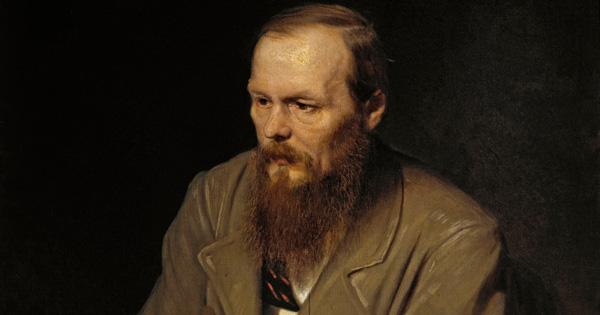
The "execution" was a meticulously staged state performance designed to instill absolute terror. After being dressed in white burial shrouds and forced to endure the ritualistic breaking of swords over their heads, the prisoners were tied to stakes in groups of three. Dostoevsky, standing in the second group, was the sixth person slated for death. The soldiers leveled their rifles, the command was prepared, and the condemned were left in a state of terminal anticipation for several agonizing minutes.
Only after the psychological breaking point had been reached did an officer arrive with a decree from the Tsar. The "sentence" was commuted to hard labor in Siberia, a move framed as a gesture of imperial mercy. In reality, it was a tactical display of power, ensuring that the condemned would return to society as broken, loyal, or traumatized subjects.
Chronology of the 1849 Crisis
- April 23, 1849: Dostoevsky is arrested and imprisoned in the Peter and Paul Fortress.
- November 1849: A military commission sentences Dostoevsky and others to death for "plotting against the state."
- December 22, 1849: The mock execution takes place at Semyonovsky Square.
- December 23, 1849: Dostoevsky is transported to the Omsk fortress in Siberia to begin a four-year term of hard labor.
- 1854: Upon completing his penal sentence, he is forced into indefinite military service in the Siberian line battalion.
- 1859: After a decade of exile, Dostoevsky is finally permitted to return to European Russia.
A Transformation of the Human Spirit
Hours after the reprieve, while still reeling from the visceral proximity of death, Dostoevsky composed a letter to his brother, Mikhail. This document, later preserved in the 1988 collection Dostoevsky Letters, serves as a primary source for understanding the psychological rupture he experienced.

In his correspondence, Dostoevsky rejected the despair that might have naturally followed such a trauma. Instead, he articulated a profound realization: the essence of life is not defined by external circumstances, but by the internal capacity to remain human. He wrote, "To be a human being among people and to remain one forever, no matter in what circumstances, not to grow despondent and not to lose heart—that’s what life is all about."
This perspective aligns closely with the principles of logotherapy later championed by Viktor Frankl, who argued that the last human freedom is the ability to choose one’s attitude toward suffering. Dostoevsky’s declaration that he was being "regenerated into a new form" suggests a deliberate cognitive shift. He transitioned from an ambitious, perhaps self-absorbed young writer into a philosopher of the human condition who viewed suffering as a necessary catalyst for moral clarity.
Socio-Political Implications and Literary Legacy
The implications of the 1849 event extend far beyond Dostoevsky’s personal life. The Siberian experience fundamentally altered his creative output. Before the arrest, his work was largely rooted in the social realism of the Gogolian tradition. Following his return, his writing took on a distinctively psychological and theological depth.

The trauma of the scaffold manifests repeatedly in his later works. In The Idiot, the protagonist Prince Myshkin offers a harrowing, detailed account of the final moments of a man facing the guillotine—a clear proxy for Dostoevsky’s own experience in Semyonovsky Square. Furthermore, the theme of "rebirth through suffering" became the bedrock of his most significant novels, including Crime and Punishment and The Brothers Karamazov.
Historical analysis suggests that the Tsar’s decision to spare the prisoners did not soften their resolve as much as it radicalized their internal worlds. By forcing Dostoevsky into the "dead house" of the Siberian labor camps, the state unwittingly provided the author with an intimate view of the criminal mind, the depths of human degradation, and the endurance of faith under extreme duress.
Comparative Analysis: The Burden of Memory
When reviewing the broader context of the 19th-century intellectual environment, Dostoevsky’s response is distinct. Unlike some of his contemporaries who retreated into political cynicism or nihilism, Dostoevsky moved toward a form of radical compassion. His later insistence on the "existential duty" to see goodness in others, even amidst widespread human failure, can be traced directly to his realization on the scaffold that the only thing of true value in the face of death is the connection between human beings.

The "staged execution" remains a subject of study for historians of state power. It was an early example of state-sanctioned psychological warfare. By using the threat of death to extract a psychological confession, the regime hoped to neutralize the ideological threat posed by intellectuals. However, the unintended consequence was the birth of a literary legacy that would challenge the very foundations of autocracy for decades to come.
The Legacy of the Pen
Dostoevsky’s fear in that initial letter—that he would be unable to write—reveals the extent to which he viewed literature as an extension of his own vitality. "If I won’t be able to write, I’ll perish," he noted. This sentiment underscores the urgency with which he approached his subsequent career. He viewed the act of writing not as a mere profession, but as a moral obligation to record the truths he had discovered in the shadow of death.
As we look back at the historical record, it is clear that the four years in Siberia, followed by the years of military service, acted as a refining fire. While the material conditions were brutal, they stripped away what he termed the "needs of the flesh that were not completely pure." This asceticism, while forced, provided the foundation for his later exploration of the soul.

Ultimately, Dostoevsky’s life after 1849 serves as a testament to the resilience of the human spirit. His ability to synthesize his trauma into a comprehensive worldview is why his work remains central to the canon of world literature. By surviving the state’s attempt to crush him, he gained the perspective required to articulate the fundamental paradoxes of human existence: that life is both a fragile, temporal event and a profound, eternal gift.
The correspondence from December 1849 remains one of the most vital artifacts of this transformation. It stands as a reminder that even when the state attempts to render a life meaningless, the individual retains the power to construct their own significance through the exercise of empathy, memory, and the refusal to succumb to bitterness. In the final estimation, Dostoevsky’s survival was not just a historical anomaly; it was the birth of an intellectual force that would define the modern understanding of the human heart.






Leave a Reply