

Humanity exists in a state of perpetual anticipation, consistently standing on the threshold of life-altering decisions. Whether it is a career shift, marriage, parenthood, or a geographic relocation, the human experience is defined by a series of transformative events. However, philosopher L.A. Paul argues that our ability to make these decisions rationally is fundamentally compromised by a cognitive blind spot. In her seminal work, Transformative Experience, Paul posits that we are biologically and psychologically ill-equipped to predict the nature of our own evolution, creating an "epistemic abyss" that renders traditional cost-benefit analysis ineffective.
The Vampire Thought Experiment: A Case Study in Rational Failure
To illustrate this paradox, Paul introduces a provocative thought experiment: if you were offered the opportunity to become a vampire—a process that is entirely painless, grants supernatural abilities, and is endorsed by all your peers who have already made the transition—would you take it?
The logic of the decision appears straightforward, yet Paul demonstrates that it is fundamentally impossible to approach rationally. To make a truly informed choice, one would need to compare the "lived experience" of being human with the "lived experience" of being a vampire. However, because you cannot know what it is like to be a vampire until you have undergone the transformation, you lack the necessary data to perform a comparison. Relying on the testimony of others is equally flawed, as their current perspective is shaped by their new existence, which is fundamentally different from your own human point of view.
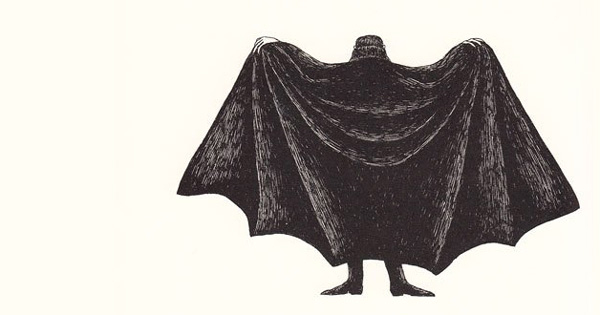
This hypothetical scenario is not merely a philosophical curiosity; it is a direct reflection of how humans approach life-altering transitions. When we make the most important decisions of our lives, we are often choosing to undergo an experience that will fundamentally change who we are, thereby rendering our current preferences and predictive models obsolete.
The Epistemic Gap in Human Decision-Making
The psychological implications of this "Vampire Problem" are vast. Research in behavioral economics and psychology, notably by figures such as Nobel laureate Daniel Kahneman, has consistently demonstrated that human confidence is rarely a reliable metric for the accuracy of our predictions. We frequently mistake our current emotional states and values for permanent fixtures of our identity, ignoring the fact that we are, as psychologist Daniel Gilbert famously described, "works in progress that mistakenly think we’re finished."
This cognitive error leads to a systemic failure in long-term planning. When we evaluate a potential life change, we utilize data from our current, limited state of being to estimate the value of an unfamiliar future. Because the transformation itself alters our neurological and psychological landscape, the "post-change" version of ourselves may value things that our current, pre-change self cannot even conceive of. This is the root of the "fear of missing out" (FOMO) and the often-misguided dread that accompanies major life transitions. We focus on the "firm footing" of the status quo because it is the only terrain we can currently map, while the abyss of the future remains a blur of unknowns.
A Chronology of Philosophical Inquiry into Change
The tension between our desire for stability and the necessity of change has been a hallmark of intellectual history. The following timeline illustrates the evolution of this philosophical discourse:

- 19th Century: Ralph Waldo Emerson identified the resistance to change as the primary obstacle to personal growth, famously noting, "People wish to be settled; only as far as they are unsettled is there any hope for them."
- Early 20th Century: Rainer Maria Rilke explored the necessity of embracing the "inexplicable" in his Letters to a Young Poet, suggesting that personal courage is defined by our willingness to encounter the singular and the strange.
- 20th Century (1931): Kurt Gödel’s Incompleteness Theorem introduced the mathematical reality that some truths cannot be proven within a system. Philosophers have increasingly applied this logic to consciousness, suggesting that the human imagination is similarly limited by its own internal constraints.
- 21st Century (2014-2015): Contemporary psychologists like Daniel Gilbert and philosophers like L.A. Paul solidified the academic framework for "Transformative Experience," moving the discussion into the realm of decision science and behavioral economics.
Supporting Data and Behavioral Implications
While the "Vampire Problem" is a philosophical construct, the data surrounding life satisfaction and decision-making supports the theory that humans are poor predictors of their own future utility. Studies on "affective forecasting"—the study of how we predict our future emotional states—consistently show that people overestimate the intensity and duration of their emotional reactions to future events.
For instance, individuals often report a high level of anxiety before a significant career change, yet longitudinal data suggests that humans are remarkably resilient and adaptive. The "transformative" nature of these events means that the individual who emerges on the other side of the experience possesses a different set of priorities, coping mechanisms, and emotional baseline than the person who made the decision. Therefore, the "rational" choice is not to try and predict the outcome, but to choose based on the desire for discovery.
The Limits of Empathy and Understanding
Paul’s research extends beyond personal decision-making to the broader scope of human interaction. She argues that just as we cannot know our future selves, we struggle to truly understand others who inhabit a different "lived experience." This is not a failure of imagination, but a limitation of the human condition.
Without the specific sensory and emotional context of an experience, we can only simulate, not empathize. This explains why societal attempts to understand marginalized groups or non-human perspectives—such as the experiences of individuals with disabilities or the consciousness of animals—are often incomplete. As Helen Keller observed during her lifelong exploration of sensory-deprived existence, there is a "secret knowledge" inherent in lived experience that cannot be bridged by observation or external accounts alone.

Broader Impact: Choosing to Become
The conclusion drawn by L.A. Paul in Transformative Experience is a shift in how we approach the "big" decisions of life. If we accept that we cannot rationally weigh the outcomes of transformative events because our future selves will be fundamentally different, the traditional model of decision-making must be discarded.
Instead of trying to predict whether a change will lead to happiness or success based on our current values, Paul suggests that the only logical path is to decide based on whether we are curious about the person we will become. This reframes the "abyss" not as a place of dread, but as a site of potential evolution. By acknowledging our inherent blindness, we gain the freedom to stop trying to force the future to conform to the past.
Implications for Policy and Personal Development
The implications of this theory are significant for both public policy and personal development. In organizational settings, leaders who recognize the transformative nature of certain roles can better support employees in navigating the "epistemic gap" of promotion or career shifts. Rather than relying on rigid performance metrics that assume a static identity, organizations should foster environments that prioritize adaptive learning and the exploration of new capacities.
For the individual, the acknowledgment of this paradox acts as a liberation from the paralysis of over-analysis. When facing a life-changing decision, the question shifts from "Will I like this?" to "Do I want to discover who I will be if I make this change?" This paradigm shift allows for a more authentic engagement with life’s trajectory. It moves the focus from the impossible task of accurate prediction to the courageous act of self-creation, suggesting that the most meaningful rewards in life are reserved for those who are willing to step into the unknown, not because they can see the path, but because they are willing to be transformed by the journey itself.






Leave a Reply