
The shifting legal landscape of reproductive rights in the United States continues to generate profound political and social turbulence, culminating in a fresh wave of high-stakes ballot measures ahead of the November general election. Voters in four states—Missouri, Nevada, Idaho, and Virginia—will decide critical constitutional amendments and statutes regarding abortion access. For states like Missouri and Nevada, the upcoming election represents a direct sequel to fierce legislative battles fought in 2024, highlighting the persistent volatility of post-Dobbs American jurisprudence.
Four years after the landmark U.S. Supreme Court decision in Dobbs v. Jackson Women’s Health Organization eliminated the federal constitutional right to abortion, the nation remains governed by an erratic patchwork of state-level restrictions, complete bans, and defensive shield laws. Rather than settling the debate, the delegation of authority to individual states has intensified local political mobilization. Advocacy groups, state legislatures, and voters find themselves locked in an escalating cycle of constitutional amendments, counter-amendments, and procedural maneuvers.
The Missouri Crossroads: A Rematch on Amendment 3
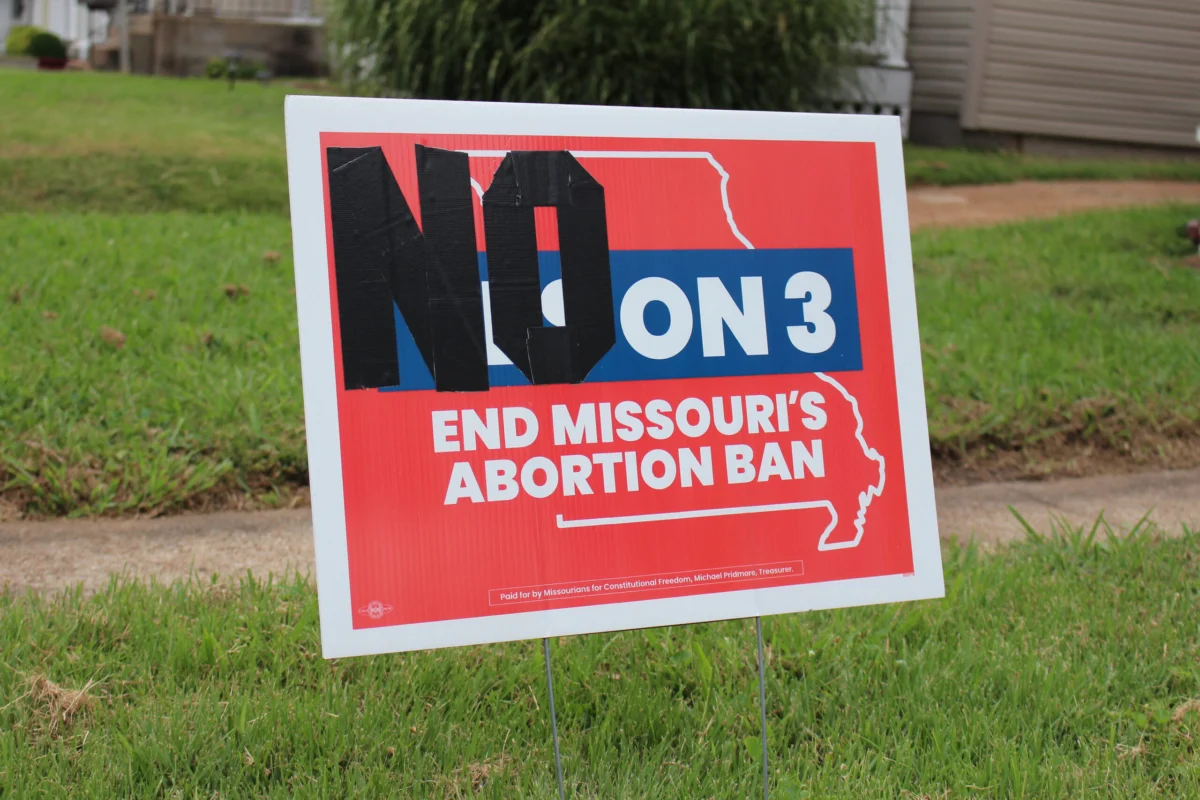
In Maplewood, Missouri, suburban resident Kelly McCoomb recently retrieved a political yard sign from her basement. The keepsake, preserved from the November 2024 election cycle, originally celebrated the successful passage of an amendment that reversed Missouri’s near-total post-Dobbs abortion ban and enshrined reproductive protections into the state constitution. However, just two years later, Missourians are being asked to reverse course.
The state’s Republican-dominated legislature has advanced a new ballot measure—bearing the exact same alphanumeric designation as its predecessor, Amendment 3—that seeks to repeal the protections enacted in 2024. While a "yes" vote in 2024 added abortion access to the state constitution up to the point of fetal viability, a "no" vote in November 2026 is required to preserve those same rights against legislative rollback. Faced with this bureaucratic irony, McCoomb modified her old placard by covering the original "YES" with black duct tape bearing a handwritten "NO," planting it firmly back in her front yard.
The proposed repeal in Missouri would dismantle the constitutional guarantee of abortion access, substituting it with a strict statutory ban. While the replacement text contains limited exceptions for medical emergencies, severe fetal anomalies, and pregnancies resulting from rape or incest, the provisions for sexual assault survivors introduce strict temporal limitations, requiring such procedures to occur prior to the twelfth week of pregnancy.
A Chronology of Restrictive Precedents and Delayed Implementation
To understand the intensity of the current referendum, observers must examine Missouri’s uniquely aggressive legislative history regarding reproductive healthcare. Long before the 2022 Dobbs ruling, Missouri actively worked to restrict abortion access through incremental regulations. Over a three-decade period, the state implemented a mandatory 72-hour waiting period, strict structural requirements for facility hallways and procedure rooms, and a mandate forcing attending physicians to secure local hospital admitting privileges.
These regulatory hurdles drastically reduced the state’s infrastructure. By 2011, Missouri recorded 5,772 abortions. By 2021, that figure had plummeted to just 150 procedures, leaving a single operational clinic in the entire state before the Supreme Court officially overturned Roe v. Wade. When the Dobbs decision was handed down in June 2022, Missouri became the first state in the nation to trigger an immediate, near-total ban on the procedure.
Even after Missouri voters overwhelmingly approved Amendment 3 in November 2024 to restore access, the practical realities of reinstating care proved arduous. Due to regulatory red tape, administrative resistance, and legal challenges, it took nearly two years for medication abortions to successfully resume within the state’s borders, illustrating the profound friction between popular referendums and statehouse administration.
Navigational Chaos and Voter Confusion
The speed of legislative counters and the repetition of ballot terminology have injected widespread confusion into the electoral process, frustrating organizers on both sides of the political aisle. Margot Riphagen-Dunn, CEO of Planned Parenthood Great Rivers, argues that the administrative whiplash is an intentional obstacle.
"Chaos is kind of the point here, and it is absolutely a tactic that gets in the way of being able to provide," Riphagen-Dunn stated, emphasizing how fluctuating legal standards disrupt clinical operations and patient trust.
Paradoxically, this structural confusion has created public relations hurdles for anti-abortion organizations as well. Reagan Barklage, vice president of Students for Life of America and treasurer of the Missouri Students for Life Ballot Committee, acknowledged that canvassing has become exceptionally complicated. Because the opposing measures share the exact same ballot title—Amendment 3—voters who previously cast ballots against abortion access in 2024 must now vote "yes" on the current legislative proposal to achieve a ban.
"It is crazy that it ended up being even the same number. I do not think that was intentional, but we’ve got to deal with what we’ve got," Barklage noted during a recent voter-outreach effort, adding wryly, "I hope the pro-choicers kept their yard signs from last time."
Nevada, Idaho, and Virginia: A National Snapshot of the 2026 Midterm Referendums
Missouri is not operating in a vacuum. Nevada shares a similar procedural timeline, preparing for its second consecutive statewide vote on reproductive rights. Under Nevada constitutional law, citizen-initiated constitutional amendments must clear two separate majority votes across two general election cycles to take effect.
In 2024, 64% of Nevadans supported a measure to enshrine existing statutory protections—which permit abortions up to 24 weeks of pregnancy—into the state constitution. Denise Lopez, president of the advocacy coalition Nevadans for Reproductive Freedom, notes that the campaign has pivoted toward voter mobilization to secure the second and final approval needed in November. The proposed constitutional change would not alter the current 24-week gestational limit, but it would erect a substantial legal barrier against future legislative bans, requiring any subsequent restrictions to be approved by voters across two separate elections.
"Folks care about it," Lopez said. "They’re seeing what’s happening at the national level, and they want to make sure that whatever’s happening in our neighboring states, like Idaho and Utah, doesn’t happen here in Nevada."
The contrast with neighboring states underscores the widening geographic divide. Idaho, which shares a border with Nevada, boasts one of the most restrictive total abortion bans in the United States. However, reproductive rights advocates successfully qualified a citizen-led ballot measure for the November election, asking voters to decide whether state statutes should explicitly protect abortion access up to the point of fetal viability, generally understood to be around 24 weeks. Meanwhile, in Utah, legal battles over a legislative ban continue to wind through the courts while abortion remains temporarily permitted up to 18 weeks.
Further east, Virginia voters face a proactive constitutional question. With abortion services currently permitted through the first two trimesters—up to 28 weeks of pregnancy—the state’s electorate will decide whether to codify those clinical parameters directly into the Virginia Constitution, permanently shielding them from the shifting majorities of the state General Assembly.
Implications of a Deepening Constitutional Crisis
Legal scholars and policy analysts warn that the proliferation of contradictory state standards points toward a deeper structural conflict within American federalism. Kristi Hamrick, vice president of media and policy for Students for Life Action, points to the compounding divergence of state laws as the precursor to a broader institutional crisis.
"I just think there’s a constitutional crisis that’s coming," Hamrick said. "Can you have 50 state standards on whether or not a human being is a human being? Can you have 50 state standards on whether human beings have legal protection?"
Conversely, proponents of reproductive rights argue that the impending crisis stems from an aggressive legislative overreach designed to subvert direct democratic outcomes. By attempting to overturn popular referendums mere months or years after voters have spoken—as seen in Missouri—state lawmakers are testing the limits of direct democracy and judicial tolerance.
As the November general election approaches, millions of Americans in Missouri, Nevada, Idaho, Virginia, and beyond will once again head to the polls. For voters like Kelly McCoomb, standing on her Maplewood porch with her modified sign, the act of voting has transformed from a singular civic duty into a recurring defense of a constitutional right that remains perpetually under siege.







Leave a Reply