
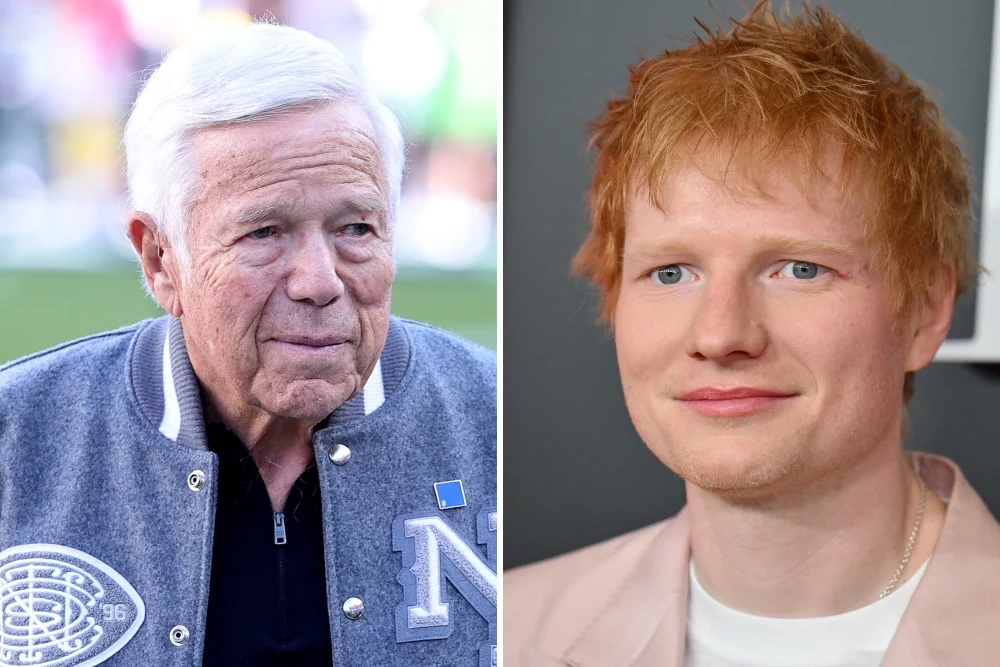
The ongoing friction between prominent figures in the music and sports industries has culminated in a significant financial development regarding humanitarian aid. Ed Sheeran and New England Patriots owner Robert Kraft have announced individual commitments of $2 million each to address the ongoing humanitarian crisis in the Middle East, effectively doubling the $1 million donation pledge previously made by rapper Macklemore. This sequence of events, which began with a public challenge from Macklemore, has sparked a broader conversation about the intersection of celebrity activism, corporate responsibility, and the role of venue owners in managing political discourse during high-profile tours.
The Chronology of the Conflict
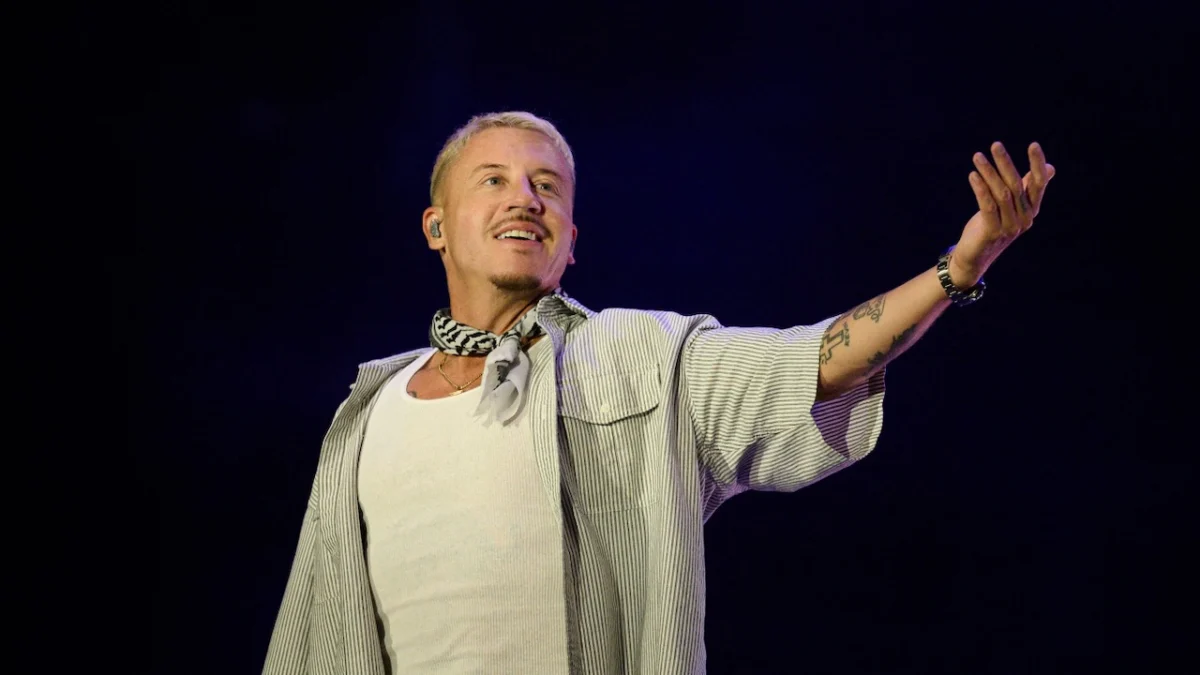
The current situation is the result of a rapidly evolving series of events that began in early September. Macklemore, who was a supporting act on Ed Sheeran’s global "Mathematics" or "Loop" tour, delivered a politically charged speech during a performance at MetLife Stadium in East Rutherford, New Jersey. During the performance, Macklemore explicitly declared "Free Palestine," a statement that drew both applause and immediate controversy.
Following this event, reports emerged that Macklemore was being removed from the remainder of the tour’s itinerary. Macklemore publicly attributed his removal to pressure exerted by Robert Kraft, the billionaire owner of the New England Patriots and Gillette Stadium. According to the rapper’s account, Kraft allegedly mobilized a coalition of stadium owners and industry stakeholders to refuse venue access for his future performances, citing the political nature of his rhetoric as a violation of the professional expectations set for performers at those venues.
The situation reached a flashpoint on Wednesday when Macklemore announced he would be donating $1 million in net earnings from his tenure on the tour to organizations dedicated to Palestinian relief. In the same announcement, he issued a direct challenge to Kraft, calling upon the mogul to match his donation.
The Response from Sheeran and Kraft
Within hours of the challenge, the New England Patriots’ official social media channels released a statement on behalf of Robert Kraft. The statement clarified that prior to Macklemore’s public challenge, Ed Sheeran had already reached out to Kraft to propose a joint effort to address the humanitarian crisis.
"Ed called me and asked me to commit $2 million to match his donation to aid in the region to fight this humanitarian crisis," Kraft stated. The declaration serves as a formal response to the pressure exerted by the rapper’s challenge, though it notably stops short of addressing the specific allegations regarding the cancellation of the tour dates.
Sheeran, who has maintained a neutral professional distance throughout the ordeal, appears to be positioning the donation as an initiative intended to "build bridges." Kraft’s statement expanded on this theme, emphasizing his long-standing history of philanthropy. "I have dedicated much of my life to building bridges between all people. I believe deeply that all lives are worth protecting," the statement continued. Kraft also sought to clarify his historical record, noting, "I’d like the people who are speaking in support of the Palestinian people to know that for decades, I have supported efforts that create opportunity for Palestinians and have brought young Palestinians and Israelis together to build businesses, create jobs, and forge relationships."
Analyzing the Humanitarian Impact
While the pledge of $6 million in total—$1 million from Macklemore, $2 million from Sheeran, and $2 million from Kraft—is a substantial sum for regional aid, the specifics regarding the disbursement of these funds remain opaque. As of the time of this report, representatives for both Sheeran and Kraft have declined to provide a list of the charitable organizations that will receive these funds.
In the context of the Middle East, humanitarian aid is often filtered through international NGOs such as the United Nations Relief and Works Agency (UNRWA), the International Committee of the Red Cross (ICRC), or specific local medical and food security programs. The lack of transparency regarding the beneficiaries has led to questions among policy analysts about the efficacy of celebrity-led donation campaigns. Without clear oversight or designated recipients, the impact of such large-scale donations can be difficult to measure in terms of tangible results on the ground.
Corporate Responsibility and Venue Politics
The removal of a supporting act from a major stadium tour due to political speech highlights a growing tension in the music industry. Stadium owners, such as Kraft, often operate as private entities with specific conduct policies. When a performer uses a high-traffic venue to express controversial political views, it can trigger contractual disputes regarding "morality clauses" or "disruption of business" provisions.
For industry experts, this situation serves as a case study in the risks associated with the fusion of art and activism. On one hand, artists are increasingly leveraging their platforms to advocate for global causes. On the other, the infrastructure required to host these artists—stadiums, promoters, and corporate partners—is often risk-averse, prioritizing brand stability and the avoidance of political polarization.
The move by Sheeran to involve himself in the donation process suggests an attempt to mediate the situation, potentially aiming to de-escalate the friction between the rapper and the venue owners. By framing the contribution as a collaborative effort to "build bridges," Sheeran is attempting to move the narrative away from the cancellation of the tour and toward a unified philanthropic goal.
Broader Implications for the Music Industry
This incident may lead to more rigorous contractual stipulations in future artist agreements. As political polarization increases globally, venue owners are likely to reinforce policies regarding on-stage discourse to protect their commercial interests. Conversely, artists may become more selective about the venues they choose to partner with, favoring those that offer broader protections for freedom of speech.
Furthermore, the public nature of this "donation battle" underscores the power of social media in modern conflict resolution. Macklemore’s use of his platform to issue a public challenge forced a response from a private billionaire who might otherwise have remained silent. This shift in power dynamics—where an artist can leverage a global audience to influence the public actions of a high-net-worth individual—represents a significant change in how political and social accountability is managed.
Future Outlook and Next Steps
As the dust settles, the immediate focus remains on the fulfillment of the pledged donations. Industry observers will be watching to see if the funds are directed toward established, reputable international relief agencies and whether the donors provide public audits of their contributions.
For Macklemore, the next steps involve navigating the fallout of his removal from the tour and continuing his advocacy efforts independently. For Kraft and Sheeran, the focus appears to be on shifting the narrative from a public dispute toward a humanitarian outcome that allows both parties to maintain their reputations.
The situation continues to develop, with potential for further comments from the involved parties as the details of the financial contributions are finalized. As this story unfolds, it serves as a reminder of the complex interplay between the entertainment industry’s commercial realities and the profound, often divisive, political issues that artists and business leaders alike must navigate in an increasingly connected world. The outcome of this specific situation may well set a precedent for how future disputes of this nature are handled in the high-stakes world of international touring and corporate philanthropy.






Leave a Reply