
The healthcare landscape of the Middle East has faced unprecedented challenges over recent decades, driven by protracted regional conflicts, massive population displacement, and structural vulnerabilities within public health infrastructure. Against this complex geopolitical backdrop, the Hashemite Kingdom of Jordan has consistently emerged as a cornerstone of regional stability and humanitarian leadership. On the first day of a pivotal two-day State visit to Jordan, Dr. Tedros Adhanom Ghebreyesus, Director-General of the World Health Organization (WHO), met with senior government officials, international partners, and high-profile advocates to underscore the vital strategic partnership between the WHO and the Jordanian government. The visit serves to spotlight Jordan’s exemplary commitment to universal health coverage (UHC), the integration of mental health into primary care systems, and its unwavering generosity in hosting millions of refugees from neighboring nations, including Syria and Gaza.
At the heart of the first day’s engagements was a high-level audience with His Majesty King Abdullah II. The formal discussion brought into sharp focus the imperative of strengthening healthcare systems, expanding equitable access to medical services, and sustaining international support for emergency health responses across the Middle East. Particular emphasis was placed on the plight of the Palestinian people, the ongoing medical evacuations of injured or critically ill patients from Gaza into specialized Jordanian facilities, and the protracted refugee populations that have found sanctuary within Jordan’s borders for years.
A Legacy of Humanitarian Openness and Regional Solidarity
Jordan’s role as a sanctuary for displaced populations is well-documented by international bodies. Despite facing its own economic constraints, natural resource limitations, and infrastructural pressures, the Kingdom currently provides comprehensive health services, education, and social support to more than three million refugees. The vast majority of these individuals originate from war-torn Syria and, more recently, from the devastating conflict in Gaza.
During his address, Dr. Tedros expressed profound gratitude to the Jordanian monarch and the broader population for maintaining open borders and open hearts during times of severe geopolitical crisis. He specifically highlighted His Majesty’s Medical Corridor initiative—a vital logistical and humanitarian lifeline that enables critically ill and injured children, many suffering from trauma injuries or advanced cancer, to be safely evacuated from Gaza to receive specialized, life-saving treatment in Jordanian medical institutions.
“I wish to express my appreciation to His Majesty King Abdullah II for his commitment to advancing universal health coverage,” Dr. Tedros stated. “I also extend my thanks to His Majesty and the people of Jordan for their solidarity and generosity in providing health services to more than three million refugees, primarily from Gaza and Syria, who are living in the country. We are grateful for Jordan’s broader humanitarian leadership, including His Majesty’s Medical Corridor initiative, which delivers critical care to ill and injured children from Gaza. Jordan continues to show the world what it truly means to put health and humanity first.”
Direct Engagement on the Front Lines of Care
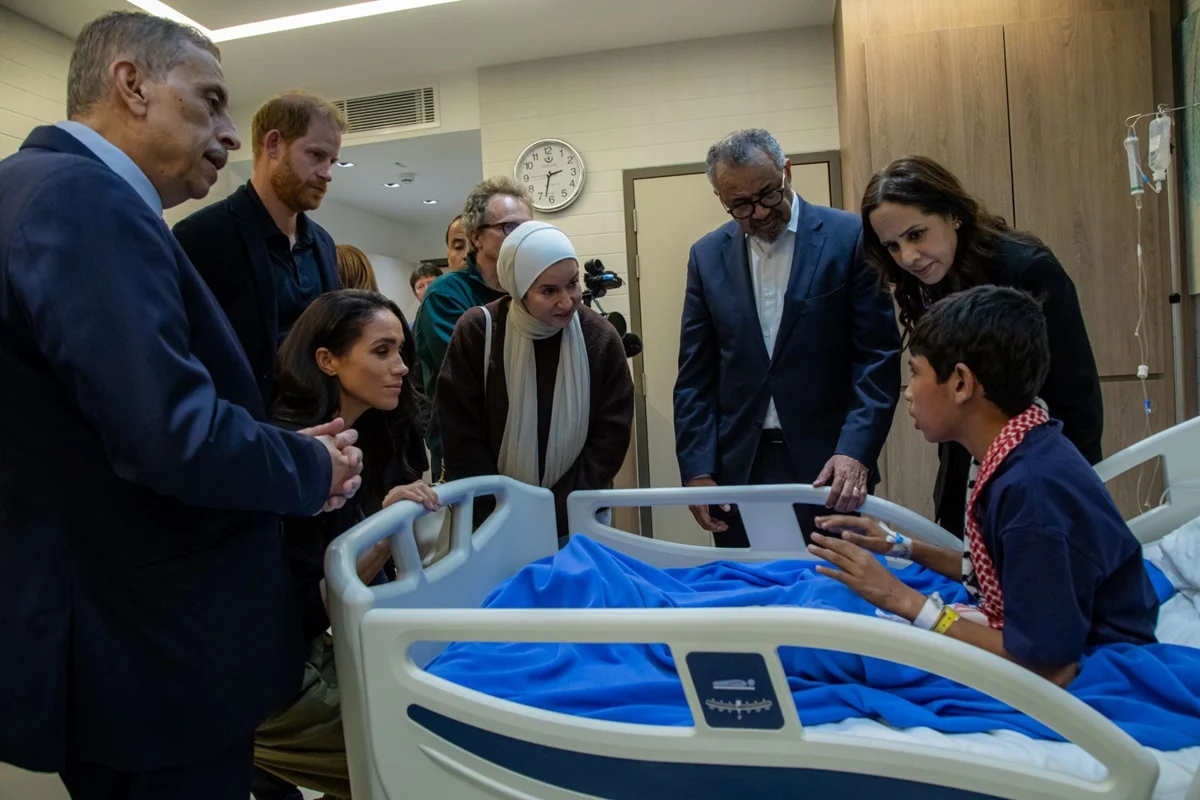
Following the high-level political consultations in the capital, Dr. Tedros transitioned from diplomatic settings to the front lines of medical delivery. He visited a specialized, WHO-supported hospital dedicated to providing complex pediatric care to children evacuated from the Gaza Strip. The visit offered the WHO chief an unvarnished look at the human toll of modern urban warfare and the extraordinary logistical feats required to transport patients across active conflict zones.
Walking through the pediatric wards, Dr. Tedros met directly with young patients, their families, and the multidisciplinary teams of doctors, nurses, and allied health professionals. These frontline medical workers operate under immense psychological and professional pressure, delivering specialized treatment for severe blast injuries, chronic conditions, and pediatric oncology cases.
The hospital visit served to reinforce a core message: the medical evacuation corridor through Jordan is not merely a logistical route, but an absolute necessity for survival. International health experts note that without such functional corridors, the mortality rate among evacuated cohorts—especially children suffering from interrupted cancer treatments or complex trauma—would be catastrophic. Consequently, the WHO used the platform to issue a renewed appeal for sustained international financial and logistical backing to keep these lifelines open and properly resourced.
High-Level Partner Consultations and Financing Priorities
Recognizing that humanitarian goodwill must be matched by robust, predictable financing, Dr. Tedros convened a strategic high-level meeting later in the day. The gathering brought together key stakeholders, including representatives from donor governments, United Nations specialized agencies, and major international philanthropic foundations.
The primary agenda item was the formulation of sustainable financing strategies aimed at two critical pillars: fortifying Jordan’s domestic health system to withstand external shocks, and scaling up regional humanitarian health actions. Discussions centered on mobilizing resources to expand mental health services—an urgent requirement in populations deeply traumatized by violence and displacement—and ensuring that host countries bearing the brunt of refugee inflows receive adequate fiscal burden-sharing from the international community.
Participants at the roundtable welcomed the opportunity to align donor priorities with national health strategies, reinforcing the shared conviction that investing in Jordan’s health infrastructure yields dividends not only for Jordanian citizens and refugees within its borders, but for regional security and global health stability as a whole.
Advancing Universal Health Coverage and Mental Health Integration
In parallel with his multilateral engagements, the WHO Director-General held focused bilateral talks with Jordan’s Minister of Health. These discussions drilled down into the mechanics of national health reform, specifically Jordan’s steady march toward comprehensive universal health coverage.
Jordan has increasingly been recognized by international health economists and public health agencies as a regional pioneer in adopting a robust primary health care (PHC) approach. Rather than treating primary care as a rudimentary entry point, the Jordanian health system has progressively integrated specialized services—most notably mental health care—directly into routine community clinics. This integration ensures that patients seeking care for common physical ailments can simultaneously access mental health counseling and psychiatric support without facing the societal stigma or financial barriers traditionally associated with specialized mental health facilities.
This progressive policy alignment is closely supported by the WHO through the Director-General’s Special Initiative for Mental Health. Public health analysts emphasize that integrating mental health into primary care is the most effective strategy for bridging the enormous treatment gap in conflict-affected regions, where post-traumatic stress disorder, anxiety, and depression are pervasive across all demographics.
High-Profile Advocacy and the Role of Archewell Philanthropies
A notable dimension of the first day’s engagements was the participation of Prince Harry, Duke of Sussex, and Meghan, Duchess of Sussex. Attending in their capacities as founders of Archewell Philanthropies and long-standing global advocates for public health, the Duke and Duchess joined Dr. Tedros for several key events, bringing heightened media visibility and international attention to the visit.
Archewell Philanthropies has maintained a robust, multi-year partnership with the WHO, supporting initiatives that range from advocating for equitable global distribution of COVID-19 vaccines to backing emergency medical evacuations and mental health interventions in crisis zones. During the Jordan visit, Prince Harry actively participated as an ally of the WHO’s mental health agenda, emphasizing the urgent need to destigmatize psychological distress and expand mental health investments across vulnerable communities, emergency settings, and refugee camps. Particular focus was placed on the mental health burdens carried by men, young people, and children navigating the psychological aftermath of war.
Reflecting on the collaboration, Dr. Tedros remarked: “I want to thank our partners, including Prince Harry, Duke of Sussex and Meghan, Duchess of Sussex, whose commitment to mental health and humanitarian action has helped bring visibility, resources and hope to some of the world’s most vulnerable communities. Their collaboration is helping to advance WHO’s mission to ensure health for all.”
Echoing these sentiments, Prince Harry shared his reflections on witnessing the reality of the crisis on the ground: “It is an honour to join the Director-General of the World Health Organization in Jordan, a country that is leading by example in compassion, resilience and innovation. Through our work with Archewell Philanthropies, my wife and I have seen first-hand the impact of WHO’s efforts to support mental health and deliver life-saving care in emergencies. We remain deeply committed to advancing awareness, reducing stigma and expanding access to mental health support for all those affected by conflict and crisis. Mental health is fundamental to recovery, dignity and long-term peace, and we are proud to stand with WHO and partners around the world to make it a global priority.”
Chronology and Forward-Looking Agenda for Day Two
The itinerary for the second and final day of the State visit is designed to showcase the breadth and depth of Jordan’s domestic health innovations and community resilience frameworks. Dr. Tedros is scheduled to visit the National Center for Rehabilitation of Addicts, a facility supported by the WHO that delivers integrated medical, psychological, and social rehabilitation services, illustrating a compassionate, health-centered approach to substance use disorders.
Additionally, the Director-General will engage with grassroots community leaders and prominent women’s organizations, including the Jordanian Hashemite Fund for Human Development (JOHUD), which plays a pivotal role in community empowerment, poverty alleviation, and social development across the Kingdom. The itinerary also features a high-profile visit to the renowned King Hussein Cancer Center (KHCC). There, discussions will focus on cutting-edge advances in cancer treatment protocols, regional medical partnerships, and the provision of specialized oncology care to patients traveling from neighboring conflict zones.
The State visit will officially draw to a close following a series of wrap-up meetings with international humanitarian operators and donor representatives. These final sessions are intended to cement operational frameworks, ensure the continuity of emergency medical supply chains, and further solidify Jordan’s indispensable status as the premier regional hub for medical evacuation, humanitarian response, and long-term health system resilience in the Middle East.
Media Contacts and Institutional Inquiries:
For further information regarding the WHO Director-General’s visit to Jordan, media outlets and institutional partners may direct inquiries to the designated communications personnel:
- Paul Garwood, Communications Officer, World Health Organization (WHO)
- WHO Media Team, World Health Organization (WHO)







Leave a Reply