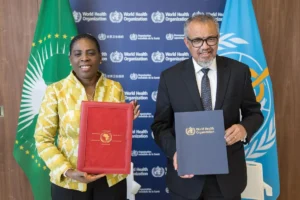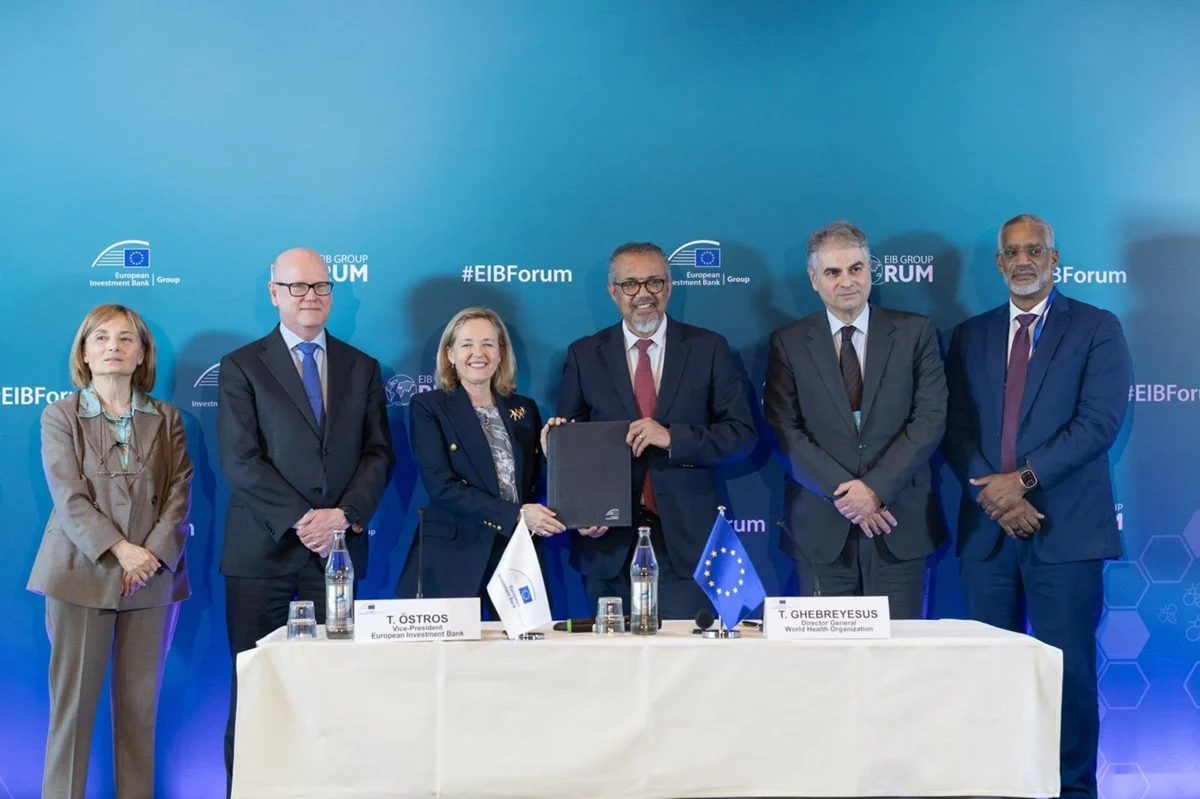
On March 6, 2025, a landmark agreement was signed at the European Investment Bank (EIB) Group Forum in Luxembourg, marking a critical step forward in the international effort to stabilize and rebuild Lebanon’s fragile healthcare system. Dr. Tedros Adhanom Ghebreyesus, Director-General of the World Health Organization (WHO), and Thomas Östros, Vice-President of the European Investment Bank operating through its specialized arm EIB Global, formalized a €10 million grant initiative. This funding injection is specifically designed to bolster public health across Lebanon by restoring vital laboratory infrastructure and securing uninterrupted access to life-saving medications for tens of thousands of vulnerable patients suffering from severe chronic illnesses.
The announcement comes at a time of profound socioeconomic and humanitarian strain within Lebanon. Years of compounding political instability, a severe economic crisis characterized by hyperinflation and currency devaluation, and escalating regional conflicts have collectively pushed the nation’s public services to the brink of collapse. Healthcare, once considered a pillar of the Levant region, has suffered immensely, leaving medical facilities underequipped, pharmaceutical supplies severely depleted, and a vast portion of the population unable to afford basic medical care. This newly unveiled partnership between the WHO and EIB Global represents a targeted intervention aimed at arresting this decline and laying the groundwork for a more resilient public health architecture.
Core Objectives of the €10 Million Grant Initiative
At the heart of the newly signed agreement are two primary objectives: the complete reconstruction and modernization of Lebanon’s Central Public Health Laboratory, and the direct procurement and distribution of essential medicines for vulnerable populations.
The Central Public Health Laboratory serves as the cornerstone of the country’s disease surveillance, diagnostic accuracy, and food and water safety protocols. Prior to its degradation due to economic deterioration and localized damages, the laboratory was responsible for detecting outbreaks, verifying microbiological safety, and guiding national health policies through empirical data. Re-establishing this facility is not merely an act of physical reconstruction; it is a vital prerequisite for national health security. A functional central laboratory enables health authorities to monitor epidemiological trends swiftly, identify emerging pathogens, manage antimicrobial resistance, and ensure that imported and locally produced consumables meet strict safety standards.
Simultaneously, the initiative addresses an immediate humanitarian emergency by prioritizing medication provision and comprehensive healthcare support for over 50,000 individuals diagnosed with chronic conditions. Diseases such as diabetes, cardiovascular disorders, and cancer require continuous, uninterrupted therapeutic regimens. In Lebanon today, out-of-pocket health expenditures have surged, and basic medications for hypertension, insulin for diabetes, and advanced chemotherapeutic agents for oncology patients have frequently been unavailable or prohibitively expensive. By securing these pharmaceutical supply chains, the WHO and EIB Global intervention directly targets populations at the highest risk of mortality and severe morbidity due to treatment interruption.
Background Context: The Multi-Year Crisis in Lebanon’s Health Sector
To fully comprehend the significance of the March 2025 agreement, one must examine the cascading crises that have battered Lebanon over the past half-decade. Beginning in late 2019, the country entered what the World Bank described as one of the most severe global economic depressions of the modern era. The Lebanese pound lost more than 90 percent of its value against the US dollar, wiping out life savings and crippling the banking sector.
This financial meltdown severely compromised the national budget for public health. The Ministry of Public Health faced acute budget constraints, rendering it incapable of subsidizing imported medical equipment, drugs, and fuel required to run hospital generators during widespread power outages. Furthermore, the August 2020 Beirut Port explosion caused catastrophic damage to several major hospitals and medical warehouses, compounding the systemic strain.
Compounding these domestic economic hurdles, Lebanon has hosted the highest per capita population of displaced persons globally, including approximately 1.5 million Syrian refugees, alongside hundreds of thousands of Palestine refugees. This demographic reality placed an unsustainable burden on public hospitals and primary healthcare centers. Healthcare workers—doctors, nurses, and laboratory technicians—faced plummeting real wages, prompting a mass exodus of medical professionals seeking employment abroad. This "brain drain" stripped the healthcare sector of its most experienced personnel, leaving remaining staff overwhelmed and under-resourced.
Chronology of International Intervention and Partnership
The partnership between the European Investment Bank and the World Health Organization in Lebanon did not materialize overnight; it represents the culmination of years of strategic coordination between international financial institutions, United Nations agencies, and local stakeholders.
In the immediate aftermath of the 2020 Beirut Port blast, the international community mobilized emergency funds to prevent the immediate collapse of the health sector. However, as emergency relief transitioned into protracted crisis management, it became evident that short-term humanitarian aid was insufficient. Structural reforms and capital investments were desperately required to transition from crisis response to sustainable resilience-building.
Throughout 2022 and 2023, the WHO engaged in extensive diagnostic assessments of Lebanon’s pharmaceutical supply chains and laboratory networks. These assessments highlighted the catastrophic risks associated with the obsolescence of the Central Public Health Laboratory and the chronic shortages of non-communicable disease (NCD) medications. Concurrently, EIB Global—mandated to finance projects outside the European Union that foster sustainable development—began identifying strategic health investments in the Mediterranean region.
By late 2024, preliminary frameworks for the €10 million funding package were established, focusing on high-impact areas where financial leverage could yield maximum public health benefits. The formal signing on March 6, 2025, at the EIB Group Forum in Luxembourg by Dr. Tedros Adhanom Ghebreyesus and Thomas Östros codified these discussions into a binding financial agreement, setting a definitive timeline for project implementation slated to begin in the second quarter of 2025.
Official Responses and Stakeholder Statements
The announcement of the grant drew widespread praise from international public health advocates, European Union representatives, and Lebanese health officials, all of whom emphasized the critical timing of the financial injection.
Speaking at the EIB Group Forum, WHO Director-General Dr. Tedros Adhanom Ghebreyesus underscored the existential nature of the crisis facing Lebanese patients. "Health is a fundamental human right, yet millions of people in Lebanon have been forced to choose between basic survival needs and purchasing life-saving medicines," Dr. Tedros stated. "This partnership with EIB Global allows us to move beyond emergency band-aids and rebuild the foundational pillars of public health. By restoring the Central Public Health Laboratory and securing medicines for chronic disease patients, we are safeguarding the future of tens of thousands of individuals who are counting on us."
Echoing these sentiments, Thomas Östros, Vice-President of the European Investment Bank, highlighted EIB Global’s steadfast commitment to fostering human capital and regional stability through targeted investments. "Europe stands firmly with the people of Lebanon during these challenging times," Östros remarked during the signing ceremony. "A resilient healthcare system is the bedrock of social cohesion and economic recovery. Through this €10 million grant, deployed in close partnership with the World Health Organization, we are channeling resources directly where they are most urgently needed—restoring diagnostic capabilities and ensuring that patients with cardiovascular diseases, diabetes, and cancer receive the continuous care they deserve."
Public health analysts and representatives from Lebanese civil society organizations also welcomed the news, pointing out that chronic diseases account for the vast majority of mortality in Lebanon. Without consistent access to pharmaceuticals, the burden on tertiary care hospitals—which are already operating at minimal capacity—would have escalated exponentially.
Fact-Based Analysis of Implications and Forward Outlook
The implications of the €10 million WHO and EIB Global initiative extend far beyond the immediate procurement of drugs and laboratory equipment. Financial and public health experts have analyzed the broader systemic impacts of this grant across several key dimensions:
1. Restoration of Epidemiological Surveillance
The revitalization of the Central Public Health Laboratory directly addresses a major blind spot in Lebanon’s national defense against infectious diseases. In an era marked by the post-pandemic landscape and the constant threat of novel pathogens, having an accredited, fully functional national reference laboratory is non-negotiable. It allows the Ministry of Public Health to track disease mutations, ensure food safety compliance, and maintain international health regulations (IHR) compliance, thereby rebuilding regional and global confidence in Lebanon’s public health oversight.
2. Alleviating Out-of-Pocket Expenditure Pressures
For households spending a significant portion of their diminishing incomes on private healthcare and imported medicines, the targeted support for over 50,000 chronic disease patients provides critical financial relief. By injecting subsidized and free-of-charge medications into the public primary healthcare network, the project directly reduces catastrophic health spending, preventing vulnerable families from slipping deeper into extreme poverty due to medical debt.
3. Catalysing Further International Investment
The involvement of the EIB Global—the development arm of the world’s largest multilateral lending institution—serves as a strong vote of confidence in targeted, transparent aid delivery within Lebanon. Financial analysts suggest that the successful execution of this €10 million grant could serve as a proof-of-concept, paving the way for larger multilateral loans and grants directed toward Lebanon’s water, sanitation, and broader social protection sectors.
4. Mitigating the Medical Brain Drain
While a €10 million grant cannot single-handedly reverse the mass emigration of healthcare professionals, equipping primary care centers with reliable medical supplies and ensuring laboratories have state-of-the-art diagnostic tools improves the working environment for the medical personnel who chose to remain in Lebanon. A functional, well-equipped workplace is a vital component of workforce retention in the health sector.
Conclusion
The agreement signed on March 6, 2025, between WHO Director-General Dr. Tedros Adhanom Ghebreyesus and EIB Global Vice-President Thomas Östros marks a pivotal milestone in Lebanon’s protracted struggle to stabilize its healthcare sector. By addressing the dual imperatives of laboratory infrastructure reconstruction and chronic disease medication provision, the €10 million initiative offers a lifeline to over 50,000 patients while reinforcing the nation’s long-term health security. As implementation moves forward, this strategic collaboration between international financial institutions and global health agencies stands as a model for resilience-building in fragile and conflict-affected states.