The transition toward a circular economy has shifted from a theoretical environmental goal to a concrete legislative reality across the United States, anchored by the rapid expansion of Extended Producer Responsibility (EPR) policies. At the center of this movement is the Product Stewardship Institute (PSI), led by founder and CEO Scott Cassel. EPR represents a fundamental shift in how the modern economy handles waste, placing the financial and physical burden of product end-of-life management directly on the manufacturers rather than local taxpayers and municipal governments. By holding producers accountable for the entire lifecycle of their goods—from design and production to collection and recycling—EPR is proving to be a catalyst for both environmental restoration and industrial innovation.
The Legislative Landscape and the Rise of EPR
The concept of EPR is not entirely new, but its application has accelerated significantly since 2023. As of recent assessments, seven U.S. states have successfully codified EPR legislation into law, signaling a departure from traditional "take-make-waste" industrial models. A landmark moment in this timeline occurred with the passage of Washington State’s SB 5144. This legislation was a significant victory for environmental policy advocates, as it specifically mandates that battery manufacturers assume responsibility for the environmental management of their products. This move was not an isolated incident; it represented the culmination of years of advocacy by organizations like PSI, which provides the technical expertise and legislative consulting necessary to turn complex environmental concepts into actionable law.
The chronology of this movement highlights a steady climb in political and public interest. Throughout the early 2020s, local governments began to struggle with the skyrocketing costs of waste management and the logistical nightmare of recycling contaminated or hazardous materials. PSI’s strategy has been to facilitate collaborative, multi-stakeholder processes that bring together state legislators, environmental agencies, and corporate representatives to design programs that are both effective and scalable. The Washington battery bill serves as a template for future legislation, proving that specific, high-risk waste streams can be managed effectively when producers are legally required to fund the infrastructure for their recovery.
The Economic Case for Producer Accountability
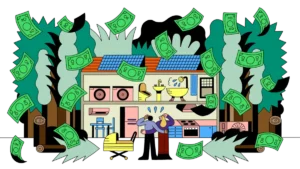
One of the most persistent criticisms leveled against EPR legislation by industry trade groups is the projected increase in costs for the end consumer. Critics often argue that if a manufacturer is forced to pay for the collection and recycling of their product, those costs will be passed down to the shopper at the point of sale. However, economic analysis suggests that the reality is far more nuanced.

Data regarding bottle deposit systems—a form of EPR that has been in existence for decades—provides a clear baseline for understanding these impacts. In states that have implemented bottle bills, collection rates for containers reach approximately 65%, compared to a mere 24% in states without such mandates. This data indicates that EPR programs are highly effective at capturing materials that would otherwise end up in landfills. Regarding the cost concern, a comprehensive study conducted by researchers at Columbia University estimated that even with the implementation of robust, comprehensive EPR programs, the maximum increase in monthly grocery bills for an average household would be approximately $4. This marginal cost is statistically insignificant compared to the long-term tax savings municipalities would realize by shifting the burden of waste management away from local taxpayers and onto the corporations that produce the packaging and products in the first place.
Job Creation and the Circular Economy
Beyond the immediate environmental gains, the shift toward EPR is projected to serve as a significant engine for economic growth. As the economy pivots toward circularity, the focus moves away from simple disposal toward sophisticated material recovery and remanufacturing. According to projections from the U.S. Bureau of Labor Statistics (BLS), this transition is expected to have a profound impact on the labor market.
The BLS anticipates that jobs related to materials movement will grow by approximately 6.5% by the year 2031, representing roughly 861,000 new positions nationwide. This growth is driven by the need for complex logistics systems to transport post-consumer materials back to manufacturers. Furthermore, as the repair and maintenance sectors expand to support a circular economy where products are designed for longevity rather than obsolescence, an additional 304,000 jobs are expected to emerge in these fields. These roles represent a diverse range of skills, from logistics and fleet management to specialized engineering and product design, effectively diversifying the green economy.
Institutional Strategy: The Role of the Product Stewardship Institute
The Product Stewardship Institute operates by bridging the gap between policy intent and practical implementation. Scott Cassel, who has spent decades advocating for these policies, emphasizes that the primary objective of PSI is to create a "level playing field." Without state-mandated EPR, responsible companies that invest in sustainable packaging are often at a competitive disadvantage against companies that continue to produce cheap, non-recyclable goods. EPR removes this disparity by setting a uniform requirement for all market participants, effectively rewarding those who design for recyclability while incentivizing others to innovate.
Throughout his tenure, Cassel has maintained that the goal of PSI is not to punish manufacturers, but to integrate them into the waste management solution. By providing the legislative language and the economic data to support these bills, PSI acts as a neutral arbiter in a space that is often characterized by intense lobbying from waste haulers, packaging manufacturers, and environmental NGOs. Their success in Washington State serves as a primary case study for how to move a bill through a state legislature, demonstrating the necessity of clear data, persistent stakeholder engagement, and a focus on long-term systemic stability.

Broader Implications and Future Outlook
The trajectory of EPR legislation suggests that the United States is at a turning point. As more states adopt EPR, the national market for recycled materials is becoming more robust. When manufacturers are responsible for the recycling of their products, they have a direct financial incentive to simplify the materials used in their packaging, increase the use of post-consumer recycled content, and design products that are easier to disassemble.
This trend toward "design for environment" is perhaps the most significant, though often overlooked, implication of EPR. When a manufacturer knows they will pay for the end-of-life disposal of a television or a mattress, their design team faces new pressures to eliminate hazardous substances and utilize modular components. This leads to cleaner waste streams and higher-quality recycled commodities, which in turn reduces the need for raw material extraction.
Looking forward, the success of EPR in states like Washington and elsewhere serves as a catalyst for federal consideration. While the United States has historically relied on a patchwork of state-level environmental regulations, the growing momentum of the circular economy may eventually necessitate a more unified national approach. Until then, the work of organizations like the Product Stewardship Institute remains essential in navigating the political, economic, and logistical complexities of building a more sustainable future.
The integration of EPR into the American economic framework is not merely a policy choice; it is a structural necessity for a nation looking to address the environmental challenges of the 21st century. By aligning the incentives of the private sector with the goals of public waste management, EPR creates a pathway toward a more equitable and efficient economy—one where the true cost of consumption is accounted for, and the value of materials is preserved through a continuous, closed-loop cycle. As Scott Cassel and the PSI continue to influence legislation across the country, the lessons learned from the initial implementation of these programs will undoubtedly serve as the foundation for the next generation of industrial and environmental policy.