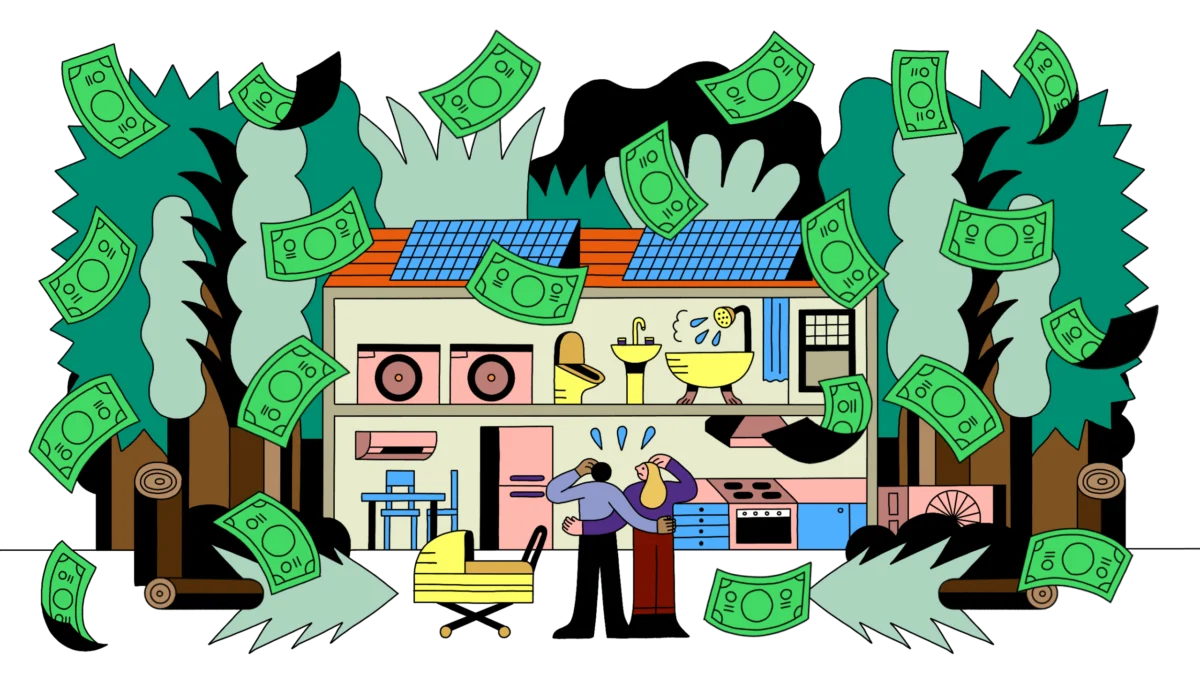
The global push to combat climate change through the electrification of residential buildings has popularized the mantra to electrify everything. Transitioning home systems—including space heating, water cooling, cooking appliances, and personal transportation—from fossil fuels to electricity is recognized as a vital strategy for drastically reducing planet-warming carbon emissions. However, this transition frequently encounters a significant and prohibitive financial barrier: the perceived necessity of upgrading a home’s overall electrical capacity.
A residential property’s connection to the municipal power grid is measured in amperage, commonly referred to as amps, which establishes the maximum electrical current that can be safely drawn simultaneously. For homes constructed over the past several decades, a 200-amp service capacity has become the prevailing standard. Conversely, many older residences operate under significantly lower limits, reflecting an era of construction when household electricity primarily powered basic lighting, refrigerators, and minor appliances.
Recent empirical research conducted by the Lawrence Berkeley National Laboratory indicates that approximately one-third of all homes in the United States feature an electrical panel capacity of 100 amps or less. In regions such as the Northeast, that proportion climbs closer to 50 percent. When homeowners in these older properties attempt to install modern, high-demand green technologies—such as heat pumps for climate control, high-powered induction stoves, and Level 2 electric vehicle (EV) chargers—they frequently encounter systemic limitations.
The Hidden Costs and Logistics of Panel Upgrades
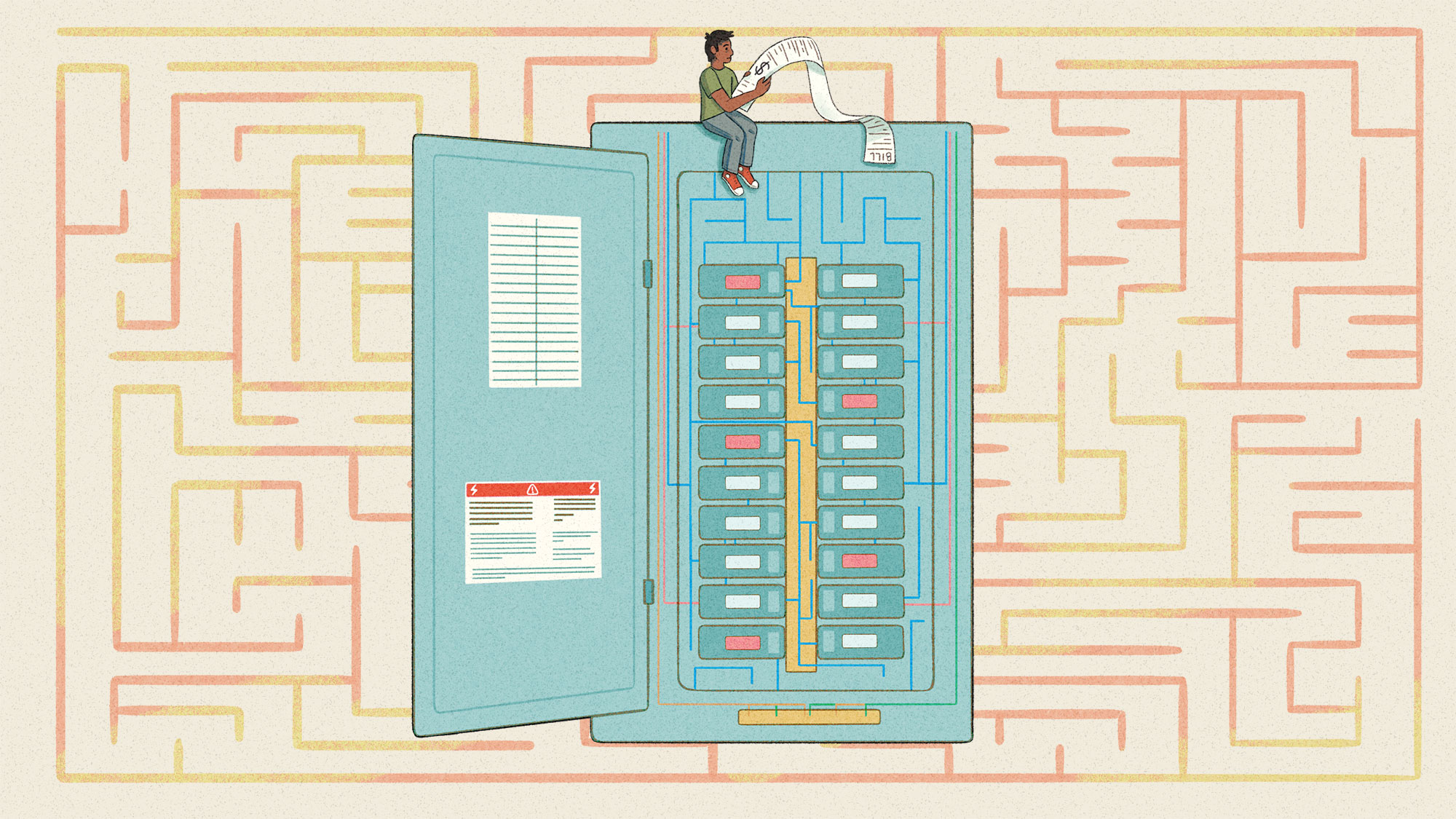
The immediate bottleneck is often physical space within the electrical panel. When a panel runs out of physical slots to accommodate additional circuit breakers, electricians can typically resolve the issue by installing a subpanel. However, a more complex challenge arises when the aggregate electrical load of new appliances threatens to exceed the peak power limits of the home’s service entry.
When an electrician determines that an electrical service upgrade is required, the financial implications can be severe. Depending on geographic location, regional labor rates, and whether existing power lines run overhead or underground, service upgrades typically start at a few thousand dollars and can rapidly escalate. Industry professionals note that total project costs ranging from $10,000 to $20,000 are not uncommon, particularly in rural settings or older neighborhoods requiring transformer overhauls.
Despite the widespread promotion of home decarbonization initiatives, comprehensive data tracking the exact annual volume of residential service upgrades remains scarce. Even less information exists regarding the number of prospective electrification projects abandoned entirely due to high cost estimates. Nonetheless, data projections from the Lawrence Berkeley National Laboratory suggest that thousands, and potentially millions, of homeowners are advised to increase their electrical capacity as they adopt clean energy technologies.
A Personal Encounter with the Upgrade Dilemma
The logistical and financial friction of home electrification is exemplified by the experiences of homeowners navigating green renovations. When a resident in Burlington, Vermont, moved into a home primarily serviced by natural gas for space heating, cooking, and clothes drying, long-term plans included a complete shift to electricity. Anticipating this future transition, the homeowner proactively increased the property’s service capacity from 150 amps to 200 amps during a broader remodeling phase, keeping initial costs manageable.
This capacity increase successfully accommodated an EV charger, air-source heat pumps, an induction cooktop, and an electric clothes dryer. The household achieved its objective of operating largely free of direct fossil fuel combustion.
The complication arose years later when the homeowners initiated plans to construct an 800-square-foot residential addition. The expansion necessitated the installation of two additional localized heat pumps, supplemental lighting, and standard electrical outlets, alongside the retirement of a remaining gas-powered appliance. During the pre-construction phase, the project electrician performed a standard load calculation to determine if the existing infrastructure could support the expanded footprint.
The resulting calculation revealed that the laundry room configuration alone would elevate the home’s theoretical electrical demand to approximately 192 amps. Factoring in the new addition, the total projected load threatened to push the household past its 200-amp service threshold. Because the home featured underground service lines, upgrading to a 300-amp or 400-amp configuration would have required extensive trenching, potential replacement of the local neighborhood utility transformer, and an estimated expenditure exceeding $10,000.
Exploring Alternative Engineering Workarounds
Facing a prohibitive renovation expense, the homeowner began investigating alternative technical solutions designed to manage residential electrical loads without modifying the main grid connection.
The initial market alternatives included advanced smart electrical panels. These intelligent systems monitor real-time energy consumption across individual circuits, automatically shedding lower-priority loads if total household demand approaches the service capacity limit, and restoring power once demand subsides. While effective, the capital expenditure for complete smart panel conversions can reach $4,000 in materials alone, with partial circuit-control systems starting around $2,000 before labor costs.
A secondary technological option involved load-sharing switches, commonly known as smart splitters. These devices enable two high-demand appliances to share a single electrical circuit by ensuring that only one operates at any given time, thereby reducing the appliance’s contribution to the home’s cumulative demand calculation. While each switch costs approximately $800, implementing multiple units for the Burlington residence would have introduced significant upfront costs while leaving minimal electrical capacity for future needs.
Unlocking Hidden Capacity Through Regulatory Standards
Seeking a more cost-effective solution, the homeowner contacted the local electric utility, Burlington Electric Department, to inquire about established protocols for similarly situated customers. A utility advisor questioned a foundational assumption made by the contractor: whether a traditional service upgrade was genuinely mandatory.
The initial electrical assessment had been executed using the standard calculation method outlined in the National Electrical Code (NEC). This conventional approach applies fixed theoretical load ratings to every hardwired appliance and outlet in a residence, summing them to establish a peak design load. Using standard industry calculators, the homeowner verified the electrician’s initial findings: existing baseline consumption was roughly 187 amps, and the proposed addition would elevate the theoretical load to 227 amps, surpassing the 200-amp service cap.
However, utility advisors directed the homeowner to a lesser-known provision within the electrical code, formally designated as Section 220.87 (recently renumbered as Section 120.87 in updated code editions). Rather than relying on cumulative theoretical maximums, this regulatory pathway evaluates a home’s actual historical energy consumption by analyzing a full year of interval smart meter data.
Because approximately 73 percent of U.S. residences are equipped with digital smart meters, accessing this historical consumption data is feasible for many homeowners. Upon request, Burlington Electric supplied a detailed log of the residence’s historical power draw.
To analyze the extensive dataset, the homeowner utilized TrueLoad, a specialized digital tool designed for electricians and energy auditors to evaluate residential load patterns under Section 220.87. The software processed the interval data to identify the precise historical peak demand for the previous year, which occurred on January 20, when the home drew slightly less than 62 amps. In accordance with code mandates, the methodology applies a standard 25 percent safety buffer to the observed peak, resulting in an adjusted peak demand of approximately 77 amps.
When the projected electrical load of the new home addition was added to this empirical baseline, the cumulative demand utilized less than 40 percent of the property’s existing 200-amp service capacity—less than half of the threshold calculated by the standard theoretical method. By applying Section 220.87, the homeowner confirmed that the existing electrical infrastructure was fully adequate, completely eliminating the need for a service upgrade and saving thousands of dollars.
Industry Perspectives and the Adoption Challenge
Experts in residential energy efficiency emphasize that this discrepancy between theoretical calculations and actual usage is widespread. Jake Marin, founder of the TrueLoad software platform and a former program administrator for Efficiency Vermont, notes that his primary objective is encouraging homeowners and contractors to evaluate historical consumption data before committing to costly electrical panel upgrades.

"It tends to show that you have a lot more headroom than you actually thought," Marin stated, noting that numerous property owners incur thousands of dollars in unnecessary infrastructure expenses due to conservative estimation practices.
Recent analytical studies support these observations. Research published by the Lawrence Berkeley National Laboratory and supported by white papers from organizations such as Efficiency Vermont indicates that the vast majority of existing residential electrical panels retain substantial functional headroom. Lead researcher Sean Murphy noted during industry webinars that most homes do not approach their rated amperage limits, even after adopting multiple clean energy technologies.
Despite the empirical validity of Section 220.87, industry analysts point out that adoption rates among electricians remain variable. AJ Rossman, an electrical engineer and co-author of Efficiency Vermont’s research on panel upsizing alternatives, observes that many contractors rely on traditional rules of thumb rather than reviewing historical utility data.
"We’re finding it really depends on the electrician," Rossman said. Surveys conducted during regional energy studies revealed that a relatively small percentage of surveyed contractors were actively utilizing Section 220.87, frequently preferring traditional calculation methods out of an abundance of caution regarding safety compliance.
Master electricians who regularly utilize the alternative calculation method report high success rates with local building code officials. Johnathan Quong, a master electrician and owner of New England Electric, notes that he has successfully maintained numerous properties on 100-amp service panels by applying Section 220.87.
"We’ve been able to keep tons of people on 100-amp panels," Quong stated, confirming that local code inspectors routinely accept the documentation when properly prepared. He attributes continued industry hesitation primarily to institutional unfamiliarity and professional liability concerns among traditional contractors.
Broader Implications for the Clean Energy Transition
As municipalities and states accelerate building decarbonization mandates, streamlining the evaluation of residential electrical capacity is emerging as a critical priority for energy policymakers.
A notable practical challenge remains the varying accessibility of granular energy consumption data across different utility territories. While some municipal utilities and investor-owned providers supply interval data readily through digital customer portals, others present navigating hurdles. Ric O’Connell, executive director of the clean grid nonprofit GridLab, encountered significant interface barriers when attempting to retrieve his own smart meter data from Pacific Gas and Electric Company in California, ultimately confirming a modest historical peak of 65 amps only after an extensive administrative effort.
For properties where empirical load data is inaccessible, alternative regulatory avenues exist. Section 220.83 (updated as Section 120.83) permits specific load-discounting calculations based on the statistical improbability of simultaneous appliance operation. Furthermore, modern code revisions increasingly integrate both historical demand data and advanced load-management technologies to provide multiple pathways for avoiding service upgrades.
Energy efficiency advocates emphasize that combining empirical load calculations with modern load-management devices offers a viable blueprint for scaling residential electrification affordably. For homeowners facing daunting contractor estimates, verifying actual grid utilization through historical data may represent the most effective financial safeguard in the transition toward a low-carbon housing stock.