The burgeoning demand for carbon-free, baseload electricity to power the next generation of artificial intelligence data centers has propelled geothermal energy developer Fervo Energy into a position of unexpected market dominance. In its latest third-quarter earnings report, Fervo announced a staggering surge in its contracted revenue, which now stands at $11.9 billion—a significant leap from the $7.2 billion reported just one quarter prior. This financial windfall comes as hyperscalers—the massive cloud computing providers like Google, Microsoft, and Amazon—scramble to secure reliable, 24/7 clean energy sources to support the astronomical power consumption required by modern AI compute clusters.
A Turning Point for Enhanced Geothermal Systems
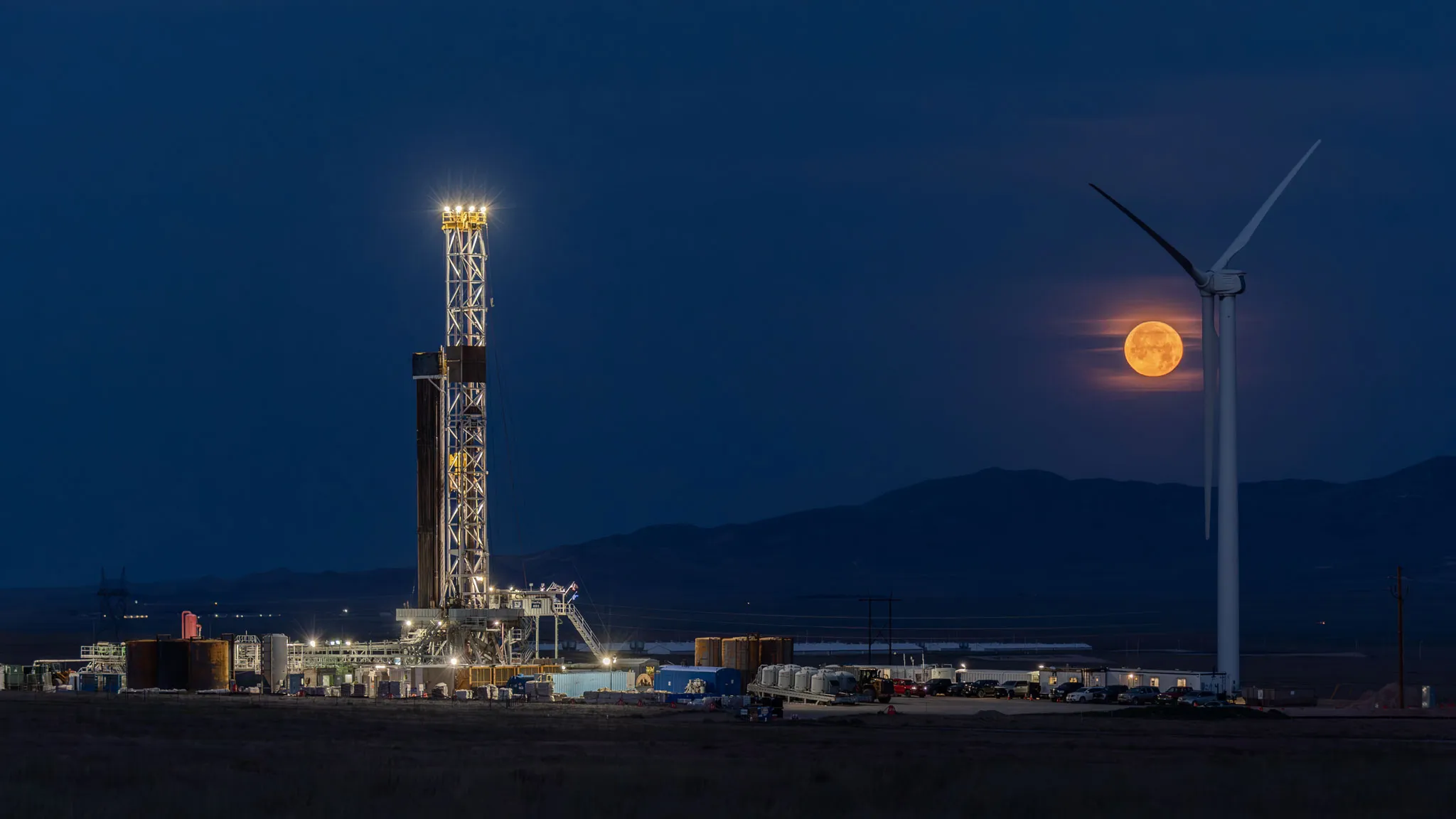
For decades, geothermal energy was confined to geologically unique regions, such as the volcanic hotspots of Iceland or the tectonic fringes of the American West. However, Fervo Energy has pioneered "Enhanced Geothermal Systems" (EGS), a technological breakthrough that utilizes horizontal drilling and hydraulic fracturing techniques borrowed from the oil and gas industry to access heat deep within the earth’s crust, regardless of traditional hydrothermal features.
The company’s recent momentum is not merely financial; it is rooted in tangible engineering milestones. Earlier this year, Fervo successfully connected its first 100-megawatt (MW) power plant to the electrical grid, proving that the technology is scalable and reliable. This milestone served as a critical proof-of-concept for investors and utility partners, validating that EGS can provide the baseload power necessary to offset the intermittency issues inherent in wind and solar energy.
Cape Station: The Epicenter of Geothermal Innovation
The cornerstone of Fervo’s current growth is Cape Station, a massive geothermal project located in Utah. Initially projected by third-party experts to have a maximum production capacity of 4 gigawatts (GW), the site has exceeded expectations. Recent geological assessments and successful pilot wells have led the company to revise its potential output upward to 8.4 GW.
This expansion is inextricably linked to Fervo’s partnership with Google. The "Cape Google 400" project, a 396 MW plant specifically designed to feed the search giant’s data centers, is currently on track for completion by the end of 2028. According to Fervo co-founder and CEO Tim Latimer, the structure of this agreement represents a shift in how energy procurement is handled for corporate technology infrastructure.
“We build Cape Station on our schedule. Google can develop a potential data center on their schedule, and neither party is waiting on the other,” Latimer noted during the earnings call. By grid-connecting the project, Google gains the flexibility to draw power as needed or trade it within the broader energy market, effectively decoupling the construction of power infrastructure from the development of compute facilities.
Scaling Through Modularity: The GeoBlock Strategy
One of the primary challenges for traditional energy sources—such as large-scale nuclear or coal-fired plants—is the "all-or-nothing" nature of their construction, which requires massive upfront capital and years of lead time before a single watt of power is generated. Fervo has countered this by adopting a modular development strategy.
The company’s "GeoBlock" architecture allows for the iterative construction of power plants. By drilling wells that are progressively deeper and hotter, Fervo has increased the power output of each unit. The initial GeoBlock design yielded 33 MW, while recent iterations have reached 50 MW. This modularity is a critical selling point for hyperscalers; as a data center campus grows, the energy supply can scale in tandem. This phased construction mitigates financial risk and allows for a quicker return on capital, a strategy that aligns perfectly with the rapid deployment timelines of AI data center build-outs.
Financial Health and the Path to Cost Parity
Despite the massive contract backlog, Fervo remains in its early-stage growth phase. The company reported an operating loss of $43.7 million for the third quarter. However, its balance sheet remains robust, supported by $1.9 billion in cash and cash equivalents against $301.6 million in long-term debt. This "runway" provides the company with the necessary liquidity to continue its aggressive drilling and exploration efforts.
The primary long-term metric for Fervo’s success will be the "levelized cost of energy" (LCOE). Historically, geothermal energy has been prohibitively expensive compared to natural gas. However, the cost trends for Fervo are moving in the right direction. The first phase of Cape Station cost $7,000 per kilowatt (kW) of capacity. The subsequent Google project has seen that figure drop to $5,500 per kW.
While still roughly double the cost of natural gas, the incorporation of federal tax credits and subsidies makes the price point increasingly competitive with fossil fuels. Fervo’s stated long-term goal is to reach a capital expenditure of $3,000 per kW. If achieved, this would allow geothermal to undercut natural gas-fired generation even in the absence of subsidies, fundamentally altering the economics of the power sector.
Implications for the Energy Transition
The success of Fervo Energy signals a broader shift in the energy landscape. For years, the debate surrounding decarbonization centered almost exclusively on the deployment of solar and wind. However, the arrival of the "AI Age" has introduced a new, non-negotiable requirement: the need for high-density, constant power that doesn’t fluctuate with weather conditions.
Analysts note that the "price-indiscriminate" nature of current AI power demand—driven by the massive revenue potential of large language models—has created a unique window of opportunity for emerging energy technologies. Hyperscalers are currently willing to pay a premium for carbon-free, 24/7 energy to meet their aggressive net-zero commitments. If Fervo can continue to demonstrate technological reliability and cost reduction, it will move from being a boutique supplier for tech giants to a major player in the national utility grid.
Challenges Ahead
Despite the optimism, significant hurdles remain. The geothermal industry must contend with complex permitting processes for public land use, the inherent risks of deep-crust drilling, and the potential for induced seismicity, which has historically plagued certain types of subterranean drilling operations. Furthermore, as the company scales, it will face the challenge of sourcing specialized labor and equipment that is currently in high demand across the broader energy and extraction industries.
Nevertheless, the trajectory established over the last twelve months suggests that Fervo has successfully moved beyond the R&D phase. By securing $11.9 billion in contracted revenue, the company has effectively "de-risked" its business model, proving that the market for firm, dispatchable, clean energy is not only real but is expanding at a pace that few energy incumbents anticipated.
As the tech industry continues its march toward massive, AI-integrated data centers, the partnership between silicon and steam—the core of geothermal energy—is likely to become a central pillar of global infrastructure. If Fervo can maintain its current cadence of technological innovation and cost reduction, it will be well-positioned to meet the massive energy demand of the 21st century while simultaneously setting the standard for the next era of renewable baseload power.