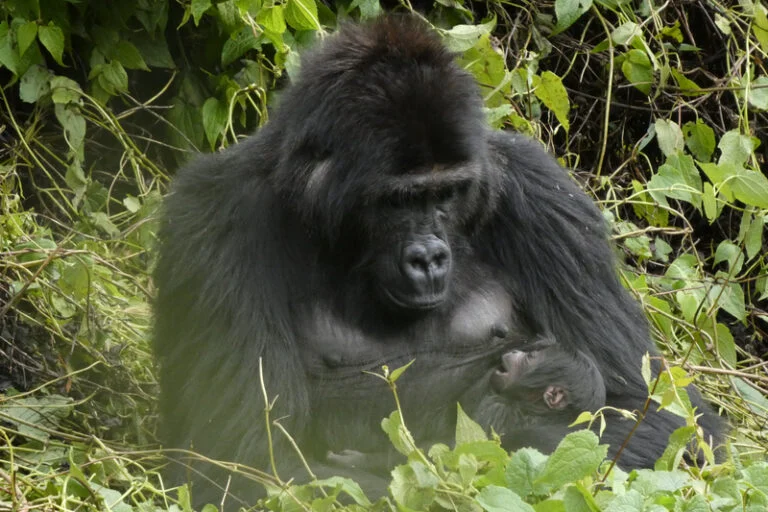
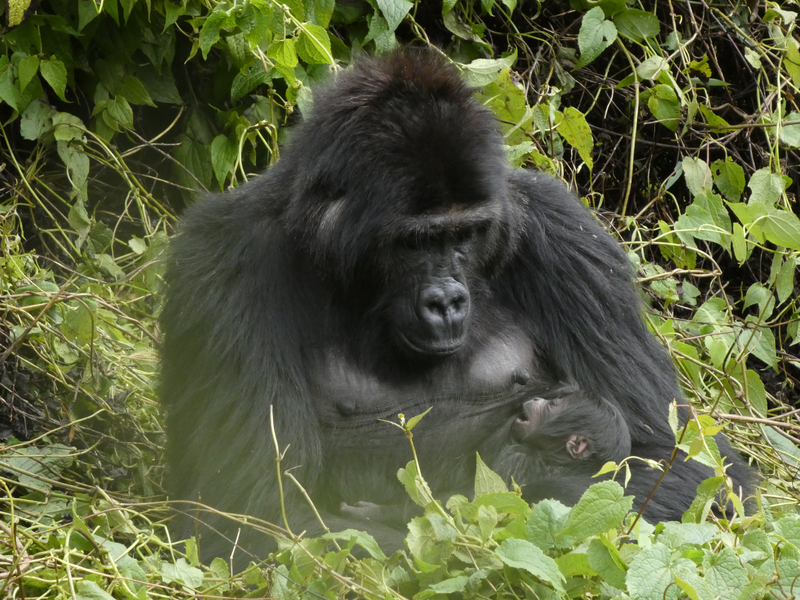
In a landmark achievement for wildlife conservation in Central Africa, a rescued Grauer’s gorilla named Lulingu has given birth to a healthy infant in the remote reaches of Virunga National Park, located in the eastern region of the Democratic Republic of Congo (DRC). Announced in May 2026, the birth marks a profound milestone for the species—the largest primate on Earth—and serves as a testament to the resilience of both the animals and the dedicated conservationists working in one of the world’s most volatile protected areas.
Lulingu, who was successfully reintroduced to her natural habitat in 2024 following years of rehabilitation, delivered her infant earlier this spring. For the teams that watched her grow from a traumatized 18-month-old orphan into a thriving wild mother, the arrival of the new generation is a deeply emotional vindication of intensive wildlife rehabilitation methodologies.
The Chronology of Lulingu’s Journey: From Trafficking Victim to Wild Mother
The story of Lulingu’s survival began a decade prior, tracing a challenging path from the dark underbelly of the illegal wildlife trade to the misty, high-altitude forests of Mount Tshiaberimu.
In 2016, Lulingu was intercepted by the Congolese Wildlife Authority (ICCN) alongside veterinary NGO Gorilla Doctors during an enforcement operation against an illegal wildlife trafficking network. Severely traumatized and separated from her family group—likely killed by poachers—the infant gorilla was transferred to the care of the Gorilla Rehabilitation and Conservation Education Center (GRACE).
Operating a specialized 16-hectare (40-acre) wildlife sanctuary in the DRC, GRACE serves as the world’s only facility dedicated specifically to the rehabilitation of orphaned Grauer’s gorillas (Gorilla beringei). Upon her arrival at just 18 months of age, Lulingu was integrated into a specialized surrogate-mother system. Under the watchful eyes of experienced human caretakers and older, surrogate gorilla mothers, Lulingu was provided with a semi-wild environment that allowed her to develop essential social behaviors, forage for natural foods, and learn the complex communication signals necessary for survival.
After years of careful preparation and behavioral monitoring, conservationists deemed Lulingu ready for the ultimate test: rewilding. In 2024, she was transported to a remote sector of Virunga National Park near Mount Tshiaberimu and released back into her endemic habitat. The recent May 2026 birth confirms that Lulingu has not only adapted to the rigors of independent life in the forest but has successfully integrated into wild ecological dynamics.
Understanding the Stakes: The Plight of the Grauer’s Gorilla
Grauer’s gorilla, also scientifically recognized as the eastern lowland gorilla, is a subspecies endemic exclusively to the dense tropical forests of the eastern DRC. Recognized globally as the largest living primate, these majestic herbivores play an indispensable role in maintaining the health and biodiversity of their forest ecosystems through seed dispersal and habitat shaping.
However, the subspecies has endured a catastrophic decline over the past three decades. Historically classified as endangered, the International Union for Conservation of Nature (IUCN) reclassified Grauer’s gorillas as critically endangered in 2016. Conservation assessments reveal that an alarming 77% of the total population has vanished since 1994. Population estimates plummeted from an estimated 16,900 individuals down to approximately 3,800 by 2015, driven largely by human encroachment, chronic civil unrest, widespread deforestation, and illegal artisanal mining operations.
Because every single individual represents a vital genetic thread for a decimated population, the birth of Lulingu’s infant carries immense biological significance. It proves that captive-reared and rehabilitated primates can successfully contribute to wild population growth, offering a viable blueprint for future conservation interventions across Central Africa.
Official Responses and Institutional Pride
The successful birth has resonated deeply throughout the conservation community, eliciting praise from leaders who dedicated years to Lulingu’s rehabilitation.
"The baby and the mother are doing perfectly well. It really makes us happy. We are proud of her, it is also a bit of our success. Imagine, we knew her as a baby, we watched her grow, be rehabilitated and now she is a mother," said Jackson Kabuyaya Mbeke, country director of GRACE, in a phone interview with Mongabay.
Kabuyaya Mbeke emphasized that the ultimate vision of the sanctuary model is circular: rescuing victims of poaching, providing long-term psychological and physical recovery, and ultimately returning healthy individuals to depleted forest ecosystems.
"The purpose of our sanctuary is to take in rescued gorillas, but also to care for them until they can be released into the wild. The fact that Lulingu has had a baby is a sign that she has adapted well to life in the wild," Kabuyaya Mbeke explained. "By reintroducing them into the wild, we also hope to repopulate forests that have been stripped of their wildlife."
Bolstered by this unprecedented success, GRACE leadership is actively evaluating logistics for subsequent rewilding cohorts. "Thanks to this success, we are now looking at whether we will reintroduce more gorillas into the wild. We are in the preparatory phase," Kabuyaya Mbeke noted.
The Shadow of Conflict: Security Challenges in Virunga National Park
Despite the celebratory nature of the birth, the long-term outlook for Virunga National Park remains shadowed by severe geopolitical instability and armed conflict.
Eastern DRC has endured relentless violence for over three decades, tracing its roots back to the regional spillovers of the 1994 Rwandan genocide. Virunga—Africa’s oldest national park and a designated UNESCO World Heritage site—has frequently served as a strategic theater for clashes involving the Congolese armed forces (FARDC), various regional militias, and local self-defense groups known locally as Wazalendo.
The security situation deteriorated further in early 2025, when the M23 rebel group seized control of expansive tracts of Virunga National Park. The ongoing occupation has severely disrupted park management and anti-poaching patrols, inadvertently catalyzing a sharp escalation in illegal poaching, rampant deforestation, and wildlife trafficking. In such a high-threat environment, protected species like the Grauer’s gorilla remain exceptionally vulnerable to snare lines, crossfire, and the collapse of rule of law.
Engaging Local Communities for Long-Term Protection
Recognizing that the survival of Virunga’s wildlife depends heavily on the goodwill and active participation of neighboring human populations, conservationists are taking deliberate steps to foster community stewardship.
To bridge the gap between park management and local residents, GRACE and its partner organizations have announced a community-led initiative allowing local villagers to participate in the naming of Lulingu’s newborn infant.
"A vote will be held to choose its name, which will be revealed during a ceremony. Everyone will be involved," Kabuyaya Mbeke stated. By inviting local communities to take ownership of the newborn’s identity, conservationists hope to build civic pride, enhance ecological awareness, and reinforce the economic and cultural value of protecting the region’s fragile biodiversity.
Implications and Future Outlook
The birth of Lulingu’s infant in the forests of Virunga National Park represents a rare narrative of triumph amid systemic environmental and political adversity. It demonstrates that targeted, science-based wildlife rehabilitation can successfully mend fragments of a broken ecosystem.
However, conservation scientists caution that individual milestones, while inspiring, cannot substitute for systemic political stability and robust law enforcement. The continued survival of Lulingu, her newborn, and the broader critically endangered Grauer’s gorilla population ultimately hinges upon international diplomatic resolutions to the conflict in eastern DRC, sustained funding for frontline rangers, and the unwavering dedication of local communities fighting to preserve their natural heritage.