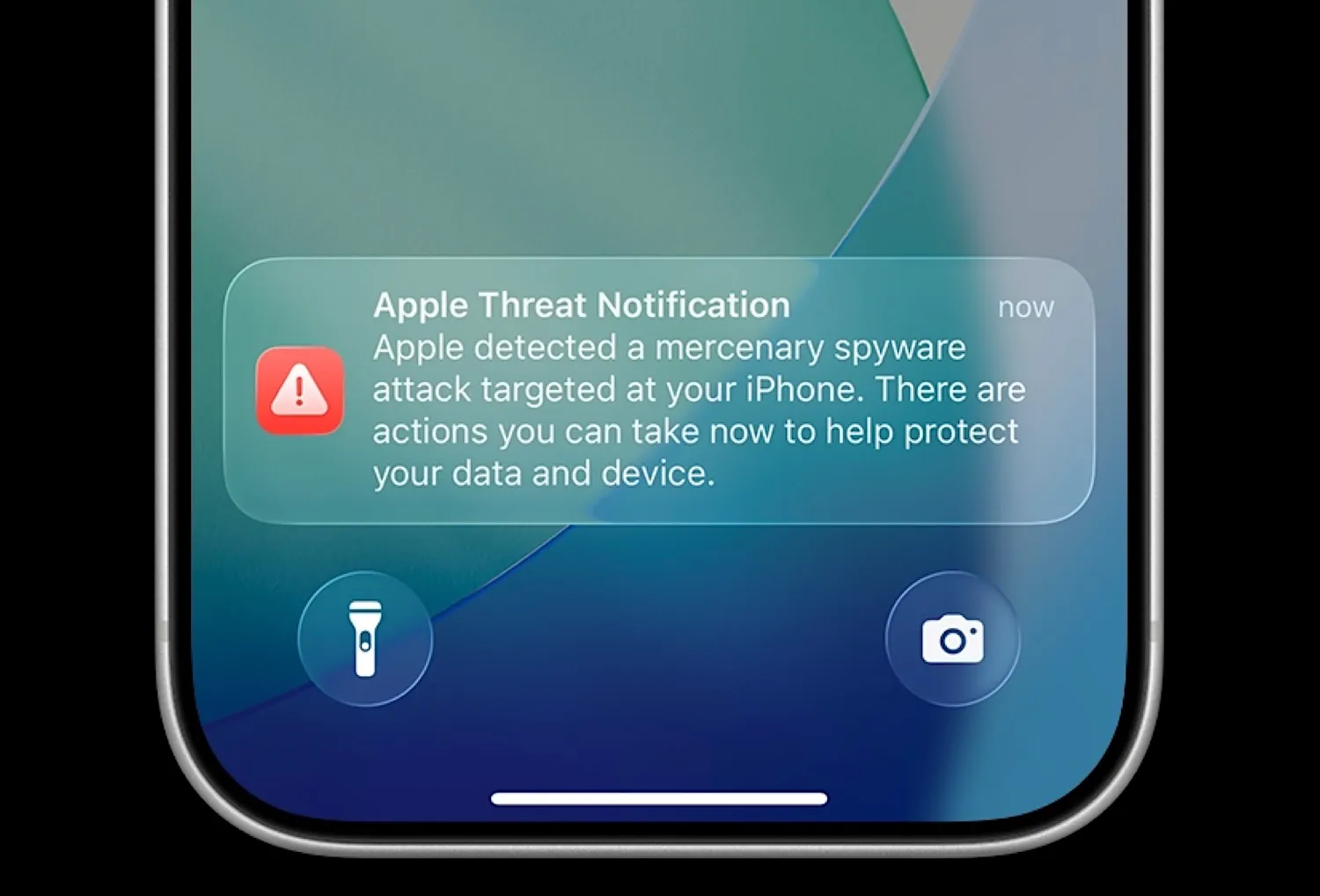
The German federal government has issued an urgent security advisory following revelations that members of the Bundestag and other prominent public figures were targeted by sophisticated, state-sponsored spyware. This development comes in the wake of a widespread notification campaign by Apple, which recently alerted users across 99 countries that their devices may have been compromised by mercenary cyber-surveillance tools. The German Federal Office for Information Security (BSI) confirmed over the weekend that it is investigating the breach, noting that the threat is considered severe enough to warrant immediate precautionary measures for all high-profile government officials.
While Apple’s notification system is designed to alert users to potential state-backed attacks, the company maintains a policy of not explicitly attributing these incursions to specific governments or entities. Nevertheless, the nature of these attacks—often involving “zero-click” exploits that require no user interaction to install—suggests a level of technical sophistication typically reserved for state intelligence agencies or well-funded private entities acting on behalf of national interests.
The Anatomy of a Zero-Click Attack
To understand the gravity of the situation, one must look at the technology involved. Unlike traditional phishing, which relies on a victim clicking a malicious link or downloading a contaminated file, zero-click exploits take advantage of vulnerabilities in the core software architecture of an operating system. By sending a specially crafted packet of data—often through an encrypted messaging app like iMessage—an attacker can gain full administrative control over a device without the user ever being aware of the intrusion.
Once inside, the spyware is capable of turning the phone into a comprehensive surveillance tool. It can activate the microphone and camera, log keystrokes, intercept encrypted communications, and extract location history, photos, and contact lists. Because these tools are designed to remain dormant and obfuscate their presence, they are notoriously difficult to detect through standard consumer-grade antivirus software.
A Global Pattern of Surveillance
The notifications sent to German officials are part of a broader, global effort by Apple to inform users of potential compromise. Among the high-profile individuals to report receiving such alerts is Radwan Mortada, a filmmaker based in Beirut. Mortada, who had previously been targeted by spyware in 2021, noted that his latest warning specifically referenced a new, distinct attack. This indicates that the entities deploying these tools are persistent, often returning to targets multiple times to ensure continuous surveillance.
The sheer scale of the operation—spanning 99 countries—underscores the proliferation of the mercenary spyware industry. Rather than developing their own cyber-offensive capabilities from scratch, many governments now outsource their surveillance needs to private vendors. These companies create “lawful interception” tools that are marketed to democratic governments for counter-terrorism and anti-crime purposes but are frequently repurposed to monitor journalists, activists, and political opposition figures.
Germany’s Response and the Internal Security Debate
The German government, led by the BSI, has urged recipients of these warnings to assume their devices have been compromised. A spokesperson for the government, Stefan Kornelius, stated that Berlin is treating the incident with the utmost seriousness. However, the government has remained tight-lipped regarding the specific identities of those targeted, citing security concerns and the ongoing nature of the investigation.
The incident has reignited a contentious debate within Germany regarding the state’s own relationship with such technology. It was revealed in 2021 that the Federal Criminal Police Office (BKA) had acquired access to the Pegasus spyware developed by the NSO Group. The revelation that German security services were using the very same class of software that is currently being used to target German lawmakers has created an uncomfortable paradox for the administration in Berlin. Civil liberties advocates argue that the normalization of this technology—even for state use—inevitably leads to its abuse, as the security community lacks the necessary oversight to prevent the tools from leaking into the hands of foreign intelligence agencies or domestic bad actors.
Chronology of the Escalation
The current wave of notifications is merely the latest chapter in a long-standing conflict between technology providers and the surveillance industry:
- 2019: The German BKA reportedly secures access to Pegasus, sparking long-term concerns regarding the ethics of government-sanctioned hacking tools.
- 2021: A surge in reports confirms the use of Pegasus and similar tools against journalists and politicians globally. Apple begins sending mass notifications to users suspected of being victims of state-sponsored spyware.
- 2023–2024: The sophistication of spyware vendors increases, with many moving away from simple phishing toward complex, zero-click vulnerabilities that bypass existing security patches.
- Late 2024: Apple identifies a massive, coordinated campaign spanning 99 countries, triggering the latest round of threat notifications to high-profile German targets.
The Broader Implications for National Security
The targeting of a G7 nation’s parliament members represents a significant escalation in the use of cyber-warfare in the political sphere. When foreign entities can monitor the private communications of legislators, the integrity of the democratic process is fundamentally undermined. Sensitive policy discussions, internal party communications, and personal data become assets that can be used for blackmail, espionage, or the strategic manipulation of political outcomes.
Furthermore, the existence of these tools poses an existential threat to the privacy of the average citizen. As cybersecurity experts have repeatedly noted, there is no way to create a “backdoor” or a high-end surveillance tool that only the “good guys” can use. Vulnerabilities discovered by researchers and sold to governments eventually become known to other threat actors, including organized crime groups and hostile state regimes.
Expert Analysis: The “Mercenary” Market
The term “mercenary spyware” refers to a business model where private companies offer “hacking-as-a-service.” These firms operate in a legal gray area, often shielded by the claim that they provide tools only to “vetted” governments. However, the consistent targeting of human rights defenders and political figures suggests that the vetting process is either deeply flawed or intentionally ignored to maximize profit.
Security researchers have pointed out that the market for these tools is growing exponentially. As the costs of traditional espionage—such as human intelligence (HUMINT) or electronic signals intelligence (SIGINT)—rise, the relatively low cost and high effectiveness of digital spyware make it an attractive option for governments with limited intelligence budgets.
Moving Forward: Defense and Mitigation
For the victims in Germany and elsewhere, the advice from cybersecurity professionals is clear: immediate device replacement is often the only way to ensure the total removal of such deeply embedded spyware. Because these programs can persist even after a factory reset, simple software updates are often insufficient to clear the threat.
The German government is now facing pressure to implement stricter export controls on surveillance technology and to advocate for international regulations that would hold mercenary spyware companies accountable. Without a global treaty or a unified regulatory framework, the current trend of “digital brinkmanship” is likely to continue, leaving the world’s most vulnerable public figures—and the systems they represent—at constant risk.
As the BSI continues its forensic analysis of the compromised devices, the incident serves as a stark reminder that in the modern digital age, the most dangerous weapon is often one that the victim never sees, never clicks on, and never knows is there. The coming weeks will likely reveal more about the extent of the infiltration within the Bundestag, but the overarching message to the global political community is clear: the era of secure, private communication is rapidly drawing to a close, and the technological landscape is shifting in favor of those who possess the tools to watch from the shadows.