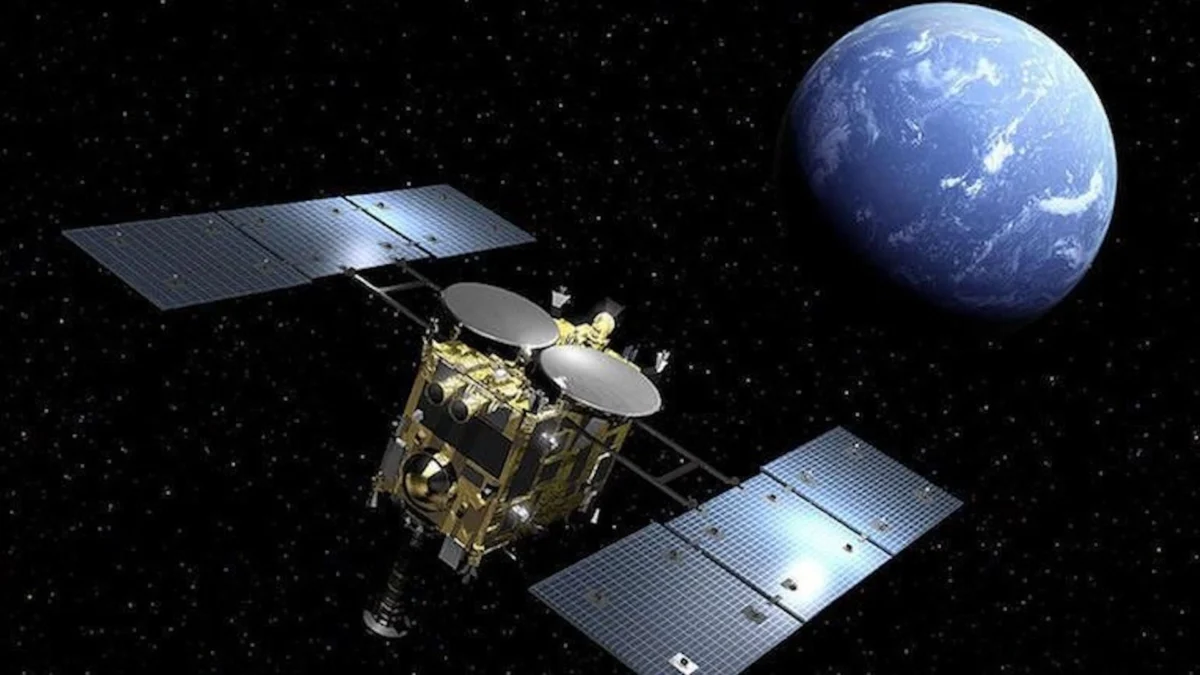
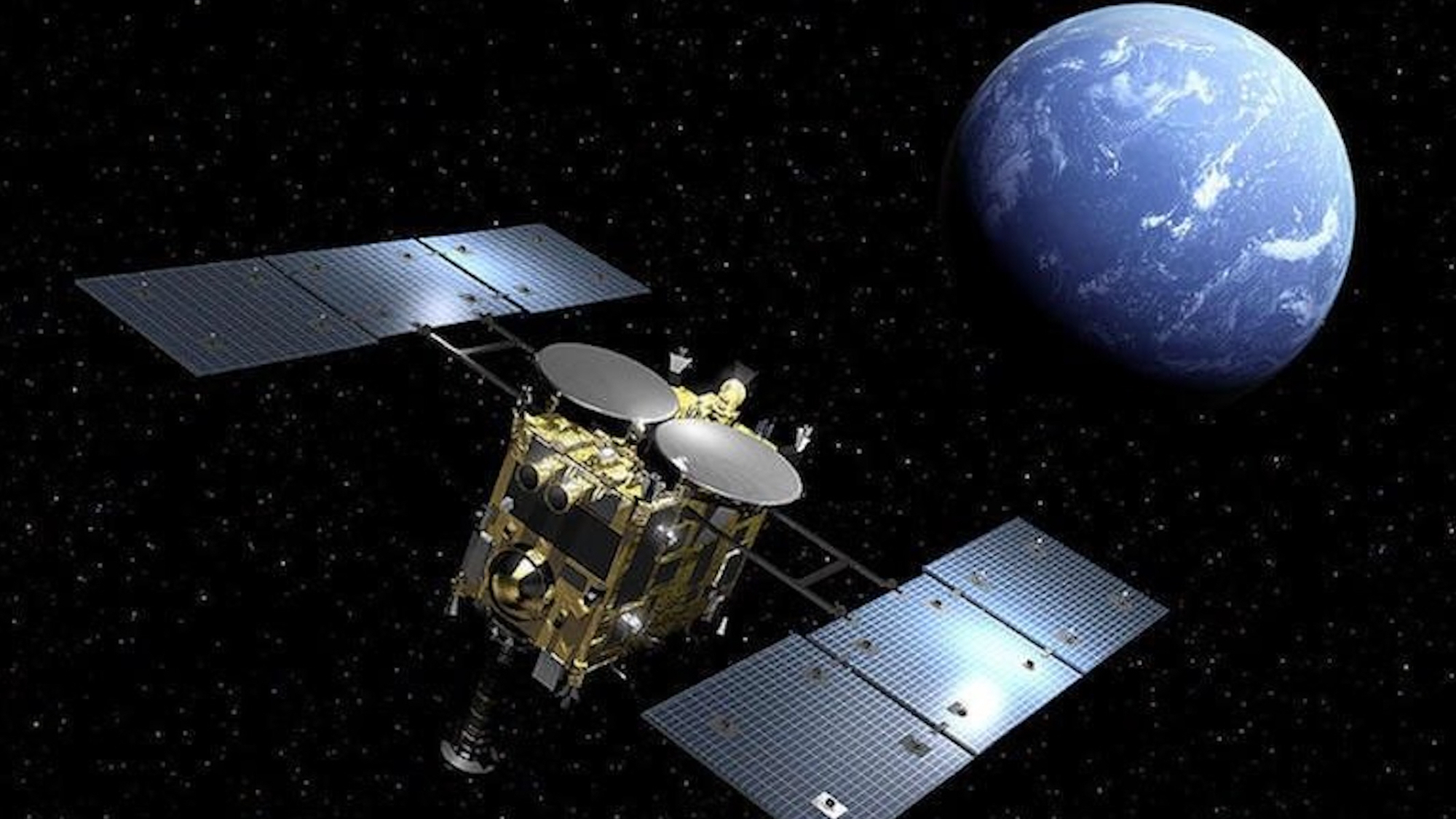
The Japan Aerospace Exploration Agency (JAXA) has officially announced a significant adjustment to the extended mission profile of the Hayabusa2 spacecraft, marking a bittersweet turning point for one of the most successful ventures in planetary science. Due to the degradation of the probe’s ion engine systems, mission controllers have opted to abandon the previously planned 2031 rendezvous and landing attempt on the 36-foot-wide asteroid 1998 KY26. Instead, the spacecraft will execute a high-speed flyby of a different near-Earth object, 2015 BM510, in April 2028. This decision reflects the delicate balancing act required to extend the lifespan of a veteran explorer that has already far exceeded its original operational requirements.
A Legacy of Discovery
Launched in December 2014, Hayabusa2 was designed with the primary objective of studying the C-type asteroid Ryugu. The mission achieved historic success, performing multiple landings and deploying small rovers to the asteroid’s surface. In December 2020, the spacecraft successfully returned a reentry capsule to Earth containing pristine samples from Ryugu, providing scientists with an unprecedented look at the building blocks of the solar system.
Following the successful delivery of these samples, the main spacecraft began an extended mission phase. It has spent the last several years traversing the inner solar system, utilizing its remaining fuel and hardware to conduct remote sensing and flyby observations. In July 2026, the probe made headlines by capturing high-resolution imagery of the two-headed asteroid Torifune from a distance of 62 million miles, demonstrating that despite its age, the probe remained a potent scientific instrument.
Technical Challenges and the Decision to Pivot
The decision to alter the mission trajectory stems from a critical failure in the spacecraft’s propulsion system. According to JAXA, the final operational thruster of the four original ion engines suffered a malfunction in mid-August 2026. These ion engines, which rely on the acceleration of xenon ions to provide precise, long-duration thrust, are the heartbeat of long-range deep space missions. Their failure, compounded by sensor data indicating unexpected surface erosion after more than a decade in the harsh environment of deep space, signaled to engineers that the spacecraft’s structural and mechanical integrity is nearing its limit.
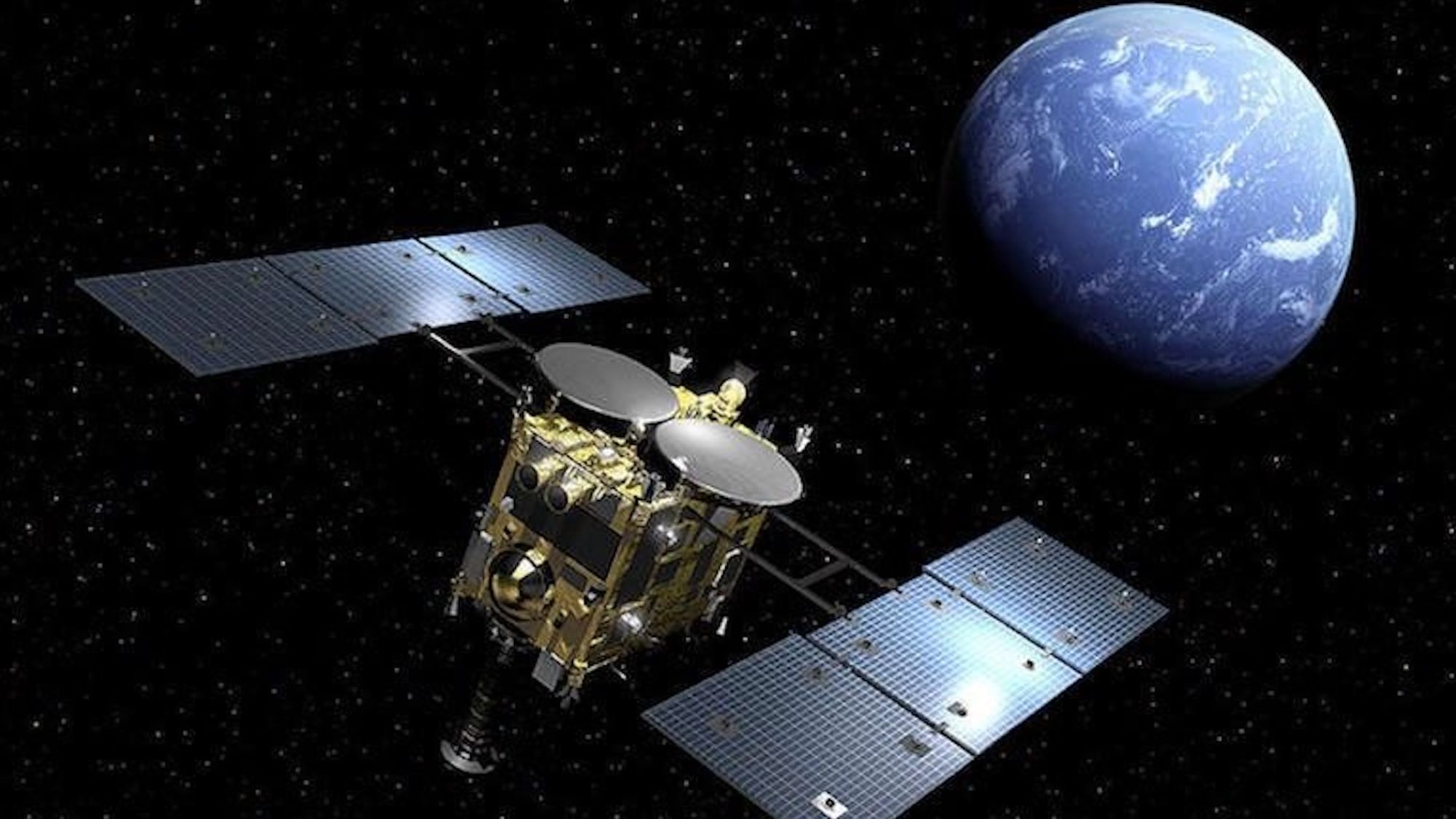
Yuya Mimasu, the team leader for the Hayabusa2 extended mission, acknowledged the severity of the situation during a press conference on November 17. He noted that the deterioration of onboard equipment has become increasingly evident, leaving the team with no choice but to prioritize a more conservative flyby trajectory over the high-risk, high-reward maneuver of a landing attempt. By targeting 2015 BM510 for a flyby rather than a landing, JAXA aims to extract as much scientific value as possible without risking a catastrophic loss of the probe during an complex orbital insertion.
Chronology of the Hayabusa2 Mission
- December 3, 2014: Launch of Hayabusa2 from Tanegashima Space Center.
- June 27, 2018: Arrival at the asteroid Ryugu after a three-and-a-half-year cruise.
- February and July 2019: Successful touchdown maneuvers on the surface of Ryugu to collect soil samples.
- December 6, 2020: The sample return capsule lands in the Woomera Prohibited Area in Australia.
- July 2026: Hayabusa2 performs a successful close-range flyby of the asteroid Torifune.
- August 2026: Final ion thruster experiences a malfunction, prompting an emergency review of mission objectives.
- November 17, 2026: JAXA confirms the shift in objective from 1998 KY26 to 2015 BM510.
- April 2028: Planned flyby of 2015 BM510.
Scientific Significance of the New Target
The shift to 2015 BM510 is not merely a consolation prize for mission planners. The asteroid has garnered significant interest within the global scientific community. It is classified as a D-type asteroid—a group characterized by a low albedo and a composition rich in organic materials. Many planetary scientists hypothesize that D-type asteroids are remnants from the outer solar system, potentially delivering water and organic molecules to the inner planets during the early stages of solar system formation.
Because 2015 BM510 is already the subject of a proposal for the European Space Agency’s (ESA) "Fast" mission series, the data gathered by Hayabusa2 will serve as a crucial precursor. By characterizing the asteroid’s surface properties and orbital dynamics, Hayabusa2 will provide the foundational data necessary for future, more intensive studies by European researchers.
The Broader Context of Japanese Space Exploration
The redirection of Hayabusa2 arrives at a pivotal moment for JAXA as it coordinates its future exploration roadmap. The agency is currently preparing for the launch of the "Destiny+" mission, a venture that will coincide with the 2028 flyby of 2015 BM510. Destiny+ is set to work in tandem with the ESA’s "Ramses" mission to study the potentially hazardous asteroid Apophis.
The proximity of these two events—the Hayabusa2 flyby and the launch of Destiny+—underscores the intensity of international cooperation in the asteroid research sector. As Apophis makes a historically close approach to Earth in 2029, the global scientific community is mobilizing to use these missions to better understand the threat posed by near-Earth objects. While Hayabusa2’s role is reaching its final chapters, its ability to contribute to this collaborative effort remains a testament to the longevity and robustness of the original engineering design.
Analysis of Operational Implications
The failure of the ion thrusters highlights the inherent difficulties in maintaining deep-space assets over extended mission timelines. While modern spacecraft are designed with redundancy, the cumulative impact of radiation, thermal cycling, and mechanical wear over twelve years of space travel is difficult to mitigate entirely.
The pivot from a landing to a flyby indicates a shift in risk management philosophy. A landing requires precise velocity control and multiple descent burns, which are impossible without reliable propulsion. A flyby, by contrast, relies on the spacecraft’s existing momentum and trajectory, requiring only minor attitude adjustments. This approach allows JAXA to keep the science payload active, ensuring that the cameras and spectrometers onboard can continue to operate as the spacecraft passes the target at high speeds.
For the team at JAXA, the primary goal is no longer to secure physical samples, but to gain "ground-truth" data. Even a brief window of observation during a flyby can provide insights into asteroid morphology, spin rates, and composition that remote ground-based telescopes cannot replicate.
Conclusion
The Hayabusa2 mission has fundamentally reshaped our understanding of the solar system’s evolution. While the loss of the capability to visit 1998 KY26 is a setback, the transition to 2015 BM510 ensures that the spacecraft will continue to contribute to planetary science until its final operational hour. As the mission enters its concluding phase, the lessons learned from both the successes at Ryugu and the technical struggles of the extended mission will inform the design of future spacecraft, ensuring that the legacy of Hayabusa2 endures in the next generation of robotic explorers.