The dust has barely settled from a bruising cycle of midterm elections that left the Make America Healthy Again (MAHA) movement reeling from a series of decisive defeats. In the immediate aftermath of the losses, movement leaders were quick to point fingers at external forces, attributing their poor electoral showing to being severely outspent by wealthier, more entrenched political rivals. However, a rigorous financial investigation into the internal operations of the movement’s primary political action committee tells a drastically different story. Rather than being crushed solely by deep-pocketed opponents, financial disclosures reveal a pattern of internal spending that calls into question whether electing political candidates was ever the primary objective of the organization’s leadership.
An exhaustive review of Federal Election Commission (FEC) filings and financial documents highlights a startling reality: the MAHA PAC, under the leadership of Tony Lyons, allocated significantly more financial resources toward internal allies, media boosters, high-end dining, exclusive luxury venues, and affiliated nonprofit organizations than it did toward directly supporting political candidates on the campaign trail. This glaring disconnect between public rhetoric and private financial management has ignited a firestorm of scrutiny among campaign finance experts, political analysts, and grassroots supporters alike.
The Grand Ambitions and the Reality of Fundraising
To understand the magnitude of the recent financial revelations, one must examine the lofty projections trumpeted by MAHA leadership earlier in the election cycle. In the spring, Tony Lyons proudly announced an aggressive, highly ambitious strategy: the launch of a massive $100 million fundraising campaign designed to dramatically bolster the electoral clout of MAHA-aligned candidates in the midterm elections. The announcement was heralded as a watershed moment for the health-focused political movement, signaling its arrival as a formidable force capable of shaking up the traditional political establishment.
However, the chasm between ambition and execution quickly widened. In reality, the MAHA PAC brought in a modest $3.2 million during the cycle. Despite failing to capture the astronomical sums initially promised, the committee managed to spend more than $10.5 million over the course of the campaign. The vast majority of this capital—over $7 million—was not freshly raised funds from the cycle, but rather money that the committee had collected and carried over from previous political efforts.
With a war chest of more than $10.5 million expended, observers naturally expected a heavy investment in television advertisements, digital messaging, field operations, and direct mail to support candidates advocating for the movement’s platform. Instead, financial disclosures paint a picture of an organization prioritizing overhead, networking, and high-living over grassroots electoral combat.
A Fraction for Candidates: The Independent Expenditure Discrepancy
At the heart of the controversy is the meager amount of money devoted to what campaign finance professionals call "independent expenditures"—the funds spent directly on messaging, advertising, and outreach to support or oppose specific political candidates. According to data analyzed by financial watchdogs, out of the $10.5 million deployed by the MAHA PAC during the midterms, less than a tenth—roughly $1 million—was directed toward these critical electoral messaging efforts.
For career
campaign finance researchers, this allocation structure is virtually unprecedented for a major super PAC operating in a high-stakes election cycle. Andrew Mayersohn, a prominent committees researcher at the nonpartisan campaign finance watchdog OpenSecrets, did not mince words when assessing the committee’s financial footprint. "Major super PACs spend most of their money on independent expenditures," Mayersohn noted, characterizing the MAHA PAC’s expenditure model as "pretty unusual" by modern standards of American political campaigning.
When a political committee raises millions of dollars ostensibly to win elections but channels the vast majority of those funds elsewhere, it invites searching questions from donors and regulatory bodies. The meager $1 million spent on actual candidate promotion raises profound doubts about the strategic focus of the organization, suggesting that the primary utility of the PAC may have been directed inward rather than outward toward the ballot box.
Dined and Debriefed: Luxury Perks Overshadow Key Races
The contrast between the PAC’s professed electoral priorities and its actual spending habits becomes even more stark when examining individual line items. In numerous instances, the financial support extended to high-profile political allies was dwarfed by expenditures on luxury meals, exclusive club memberships, and upscale networking environments.
A prime example unfolded in a fiercely contested House race in Northern California. The MAHA movement threw its support behind candidate Kevin Kiley, who faced off against his political rival, pediatrician Richard Pan. Movement leaders and strategists frequently pointed to this specific contest as a major ideological showdown, describing it publicly as "the most direct ideological confrontation" between the MAHA agenda and its opposition anywhere on the 2026 midterm ballot.
Given the high-stakes rhetoric surrounding the race, one might reasonably expect a robust financial commitment from the movement’s premier super PAC. Yet, the MAHA PAC allocated a paltry $49,900 to directly back Kiley’s campaign.
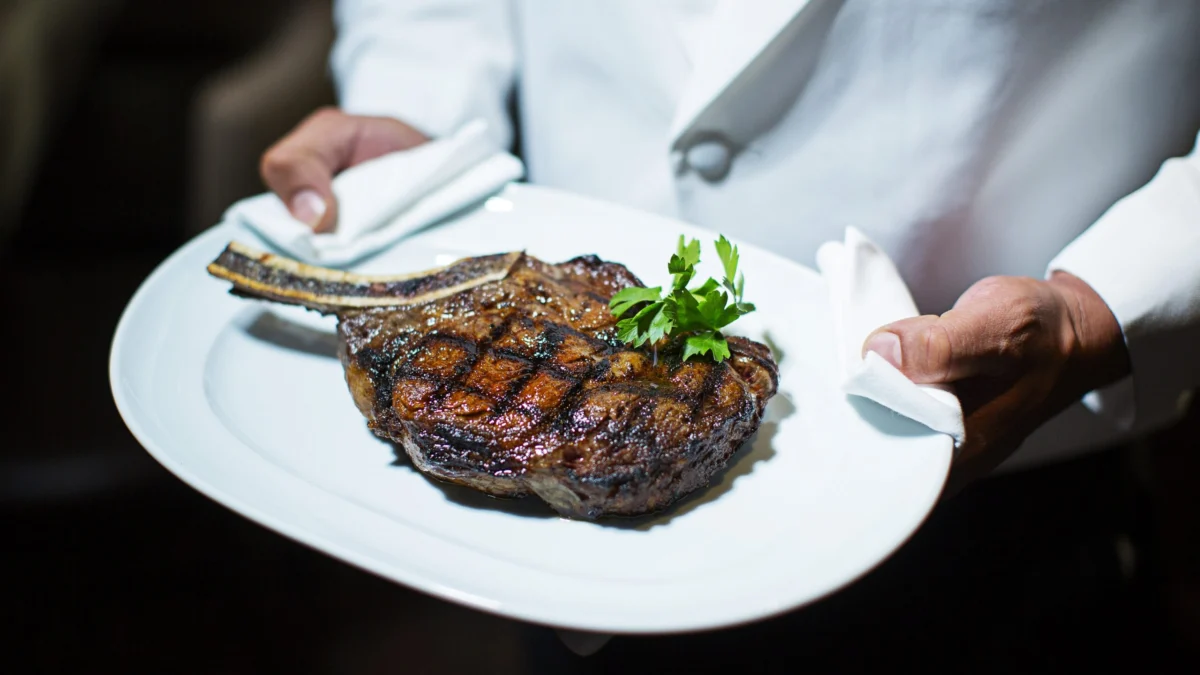
To put that figure into perspective, the PAC’s financial disclosures reveal that it spent slightly more than that—$50,100—at Mastro’s Steakhouse, an exceptionally upscale dining establishment in Washington, D.C., renowned for its $110 porterhouse steaks and elite clientele. Furthermore, the investment in the California House race was dwarfed by the PAC’s spending at other luxury outposts. The committee shelled out $155,900 at Ned’s Club, an ultra-exclusive private members’ club located near the White House that has rapidly evolved into a favored watering hole and networking hub for high-profile political figures and Washington insiders.
When a political action committee spends more than three times as much money at an elite private club than it does on the single most important ideological battleground race on the entire national ballot, critics argue it provides definitive proof of misaligned priorities.
A Timeline of Disconnect: From Spring Promises to Autumn Defeats
To fully comprehend the trajectory of the MAHA movement’s midterm cycle, it is necessary to trace the chronology of events that led to the current reckoning.
- Spring: Tony Lyons and movement organizers officially launch the super PAC strategy, announcing a target of $100 million in fundraising to reshape the political landscape during the midterms. Public statements emphasize building massive electoral muscle to challenge establishment candidates.
- Summer: Fundraising efforts fall significantly short of initial projections, stalling out at $3.2 million in new contributions. Despite the revenue shortfall, the committee begins drawing down millions of dollars from previously accumulated reserves, ramping up its total available budget to over $10.5 million.
- Early Fall: Campaign activities ramp up nationwide. Key races are identified, including the high-profile House contest in Northern California pitting Kevin Kiley against Richard Pan. Leaders bill the matchup as a defining ideological referendum.
- Late Fall (Election Day): The midterm elections arrive, resulting in a sweeping wipeout for MAHA-backed candidates across the country. Movement leaders immediately point outward, blaming heavy losses on being outspent by wealthier, more powerful political opponents.
- Post-Election Period: Investigative reports from financial watchdogs and news organizations break down the MAHA PAC’s actual FEC disclosures, revealing that less than $1 million went toward independent expenditures while substantial sums were funneled into luxury dining, exclusive club dues, internal nonprofit transfers, and political allies.
Broader Implications and the Future of the Movement
The fallout from the financial disclosures extends far beyond mere political embarrassment; it strikes at the core credibility of the Make America Healthy Again movement as it attempts to chart a path forward. Grassroots donors and activists who contributed hard-earned money under the impression that they were fueling a grassroots electoral revolution are now forced to reckon with the reality that their contributions may have primarily subsidized Washington luxury and internal administrative overhead.
Political analysts suggest that the revelation of these spending patterns could inflict long-term damage on the movement’s ability to mobilize resources in future election cycles. Trust is the foundational currency of political movements, particularly those that position themselves as populist crusades against institutional corruption and elite self-dealing. When leadership groups are documented spending lavishly on high-end steakhouses and private clubs while shortchanging the very candidates carrying the movement’s banner, the cognitive dissonance threatens to alienate the base.
Moreover, the revelations place heightened pressure on Tony Lyons and other prominent figures within the MAHA leadership structure to provide a transparent, detailed accounting of their financial decisions. Without a credible explanation for why millions of dollars were diverted away from electoral messaging and into high-end perks and internal entities, the movement risks being consumed by internal dissent and public skepticism.
As the political landscape continues to shift in the wake of the 2026 midterms, the cautionary tale of the MAHA PAC serves as a stark reminder of the perils of organizational opacity. Whether the movement can successfully reform its financial practices, rebuild trust with its grassroots supporters, and forge a viable path toward future electoral success remains one of the most pressing questions in contemporary American politics. For now, however, the enduring image of the campaign will not be the victories won on the battlegrounds of democracy, but the steep tabs run up in the exclusive salons of Washington, D.C.