
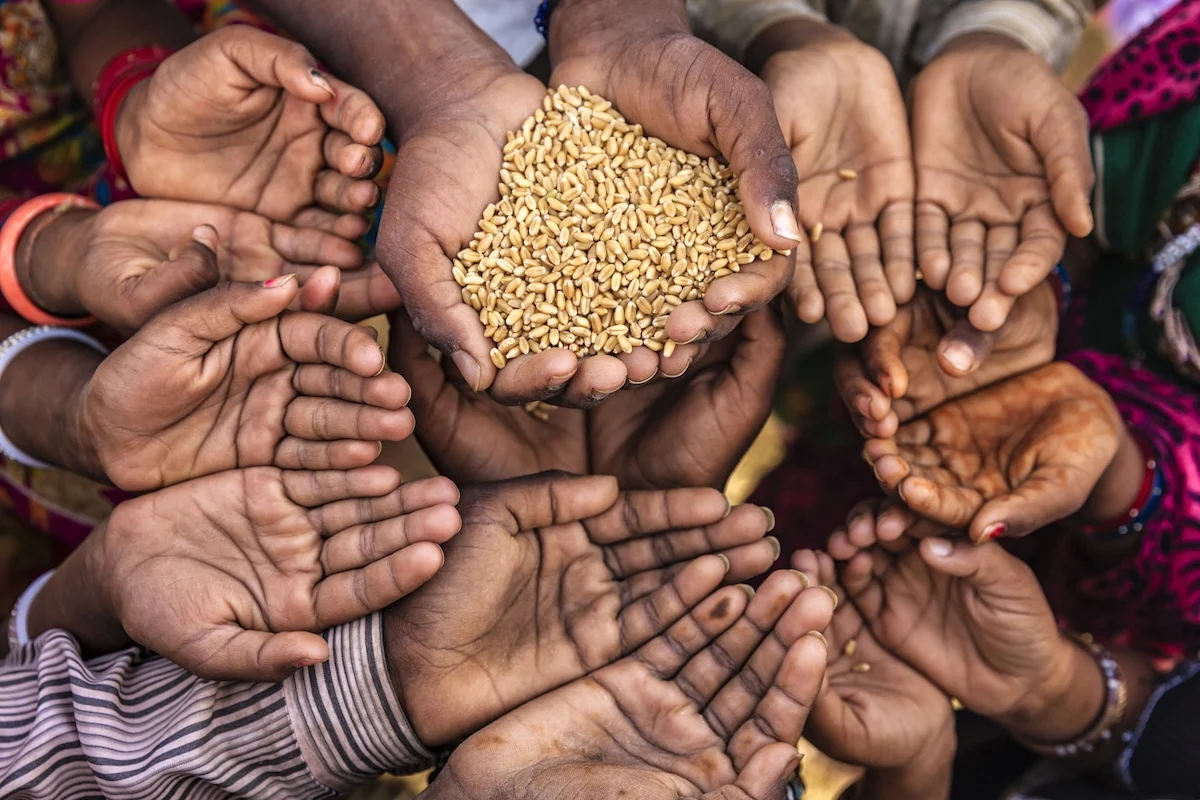
The State of Food Security and Nutrition in the World (SOFI) 2025 report, a definitive annual study published by five specialized United Nations agencies, has revealed a complex and diverging landscape of global nutrition. While the overall global hunger rate saw a marginal decline over the past year, the progress remains alarmingly uneven, with significant spikes in undernourishment recorded across Africa and Western Asia. Released by the Food and Agriculture Organization of the United Nations (FAO) on Monday, the report underscores the persistent challenges of conflict, climate change, and economic instability that continue to undermine the international goal of achieving "Zero Hunger" by 2030.
According to the latest data, approximately 8.2 percent of the global population—representing roughly 673 million people—suffered from chronic hunger in 2024. This figure marks a slight improvement from the 8.7 percent recorded in 2022 and the 8.5 percent in 2023. In absolute terms, between 638 million and 720 million people faced hunger last year, a decrease of approximately 15 million from the previous year. However, UN officials warn that these aggregate gains mask a deepening crisis in specific geographic corridors where food systems are failing under the weight of prolonged instability.
Regional Divergence: Successes and Setbacks
The 2025 SOFI report highlights a significant "hunger divide" between different parts of the world. In Asia, the percentage of the population facing undernourishment fell to 6.7 percent, down from 7.9 percent just two years prior. Similarly, the Caribbean and Latin America continued their recovery from the shocks of the early 2020s. After peaking at a 6.1 percent hunger rate in 2020, these regions saw undernourishment drop to 5.1 percent in 2024, affecting approximately 34 million people.
In sharp contrast, the situation in Africa and Western Asia has deteriorated. Africa remains the region with the highest proportion of people facing hunger, with more than 20 percent of the population—approximately 307 million people—undernourished in 2024. The continent is grappling with a "polycrisis" involving extreme weather events, such as prolonged droughts in the Horn of Africa and devastating floods in the Sahel, alongside internal conflicts and high levels of sovereign debt.
Western Asia has also seen a troubling upward trend. The report estimates that 12.7 percent of the population in this region, or more than 39 million people, faced hunger in 2024. This rise is largely attributed to the intensification of regional conflicts and the resulting disruption of local food production and trade routes.
The Economic Drivers of Food Insecurity
A central theme of the 2025 report is the lingering impact of the global food price surge that occurred between 2021 and 2023. This inflationary period was triggered by a "perfect storm" of factors: the logistical bottlenecks resulting from the COVID-19 pandemic, the massive disruption of grain and fertilizer exports due to Russia’s invasion of Ukraine, and a series of climate-induced crop failures in major producing nations.
While global food price inflation began to stabilize in late 2023, its effects remain acutely felt in low-income nations. Median global food price inflation rose from 2.3 percent in December 2020 to a peak of 13.6 percent in early 2023. However, in low-income countries, this figure soared to as high as 30 percent in May 2023. These high prices have fundamentally altered the ability of vulnerable households to access nutritious food.
The report notes that "moderate or severe food insecurity"—a metric that counts people who do not have regular access to enough nutritious food—affected 28 percent of the global population in 2024, or 2.3 billion people. While this is a slight decrease from 28.4 percent in 2023, the number of people unable to afford a healthy diet remains staggering.
Globally, 2.6 billion people could not afford a healthy diet last year. While this is an improvement from the 2.76 billion recorded in 2019, the trend is moving in the wrong direction for the world’s poorest countries. In low-income nations, the number of people unable to afford a healthy diet rose to 545 million in 2024, up from 464 million five years ago. In lower-middle-income nations (excluding India), this number climbed to 869 million, compared to 791 million in 2019.
Official Responses and Calls for Urgent Reform
Leading officials from the UN agencies—including the FAO, the International Fund for Agricultural Development (IFAD), UNICEF, the World Food Programme (WFP), and the World Health Organization (WHO)—have issued a collective call for a radical shift in how global food systems are managed and financed.

FAO Director-General QU Dongyu emphasized the need for targeted intervention. "While it is encouraging to see a decrease in the global hunger rate, we must recognize that progress is uneven," Qu stated. "SOFI 2025 serves as a critical reminder that we need to intensify efforts to ensure that everyone has access to sufficient, safe, and nutritious food. To achieve this, we must work collaboratively and innovatively with governments, organizations, and communities."
The health implications of these trends were highlighted by WHO Director-General Dr. Tedros Adhanom Ghebreyesus, who noted that while there has been progress in promoting exclusive breastfeeding and reducing stunting in some regions, the overall burden of malnutrition remains a global health emergency.
UNICEF Executive Director Catherine Russell focused on the long-term developmental toll of the crisis. "Every child deserves the chance to grow and thrive," Russell said. "Yet over 190 million children under the age of 5 are affected by undernutrition, which can have negative consequences for their physical and mental development. This robs them of the chance to live to their fullest potential."
IFAD President Alvaro Lario pointed to the economic necessity of investing in rural infrastructure. "In times of rising food prices and disrupted global value chains, we must step up our investments in rural and agricultural transformation," Lario remarked. "These investments are not only essential for ensuring food and nutrition security—they are also critical for global stability."
Chronology of the Global Food Crisis (2019–2025)
To understand the current state of global hunger, it is necessary to look at the timeline of events that have shaped the last five years:
- 2019: Pre-pandemic hunger levels were relatively stable, though the goal of Zero Hunger was already falling behind schedule.
- 2020-2021: The COVID-19 pandemic disrupted global supply chains, led to massive job losses, and caused a spike in food insecurity as transport costs skyrocketed.
- 2022: The outbreak of the war in Ukraine caused an immediate shock to the global supply of wheat, maize, and sunflower oil, as well as fertilizers, sending prices to record highs.
- 2023: Food price inflation peaked globally. Low-income countries faced inflation rates of up to 30%, leading to a surge in the number of people unable to afford basic nutrition.
- 2024: The latest reporting year shows a "decoupling" of trends—recovery in Asia and Latin America, but deepening crises in Africa and Western Asia due to climate change and localized conflict.
- 2030 (Projected): UN agencies estimate that 512 million people will remain chronically undernourished by 2030 if current trends continue, with nearly 60 percent of those individuals located in Africa.
Analysis of Implications and Policy Recommendations
The findings of the SOFI 2025 report suggest that the world is currently on track to fail the Sustainable Development Goal (SDG) 2: Zero Hunger. The projection that over half a billion people will still be hungry by the end of the decade represents a significant humanitarian and policy failure.
The report recommends a multi-pronged approach to reversing these trends. First, it calls for "transparent and credible monetary policies" to contain inflationary pressures. Second, it advocates for "time-bound and targeted fiscal measures," such as expanded social protection programs (e.g., cash transfers and school feeding programs) to protect the most vulnerable households from price volatility.
Furthermore, the UN agencies emphasize the importance of strategic investment in agrifood research and development. By boosting the productivity and resilience of small-scale farmers—particularly in Africa—countries can reduce their reliance on volatile global markets. Improvements in market information systems, transportation, and production infrastructure are also deemed essential for building "climate-smart" food systems that can withstand the increasing frequency of extreme weather events.
The report concludes with a warning that food security is not merely a humanitarian issue but a pillar of global security. As seen in Western Asia and parts of Africa, food scarcity and high prices often serve as catalysts for social unrest and mass migration. Addressing the root causes of hunger—conflict, climate change, and economic inequality—is therefore not only a moral imperative but a prerequisite for a stable international order.
As the international community prepares for the next round of climate and development summits, the SOFI 2025 report serves as a data-driven wake-up call. Without a coordinated effort to bridge the widening gap between regions that are recovering and those that are falling further behind, the dream of a world without hunger will remain out of reach.










Leave a Reply