
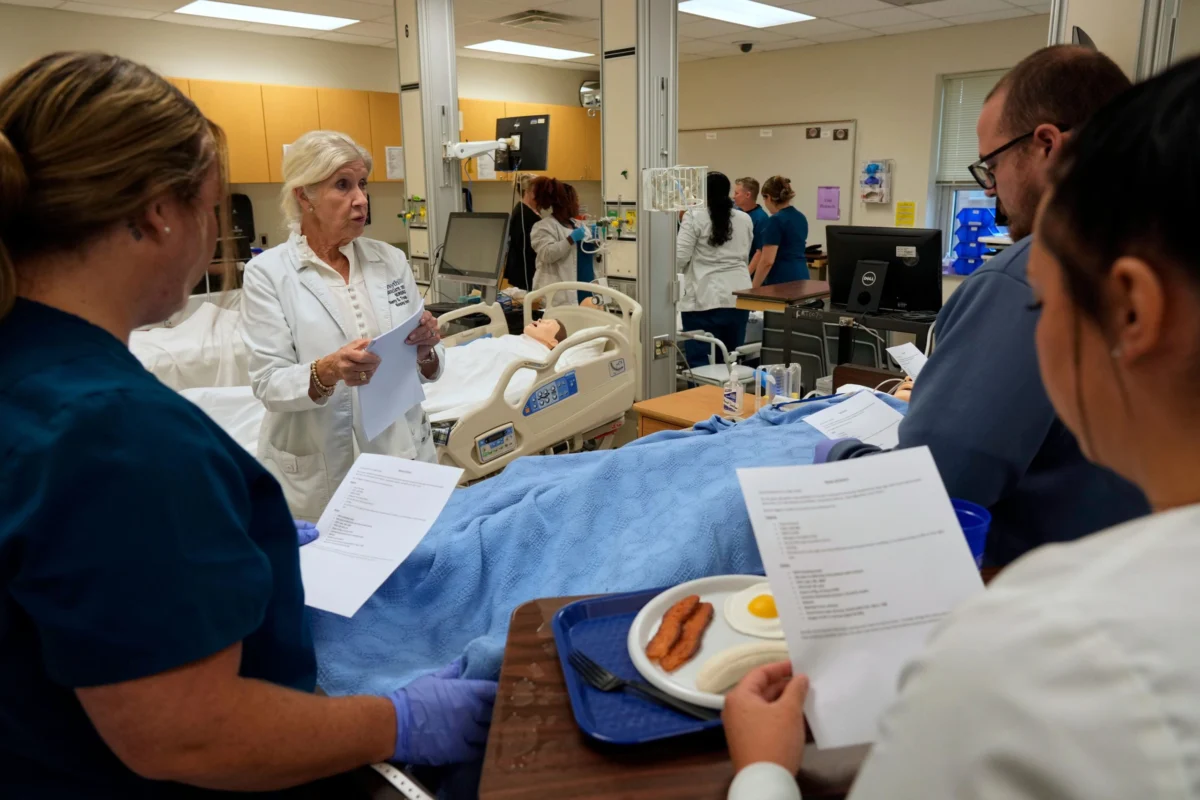
As the academic year hits its stride, thousands of American college seniors are confronting a landscape of profound financial instability that threatens to derail their career aspirations. For students like 21-year-old Mitzie Westgate, a senior at the College of Charleston, the path to a doctorate in occupational therapy—a goal rooted in personal experience with family disability—has been obscured by a shifting federal lending policy. The ongoing ambiguity surrounding federal student loan limits has transformed the standard graduate school application process into a high-stakes gamble, leaving students unable to determine which institutions they can afford or if they can justify the investment of a terminal degree at all.
This crisis stems from a sweeping legislative shift that occurred last year, when Congress removed numerous graduate-level programs from the Department of Education’s list of "professional" degrees. This reclassification effectively dismantled the Grad PLUS loan program, which previously allowed students to borrow up to the full cost of attendance. Under the new guidelines, most graduate programs are now capped at an annual federal loan limit of $20,500, with an aggregate limit of $100,000. While a select group of 11 professional programs remains eligible for higher limits of $50,000 annually and $200,000 in total, the vast majority of health care, psychology, and counseling degrees have been relegated to the lower, more restrictive tiers.
A Chronology of Policy Flux and Legal Challenges
The transition to this new lending environment has been anything but smooth. The policy took effect on July 1, but its implementation was immediately complicated by a legal challenge. A coalition of nursing associations, health care providers, and educational advocacy groups filed a lawsuit arguing that the abrupt reclassification would create a critical shortage of essential practitioners.
In response, a federal judge issued an injunction suspending the implementation of the stricter rules until at least December. This legal limbo has created a "policy vacuum" that has left financial aid administrators and prospective students in a state of administrative whiplash. For students currently in the midst of applying for the 2027-28 academic year, the uncertainty is paralyzing. They are forced to build financial plans based on rules that could be revoked or finalized at any moment, creating a risk that a program currently permitted for higher borrowing limits could, by the time enrollment occurs, fall under the restrictive $20,500 annual cap.
The Anatomy of the Financial Trap
The repercussions of these limits are particularly acute in the health care and social services sectors, fields that are currently experiencing significant labor shortages. Experts at the American Enterprise Institute (AEI) have noted a fundamental misalignment between the structure of these new loans and the realities of graduate education.
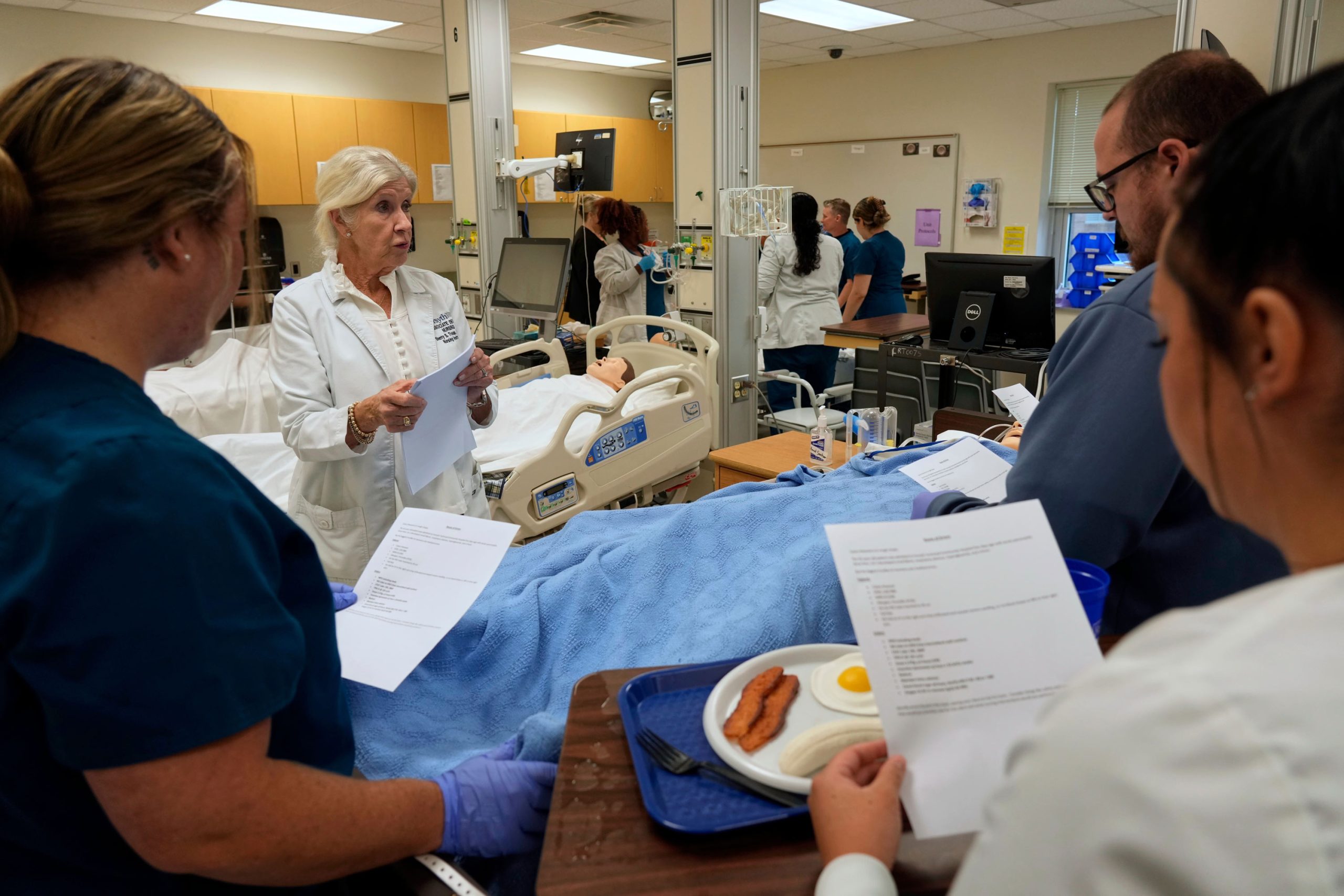
The traditional model of graduate financing relied on the assumption that students would bridge the gap between tuition and earnings through long-term, low-interest federal loans. By restricting these funds, the government is effectively pushing students toward private lenders. However, the private lending market is governed by different incentives. Unlike the federal government, private lenders utilize strict underwriting standards, often rejecting applicants with limited credit histories or those entering fields with lower immediate salary growth.
"Students attending more expensive programs do not, on average, earn substantially more after graduation," an AEI report stated. "In these fields, higher debt often reflects higher tuition prices rather than higher returns. As a result, lenders would have far fewer incentives to offer more loans to students attending expensive private programs."
This creates a paradox: students in critical fields like occupational therapy, social work, and physical therapy are being steered toward private debt, yet those same students are often deemed "high risk" by lenders because their career paths do not offer the explosive salary returns seen in corporate law or finance. Mark Kantrowitz, a prominent student financial aid expert, notes that lenders are increasingly targeting only the most "lucrative" graduate students, leaving the remainder of the applicant pool with few options beyond high-interest predatory lending.
Broader Economic Implications and Industry Responses
The threat of predatory lending has drawn sharp criticism from legal advocacy groups. Eileen Connor, director of the Project on Predatory Student Lending, warns that the removal of federal guardrails leaves students vulnerable to opaque terms, hidden fees, and mandatory arbitration clauses. "If you have bad credit, you could be looking at a 16 percent interest rate," Connor said, noting that these traps are becoming more prevalent as federal oversight wanes.
The ripple effects extend beyond individual students to the institutions themselves. Some wealthier universities have attempted to mitigate the crisis by establishing internal loan programs or issuing guidance on preferred private lenders. However, the efficacy of these measures is limited. A significant portion of the academic sector remains hesitant to commit to wholesale price reductions. While some analysts believe that market competition will force universities to lower tuition to remain accessible, others, such as Sarah Sattelmeyer of New America, remain skeptical. "Right now, I don’t see evidence that we’re going to see large across-the-board tuition and price reductions," she said.
Conversely, some observers point to early signs of market correction. At institutions like the University of Pennsylvania, high-cost programs are being scrutinized by prospective students who are increasingly comparing prices against lower-cost regional competitors. If federal funding continues to shrink, institutions may find themselves forced to adjust their tuition models to prevent a decline in enrollment.

The Human Cost: A Workforce in Jeopardy
For practitioners currently in the field, the policy changes feel like a systemic failure that ignores the realities of the American health care workforce. Kayce Cordray, a doctoral candidate in nursing at Oral Roberts University, provides a stark example of the human toll. Although she is currently insulated from the new limits due to her enrollment date, she expresses grave concern for the future of the profession.
"We are facing a real nursing shortage and a real rural health care shortage," Cordray said. "We’re not even going to be able to get registered nurses if we don’t have faculty. It’s a domino effect." She emphasizes that for many students—particularly those who are also parents—the prospect of managing private loans that require repayment while still in school is not just a financial hurdle, but a barrier to entry that is physically and emotionally unsustainable.
The requirement to begin repaying loans during the enrollment period, a common feature of private financing, is fundamentally incompatible with the intensity of doctoral-level study in medicine and psychology. For students like Gracie Hayworth, who is navigating a master’s in public health, the potential for having to service debt while in school is forcing a re-evaluation of her entire family’s financial strategy.
Conclusion: The Future of Graduate Access
The current uncertainty is not merely a bureaucratic inconvenience; it is a structural barrier that is altering the demographic composition of the future professional workforce. If access to graduate education becomes contingent upon existing wealth or a willingness to accept predatory interest rates, the diversity and accessibility of fields like occupational therapy, nursing, and counseling will likely diminish.
As the December deadline for the legal injunction approaches, the higher education sector waits for a resolution that will dictate the viability of advanced degrees for a generation of students. For Mitzie Westgate and her peers, the dream of giving back to their communities through professional service remains a precarious one, caught in the crossfire of federal policy, legal battles, and a private lending market that has yet to prove it can provide a stable alternative to federal support. Until a clear, long-term framework is established, the "policy vacuum" will continue to cast a shadow over the future of the nation’s health care infrastructure.









