
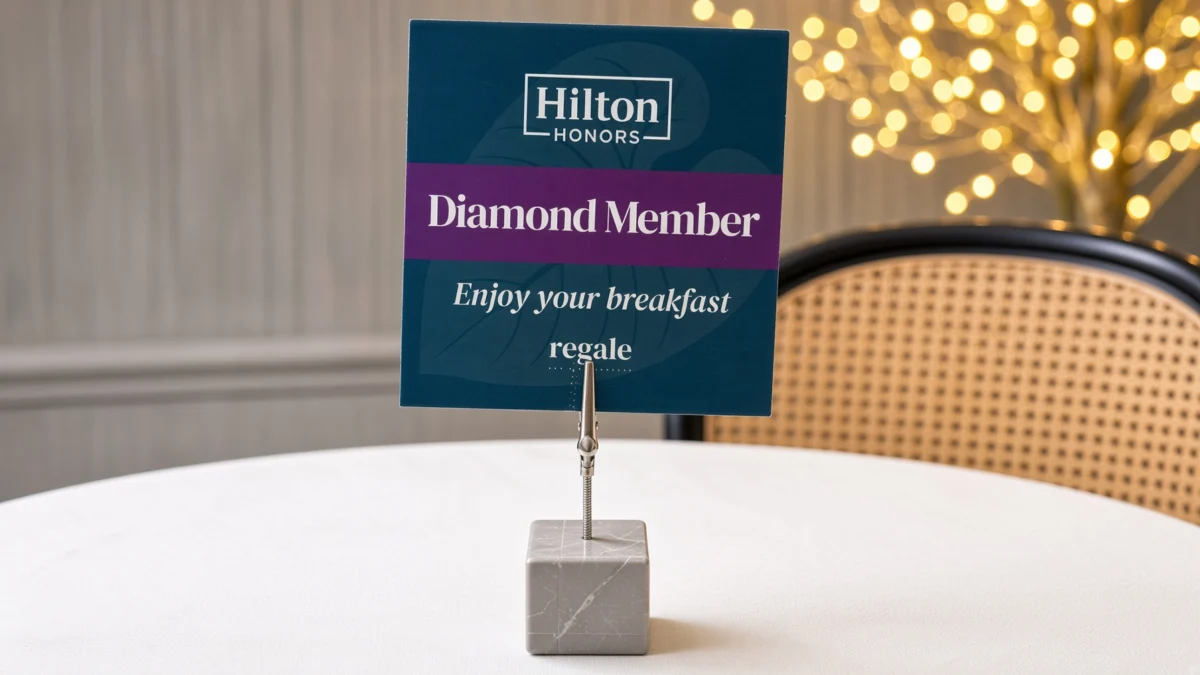
The landscape of hotel loyalty programs has undergone a period of intense volatility and strategic revision throughout the 2026 fiscal year, with Hilton Honors emerging as a primary driver of this industry-wide transformation. Following a series of tactical adjustments—including the introduction of the Diamond Reserve tier and a comprehensive reduction in qualification thresholds for existing Gold and Diamond statuses—the company has signaled a further shift in its elite hierarchy. Internal documentation and emerging marketing collateral have confirmed the existence of a new, ultra-exclusive status designation: Black Diamond. This development represents the highest echelon of the Hilton Honors program, positioning the brand to capture an even larger share of high-net-worth travel spending while simultaneously testing the ceiling of its customer loyalty ecosystem.
A Chronology of Strategic Tier Expansion
The evolution of Hilton’s loyalty structure in 2026 has been marked by a deliberate, phased rollout of new status levels designed to segment the travel market more granularly. In December 2025, eagle-eyed industry observers noted the appearance of "The Honors Society" designation within internal corporate materials. Initially viewed as a potential internal marketing moniker or a niche experimental program, the terminology transitioned into the public sphere in June 2026 as part of a concerted, high-visibility marketing campaign.
The introduction of "The Honors Society" served as an early indicator that Hilton intended to differentiate its most frequent travelers from the standard Diamond membership pool. However, the subsequent emergence of the Black Diamond tier—sitting above the recently introduced Honors Society and the traditional Diamond Reserve—suggests that the hotel giant is moving toward a multi-tiered ultra-luxury structure. This architecture mirrors trends seen in private banking and high-end credit card markets, where "invite-only" or "black card" branding is used to confer prestige and signal exclusivity to the most valuable 0.1% of the consumer base.
Analysis of Tier Qualifications and Market Positioning
Hilton’s recent strategy appears to be twofold: lowering barriers for mid-tier travelers while exponentially increasing the difficulty for top-tier recognition. By reducing qualification requirements for Gold and Diamond statuses earlier this year, Hilton likely aimed to stimulate occupancy rates and increase the volume of program participants. This "democratization" of mid-level status helps to lock in business travelers who might otherwise split their loyalty among competing hotel groups like Marriott Bonvoy or World of Hyatt.
Conversely, the introduction of the Diamond Reserve, The Honors Society, and now the Black Diamond tier functions as a mechanism for retaining the "whale" segment—travelers whose annual spend on property, dining, and ancillary services far exceeds the average. While official qualification criteria for Black Diamond remain closely guarded, industry analysts suggest that such a tier likely requires a combination of high-frequency stays, significant annual spend in excess of $50,000 to $100,000, and potentially secondary factors such as lifetime status milestones or ownership of co-branded premium credit cards.
The Role of Ancillary Platforms in Loyalty Engagement
Beyond the internal restructuring of its tiers, Hilton’s loyalty ecosystem continues to integrate with broader shopping portals, such as Rakuten, to maintain consumer engagement outside of the hotel environment. By leveraging these partnerships, the program ensures that Hilton Honors points remain top-of-mind even when the member is not traveling. These "mileage malls" allow members to earn points on everyday consumer goods, effectively turning the loyalty program into a financial tool rather than just a travel incentive.
![Hilton May Add “Black Diamond” Above Diamond Reserve—Pushing Diamond Status Further Down [Roundup]](https://viewfromthewing.com/wp-content/uploads/2026/09/cV0De.jpg)
For instance, promotional strategies involving platforms like GiftCards.com serve as a microcosm of how the brand incentivizes liquidity within its system. By allowing users to purchase gift cards for essential services—such as Uber, DoorDash, or major airlines like Southwest and Delta—through these portals, Hilton effectively subsidizes the cost of travel for its members. A $50 expenditure that results in a $50 return (or equivalent points value) creates a psychological "win" for the consumer, increasing brand affinity and reinforcing the utility of the Hilton Honors currency.
Industry Context: The War for the High-End Traveler
The travel industry in late 2026 remains highly competitive, with airlines and hotels engaged in a subtle arms race regarding passenger and guest experience. Recent reports, such as those highlighting exceptional service levels on American Airlines flights, underscore the reality that premium travelers are increasingly vocal about the value they receive for their loyalty. When guests experience high-quality service—whether in the air or at a luxury resort—it creates a benchmark that competitors are forced to meet or exceed.
The shift toward "Black Diamond" and similar status levels is a defensive response to the saturation of the traditional "Diamond" market. As travel has rebounded and even exceeded pre-pandemic levels, the pool of Diamond members has grown, potentially diluting the perceived value of the benefits associated with that status. By creating a new, exclusive tier, Hilton effectively "resets" the scarcity of its top-tier recognition. This allows the company to provide elevated, tangible benefits to the most profitable guests—such as dedicated concierge teams, private airport transfers, or guaranteed suite upgrades—without having to extend those costly privileges to the entire legacy Diamond population.
Broader Economic Implications
From a macroeconomic perspective, the proliferation of ultra-exclusive loyalty tiers reflects a broader trend of K-shaped consumption in the travel and hospitality sector. While the mass market is served by lower qualification thresholds, the ultra-luxury segment is increasingly isolated and rewarded with bespoke experiences.
This strategy carries several risks, however. First, it risks alienating the "aspirational" traveler, who may feel that the top tiers of the program are becoming unattainable regardless of their efforts. Second, the complexity of a program featuring Diamond, Diamond Reserve, Honors Society, and Black Diamond tiers may lead to "status fatigue," where members become confused about the tangible differences between these levels.
Hilton’s challenge moving forward will be to clearly communicate the value proposition of these new tiers. If the "Black Diamond" status does not come with clearly defined, superior benefits that are perceptible to the guest, the initiative may fail to generate the intended brand loyalty. However, if executed correctly, it serves as a powerful instrument for CRM (Customer Relationship Management), allowing Hilton to identify its most valuable patrons and provide them with a level of service that fosters life-long retention.
Conclusion
As Hilton Honors navigates the complexities of the 2026 travel market, the emergence of the Black Diamond tier serves as the latest chapter in a broader narrative of brand segmentation. By balancing accessibility for the broader membership base with elite exclusivity for top-tier spenders, Hilton is attempting to capture the full spectrum of the hospitality market. The coming quarters will be critical, as the company formalizes the benefits of this new tier and seeks to integrate it into the wider Hilton Honors architecture. For now, the move signals that the hotel loyalty industry is far from stagnant, with major players continuing to experiment with the fundamental mechanics of consumer engagement in an increasingly fragmented global travel economy.








Leave a Reply