In the dynamic and often violent theatre of the cosmos, few phenomena are as awe-inspiring as magnetic reconnection. This explosive physical process occurs when stretched and tangled magnetic field lines suddenly snap, realign, and release a torrent of stored energy. It is the invisible engine driving some of the universe’s most dramatic spectacles, from the shimmering curtains of Earth’s auroras to the colossal, plasma-spewing solar flares erupting from the surface of our sun. For generations, physicists viewed this phenomenon as a strictly electromagnetic quirk—a unique consequence of plasma physics and Maxwell’s equations.
However, a groundbreaking new theoretical study
is challenging this long-held paradigm. According to fresh mathematical models rooted in Albert Einstein’s theory of general relativity, gravity itself may possess a hitherto unrecognized counterpart to this process. The research suggests that sheet-like structures within the gravitational field can undergo their own version of breaking and snapping, fundamentally reorganizing themselves and releasing vast amounts of energy in the process. If confirmed, this discovery could revolutionize our understanding of spacetime, alter how we model extreme astrophysical environments, and offer new clues into the mysterious mechanics of the universe.
The Mechanics of Cosmic Snapping: Understanding Magnetic Precedents
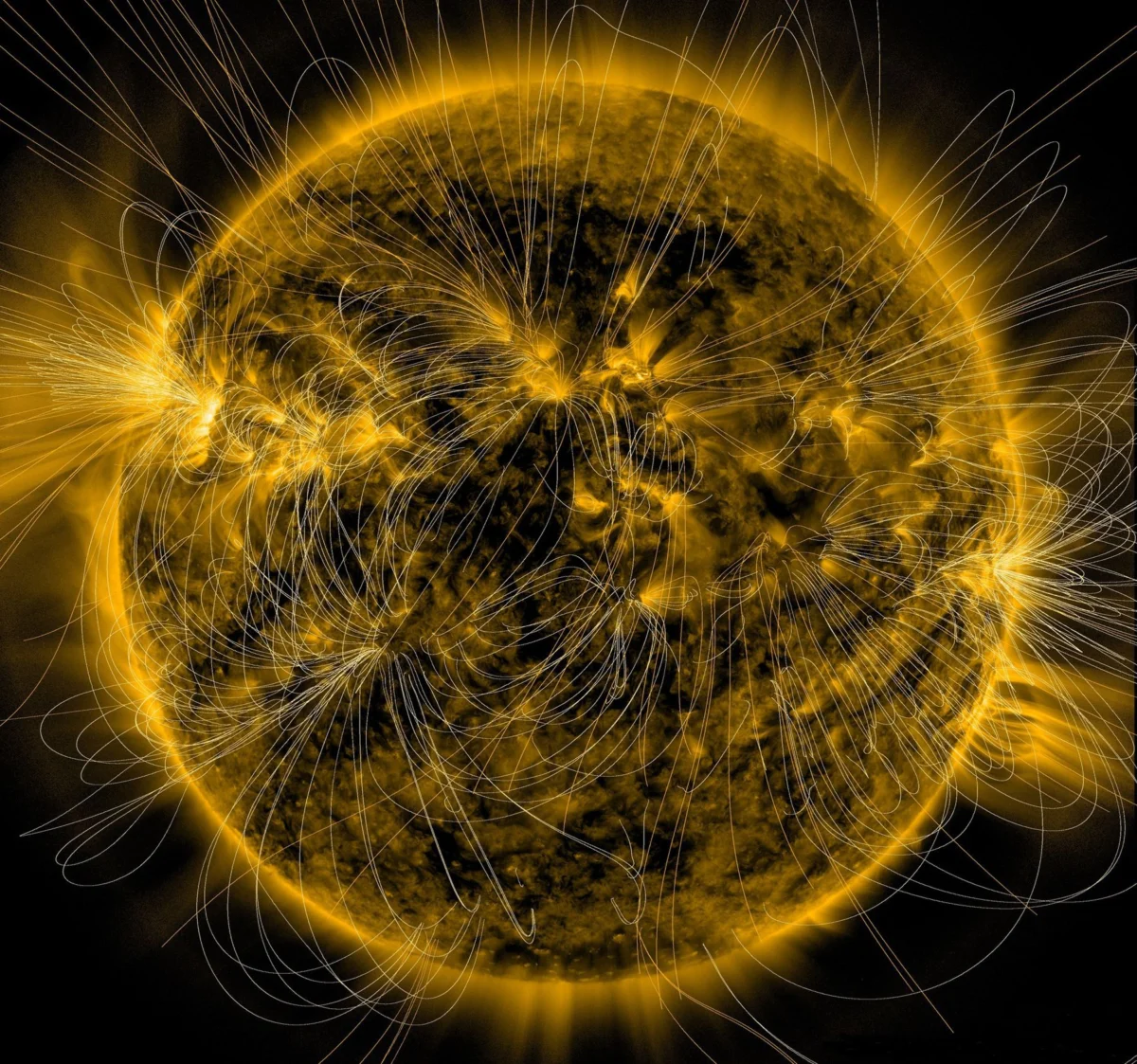
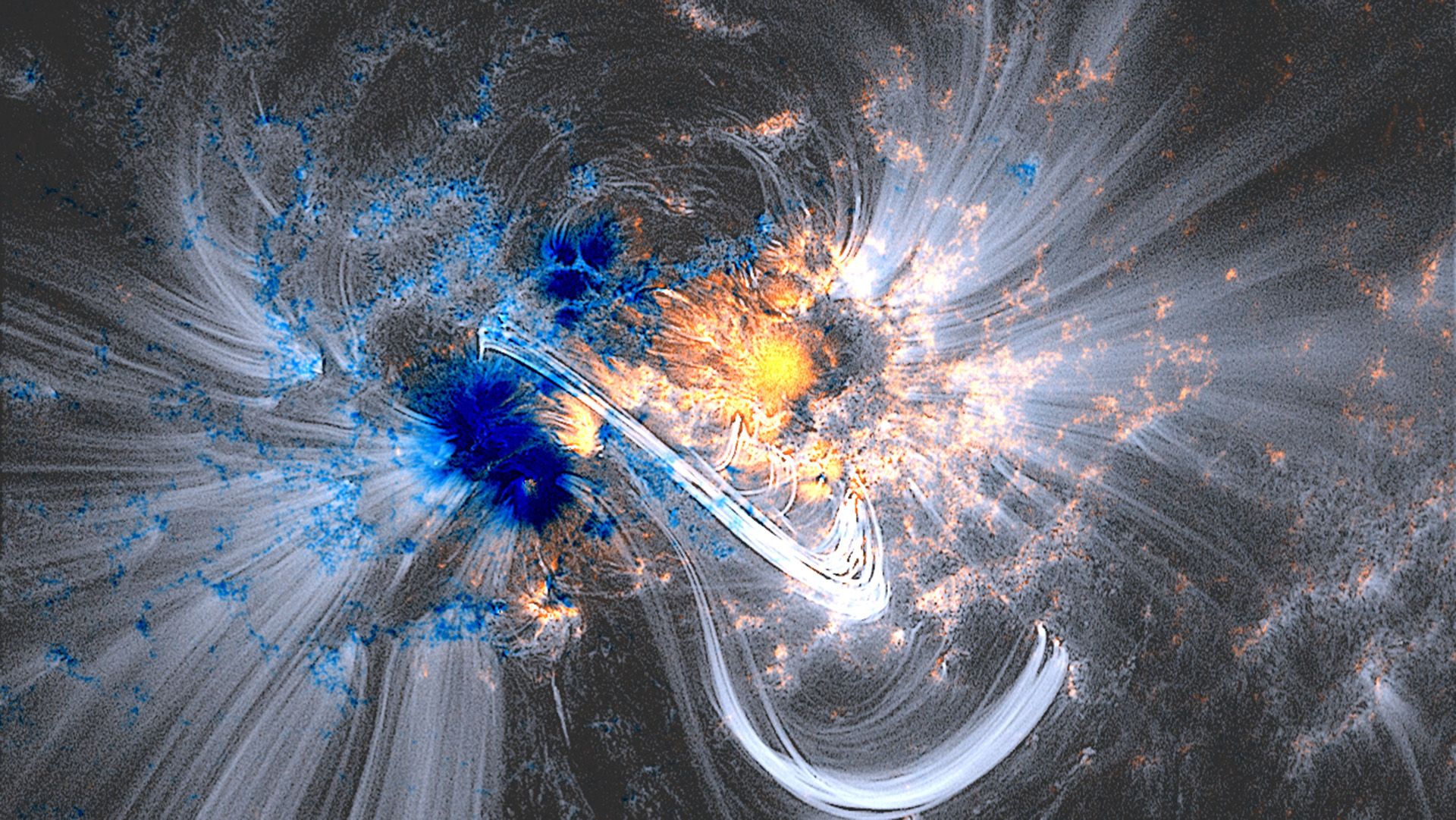
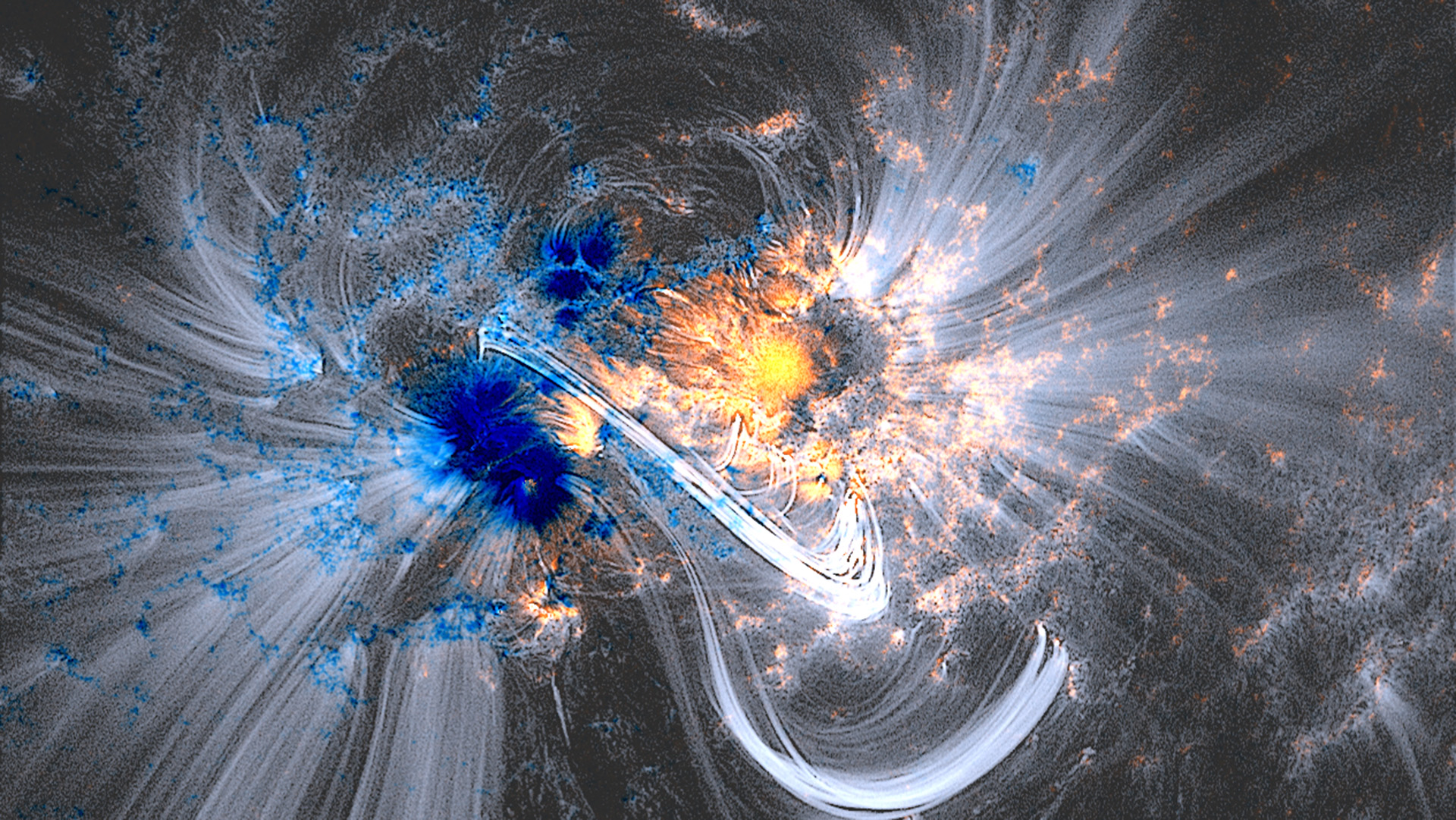
To comprehend the significance of gravitational reconnection, scientists first look to its well-documented electromagnetic sibling. Magnetic reconnection happens when plasmas—superheated gases consisting of charged ions and free electrons—move in such a way that they drag magnetic field lines along with them. When oppositely directed magnetic fields are pushed closely together, a thin boundary layer forms. In this boundary, the magnetic field lines break and rapidly reconnect in a new configuration.
This violent reconfiguration acts like a stretched rubber band snapping back, converting magnetic potential energy into kinetic energy, thermal energy, and particle acceleration. On the sun, this mechanism triggers coronal mass ejections, hurtling billions of tons of magnetized solar material into the interplanetary medium. In Earth’s magnetosphere, it allows solar wind particles to breach our planetary shield, fueling geomagnetic storms that can disrupt satellite communications and power grids.
For decades, standard gravitational theory—governed by Einstein’s general relativity, where gravity is not an invisible pull but rather the curvature of spacetime caused by mass and energy—was thought to operate on entirely different principles. Spacetime was generally modeled as smooth, continuous, and flexible, capable of rippling outward as gravitational waves, but traditionally viewed as lacking the sharp, localized topological discontinuities seen in magnetic fields. The new theoretical framework, however, indicates that intense gravitational fields can form sheet-like configurations that mimic the topological stress points found in plasmas, setting the stage for a gravitational equivalent of the snap.
A New Theoretical Frontier: Bridging Relativity and Field Dynamics
The latest study builds upon complex mathematical formulations of general relativity, pushing Einstein’s equations into extreme regimes where spacetime geometry behaves much like a fluid or an elastic medium. Researchers analyzing these configurations discovered that under specific conditions of intense stress and high curvature, gravitational fields can develop sharp gradients—effectively forming gravitational "current sheets."
Just as plasma currents generate magnetic shear, extreme distributions of mass-energy or intense gravitational wave interactions can create regions where the geometry of spacetime experiences extreme tension. When this tension exceeds a critical threshold, the smooth fabric of the local spacetime geometry can theoretically destabilize. The sheet-like structures break, and the gravitational field lines—or more accurately, the trajectories defining the local curvature—reconnect into a lower-energy configuration.
This theoretical breakthrough did not emerge in a vacuum. Over the past decade, astrophysicists and theoretical physicists have increasingly turned to numerical relativity and advanced computational models to simulate scenarios that were once mathematically intractable. By applying computational power to Einstein’s non-linear field equations, researchers are uncovering hidden behaviors in spacetime that go far beyond the classical weak-field approximations typically taught in physics classrooms.
Historical Context and the Evolution of Spacetime Physics
The journey toward understanding gravitational reconnection is part of a century-long quest to fully decode general relativity. When Albert Einstein published his field equations in November 1915, he provided a radically new description of gravity: space and time are inextricably linked in a four-dimensional continuum that responds dynamically to the presence of matter and energy.
For the first few decades, solutions to Einstein’s equations were largely focused on static or symmetric systems, such as the gravitational field surrounding a single, non-rotating star or black hole. It was not until the mid-20th century, with the advent of relativistic astrophysics, that researchers began exploring more dynamic phenomena, such as gravitational collapse and the generation of gravitational waves.
The detection of gravitational waves by the LIGO and Virgo collaborations in 2015 marked a watershed moment, proving that ripples in the fabric of spacetime are real and measurable. Since then, astrophysicists have detected numerous collisions of black holes and neutron stars, revealing a universe far more violent and dynamic than previously imagined. These observations have forced theorists to look closer at extreme spacetime dynamics, paving the way for radical concepts like gravitational reconnection to move from pure mathematical speculation into serious scientific inquiry.
Implications for Astrophysics and Cosmology
While the study of gravitational reconnection remains firmly in the realm of theoretical physics for now, its potential implications for observational astronomy and cosmology are profound. If gravity can indeed snap and reconnect, it could provide a mechanism for energy release in environments where traditional electromagnetic processes are absent or insufficient.
For instance, regions surrounding primordial black holes, the centers of active galactic nuclei, and the chaotic aftermath of binary neutron star mergers are environments characterized by extreme gravitational fields and immense energy densities. In these settings, standard magnetic reconnection operates alongside intense gravitational forces. A better understanding of how gravity behaves when its fields break and reform could help astrophysicists model high-energy phenomena that currently defy explanation, such as certain classes of gamma-ray bursts or anomalous X-ray emissions from dense stellar remnants.
Furthermore, exploring the boundaries of general relativity through such models brings physicists one step closer to the ultimate goal of modern theoretical physics: a unified theory of quantum gravity. While general relativity brilliantly describes the macro-cosmos, it breaks down at the subatomic scale where quantum mechanics dominates. By probing the limits of spacetime continuity—such as the snapping of gravitational field lines—researchers hope to find subtle signatures that might point the way toward reconciling gravity with the quantum world.
The Road Ahead: Challenges and Verification
Translating these theoretical models into testable hypotheses remains a monumental challenge. Unlike magnetic reconnection, which can be observed directly via satellites in Earth’s magnetosphere or telescopes pointing at the sun, gravitational reconnection occurs in regimes that are extraordinarily difficult to isolate or measure.
Gravitational waves offer the most promising window into such extreme dynamics. As computational relativity models become more sophisticated, researchers will attempt to simulate the exact gravitational wave signatures that would be produced if a gravitational current sheet were to break and reconnect. If these theoretical signatures possess unique characteristics—perhaps a sudden, distinct burst of high-frequency gravitational waves distinct from standard inspiral and merger signals—future generations of gravitational wave detectors might be able to search for them in archival or real-time data.
As the scientific community digests these new theoretical findings, the conversation surrounding the flexibility and resilience of spacetime is shifting. What was once viewed as a smooth, unbroken canvas is increasingly revealed as a complex, dynamic medium capable of dramatic fractures and realignments. As researchers continue to probe the mathematical depths of Einstein’s legacy, the universe continues to demonstrate that even the most fundamental forces of nature still hold breathtaking surprises.