
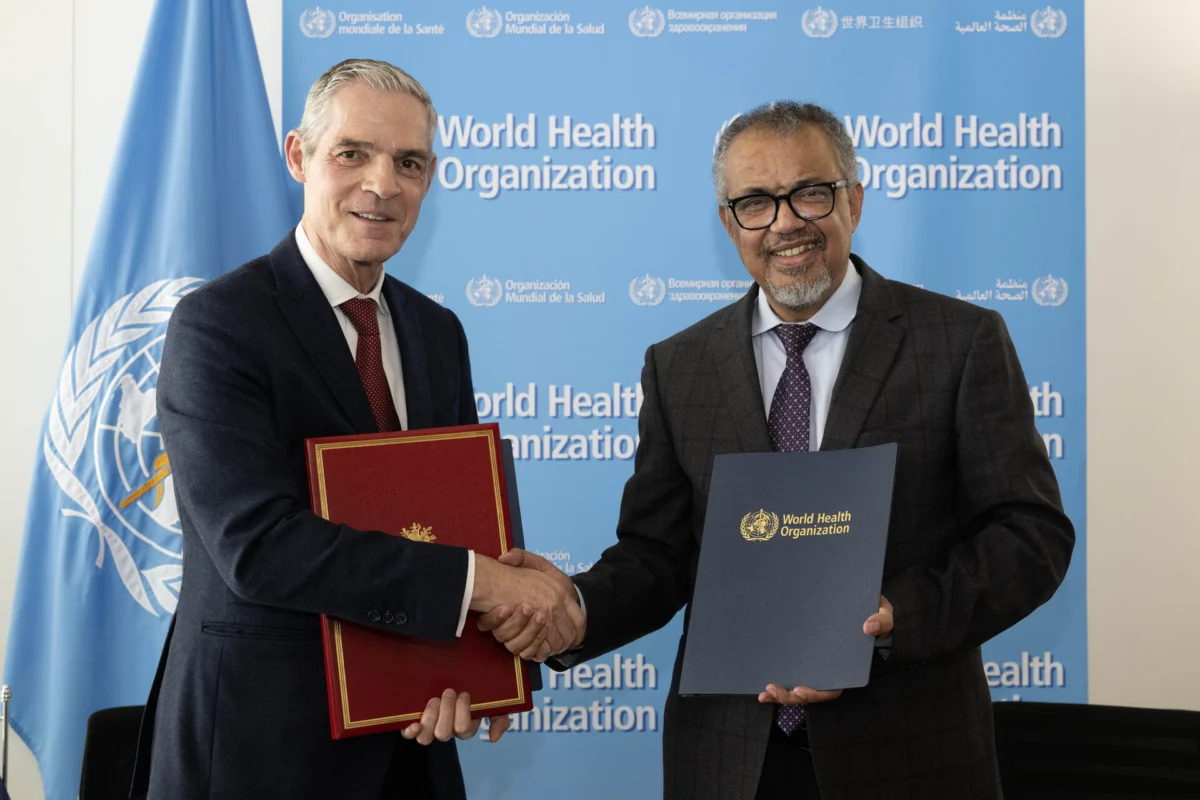
GENEVA — In a significant boost to multilateral health governance and emergency response capabilities, the Government of France and the World Health Organization (WHO) formally concluded a comprehensive funding package totaling €24 million. The formal signing ceremony took place on the afternoon of October 17, 2024, at the global health agency’s headquarters in Geneva, Switzerland. The agreement was executed by His Excellency Mr. Jérôme Bonnafont, Permanent Representative of France to the United Nations and other international organizations in Geneva, alongside Dr. Tedros Adhanom Ghebreyesus, Director-General of the WHO.
The newly enacted financial commitment encompasses seven distinct contribution agreements designed to channel vital resources into a broad spectrum of global public health initiatives. This latest monetary infusion is channeled through the French Ministry of Europe and Foreign Affairs and operates under the broader umbrella of the France–WHO Framework Agreement for the 2020–2025 period. This overarching framework provides both the strategic alignment necessary to match France’s foreign policy priorities with the WHO’s normative guidance, while simultaneously establishing the legal, administrative, and operational mechanisms required for swift financial deployment.
Financial Breakdown and Strategic Allocation
A cornerstone of this €24 million package is a dedicated allocation of €4.5 million directed into the WHO’s Core Voluntary Contributions Account (CVCA). Unlike strictly earmarked funds, fully flexible voluntary contributions are of paramount importance to the operational integrity of the organization. They allow the Director-General and the executive leadership to deploy financial resources rapidly where needs are most acute, fill critical funding gaps in neglected disease programs, and respond to sudden-onset crises before specific project-based donor funding can be mobilized.
Beyond the core flexible allocation, the remaining funds are strategically distributed across several high-priority domains identified within the WHO’s normative and operational mandates. These priority areas represent a mix of chronic health challenges and acute humanitarian emergencies:
- Non-Communicable Diseases (NCDs): Addressing the rising global burden of cardiovascular diseases, cancers, diabetes, and chronic respiratory ailments, particularly in low- and middle-income countries where health systems are increasingly strained by the double burden of communicable and non-communicable maladies.
- Urban Health Labs: Supporting innovative municipal health strategies designed to tackle the unique epidemiological and environmental health challenges faced by rapidly expanding urban populations across the globe.
- One Health Approach: Bolstering cross-sectoral collaboration at the human-animal-ecosystem interface to prevent, detect, and respond to zoonotic spillover events, antimicrobial resistance, and emerging infectious pathogens.
- Contingency Fund for Emergencies (CFE): Providing rapid-liquidity financing that enables the WHO to disburse funds within 24 hours of a health emergency declaration, cutting through bureaucratic delays to initiate immediate life-saving interventions on the ground.
- Targeted Humanitarian Responses: Funding specific, high-stakes operational responses, including emergency healthcare delivery in Gaza amidst ongoing conflict, containment and treatment operations for resurgent cholera outbreaks in vulnerable regions, and specialized mental health and psychosocial support programs for populations affected by the war in Ukraine.
- The WHO Lyon Office: Sustaining the specialized WHO operational center in Lyon, France, which plays a pivotal, globally recognized role in epidemic and pandemic preparedness, laboratory strengthening, and workforce training.
Chronology and Evolution of the France-WHO Partnership
The October 2024 signing represents the latest milestone in a deeply rooted, decades-long institutional partnership between France and the World Health Organization. To understand the significance of this €24 million package, it is necessary to examine the chronological evolution of French multilateral health diplomacy and its alignment with WHO reform initiatives.

- Early 2000s–2010s: France establishes itself as a reliable donor for specific disease verticals and emergency responses, steadily increasing its footprint in Geneva-based international organizations. The creation of the WHO Office in Lyon during this period cements France’s role as a technical hub for global health security and epidemic intelligence.
- 2020: The signing of the inaugural France–WHO Framework Agreement (2020–2025). This institutional pact marks a shift from ad-hoc, fragmented donations to predictable, multi-year strategic financing, streamlining administrative burdens and aligning French development assistance with the WHO’s General Programmes of Work.
- 2020–2022 (The COVID-19 Pandemic): France emerges as a leading advocate for global solidarity, heavily supporting the Access to COVID-19 Tools Accelerator (ACT-A) and the mRNA vaccine technology transfer program. Paris increases its voluntary contributions to help mitigate pandemic disruptions in fragile health systems.
- May 2024: The World Health Assembly formally approves the Fourteenth General Programme of Work (GPW 14) for the period 2025–2028. This strategic blueprint sets the global health agenda for the post-pandemic era, focusing on equity, climate change and health, and resilient primary healthcare.
- September–November 2024: France steps forward as a prominent co-host of the WHO’s inaugural Investment Round. This novel financing mechanism is designed to mobilize predictable, flexible, and resilient resources from a broader base of sovereign and philanthropic donors, addressing the historical over-reliance on tightly earmarked funding that has constrained the organization’s agility.
- October 17, 2024: Ambassador Jérôme Bonnafont and Dr. Tedros Adhanom Ghebreyesus formally sign the seven contribution agreements totaling €24 million at WHO headquarters in Geneva, operationalizing key commitments under the 2020–2025 framework.
Supporting Data and Multilateral Context
Global health financing is currently undergoing a structural transformation. For decades, the WHO has operated under a funding model characterized by a high degree of vulnerability: assessed contributions (mandatory dues from Member States) have historically accounted for a shrinking percentage of the organization’s total budget, while voluntary contributions—often earmarked for specific diseases or regions by individual donors—have made up upwards of 80% of total revenue. This imbalance has frequently limited the WHO’s ability to address systemic health issues or deploy resources flexibly during unforeseen crises.
In response, Member States, led by champions of multilateralism such as France, have undertaken concerted efforts to reform the organization’s financing architecture. At the World Health Assembly, nations historically agreed to a phased increase in assessed contributions, aiming to provide a more predictable baseline for the organization’s normative work. Simultaneously, initiatives like the WHO Investment Round have sought to engage donors in multi-year, flexible commitments.
France’s positioning within this landscape is distinctive. As a G7 nation and a permanent member of the United Nations Security Council, Paris has consistently advocated for a fully and flexibly financed multilateral health architecture. By dedicating a significant portion of its €24 million package—specifically the €4.5 million allocated to the Core Voluntary Contributions Account—to unearmarked funds, France demonstrates practical alignment with these institutional reforms. This approach contrasts with donor models that tie every euro to specific, highly restrictive domestic political or programmatic KPIs, allowing the WHO’s technical experts to allocate funds based on objective epidemiological need.
Furthermore, France’s domestic and international health investments reflect a comprehensive view of security. By funding both immediate crisis response mechanisms (such as the CFE and operations in Gaza, Ukraine, and cholera-affected zones) and long-term structural capacities (such as NCD prevention, urban health initiatives, and the Lyon epidemic preparedness center), the French government acknowledges that global health security cannot be achieved through emergency firefighting alone; it requires robust, resilient primary health systems capable of withstanding systemic shocks.
Official Statements and Diplomatic Reactions
During the signing ceremony at WHO headquarters, senior officials from both delegations emphasized the mutual benefits and strategic imperative of their enduring partnership.
Ambassador Jérôme Bonnafont articulated France’s overarching foreign policy stance regarding global health governance:

"France remains deeply committed to supporting the World Health Organization in its efforts to tackle critical global health challenges. These agreements reflect our shared priorities of promoting health equity, responding to emergencies, and strengthening healthcare systems worldwide. In an era marked by overlapping geopolitical and epidemiological crises, robust multilateral institutions are not optional; they are an absolute necessity for global stability and human security."
Echoing these sentiments, WHO Director-General Dr. Tedros Adhanom Ghebreyesus expressed profound appreciation for the French government’s consistent leadership and financial reliability:
"We are immensely grateful to the French Government for its steadfast support to WHO, continued partnership, and leadership in global health. This contribution will enable us to address key health threats, from non-communicable diseases to emergency response, helping to save lives and protect the most vulnerable populations. France’s commitment to flexible financing sets a powerful example for the international community, demonstrating what true multilateral solidarity looks like in practice."
Diplomatic observers in Geneva noted that the timing of the signing—occurring shortly after the rollout of the WHO Investment Round framework—underscores France’s intent to lead by example. By converting high-level political commitments into concrete, signed legal agreements, Paris is actively encouraging other donor governments to step up their financial predictability ahead of upcoming global health summits.
Broader Implications and Future Outlook
The execution of these seven contribution agreements carries significant implications for the international public health landscape. As the world navigates the complex epidemiological transition of the 21st century—characterized by the dual pressures of aging populations burdened by non-communicable diseases and the persistent threat of novel zoonotic spillover events—the demand for normative guidance and operational support from the WHO has never been higher.
- Operational Agility in Crises: The infusion of flexible funds into the CVCA and the CFE ensures that the WHO maintains the institutional muscle memory and liquidity required to respond within hours to emerging humanitarian catastrophes. Whether scaling up trauma care in conflict zones like Gaza and Ukraine or deploying rapid-response epidemiologists to contain cholera outbreaks, these funds remove administrative bottlenecks.
- Reinforcing European and Global Health Security: The sustained backing of the WHO Lyon Office ensures that laboratory networks, epidemiological surveillance training, and outbreak preparedness logistics remain anchored in a high-capacity European hub, directly benefiting low- and middle-income partner countries seeking technical mentorship.
- Paving the Way for Sustainable Financing: By championing flexible funding models and participating actively in the WHO Investment Round, France is helping to forge a sustainable financial future for the agency. If other major donor nations replicate this balance of core flexible support and targeted operational funding, the WHO will be significantly better equipped to execute its Fourteenth General Programme of Work (2025–2028).
Ultimately, the October 17 signing ceremony in Geneva transcends a routine bureaucratic transaction. It stands as a reaffirmation of the value of international cooperation, proving that strategic partnerships between sovereign states and international agencies remain the most effective bulwark against shared global threats to human health and well-being.






Leave a Reply