
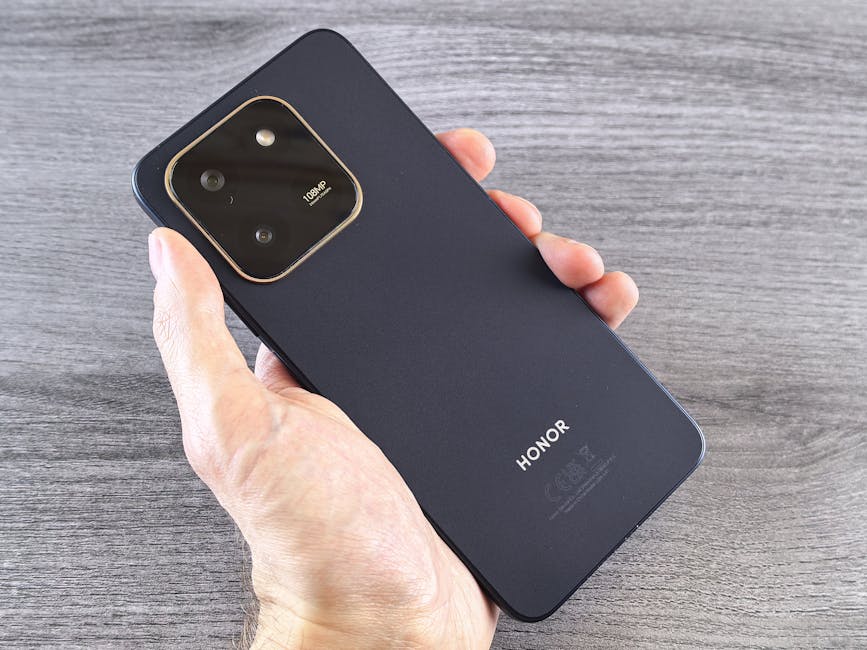
Honor Has Now Overtaken Pixel: A Deep Dive into the Shifting Smartphone Landscape
The smartphone market, a relentless arena of innovation and competition, has witnessed a significant paradigm shift in recent times. Once a clear duopoly dominated by Apple and Samsung, with Google’s Pixel line carving out a respectable niche, the landscape is now evolving rapidly. The emergence and resurgence of Chinese manufacturers, particularly Honor, have disrupted established hierarchies, with Honor now demonstrably overtaking Google’s Pixel in several key metrics and market perceptions, signaling a profound change in consumer preference and technological trajectory. This article will delve into the multifaceted reasons behind this shift, examining Honor’s strategic advancements, Pixel’s perceived stumbles, and the broader implications for the future of premium and high-performance smartphones.
Honor’s ascent is not a fleeting moment; it is the result of deliberate and aggressive strategies executed with precision. Following its divestment from Huawei, Honor was freed from the geopolitical constraints that hampered its former parent company, most notably the absence of Google Mobile Services (GMS). This liberation allowed Honor to re-establish itself globally, not as a budget alternative, but as a serious contender in the premium and flagship segments. The company has invested heavily in research and development, evident in its technological innovations. For instance, Honor has been at the forefront of foldable display technology, introducing devices like the Magic V series which boast industry-leading hinge designs, impressive screen-to-body ratios, and robust build quality. These foldables are not just experimental; they are polished, consumer-ready products that challenge established players in a rapidly growing niche. Furthermore, Honor’s commitment to advanced camera systems, often featuring large sensors, sophisticated image processing powered by proprietary AI algorithms, and innovative lens configurations, has directly competed with and, in many instances, surpassed the computational photography strengths that were once a primary selling point of the Pixel line. Their focus on high-refresh-rate displays, rapid charging technologies, and cutting-edge processor integration further solidifies their position as a comprehensive flagship offering, not just a single-feature standout.
Conversely, Google’s Pixel line, while possessing unique strengths, has faced a series of challenges that have contributed to Honor’s relative surge. The Pixel’s primary allure has historically been its exceptional software experience, characterized by clean Android, timely updates, and AI-driven features that leverage Google’s deep understanding of user behavior. However, the hardware, while competent, has often lagged behind competitors in terms of raw specifications and premium build materials. While Pixel cameras are renowned for their computational prowess, the physical hardware, such as sensor size and aperture, has sometimes been outpaced by rivals who prioritize these aspects alongside software. This has led to a perception that Pixel phones are more about software than a complete hardware-software integration at the bleeding edge. Moreover, issues with hardware reliability and occasional software glitches, though not endemic, have eroded some consumer trust. The consistent release of Google’s Tensor chip, while offering unique AI capabilities, has also been criticized for not always matching the raw performance benchmarks of the latest flagship Snapdragon or MediaTek processors, impacting gaming and heavy multitasking scenarios. This perceived gap in hardware innovation, coupled with a somewhat conservative approach to design and feature set in comparison to the aggressive pushing of boundaries seen from companies like Honor, has created an opening for competitors to gain ground.
The market segment where this divergence is most apparent is the premium smartphone category. Honor has strategically positioned its Magic series to directly challenge the likes of Apple’s iPhone Pro and Samsung’s Galaxy S Ultra. Devices like the Honor Magic 6 Pro showcase a formidable combination of cutting-edge camera hardware, including periscope telephoto lenses offering significant optical zoom, a large primary sensor, and advanced image stabilization. The display technology on these Honor devices is also top-tier, featuring high resolutions, adaptive refresh rates, and excellent color accuracy, often exceeding that of the Pixel offerings in objective tests. Coupled with a premium ceramic or glass build and robust battery life often supported by industry-leading fast charging, Honor is delivering a complete flagship experience that appeals to users seeking the best in all aspects. Pixel, on the other hand, has struggled to consistently match this level of hardware ambition across the board. While the camera software remains a strength, the physical limitations of the camera hardware and less aggressive advancements in display and charging technologies have meant that the Pixel often feels like a product that excels in specific areas but falls short of a truly no-compromise flagship in others.
Furthermore, Honor’s global expansion strategy has been remarkably effective. By leveraging established supply chains and distribution networks, and crucially, by restoring GMS to its devices, Honor has been able to reach a wider audience than ever before. This global presence, combined with targeted marketing campaigns that emphasize technological prowess and premium design, has allowed Honor to build brand recognition and loyalty in key markets. In contrast, while Pixel has a dedicated following, its market share, particularly outside of North America, has remained relatively modest. The limited availability of certain Pixel models in some regions and a less aggressive marketing push have contributed to this. Honor’s ability to offer compelling alternatives in both the foldable and traditional flagship segments, backed by a strong retail presence and consistent product launches, has allowed it to capture a significant share of mind and wallet from consumers who might have previously considered a Pixel but are now presented with a more polished and feature-rich alternative from Honor.
The importance of display technology cannot be overstated in the premium smartphone battleground. Honor has consistently pushed the envelope with its Magic series, often featuring industry-leading LTPO OLED panels that offer exceptional brightness, color accuracy, and power efficiency. The implementation of advanced eye-care technologies, such as high-frequency PWM dimming, has also become a signature feature, addressing a common concern for many users regarding display strain. Google’s Pixel phones, while featuring good displays, have often been content with incremental improvements, not necessarily setting new benchmarks in terms of peak brightness, color gamut, or advanced eye-protection features. This difference in display innovation means that for users who prioritize visual experience, whether for media consumption or prolonged use, Honor devices are increasingly presenting a more compelling case. The nuanced details of display calibration, peak brightness for HDR content, and overall visual fidelity are areas where Honor’s R&D has clearly paid dividends, leading to a superior user experience in this critical aspect.
The performance narrative is another significant factor in Honor’s ascendancy over Pixel. While Google’s Tensor chips are designed with AI in mind, they have often been outmatched by the raw CPU and GPU power offered by Qualcomm’s flagship Snapdragon processors and even MediaTek’s Dimensity chips. Honor, by equipping its flagship devices with the latest Snapdragon SoCs, ensures that its phones are at the forefront of gaming performance, multitasking capabilities, and overall responsiveness. This means that for power users who demand the absolute best in processing power for demanding applications and high-fidelity mobile gaming, Honor devices offer a more complete and consistently high-performing solution. The Pixel’s reliance on its own silicon, while enabling unique AI features, has sometimes come at the cost of outright performance, creating a perception that these devices are not always the best choice for those who push their phones to the limit in terms of computational demands beyond AI processing.
The foldable market is a nascent yet rapidly growing segment where Honor has firmly established itself as a leader, a space where Pixel has yet to make a significant entry. The Honor Magic V2, for example, has garnered widespread acclaim for its incredibly slim and lightweight design, impressive durability, and seamless foldable experience. This level of refinement in a foldable device is a testament to Honor’s engineering capabilities and its commitment to pushing the boundaries of what is possible. While Google has experimented with foldable prototypes, a consumer-ready Pixel Fold has not yet materialized to compete in this space. This absence creates a significant void, allowing Honor to capture early market share and mindshare among consumers eager for the latest foldable technology. The success of Honor in this segment directly diverts potential premium buyers who might have considered a Pixel if it were available in this form factor, but are now opting for the more mature and feature-rich Honor offerings.
Consumer perception and brand momentum are also critical elements in this shift. Honor, having shed its previous constraints, has successfully rebranded itself as an innovative, premium technology company. Their marketing campaigns are sophisticated, highlighting technological advancements and user benefits. This renewed focus and positive brand image have translated into increased consumer interest and sales. Google’s Pixel, while respected for its software, has often struggled to generate the same level of excitement and aspirational appeal as some of its competitors. The "Pixel experience" is well-defined but perhaps too niche for broader market dominance. Honor’s ability to offer a more holistic premium package, encompassing design, performance, camera, and innovative form factors, has resonated with a wider segment of the smartphone market, leading to a perception that Honor is now the more forward-thinking and desirable brand in the premium Android space, effectively overtaking Pixel in the minds of many consumers.
In conclusion, Honor’s trajectory has seen it surpass Google’s Pixel line by executing a comprehensive strategy that prioritizes cutting-edge hardware innovation, aggressive market penetration, and a compelling premium product offering. While Pixel remains a strong contender with its unique software advantages, Honor’s advancements in display technology, camera systems, performance, and its pioneering role in the foldable market have undeniably positioned it as the more dominant force in the current smartphone landscape, signaling a significant recalibration of established hierarchies within the industry. The future of the premium smartphone market will likely see Honor continue to push boundaries, further solidifying its position as a leader, while Pixel will need to adapt and innovate more aggressively to regain its competitive edge.





Leave a Reply