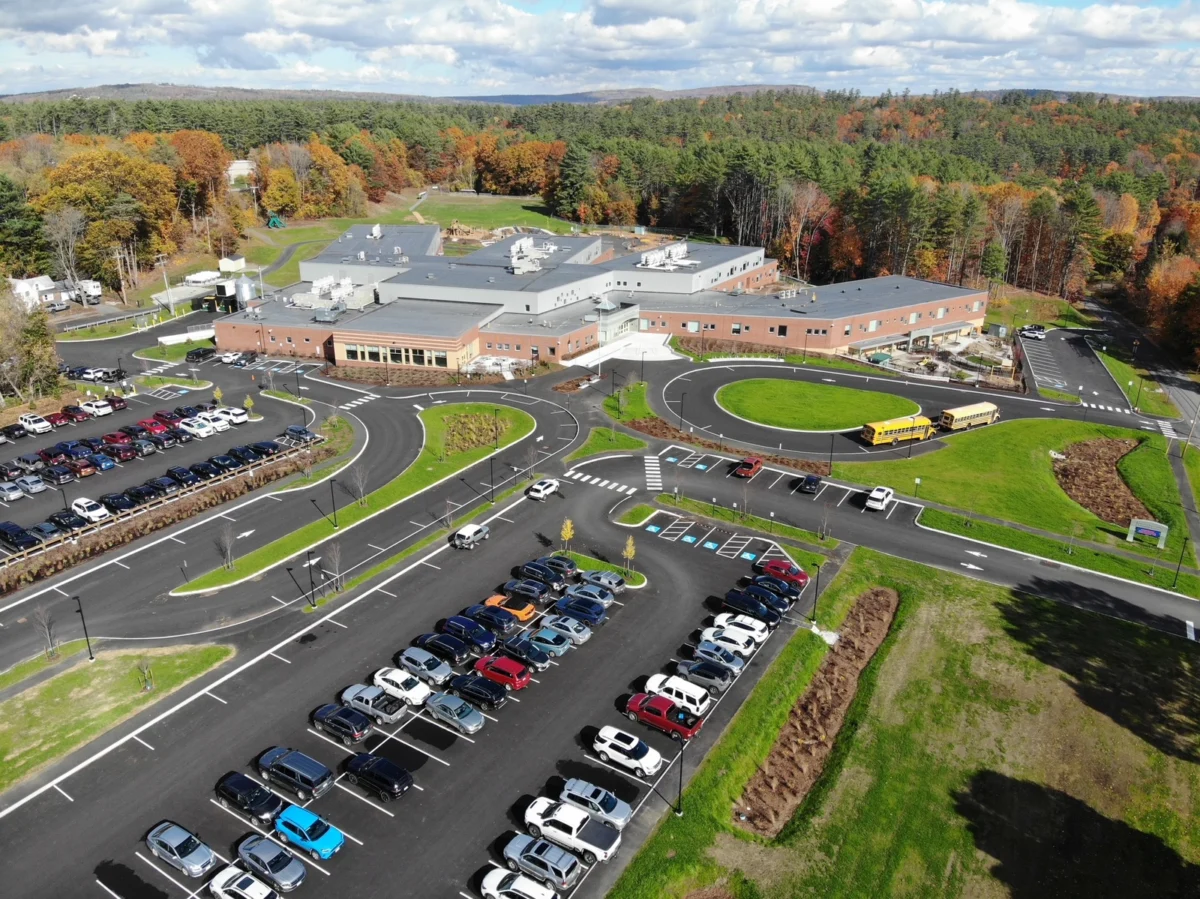
The town of Skowhegan, Maine, has established a groundbreaking educational model that may provide a definitive solution to the chronic fragmentation of early childhood education in the United States. By integrating infants, toddlers, preschoolers, and elementary students onto a single public school campus, the Margaret Chase Smith Community School has moved beyond traditional educational boundaries to create a holistic service hub. This initiative, born out of a partnership between local school officials, the nonprofit Educare Maine, and state legislators, represents a fundamental shift in how public infrastructure can be utilized to support families and child development from birth through the fifth grade.
The Challenge of Fragmented Early Childhood Systems
For decades, the American early childhood landscape has been characterized by a disjointed array of programs, each governed by different regulations and funding streams. Head Start, private child care centers, public pre-K programs, and special education services often operate in silos. This fragmentation creates significant hurdles for families, particularly in rural areas like Somerset County, Maine, where transportation is limited and poverty rates are higher than the national average.
In many communities, a parent might have to drop an infant at a private caregiver, a preschooler at a Head Start center miles away, and an older child at a public elementary school. This "logistical gymnastics" often results in parents—predominantly mothers—dropping out of the workforce. Furthermore, the transition into kindergarten is frequently jarring for children who move from informal or separate care settings into the structured environment of a public school.
Skowhegan’s leaders recognized that improving quality or expanding access within these individual silos was insufficient. The structural problem required a structural solution: the elimination of the walls between early care and K-12 education.
A Chronology of Transformation: From Pilot to Policy
The journey toward the Margaret Chase Smith Community School was not an overnight success but a decade-long evolution involving local experimentation and state-level advocacy.
- The Foundation (2010s): Educare Central Maine (now Educare Maine) established itself as a leader in high-quality early childhood education in the region. Following the national Educare model, it focused on data-driven instruction, family engagement, and professional development.
- The Lab School Initiative: Educare Maine launched a "Lab School" and Learning Hub to partner with existing home-based and center-based providers. Rather than competing for students, the hub provided coaching and shared resources to stabilize the local childcare ecosystem.
- The Skowhegan Planning Phase (2020-2022): As the Maine School Administrative District 54 (MSAD 54) began planning a replacement for aging elementary infrastructure, local leaders proposed an unconventional idea. Instead of a standard K-5 building, they envisioned a "birth-to-grade-five" facility.
- Legislative Catalyst (2023): The success of the local pilot programs informed the creation of "First4ME," a statewide legislative model. This policy encourages communities to collaborate across sectors rather than competing for limited grants.
- The Construction Breakthrough: In a historic move, the Maine Department of Education agreed to fund the inclusion of infant and toddler spaces within the new public school construction project. Historically, state funding for school buildings was strictly reserved for K-12 or Pre-K spaces.
Data and Socioeconomic Context in Rural Maine
The necessity for this integrated model is underscored by stark data regarding the state of childcare in Maine. According to data from the Maine Department of Health and Human Services, the state lost approximately 15% of its licensed childcare providers between 2012 and 2022. Rural counties like Somerset, where Skowhegan is located, were disproportionately affected, often classified as "childcare deserts"—areas where there are more than three children for every one available childcare slot.
Economic data further illustrates the burden on families. In Maine, the average annual cost of infant care can exceed $12,000, which accounts for a significant portion of the median household income in Somerset County (approximately $52,000). By integrating these services into the public school system, the community can leverage shared infrastructure—such as heating, maintenance, and administrative staff—to lower operational costs and improve the sustainability of the programs.
Research from the University of Maine corroborated the efficacy of this collaborative approach. Data gathered during the pilot phases showed that childcare providers who participated in the coordinated support network were significantly more likely to sustain their businesses and achieve higher quality ratings on the state’s "Step It Up" scale.

Breaking the Silos: The Policy Shift
The most significant hurdle to the Skowhegan model was the traditional definition of a "public school." For over a century, public education in the U.S. has been legally and financially defined as starting at age five (kindergarten). While many states have expanded this to age four (Pre-K), the inclusion of infants and toddlers has remained almost exclusively within the private or nonprofit sector.
The Maine Department of Education’s decision to include infant-toddler spaces in a new school construction project signaled a paradigm shift. It acknowledged that the developmental needs of a six-month-old are as critical to future academic success as the curriculum for a six-year-old. By treating early care as a public asset rather than a private family burden, the state has set a precedent that other jurisdictions are now beginning to study.
Tracye Fortin, Chief Impact Officer for Educare Maine, emphasized that the goal was to create a "replicable structure." The project was designed not just to serve the children of Skowhegan, but to prove that the "siloed" funding of the past is an obstacle to modern educational needs.
Stakeholder Reactions and Community Impact
The response from the Skowhegan community has been overwhelmingly positive, reflecting a sense of relief among parents and excitement among educators.
- Parental Perspective: Local parents have cited the "one-stop" nature of the school as a life-changing development. The ability to have all children in one location reduces the "transportation barrier" that often prevents low-income families from accessing consistent care.
- Educator Alignment: Teachers at the Margaret Chase Smith Community School benefit from a unified professional development track. Elementary school teachers can collaborate with infant and toddler specialists to understand the developmental history of their incoming students, allowing for a seamless transition that minimizes "kindergarten shock."
- Economic Impact: Local business leaders have expressed support for the model, noting that reliable childcare is a prerequisite for a stable workforce. In rural Maine, where labor shortages are acute, the presence of a birth-to-grade-five school serves as a powerful tool for both talent retention and attraction.
Broader Implications for National Education Policy
The Skowhegan model arrives at a time when the United States is grappling with a national childcare crisis. The "Child Care Deserts" report by the Center for American Progress highlights that over half of Americans live in areas with an undersupply of licensed childcare.
The success of the Margaret Chase Smith Community School suggests that the solution may not lie in simply increasing subsidies for the existing fragmented system, but in fundamentally reimagining the role of the public school.
Key takeaways for other states include:
- Resource Pooling: By combining federal Head Start funds, state Pre-K grants, and local school budgets, communities can create more robust and resilient institutions.
- Infrastructure Utilization: Public schools are often the most significant capital assets in a community. Utilizing them for 0-4 care maximizes the return on taxpayer investment.
- Inclusive Environments: The model promotes inclusive settings where children with special needs can receive early intervention services in the same building where they will eventually attend elementary school.
Conclusion: A Blueprint for the Future
The Margaret Chase Smith Community School in Skowhegan is more than just a building; it is a proof of concept. It demonstrates that when local leaders, nonprofit partners, and state agencies align their goals, they can overcome the bureaucratic hurdles that have historically kept early childhood care and K-12 education separate.
By integrating the needs of infants and toddlers directly into the public education infrastructure, Skowhegan has moved the needle from viewing childcare as a private struggle to recognizing it as a shared public priority. As the nation looks for ways to address the childcare crisis and improve educational outcomes, this small town in rural Maine offers a scalable, sustainable, and common-sense blueprint for building a whole system rather than a collection of pieces.