The rapid acceleration of generative artificial intelligence has brought the technology sector to a critical juncture where major developers find themselves trapped in a high-stakes prisoner’s dilemma. Industry leaders increasingly recognize that they are essentially hostages of one another’s commercial and strategic decisions. If a single prominent firm decides to bypass rigorous safety protocols to push a new foundational model to market first, competitors frequently feel compelled to abandon their own cautions to maintain market share. Conversely, if one company deploys a potentially dangerous or poorly understood model without adequate safeguards, it effectively creates a permissive environment, signaling to rivals that the industry norm has shifted toward reckless acceleration.
This dynamic of mutual vulnerability has dominated contemporary discussions regarding the future of machine learning. While intense public and political debate has centered on what national governments and international bodies should do to regulate this rapidly evolving frontier, legislative wheels notoriously turn slower than technological breakthroughs. Consequently, a far more immediate and urgent question is emerging from within the corridors of power in Silicon Valley and beyond: Can the private corporations building these immensely powerful systems take decisive, collective action independently before they completely forfeit their public credibility, invite devastating regulatory crackdowns, or trigger an irreversible safety catastrophe?
The Anatomy of the Industry-Wide Dilemma
At the heart of the modern artificial intelligence landscape lies a paradox of competition and collective risk. Companies such as OpenAI, Google DeepMind, Anthropic, and Meta are locked in an unprecedented race for technological supremacy, fueled by billions of dollars in venture capital, cloud infrastructure investments, and soaring public market valuations. In this hyper-competitive environment, caution is frequently penalized by investors, while speed and scale are rewarded with capital and cultural dominance.
However, this race creates a systemic vulnerability. Artificial intelligence models, particularly frontier foundational models, possess dual-use capabilities that can be weaponized for cyberattacks, biological engineering, or sophisticated misinformation campaigns at scale. Because the technology’s emergent properties are often not fully understood even by their creators prior to deployment, pushing the envelope carries existential risks. Industry insiders have privately and publicly acknowledged that a major safety failure by any single major player could invite a severe legislative backlash that harms the entire ecosystem.
Despite this shared risk, individual firms struggle to slow down unilaterally. To pause development or delay a launch for additional safety audits is to risk losing top-tier engineering talent, venture funding, and market leadership to a rival. This structural trap mirrors classic economic models of collective action failures, where rational individual choices lead to a collectively irrational and dangerous outcome.
Historical Parallels: Looking to the Nuclear and Aviation Sectors
To understand how high-risk industries navigate this exact tension, policy experts and organizational strategists frequently point to historical precedents such as the nuclear energy sector and commercial aviation. Both industries deal with technologies capable of catastrophic harm, yet both managed to build robust frameworks for self-regulation and safety long before comprehensive government oversight fully matured.
During the formative decades of nuclear energy, organizations like the Institute of Nuclear Power Operations (INPO) were established following incidents like the Three Mile Island accident in 1979. Rather than waiting passively for heavy-handed government mandates, nuclear operators recognized that a disaster at any single plant threatened the social license and viability of the entire global industry. Consequently, they instituted rigorous peer-review mechanisms, shared operational safety data transparently, and enforced strict internal standards that superseded purely commercial competitive pressures.
Similarly, the commercial aviation industry operates under a culture of rigorous incident reporting and collective safety protocols. When an aviation accident occurs, data is shared globally among manufacturers, airlines, and regulators with the explicit understanding that safety is a non-competitive domain.
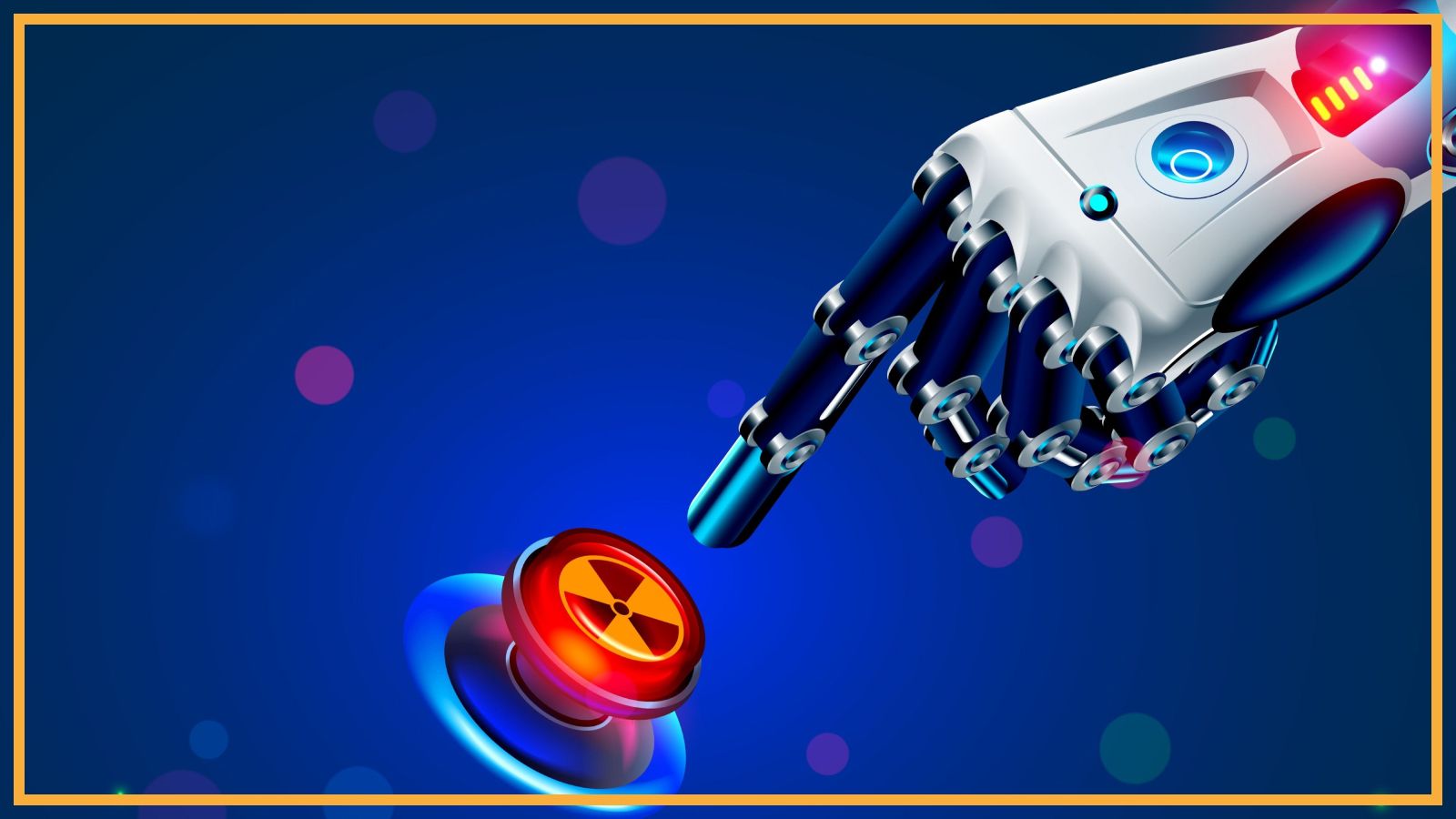
The artificial intelligence sector, however, has historically lacked such institutional architecture. Dominated by a software-industry ethos of "move fast and break things," the AI community has often treated safety protocols as proprietary trade secrets rather than collective public goods. Analysts argue that if AI firms are to survive their current dilemma, they must pivot toward a cooperative safety paradigm reminiscent of nuclear and aviation governance.
The Chronology of Self-Regulation and Safety Commitments
The journey toward establishing formal governance and safety guardrails within the artificial intelligence industry has been marked by a series of fragmented initiatives, internal controversies, and shifting corporate commitments over the past several years.
- December 2022 to March 2023: The public release of consumer-facing generative AI tools sparks an unprecedented global adoption wave. Concurrently, warnings from researchers regarding deepfakes, bias, and potential existential risks escalate, prompting early calls for voluntary moratoria on frontier model training.
- July 2023: Leading AI companies, including OpenAI, Alphabet, Meta, Microsoft, Anthropic, Amazon, and Inflection, meet with U.S. government officials at the White House to pledge voluntary commitments. These pledges focus on rigorous internal and external security testing (red teaming), watermarking AI-generated content, and sharing research on safety risks.
- Late 2023 to Early 2024: Internal friction surfaces within several leading AI labs. Prominent safety researchers and board members express frustration over commercial pressures overriding long-term alignment and safety considerations, leading to high-profile resignations and corporate restructuring at firms like OpenAI and Anthropic.
- Mid 2024: Major AI developers begin establishing internal "Responsible AI" boards and adopting structured "frontier risk frameworks" or tiered safety protocols designed to pause deployment if models cross specific capability thresholds. However, enforcement mechanisms remain largely voluntary, internal, and opaque to external scrutiny.
- Late 2024 to Present: As models approach artificial general intelligence (AGI) milestones, governments worldwide introduce binding AI acts and executive orders. The tension between voluntary industry self-regulation and statutory compliance reaches an all-time high, forcing firms to decide whether to empower independent oversight bodies or risk stringent external controls.
Official Responses and Stakeholder Perspectives
The debate over whether AI companies can effectively police themselves has elicited sharply contrasting views from policymakers, corporate executives, and independent researchers.
Tech executives frequently emphasize their commitment to responsible scaling. Leaders from companies like Anthropic and OpenAI have publicly advocated for government regulation, acknowledging that voluntary commitments alone are insufficient to manage systemic risks. In congressional testimonies and open letters, industry leaders have called for statutory bodies to license frontier models, arguing that clear legal baselines protect responsible actors from being undercut by reckless competitors.
Conversely, civil society organizations, academic researchers, and labor advocates express deep skepticism regarding corporate self-regulation. Critics argue that asking profit-driven corporations to police their own products is fundamentally akin to letting financial institutions oversee their own risk management prior to the 2008 financial crisis. Independent watchdogs point out that internal safety teams are frequently underfunded, lack binding authority over executive leadership, and are vulnerable to being sidelined when lucrative commercial opportunities arise.
Furthermore, legal scholars note that antitrust laws in many jurisdictions inadvertently complicate cooperative safety agreements. When competing corporations meet to discuss industry standards or coordinate pauses on technology deployment, they risk running afoul of regulatory prohibitions against collusion and market manipulation. Consequently, creating a legally safe harbor for AI firms to collectively coordinate on safety standards remains an urgent legislative prerequisite for effective self-regulation.
Broader Economic Impact and Future Implications
The resolution of this prisoner’s dilemma will profoundly shape the trajectory of the global economy, national security, and the future of work. If artificial intelligence firms fail to establish credible, binding self-governance mechanisms, the resulting safety failures or public scandals could trigger an intense regulatory backlash. Such a backlash might involve draconian moratoriums, heavy compliance burdens that entrench the monopoly power of incumbent tech giants, or a chilling effect on open-source research and legitimate technological innovation.
On the other hand, if the industry successfully pivots toward a cooperative safety model—supported by clear legal frameworks that encourage transparency and peer accountability—it could establish a sustainable foundation for technological progress. This would require AI companies to decouple safety from commercial competition, treating the mitigation of catastrophic risks as a shared operational baseline.
Ultimately, the core governance problem facing the artificial intelligence industry is not merely technical, nor is it strictly governmental. It is fundamentally a problem of strategic organization and trust. Until major tech firms recognize that their long-term commercial survival depends on collective restraint rather than individual brinkmanship, the shadow of the prisoner’s dilemma will continue to loom over the entire digital frontier.