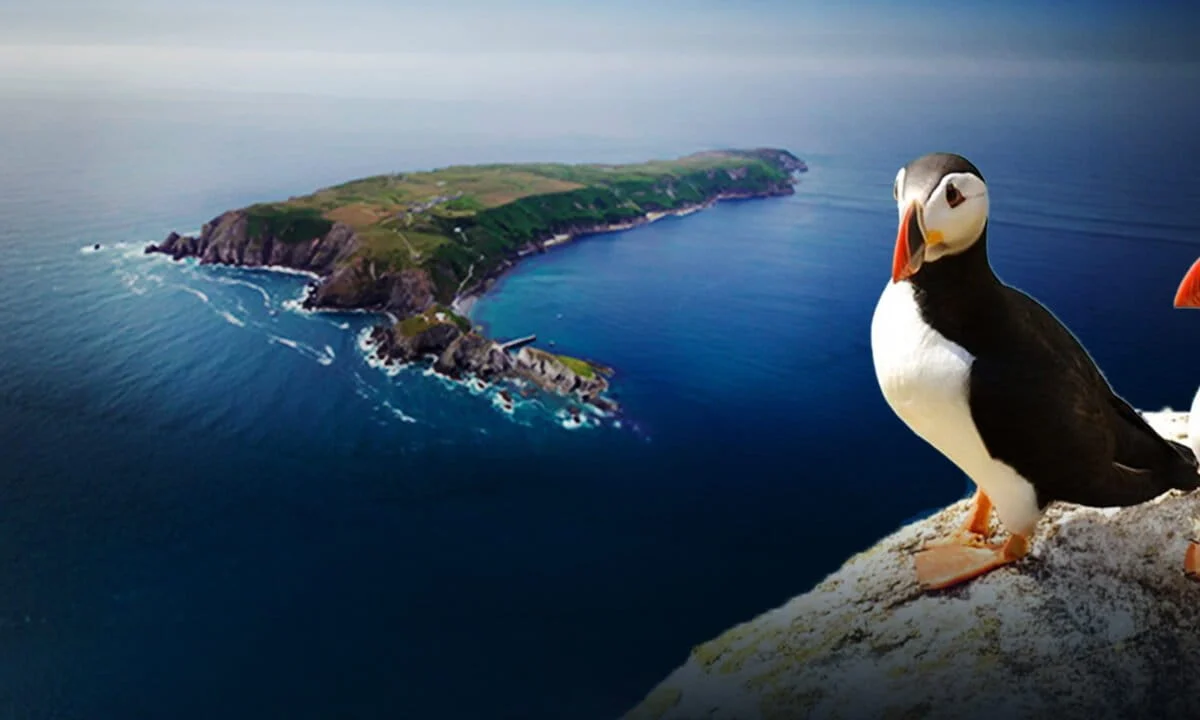
Out in the windswept expanse of the Bristol Channel, positioned strategically between the coasts of England and Wales, lies Lundy Island—a granite outcrop measuring just three miles long and half a mile wide. Despite its modest dimensions, this isolated landmass has quietly transformed into one of the United Kingdom’s most triumphant conservation success stories. Over the past two decades, a combination of targeted terrestrial eradication programs and pioneering marine management has turned the tide against ecological decline. Today, Lundy stands not merely as a sanctuary for wildlife, but as a collaborative model demonstrating how environmental protection, local commerce, and community stewardship can successfully coexist.
Main Facts of the Lundy Conservation Model
The ecological resurgence of Lundy Island is characterized by two major milestones: the dramatic recovery of its seabird populations and the establishment of the UK’s first statutory Marine Nature Reserve and No-Take Zone (NTZ).
On land, the island’s primary historical hurdle was the presence of invasive brown rats (Rattus norvegicus). Accidentally introduced via shipwrecks and human transit centuries ago, the rodents proliferated across the rugged terrain. By the early 2000s, these predators had severely impacted Lundy’s ground-nesting birds by raiding burrows to consume eggs and vulnerable chicks. Seabird counts plummeted to a historic low of approximately 6,000 individuals.
Following a comprehensive eradication program initiated twenty years ago, the rat population was successfully removed. The subsequent ecological bounce-back has been profound. Modern surveys place Lundy’s seabird population at roughly 48,000. Key resident species—including puffins (Fratercula arctica), Manx shearwaters (Puffinus puffinus), razorbills (Alca torda), guillemots (Uria aalge), European storm petrels (Hydrobates pelagicus), northern fulmars (Fulmarus glacialis), and black-legged kittiwakes (Rissa tridactyla)—now utilize the island’s sheer cliffs and grassy slopes in record numbers.
Beneath the surrounding waters of the Bristol Channel, a parallel transformation occurred. The marine ecosystem features a diverse mosaic of rocky reefs, kelp forests, sandy bottoms, underwater caves, pinnacles, and muddy habitats. Historically, however, these rich waters attracted intensive commercial fishing pressure, including heavy trawling and dredging, which severely degraded fragile seabed habitats.
In response, the waters surrounding Lundy were designated as a Marine Nature Reserve, culminating in 2003 with the creation of the UK’s first No-Take Zone. Spanning a clearly defined rectangular sector along the island’s east coast, the NTZ completely prohibits all forms of fishing, anchoring, and extraction. Surrounding this strict sanctuary is a larger management area where regulated activities—such as recreational rod-and-line fishing and traditional lobster potting—are permitted, while destructive mobile gear like trawling remains strictly banned.
Chronology of a Grassroots Restoration
The turnaround of Lundy Island did not happen overnight; it was the result of a deliberate, multi-decade timeline of planning, community negotiation, and legislative action.
- Pre-2000s: Decades of unregulated and intensive commercial fishing, combined with the unchecked predation of invasive rats on land, push Lundy’s terrestrial and marine ecosystems toward severe degradation.
- Early 2000s: Conservationists, local North Devon fishermen, business owners, and regulatory bodies recognize the unsustainable trajectory of the island’s natural resources. A grassroots collaborative framework is established to design a protective marine boundary.
- 2003: Lundy is officially designated as home to the United Kingdom’s first-ever No-Take Zone (NTZ), creating a 3.3-square-kilometer fully protected marine zone where no extraction of marine life is permitted. Simultaneously, a coordinated, large-scale eradication project targets the island’s invasive rat population to safeguard nesting seabirds.
- Mid-2000s to 2010s: Monitoring programs conducted in partnership with agencies such as the Inshore Fisheries and Conservation Authority (IFCA) reveal rapid ecological recovery. Fish stocks, particularly European lobsters (Homarus gammarus), rebound dramatically within the NTZ within four to five years of implementation.
- Present Day: Lundy supports a thriving ecosystem with nearly 50,000 seabirds and demonstrably healthier marine life, serving as a functioning, data-backed template for marine spatial planning across British waters.
Supporting Data and Ecological Metrics
The success of Lundy’s conservation framework is heavily substantiated by empirical data collected by marine biologists, ornithologists, and local fisheries authorities.

On land, the eradication of rats allowed the seabird population to multiply eightfold, surging from a precarious low of 6,000 birds to roughly 48,000 today. This recovery stands in stark contrast to broader national trends, as many of Britain’s coastal bird species face steep population declines due to climate change, avian influenza, and dwindling food supplies.
In the marine sphere, the data surrounding the No-Take Zone is equally striking. Surveys executed within four to five years of the NTZ’s enforcement demonstrated an immediate population explosion among targeted commercial species. According to long-time local fishermen, such as Geoff Huelin—who spent decades harvesting the waters around Lundy—catch metrics inside and immediately adjacent to the zone highlight a clear "spillover effect." While a string of 35 to 40 pots outside the protected perimeter might yield roughly 12 lobsters, a single night’s hauling near or within the zone’s boundaries can produce up to 75 significantly larger specimens.
Beyond commercially valuable crustaceans, the marine reserve has nurtured ultra-fragile, slow-growing foundational species that are highly vulnerable to commercial fishing gear. Delicate pink sea fans (Eunicella verrucosa), which take decades to establish complex structural colonies, have found a safe haven away from the scouring paths of bottom trawlers. Other fragile benthic structures and vulnerable fish species—including the critically endangered crawfish, or spiny lobster (Palinurus elephas)—have been pulled back from the brink of regional extinction.
Official Responses and Stakeholder Collaboration
A critical factor in Lundy’s enduring success has been the active participation of the local community. Rather than adopting a top-down approach that excluded resource users, the architects of Lundy’s Marine Protected Area actively engaged the local fishing fleet of North Devon.
Geoff Huelin, reflecting on his decades in the industry and subsequent transition out of active fishing, noted the absolute consensus among local fishers regarding the zone’s efficacy. "We all joined forces with the divers; everybody was happy with it really," Huelin stated, emphasizing that local watermen strictly respect the boundaries of the NTZ. "There’s such benefits with it that I can’t see anything that would say against it. And all the fishermen are happy here… everybody stands by it 100% really."
Conservation managers and local wardens echo this sentiment, pointing out that drawing lines on a map is mathematically simple, but securing human compliance is the true challenge. By involving fishermen in deciding where restrictions would apply and which low-impact practices—such as creeling and potting—could continue in adjacent waters, the initiative avoided the bitter polarization that frequently plagues marine conservation projects worldwide.
Broader Impact and Implications
The implications of Lundy Island extend far beyond the Bristol Channel. As the United Kingdom and global governing bodies commit to expanding Marine Protected Areas (MPAs) to safeguard at least 30% of the world’s oceans by 2030, policymakers frequently look to Lundy as the pioneering prototype for effective marine spatial planning.
The island demonstrates that No-Take Zones do not merely restrict human activity for the sake of isolation; rather, they can act as biological nurseries that actively replenish adjacent, heavily fished grounds through natural emigration and species spillover. By balancing the economic livelihood of local fishing communities with strict ecological sanctuaries, Lundy proves that conservation can generate tangible economic and vocational dividends for the very people who depend on the sea.
As Lundy moves forward, the primary objective for conservationists, wardens, and visitors alike will be maintaining this delicate equilibrium. The island remains a vital sanctuary for those seeking to disconnect from the frantic pace of the British mainland, while providing a living laboratory for ecological resilience. Through disciplined management, community trust, and a commitment to scientific monitoring, Lundy Island has successfully turned the tables on environmental degradation, offering a hopeful blueprint for the future of British and global conservation.