
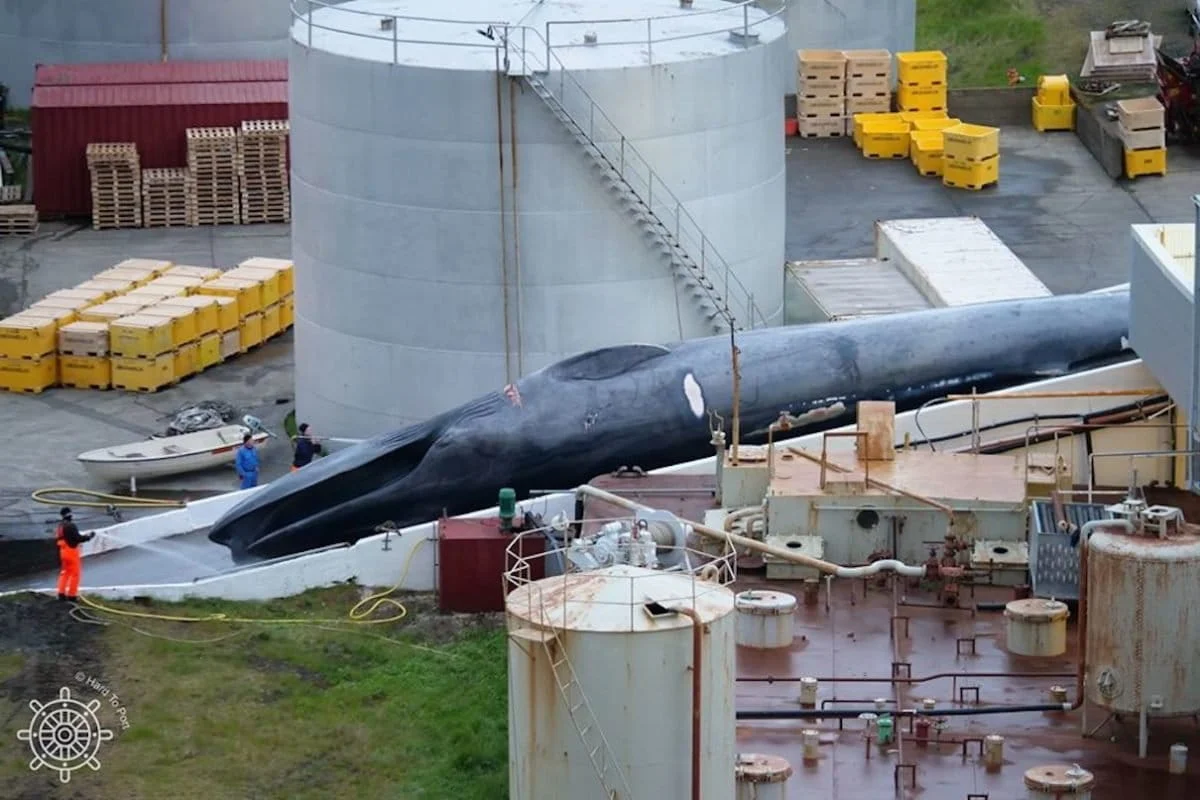
Iceland’s sole remaining commercial whaling company, Hvalur hf., has announced its intention to resume the hunting of fin whales during the summer of 2026, marking a contentious return to a practice that has faced significant domestic and international scrutiny. This decision follows a two-year operational hiatus during which the company cited unfavorable market conditions and regulatory hurdles. The resumption comes at a critical juncture for the industry, as the Icelandic government prepares to introduce legislation that could permanently ban commercial whaling, effectively turning the 2026 season into a potential "final chapter" for the centuries-old tradition in the North Atlantic.
In 2024, the Icelandic Ministry of Food, Agriculture, and Fisheries granted Hvalur hf. a five-year license, permitting an annual catch of up to 209 fin whales (Balaenoptera physalus). Despite holding this permit, the company, led by the polarizing figure Kristján Loftsson, opted not to send its fleet to sea in either 2024 or 2025. The upcoming 2026 season, however, is expected to operate under tightened constraints. Iceland’s Marine and Freshwater Research Institute (MFRI) has recently issued updated scientific advice, recommending that the total allowable catch be reduced to 150 whales for the 2026 season—a 28% decrease from previous quotas. This recommendation is based on updated population assessments and the need to ensure the long-term sustainability of the species in the Central North Atlantic.
The Biological Significance of the Fin Whale
The fin whale is a creature of immense biological importance and physical scale. Classified by the International Union for Conservation of Nature (IUCN) Red List as vulnerable to extinction, it is the second-largest animal on the planet, surpassed only by the blue whale. Reaching lengths of up to 85 feet and weighing as much as 80 tons, these "greyhounds of the sea" are known for their slender profiles and impressive swimming speeds.
Conservationists emphasize that the recovery of fin whale populations is an arduous process. Luke McMillan, head of hunting and captivity with the U.S.-based NGO Whale and Dolphin Conservation, notes that the species is characterized by a slow maturation process and low reproductive rates. Because females only give birth to a single calf every two to three years, the population is exceptionally sensitive to anthropogenic pressures, including commercial hunting, ship strikes, and entanglement in fishing gear. The removal of mature individuals from the breeding pool can have cascading effects on the population’s ability to rebound from the industrial whaling era of the 20th century, which saw hundreds of thousands of fin whales killed globally.
A Chronology of Iceland’s Whaling Ambivalence
Iceland’s relationship with whaling has been marked by decades of diplomatic tension and internal debate. Following the 1982 International Whaling Commission (IWC) moratorium on commercial whaling, which took effect in 1986, Iceland initially complied but eventually left the commission in 1992. It rejoined in 2002 with a controversial reservation against the moratorium, a move that allowed it to resume commercial hunting in 2006.
Since then, the industry has been dominated by Hvalur hf. and its CEO, Kristján Loftsson. Loftsson has famously defended the practice in utilitarian terms, once stating that whales are "just another fish" and an "abundant marine resource." Biologically, whales are, of course, marine mammals, but Loftsson’s rhetoric reflects a traditionalist view of the sea as a harvestable larder.
The timeline of the last decade shows a pattern of starts and stops:
- 2018: Hvalur hf. faced international outcry after killing a rare blue whale-fin whale hybrid.
- 2019–2021: Whaling was largely suspended due to a combination of COVID-19 restrictions and declining demand in the Japanese market.
- 2022: A brief resumption occurred, but was marred by technical issues.
- 2023: The Icelandic government temporarily suspended the hunt just one day before it was set to begin, following a damning report on animal welfare.
- 2024–2025: No whales were caught as the company re-evaluated the economic viability of the Japanese export market.
The Welfare Crisis: 11.5 Minutes to Die
The most significant blow to the whaling industry’s reputation within Iceland came from a 2023 report by the Icelandic Food and Veterinary Authority (MAST). The report utilized video footage from onboard observers to track the "time to death" for whales struck by explosive harpoons. The findings were harrowing: over 40% of the whales did not die instantaneously.
The median time to death for whales that were not killed by the first strike was 11.5 minutes. In one particularly egregious instance, a whale was pursued and struck multiple times, taking a full two hours to expire. These statistics led the veterinary authority to conclude that the hunting of large whales cannot currently meet the standards set by Iceland’s Animal Welfare Act.
Luke McMillan argues that the very nature of the hunt precludes humane treatment. "At sea, you’re firing from a moving ship at a moving target, in weather you can’t control," he said. The instability of the platform and the immense size of the animal make it nearly impossible to ensure a consistent, lethal strike to the brain, leading to prolonged agony for the animals.

The Economic Collapse of the Whale Meat Market
While ethical concerns dominate the headlines, economic realities may ultimately be what sinks the industry. Historically, Hvalur hf. relied almost exclusively on exports to Japan. However, Japan’s own resumption of commercial whaling within its territorial waters in 2019 has reduced its reliance on Icelandic imports.
Data suggests that Japanese demand for fin whale meat has plummeted, with reports indicating a 99% decline in certain import sectors during the 2023-2024 fiscal year. In 2025, Loftsson himself admitted that the Japanese market was "unfavorable," noting that the price of whale products had dropped so low that the hunt was no longer "justifiable" from a business perspective.
Domestically, the market is virtually non-existent. Recent surveys indicate that fewer than 2% of Icelanders regularly consume whale meat. Most of the whale meat sold within Iceland is purchased by tourists, a paradox that has led many local business owners in the tourism sector to call for a ban, fearing that whaling damages Iceland’s "clean and green" brand. The whale-watching industry in Iceland, which generates significantly more revenue than whaling, has become a powerful political lobby against Hvalur hf.
Political Shifts and the Path to Abolition
The political tide in Reykjavík appears to be turning. Iceland’s Minister of Industries and Innovation, Hanna Katrín Friðriksson, has been vocal about the fact that commercial whaling no longer serves the public interest. She has indicated that the government plans to introduce legislation in the fall of 2026—following the conclusion of the summer whaling season—to formally end the practice.
This legislative move is seen as a compromise. By allowing the current five-year license to run its course or providing a final window for operations, the government may be attempting to avoid legal battles over compensation for Hvalur hf. while signaling to the international community that Iceland is moving toward a post-whaling future.
"The economic case for whaling has effectively collapsed," McMillan noted. "What remains is a political and legal question about whether to formalize that with legislation. The question for the 2026 season is whether any fin whales will be killed before that legislation arrives."
Broader Environmental and Global Implications
Beyond the immediate welfare and economic concerns, scientists are increasingly highlighting the role of great whales in climate regulation. Whales act as "carbon sinks"; over their long lifespans, they accumulate carbon in their bodies, and when they die, they sink to the ocean floor, sequestering that carbon for centuries. Furthermore, their waste products provide essential nutrients like iron and nitrogen to phytoplankton, which produce more than half of the world’s oxygen and absorb vast amounts of carbon dioxide.
The international community continues to apply pressure. The United States has previously threatened trade sanctions under the Pelly Amendment, which allows the U.S. to restrict imports from countries that "diminish the effectiveness" of international conservation programs. While these sanctions have rarely been fully realized, the threat remains a thorn in the side of Icelandic-American diplomatic relations.
As 2026 approaches, the world’s eyes will be on the small Icelandic ports where Hvalur hf.’s ships are docked. Whether the fleet sails or remains idle will depend on a volatile mix of global market prices, domestic political willpower, and the personal resolve of Kristján Loftsson. For the fin whales of the North Atlantic, the 2026 season represents a final gauntlet in a world that is rapidly deciding it no longer has a place for commercial whaling.
At the time of publication, Hvalur hf. and the Icelandic Ministry of Industries had not responded to requests for further comment regarding the specific logistics of the 2026 hunt or the details of the upcoming restrictive legislation.










Leave a Reply