
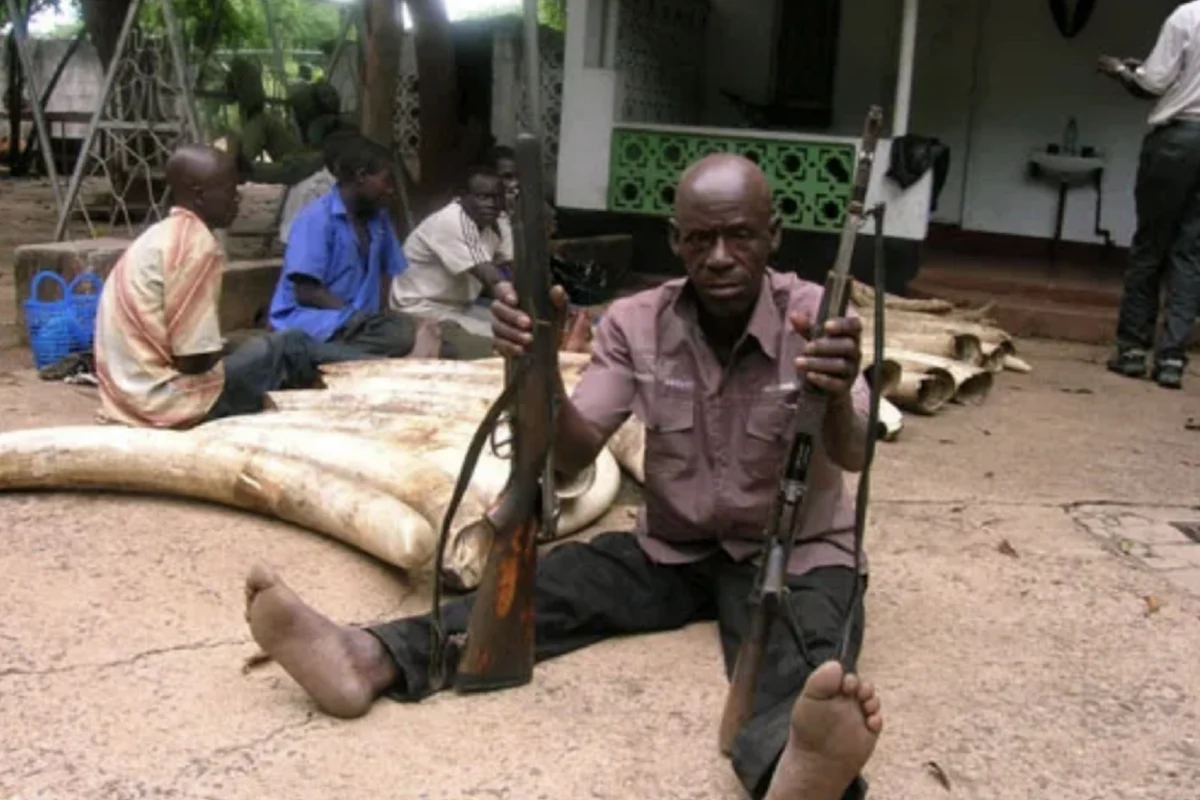
Deep within a correctional facility in Zambia, an inmate reflects on the path that led to his imprisonment. He recalls being approached by an intermediary who provided a mobile phone and a contact number, promising a direct link to a buyer in the capital city of Lusaka willing to pay top dollar for ivory and pangolin scales. The pitch was simple yet devastatingly effective: the money would be enough to build a permanent home and send his children to school. Instead, the man was ultimately arrested, prosecuted, and handed a lengthy prison sentence for an elephant-related wildlife offense.
This narrative illustrates a complex reality confronting conservationists, law enforcement agencies, and policymakers across southern Africa. Wildlife crime is rarely a monolith driven purely by malicious intent; rather, it is a multi-layered global industry sustained by a diverse cast of actors. These participants range from grassroots individuals pressed into service by immediate economic desperation to logistical middlemen, heavily armed poaching gangs, and entrenched international kingpins running sophisticated transnational syndicates.
While law enforcement agencies frequently target lower-level offenders—who are easier to apprehend and prosecute—these individuals represent easily replaceable cogs in a massive criminal machine. Arresting a poacher or a low-level courier does little to dismantle the syndicate structures or halt the relentless flow of illegal wildlife products. Recognizing this cyclical failure, researchers and conservation organizations are shifting their focus upstream to understand how and why vulnerable individuals cross the line into wildlife crime in the first place.

Unprecedented Research Inside Correctional Facilities
In a pioneering effort to decode the grassroots drivers of illegal wildlife trade, the non-governmental organization Wildlife Crime Prevention (WCP) Zambia partnered with Copperbelt University to launch an exhaustive empirical study. The research team conducted face-to-face interviews with 302 inmates incarcerated across 32 correctional facilities throughout Zambia. The findings, recently published in the International Journal of Law, Crime and Justice under the title "Recidivism, opportunity, and deterrence in wildlife crime: Evidence from Zambia," offer a rare, human-centric glimpse into the underworld of poaching and trafficking.
Zambia occupies a precarious geographic and ecological position within the African continent. Bordered by eight different nations, the country functions simultaneously as a primary source for high-value wildlife contraband and a critical transit corridor for regional trafficking rings. According to data gathered during the study, individuals incarcerated for wildlife offenses comprise approximately 7% of Zambia’s total prison population.
The legal framework governing these offenses is notably stringent. Under Zambian law, a first-time conviction for hunting inside a protected area without a license can carry a prison sentence ranging from three to 10 years. Meanwhile, more severe infractions—such as the unlawful possession of trophies from protected species, or crimes directly tied to iconic megafauna like elephants and rhinos—frequently yield mandatory prison terms spanning anywhere from five to upwards of 20 years.

Demographics and Motivations: Opportunity Meets Desperation
The research team gathered comprehensive demographic data alongside qualitative insights by posing open-ended questions to inmates, such as, "How did you come to be here?" The resulting profile of the incarcerated population challenges traditional criminological assumptions. Roughly half of the respondents were middle-aged men over the age of 41, and an overwhelming majority were first-time offenders. However, nearly a third admitted to prior involvement in wildlife crimes that went undetected by authorities.
The offenses spanned seven broad categories identified by the researchers: bushmeat hunting, illegal fishing, firearm-related wildlife crimes, and specialized poaching targeting high-value protected species such as elephants, pangolins, and rhinos. Among these, bushmeat hunting was the most prevalent, closely followed by crimes involving pangolins and ivory.
When examining the underlying catalysts for these crimes, the data pointed overwhelmingly to two primary factors: circumstance and opportunity. Approximately 40% of respondents cited immediate opportunity as the decisive trigger for their involvement, while another 16% pointed to acute existential needs, such as securing money for food, clothing, or urgent medical care.

Many of those surveyed were subsistence farmers whose livelihoods were at the mercy of unpredictable weather patterns and failing crops. In rural regions devoid of robust social safety nets, formal banking institutions, or accessible credit loans, unexpected financial shocks can prove catastrophic. As one anonymous researcher noted, unless an individual has a wealthy relative living in an urban center, legitimate economic opportunities are exceedingly scarce.
One inmate vividly illustrated this precarious vulnerability, explaining how he stumbled upon a pangolin while traveling to Mozambique to sell tomatoes. Having heard persistent rumors that pangolins commanded high prices, and desperate to finance the construction of a house, he seized the moment—a decision that ultimately traded his freedom for a prison sentence.
Reentry Realities and the Challenge of Recidivism
As part of their investigation, the research team explored the inmates’ expectations, future intentions, and anxieties surrounding their eventual release. While most respondents remained noncommittal about their long-term plans, roughly a third expressed a firm desire to distance themselves permanently from wildlife crime. Conversely, about 5% openly admitted an intent to reoffend or voiced deep anxiety about being pulled back into illicit networks due to a lack of viable alternatives.

"If I leave this place with nothing to do, I am afraid of going back to crime," one inmate confessed. Another highlighted the social hazards awaiting them, noting that avoiding "bad company" upon reentry would be a formidable challenge.
Interestingly, the study revealed stark contrasts regarding social stigma. Approximately 80% of the male respondents reported little to no fear of social stigma or rejection by their families and local communities upon release. While female inmates—who comprised a tiny minority of just nine participants in the study—expressed greater uncertainty and fear regarding community reception, the small sample size prevented researchers from establishing a definitive gender pattern.
Meredith Gore, an environmental crime researcher at the University of Maryland who was not involved in the study, praised the work for shedding light on the gender dimensions of environmental crime, which she termed an "under-tapped topic." However, Gore also highlighted a troubling implication: the absence of heavy social stigma among male offenders may elevate the risk of recidivism, suggesting that standard criminological models developed in Western contexts may fail to capture the socio-cultural realities of wildlife crime in southern Africa.
Bridging the Gap Through Targeted Reintegration

Addressing the root causes of wildlife crime requires more than punitive measures; it demands targeted, post-release economic strategies. Recognizing this imperative, WCP Zambia recently concluded a six-month pilot project designed to help incarcerated offenders establish communication channels with their families prior to release. Led by wildlife criminologist and lead study author Emma Richards, the initiative aims to help inmates plan their transition back into society and identify practical livelihood requirements well before their sentences conclude.
Richards emphasized the practical limitations of conventional prison rehabilitation programs. "You can have somebody doing a carpentry project in prison, but if they get out and they’ve got no access to carpentry tools, what have you really achieved?" she asked.
To combat this disconnect, WCP Zambia’s pilot program has begun providing released offenders with tangible assets, including agricultural equipment for crop and livestock farming, as well as capital and startup support for small local grocery businesses. Experts agree that fostering sustainable economic alternatives tailored to the explicit desires of local communities is essential to reducing repeat offenses.
A Call for Humanity and Further Inquiry

As the first study of its kind conducted within Zambia’s correctional facilities, researchers acknowledge that their findings have raised more questions than definitive answers. Nevertheless, the project marks a crucial conceptual evolution in how conservationists view wildlife offenders—moving away from flat, villainous archetypes and toward a more nuanced, humane understanding of human vulnerability and rural poverty.
"They’re not just a group of evil people who kill elephants," one researcher reflected. By illuminating the socioeconomic pressures, structural vulnerabilities, and institutional gaps that draw individuals into the lower rungs of wildlife crime, this landmark study provides conservation strategists with vital data needed to design holistic interventions that protect both vulnerable ecosystems and human livelihoods.







Leave a Reply